

Pomegranate juice protects your arteries through powerful antioxidants called punicalagins that prevent LDL cholesterol oxidation and reduce arterial inflammation. When you drink 240 mL daily, you’ll boost nitric oxide production by 130%, keeping your blood vessels flexible and improving circulation. Clinical studies show this can reduce carotid artery lesions by 35% and lower systolic blood pressure by 21%. The anti-inflammatory compounds actively block plaque formation while enhancing your blood’s natural antioxidant defenses for extensive cardiovascular protection.
The Science Behind Pomegranate’s Cardiovascular Benefits

While many fruits offer health benefits, pomegranate juice stands out for its remarkable ability to protect your cardiovascular health through multiple biological pathways.
When you consume pomegranate juice daily, you’re delivering powerful antioxidants called punicalagins directly to your vascular system. These compounds enhance nitric oxide production, which prevents endothelial dysfunction and maintains ideal blood flow through your arteries.
The science is compelling: clinical studies show pomegranate juice reduces carotid artery lesions by 35% while notably decreasing oxidative stress in your vascular cells.
You’ll also benefit from reduced lipid accumulation and macrophage infiltration in arterial plaques, effectively slowing atherosclerosis progression.
Additionally, pomegranate juice improves stress-induced ischemia in your heart muscle, providing extensive cardiovascular protection through scientifically-proven mechanisms.
How Antioxidants in Pomegranate Prevent LDL Oxidation
When LDL cholesterol becomes oxidized in your bloodstream, it transforms from a manageable risk factor into a dangerous catalyst for arterial disease.
Pomegranate juice combats this threat through its potent antioxidant properties, particularly from polyphenolic compounds called punicalagins that dramatically reduce oxidative stress throughout your body.
Daily consumption enhances your blood’s antioxidant activity by up to 130%, creating a protective shield against LDL oxidation. This protection isn’t just theoretical—clinical studies show pomegranate juice reduces carotid artery lesions by 35% in patients.
The antioxidants actively prevent damage to arterial walls while improving endothelial function, which keeps your blood vessels healthy and flexible. This extensive protection makes pomegranate juice a powerful ally for your cardiovascular health.
Punicalagins: The Powerful Compounds That Protect Blood Vessels
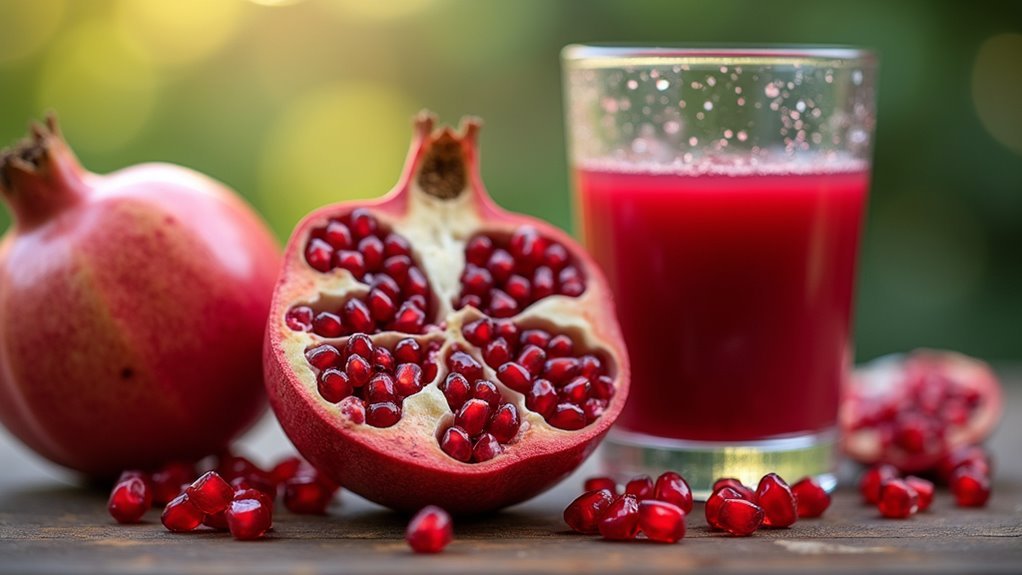
Punicalagins stand as pomegranate’s most powerful cardiovascular defenders, wielding remarkable protective abilities that directly shield your blood vessels from multiple forms of damage.
These potent antioxidants combat oxidative stress while enhancing nitric oxide production, dramatically improving your endothelial function and overall vascular health.
You’ll benefit from punicalagins’ ability to prevent LDL cholesterol oxidation, effectively blocking arterial plaque formation and reducing atherosclerosis risk.
Clinical research demonstrates that consuming pomegranate juice daily can reduce carotid artery lesions by 35% within one year – a significant improvement in arterial health.
Additionally, punicalagins deliver powerful anti-inflammatory effects that decrease inflammation within your arterial walls.
This dual action of antioxidant protection and inflammation reduction provides extensive cardiovascular protection, making punicalagins essential compounds for maintaining healthy blood vessels and preventing heart disease.
Clinical Evidence of Pomegranate Reversing Atherosclerosis
Although cardiovascular disease remains a leading health threat worldwide, groundbreaking clinical research reveals that pomegranate juice can actually reverse atherosclerosis – the dangerous buildup of plaque in your arteries.
Israeli studies show you’ll experience a remarkable 35% reduction in carotid artery lesions when consuming pomegranate juice regularly, while control groups saw lesions increase by 9%.
You’ll also boost your antioxidant effects by 130%, protecting against oxidative stress that damages blood vessels.
The research demonstrates significant improvements in cardiovascular health, including 21% lower systolic blood pressure and reduced inflammatory markers in atherosclerotic plaques.
These antioxidant effects help stabilize cholesterol levels while actively reversing arterial damage, offering hope for preventing heart disease naturally.
Pomegranate’s Role in Enhancing Nitric Oxide Production

Beyond its ability to reverse arterial plaque, pomegranate juice works at the molecular level by dramatically enhancing your body’s production of nitric oxide – a powerful signaling molecule that acts as your arteries’ natural relaxant.
When you drink pomegranate juice daily, you’re boosting nitric oxide levels that directly improve endothelial function and reduce arterial stiffness. The antioxidant properties protect against LDL cholesterol oxidation, supporting healthy nitric oxide production for ideal vascular health.
Clinical studies reveal pomegranate juice’s remarkable impact:
- 21% reduction in systolic blood pressure through enhanced nitric oxide availability
- Improved stress-induced heart muscle ischemia via better blood flow
- Enhanced arterial flexibility that keeps your cardiovascular system functioning like a younger person’s
Your arteries literally become more responsive and efficient.
Blood Pressure Reduction Through Daily Pomegranate Consumption
You’ll find that daily pomegranate juice consumption delivers measurable blood pressure reductions, with clinical studies showing an average 5 mmHg decrease in systolic pressure.
Your body responds even more dramatically with consistent long-term use, as participants experienced a remarkable 21% reduction after one year of regular intake.
You don’t need massive quantities to see results, but understanding the ideal daily dosage requirements guarantees you’re getting the most cardiovascular benefits from this natural intervention.
Clinical Blood Pressure Results
When researchers examined the cardiovascular effects of daily pomegranate juice consumption, they discovered remarkable improvements in blood pressure measurements that exceeded initial expectations.
Clinical study participants experienced up to 21% reduction in systolic blood pressure after one year of regular consumption. The antioxidant activity increased by an impressive 130%, directly correlating with enhanced arterial health.
These findings reveal powerful benefits for your cardiovascular system:
- You’ll reduce dependency on medication – participants decreased their need for ACE inhibitors through natural blood pressure management
- You’ll experience fewer chest pain episodes – coronary heart disease patients saw 50% reduction in angina attacks
- You’ll improve stress response – stress-induced ischemia showed notable improvement, protecting your heart during challenging moments
Pomegranate juice delivers measurable cardiovascular protection through consistent daily intake.
Daily Dosage Requirements
Understanding these blood pressure benefits leads to an important question: how much pomegranate juice should you drink daily to achieve ideal results?
Research shows daily consumption ranging from 43 to 330 mL effectively reduces systolic blood pressure by approximately 5 mmHg, supporting overall cardiovascular health.
You’ll find the sweet spot at 240 mL daily, which studies demonstrate considerably decreases stress-induced ischemia in patients with coronary heart disease after three months.
The polyphenolic antioxidants in pomegranate juice work most effectively within this dosage range, protecting your arterial health by inhibiting LDL oxidation.
Long-term daily consumption proves even more beneficial—you can expect a 21% reduction in systolic blood pressure after one year of consistent supplementation, making this dosage both effective and sustainable for lasting cardiovascular protection.
Preventing Endothelial Dysfunction With Pomegranate Juice
Since endothelial dysfunction marks one of the earliest stages of cardiovascular disease, protecting these delicate arterial cells becomes essential for maintaining heart health.
Pomegranate juice offers powerful cardiovascular protection by enhancing nitric oxide synthesis, which keeps your arteries flexible and responsive. This remarkable fruit actively combats oxidative stress and inflammation that damage endothelial cells.
Research demonstrates pomegranate’s ability to prevent atherosclerosis progression, particularly in carotid artery lesions.
Here’s how it transforms your vascular health:
- Shields your arteries from LDL cholesterol oxidation that destroys endothelial cells
- Reduces stress-induced ischemia that threatens your heart muscle during challenging moments
- Decreases arterial inflammation that silently accelerates cardiovascular disease progression
You’re giving your endothelial cells the protection they desperately need to maintain peak function.
How Pomegranate Reduces Arterial Plaque Formation
Beyond protecting your endothelial cells, pomegranate juice actively dismantles existing arterial plaque formation while preventing new deposits from forming. Its antioxidant properties inhibit LDL cholesterol oxidation, a key trigger in plaque development. Clinical studies show daily consumption reduces carotid artery lesions by 35%, while control groups experienced 9% increases.
| Mechanism | Result |
|---|---|
| LDL Cholesterol Protection | Prevents oxidative stress damage |
| Inflammation Reduction | Decreases macrophage infiltration |
| Plaque Size Reduction | Shrinks existing coronary deposits |
| Blood Pressure Benefits | 21% systolic pressure decrease |
The juice’s dose-dependent effects target inflammation within plaques, reducing lipid accumulation. You’ll experience significant cardiovascular benefits as pomegranate extract actively prevents occlusive plaques in coronary arteries, offering extensive protection against arterial damage.
Improving Blood Flow and Circulation Naturally
While reducing plaque formation creates a foundation for healthier arteries, pomegranate juice’s most immediate cardiovascular function benefit comes through its remarkable ability to enhance blood circulation throughout your body.
This powerful antioxidant rich beverage increases nitric oxide production, relaxing blood vessels and dramatically improving blood flow.
Here’s how pomegranate juice transforms your circulation:
- Slash blood pressure by 21% – giving your heart the relief it desperately needs
- Reduce carotid artery lesions by 35% – protecting the essential pathways to your brain
- Eliminate stress-induced heart muscle ischemia – ensuring oxygen reaches your heart during activity
Pomegranate’s Anti-Inflammatory Effects on Cardiovascular System
Although improved circulation provides immediate cardiovascular benefits, pomegranate juice’s most profound long-term impact comes through its powerful anti-inflammatory effects on your entire cardiovascular system.
When you consume pomegranate juice regularly, you’ll experience a 130% increase in antioxidant activity that combats oxidative stress throughout your blood vessels. The juice targets inflammation at its source by reducing monocyte chemotactic protein-1 in atherosclerotic plaques and decreasing IL-6 production in macrophages.
These anti-inflammatory effects translate into measurable improvements in vascular function, including a 21% reduction in systolic blood pressure after one year. By preventing foam cell formation, pomegranate juice actively protects against atherosclerosis progression, offering extensive cardiovascular protection through sustained inflammation reduction.
Optimal Dosage and Consumption Guidelines for Heart Health
To maximize pomegranate’s cardiovascular benefits, you’ll need to consume 240 ml of juice daily, which provides the clinically proven amount for reducing stress-induced ischemia and improving heart function.
Your daily intake should include 78 mg of punicalagins, the key compound responsible for cardiovascular protection.
You can achieve this target through either fresh pomegranate juice or concentrated extracts, though each option offers different advantages for your heart health regimen.
Daily Juice Amount
When determining the ideal amount of pomegranate juice for cardiovascular health, research consistently points to 8 ounces (240 ml) as the daily sweet spot. This specific daily consumption delivers 78 mg of punicalagins, optimizing your heart health benefits while improving myocardial perfusion in coronary patients.
Studies reveal this amount can dramatically transform your cardiovascular system:
- Reduce blood pressure by 21% in systolic readings, offering natural hypertension management
- Shrink carotid artery lesions by an impressive 35% after one year of consistent intake
- Enhance stress-induced ischemia protection, strengthening your heart’s resilience during challenging moments
You’ll maximize these cardiovascular benefits by integrating this daily pomegranate juice routine into a balanced, heart-healthy diet rather than treating it as a standalone solution.
Punicalagin Content Requirements
Behind that 8-ounce daily recommendation lies a specific bioactive target: 78 mg of punicalagins, the powerful polyphenolic compounds that drive pomegranate’s cardiovascular health benefits. These compounds protect against stress-induced ischemia and reduce arterial plaque formation through potent antioxidant support.
| Health Benefit | Punicalagin Dosage | Daily Consumption |
|---|---|---|
| Cardiovascular Protection | 78 mg | 240 ml pomegranate juice |
| Prostate & Antioxidant Support | 280-375 mg | Higher concentration needed |
| Carotid Artery Improvement | 78+ mg | Consistent daily intake |
Clinical trials demonstrate that meeting these punicalagin thresholds through daily consumption delivers measurable results. Participants achieved a 35% decrease in carotid artery lesions while experiencing improved blood flow and reduced arterial inflammation.
Extract Vs Juice
Concentration matters greatly when choosing between pomegranate extract and juice for cardiovascular benefits.
While pomegranate juice provides valuable polyphenols and antioxidant protection against LDL oxidation, extract offers considerably more potency for arterial health. Research demonstrates extract’s nearly 100-fold superiority in reducing inflammation and preventing cardiovascular disease progression.
When selecting your ideal form, consider these critical factors:
- Extract delivers concentrated power – You’ll get maximum antioxidant benefits with minimal volume consumption.
- Juice requires larger quantities – You’d need 240ml daily to achieve therapeutic levels for heart protection.
- Extract targets inflammation more effectively – It’s proven superior for preventing foam cell formation that damages your arteries.
Choose extract for maximum cardiovascular protection, or juice if you prefer natural consumption methods.
Frequently Asked Questions
Does Pomegranate Juice Really Clean Arteries?
You’ll find pomegranate juice does help clean arteries by reducing plaque buildup. Studies show it decreases carotid artery lesions by 35% while improving blood flow and preventing further arterial damage.
What Drink Opens up Arteries, Pomegranate Juice?
You’ll find pomegranate juice effectively opens arteries by boosting nitric oxide production and reducing oxidative stress. It improves blood flow, decreases arterial lesions by 35%, and lowers blood pressure considerably.
What Is the Best Thing to Remove Plaque From Your Arteries?
You’ll find pomegranate juice effective for removing arterial plaque, reducing lesions by 35% in studies. Its polyphenolic compounds prevent LDL oxidation while improving blood flow and lowering blood pressure naturally.
How Long Does It Take for Pomegranate Juice to Work?
You’ll see pomegranate juice’s arterial benefits within weeks. Endothelial function improves quickly, while significant blood pressure reductions take about a year. Some studies show 50% less angina episodes after three months of daily consumption.


