
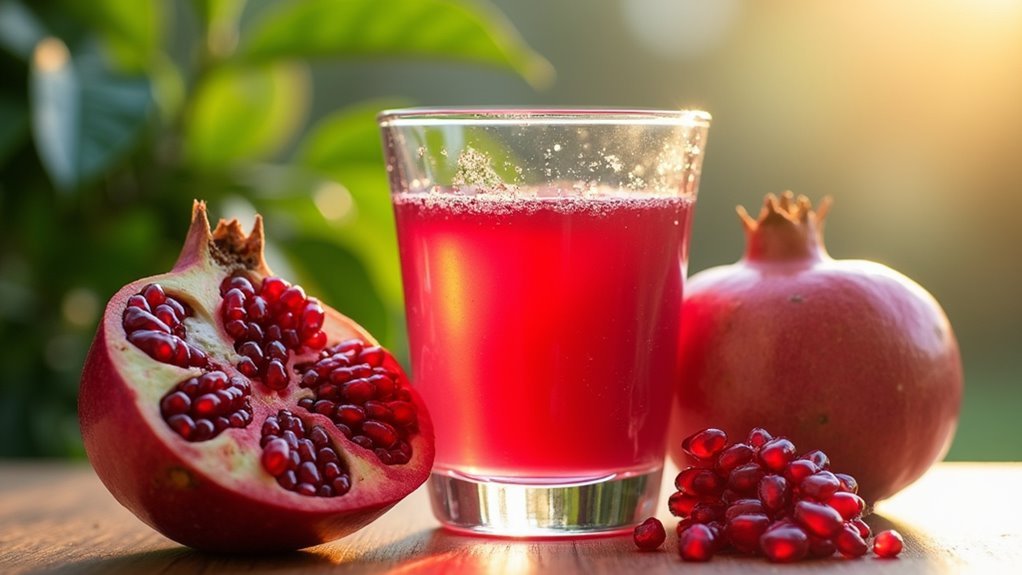
Pomegranate juice boosts your arterial flow through its rich polyphenolic compounds, particularly punicalagins, which increase nitric oxide production by over 20%. This enhanced nitric oxide helps your blood vessels dilate more effectively while the antioxidants protect your endothelial cells from oxidative damage. The juice also prevents LDL cholesterol oxidation and reduces inflammatory markers that contribute to arterial stiffness. These combined mechanisms improve blood vessel responsiveness and can reduce systolic blood pressure by up to 21%, with the science revealing even more remarkable cardiovascular benefits.
The Science Behind Pomegranate’s Cardiovascular Benefits
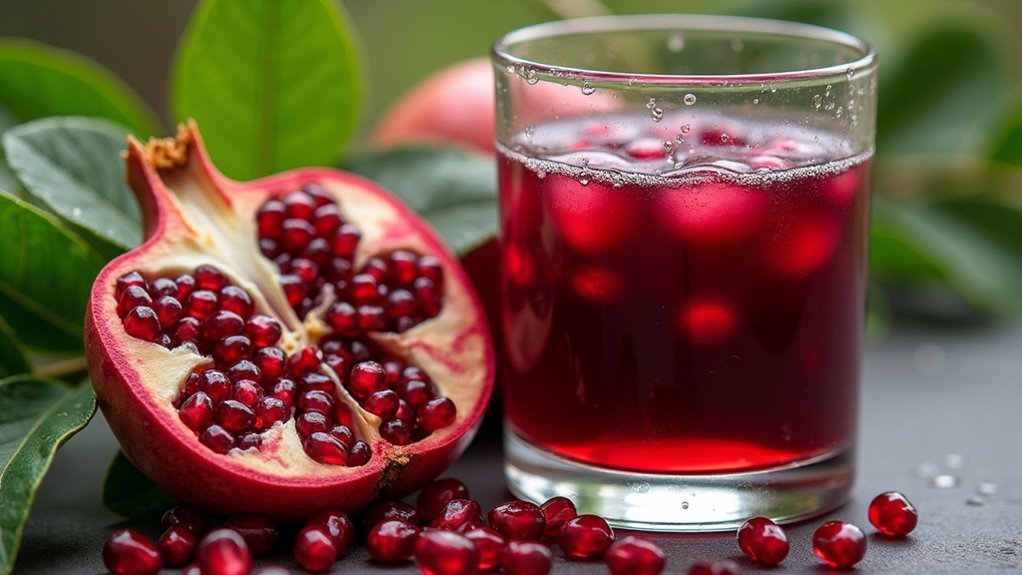
Three key mechanisms drive pomegranate juice’s remarkable cardiovascular benefits, making it one of nature’s most potent heart-protective beverages.
First, you’ll experience enhanced nitric oxide synthesis and activity, which directly improves arterial flow by promoting vascular dilation.
Second, polyphenolic antioxidants combat oxidative stress while preventing LDL cholesterol oxidation, protecting your arteries from damage.
Third, these compounds work together to reduce systolic blood pressure and improve myocardial perfusion.
When you consume pomegranate juice regularly, you’re targeting multiple pathways simultaneously.
The antioxidants don’t just neutralize harmful free radicals—they actively support your body’s natural cardiovascular protection systems.
This multi-faceted approach explains why studies show such impressive results, including decreased carotid artery lesions and improved blood flow to your heart muscle, fundamentally enhancing your overall cardiovascular health.
Antioxidant Powerhouse: Polyphenols and Punicalagins
When you drink pomegranate juice, you’re flooding your system with punicalagins—powerful polyphenols that actively fight the oxidative stress damaging your arteries.
These compounds don’t just neutralize harmful free radicals; they also prevent your LDL cholesterol from becoming oxidized and forming dangerous plaques in your blood vessels.
What’s more, punicalagins boost your body’s production of nitric oxide, the key molecule that signals your arteries to relax and widen for improved blood flow.
Punicalagins Combat Oxidative Stress
Although oxidative stress silently damages your blood vessels daily, punicalagins—the powerhouse polyphenolic compounds found abundantly in pomegranate juice—serve as your body’s frontline defense against this cellular assault.
These remarkable antioxidant properties protect your endothelial cells from free radical damage while simultaneously boosting nitric oxide synthesis and activity. You’ll experience enhanced arterial flow as nitric oxide promotes essential vasodilation throughout your cardiovascular system.
When you consume pomegranate juice regularly, punicalagins effectively prevent LDL oxidation, blocking a primary pathway to atherosclerosis development.
Clinical evidence demonstrates that daily intake increases your total antioxidant activity by 130% while improving myocardial perfusion. This translates into measurably reduced stress-induced ischemia, particularly benefiting those with coronary heart disease through enhanced cardiac blood flow.
LDL Protection Mechanisms
Beyond neutralizing free radicals, pomegranate juice’s polyphenols and punicalagins create a sophisticated defense system that specifically targets LDL cholesterol before it becomes dangerous.
These compounds work through multiple pathways to protect your cardiovascular health.
Here’s how pomegranate juice’s LDL protection mechanisms enhance your arterial function:
- Direct LDL oxidation inhibition – Punicalagins bind to LDL particles, preventing them from becoming oxidized and atherosclerotic.
- Enhanced antioxidant capacity – Daily consumption increases your body’s total antioxidant activity by 130%.
- Improved nitric oxide synthesis – Antioxidant properties boost nitric oxide production, dilating blood vessels for better flow.
- Reduced cardiac stress – Regular intake decreases stress-induced ischemia in heart muscle tissue.
This thorough protection keeps your arteries healthier and blood flowing smoothly.
Nitric Oxide Enhancement
Pomegranate juice’s polyphenols and punicalagins don’t just protect your LDL cholesterol—they actively boost your body’s nitric oxide production, creating a powerful pathway for improved blood flow.
These compounds enhance endothelial function by reducing oxidative stress and inflammation in your blood vessels. When you drink pomegranate juice regularly, you’re providing your cardiovascular system with potent antioxidant properties that directly support nitric oxide synthesis.
Clinical research shows this enhanced nitric oxide production translates to real results—you’ll experience improved arterial flow and potentially see systolic blood pressure drop by 21%.
The antioxidants work continuously to maintain ideal vessel dilation, ensuring your arteries stay flexible and responsive. This creates lasting benefits for your overall cardiovascular health through sustained nitric oxide enhancement.
How Pomegranate Enhances Nitric Oxide Production
When you consume pomegranate juice, its powerful punicalagins and polyphenolic compounds work directly to boost your body’s nitric oxide production—a critical molecule that signals your blood vessels to relax and widen.
Here’s how pomegranate juice enhances nitric oxide for better arterial flow:
- Increases NO synthesis – The polyphenolic compounds stimulate enzymes that produce more nitric oxide in your endothelial cells.
- Protects existing NO – Antioxidants shield nitric oxide molecules from oxidative damage, extending their active lifespan.
- Improves endothelial function – Enhanced cellular activity leads to better blood vessel responsiveness and flexibility.
- Prevents atherosclerosis – Increased nitric oxide inhibits LDL oxidation and reduces plaque formation in arteries.
This enhanced nitric oxide production directly translates to improved cardiovascular health and reduced risk of cardiovascular diseases.
Protecting Against LDL Cholesterol Oxidation

While nitric oxide production plays an essential role in vascular health, pomegranate juice’s protective effects extend to another essential cardiovascular mechanism—preventing LDL oxidation.
When you consume pomegranate juice daily, you’re delivering powerful punicalagins and polyphenolic compounds that shield your LDL cholesterol from oxidative damage. This protection is important because oxidized LDL directly contributes to atherosclerosis development.
Studies show you’ll experience a remarkable 130% increase in antioxidant activity, greatly reducing LDL oxidation levels. This enhanced protection improves your arterial function and vascular health while preventing dangerous plaque buildup in your arteries.
After one year of regular consumption, you can expect a 21% reduction in systolic blood pressure, demonstrating pomegranate juice’s thorough cardiovascular health benefits through LDL protection.
Endothelial Function and Vascular Health
Beyond protecting your cholesterol from oxidative damage, pomegranate juice’s cardiovascular benefits stem from its direct impact on your endothelial cells—the thin layer of cells lining your blood vessels.
This powerful beverage enhances endothelial function through several key mechanisms that promote superior vascular health:
- Nitric oxide boost – Pomegranate juice increases nitric oxide synthesis and activity, enabling better vasodilation and improved blood flow throughout your arteries.
- Oxidative stress protection – Punicalagins shield your endothelial cells from damaging free radicals that cause dysfunction.
- Arterial stiffness reduction – Regular consumption markedly decreases arterial rigidity, improving overall vessel flexibility.
- Inflammatory markers decrease – Studies show reduced IL-6 levels, lowering cardiovascular disease risk and preventing endothelial deterioration.
Clinical Evidence for Arterial Plaque Reduction

Although pomegranate juice’s endothelial benefits create the foundation for arterial health, the most compelling evidence comes from clinical trials demonstrating actual plaque reduction in your arteries.
An Israeli study revealed that regular pomegranate juice consumption led to a remarkable 35% decrease in carotid artery lesions. These clinical studies show you’ll experience a 130% increase in total antioxidant activity, protecting your vascular cells from oxidative damage.
The juice effectively impedes atherosclerosis progression while improving your cardiovascular function through a 21% reduction in systolic blood pressure. If you’re dealing with coronary heart disease, you’ll particularly benefit from the 17% improvement in myocardial perfusion, indicating enhanced blood flow and reduced ischemia throughout your arterial system.
Pomegranate’s Role in Blood Pressure Regulation
You’ll find that pomegranate juice naturally reduces your blood pressure through powerful antioxidant compounds that directly impact your cardiovascular system.
The juice enhances your body’s nitric oxide production, which causes your blood vessels to dilate and improves overall blood flow.
This natural mechanism can lower your systolic blood pressure by an average of 5 mmHg, offering a fruit-based approach to managing hypertension.
Natural Blood Pressure Reduction
When you’re searching for natural ways to manage your blood pressure, pomegranate juice emerges as a powerful ally backed by compelling research. Studies demonstrate that daily consumption reduces systolic blood pressure by an average of 5 mmHg, with participants experiencing a remarkable 21% decrease over one year.
The polyphenolic antioxidants in pomegranate juice work by:
- Inhibiting LDL oxidation to prevent arterial stiffness
- Improving myocardial perfusion for better heart function
- Reducing stress-induced ischemia during physical activity
- Maintaining healthy arterial flow through enhanced circulation
This natural treatment’s effectiveness may even diminish your need for antihypertensive medications.
Nitric Oxide Enhancement
Beyond its direct blood pressure-lowering effects, pomegranate juice orchestrates a sophisticated biochemical process that fundamentally transforms your vascular health through nitric oxide enhancement.
The antioxidants in pomegranate, particularly punicalagins, actively boost nitric oxide synthesis in your endothelial cells. This increased nitric oxide production dilates your blood vessels, dramatically improving arterial flow and regulating blood pressure naturally.
When you consume pomegranate juice regularly, you’re preventing endothelial dysfunction while simultaneously inhibiting LDL cholesterol oxidation. This dual action protects against atherosclerosis development.
Clinical evidence shows you’ll experience significant cardiovascular health improvements, including reduced stress-induced ischemia in coronary heart disease patients. Your enhanced nitric oxide levels create a cascade of vascular benefits that extend far beyond simple blood pressure reduction.
Anti-Inflammatory Effects on Blood Vessels
Since inflammation in blood vessels greatly contributes to cardiovascular disease development, pomegranate juice’s potent anti-inflammatory effects offer considerable protective benefits for your arterial health.
Pomegranate juice’s powerful anti-inflammatory properties provide significant protection against cardiovascular disease by supporting healthy arterial function.
The juice’s punicalagins reduce oxidative stress while decreasing inflammatory markers like IL-6 that damage your cardiovascular system.
Here’s how pomegranate juice combats blood vessel inflammation:
- Reduces inflammatory markers – Daily consumption noticeably decreases IL-6 levels associated with heart disease
- Lowers blood pressure – Regular intake achieves a 21% reduction in systolic pressure
- Inhibits adhesion molecules – Prevents ICAM-1 and VCAM-1 expression that leads to atherosclerosis
- Enhances nitric oxide production – Improves blood flow while reducing vessel inflammation
These combined anti-inflammatory mechanisms create ideal conditions for healthy arterial function and improved circulation throughout your body.
Reversing Atherosclerosis Through Natural Compounds
While traditional medical approaches focus on managing atherosclerosis symptoms, pomegranate juice’s natural compounds actually work to reverse the underlying plaque buildup in your arteries. The juice’s powerful antioxidant properties prevent LDL cholesterol oxidation, which triggers atherosclerosis development.
Clinical research demonstrates that daily pomegranate juice consumption reduces carotid artery lesions by up to 35%, showing genuine reversal potential.
Your cardiovascular system benefits from enhanced nitric oxide production, which improves blood vessel dilation and arterial flow. This natural compound counters oxidative stress that damages your vascular health.
Long-term consumption delivers additional benefits: 21% reduction in systolic blood pressure and 17% improvement in myocardial perfusion for coronary heart disease patients. These measurable improvements prove pomegranate juice doesn’t just prevent further damage—it actively reverses existing atherosclerotic changes.
Optimal Dosage and Consumption Methods
Research establishes 240 mL as the ideal daily dosage for cardiovascular protection, providing measurable improvements in arterial flow without adverse effects. This preferred dosage delivers concentrated polyphenols and antioxidants that enhance cardiovascular function when consumed consistently.
For maximum benefits, follow these consumption guidelines:
- Choose fresh over processed varieties to preserve higher antioxidant levels.
- Maintain regular consumption for at least three months to reduce stress-induced ischemia.
- Combine with berries or leafy greens to amplify cardiovascular effects.
- Monitor blood pressure regularly, as pomegranate juice can lower systolic pressure by 5 mmHg.
Regular consumption of this therapeutic dosage strengthens arterial walls and improves blood flow patterns.
You’ll notice enhanced circulation as polyphenols work to restore vascular health over time.
Comparing Pomegranate to Other Heart-Healthy Foods
When you’re choosing heart-healthy foods, you’ll find that pomegranate juice stands out with its exceptional antioxidant power, increasing total antioxidant activity by 130% compared to other antioxidant-rich options like berries and citrus fruits.
You’ll get unique nitric oxide benefits from pomegranate’s punicalagins and polyphenols that enhance arterial dilation and blood flow more effectively than many traditional heart-healthy choices.
While fatty fish provides omega-3s and leafy greens offer nitrates, you’re getting something different with pomegranate juice—it specifically inhibits LDL oxidation and reduces stress-induced heart complications that other foods can’t match.
Antioxidant Power Rankings
Among antioxidant-rich foods that support cardiovascular health, pomegranate juice consistently ranks at the top due to its exceptional concentration of punicalagins—compounds that outperform many other heart-healthy options in protecting your cell membranes and reducing oxidative stress.
Here’s how pomegranate juice’s antioxidant effects stack up against other foods:
- Blood vessel dilation: Enhances nitric oxide production more effectively than oranges or berries
- Atherosclerosis prevention: Reduces carotid artery lesions by 35%, outperforming antioxidant-rich tomatoes
- Total antioxidant activity: Increases by 130% with regular consumption, exceeding other antioxidant sources
- Anti-inflammatory effects: Demonstrates 50% reduction in amyloid beta accumulation, providing broader systemic benefits
This superior performance directly translates to better arterial health outcomes compared to conventional heart-healthy alternatives.
Nitric Oxide Benefits
Beyond its impressive antioxidant rankings, pomegranate juice delivers superior nitric oxide benefits that directly enhance your arterial function compared to other heart-healthy foods.
You’ll experience over 20% increased nitric oxide levels with daily consumption, surpassing cardiovascular benefits from citrus fruits. The concentrated polyphenols, particularly punicalagins, protect nitric oxide from oxidative degradation more effectively than other antioxidant-rich options.
Clinical trials demonstrate pomegranate juice’s remarkable impact on your vascular system.
You’ll see a 35% reduction in carotid artery lesions, indicating improved arterial flow and function. Unlike leafy greens that also boost nitric oxide production, pomegranate juice uniquely inhibits LDL oxidation, providing dual protection against atherosclerosis.
This combination creates superior cardiovascular benefits that promote healthier arteries and enhanced blood vessel dilation.
Frequently Asked Questions
What Does Pomegranate Juice Do for Arteries?
Pomegranate juice dilates your blood vessels by boosting nitric oxide production. It’ll reduce arterial damage through antioxidants, lower your blood pressure, decrease atherosclerosis lesions, and improve blood flow to your heart muscle.
How Does Pomegranate Increase Blood Flow?
Pomegranate increases your blood flow by delivering powerful antioxidants called punicalagins that boost nitric oxide production in your arteries. This enhances vasodilation, reduces arterial stiffness, and decreases plaque buildup throughout your circulatory system.
How Much Pomegranate Does It Take to Unclog Arteries?
You’ll need 240 ml of pomegranate juice daily to see arterial benefits. Clinical studies show this amount can reduce carotid artery lesions by 35% after one year of consistent consumption.
What Is the Best Juice to Increase Blood Flow?
You’ll find pomegranate juice is the best choice for increasing blood flow. It’s packed with punicalagins that boost nitric oxide production, improve arterial dilation, and reduce blood pressure more effectively than other juices.


