

When choosing pomegranate juice for heart health, you’ll want to look for “100% juice” labels without added sugars or artificial ingredients. Prioritize cold-pressed varieties over pasteurized options since they retain more heart-protective polyphenols and antioxidants. Check that pomegranate juice is the first ingredient, not a blend with other fruits. Organic options typically offer higher antioxidant levels and fewer pesticides. Stick to 2-4 ounces daily to manage natural sugar intake while maximizing cardiovascular benefits. Continue exploring to discover specific brand certifications and processing methods that optimize therapeutic value.
Understanding Pomegranate Juice Labels and Ingredients
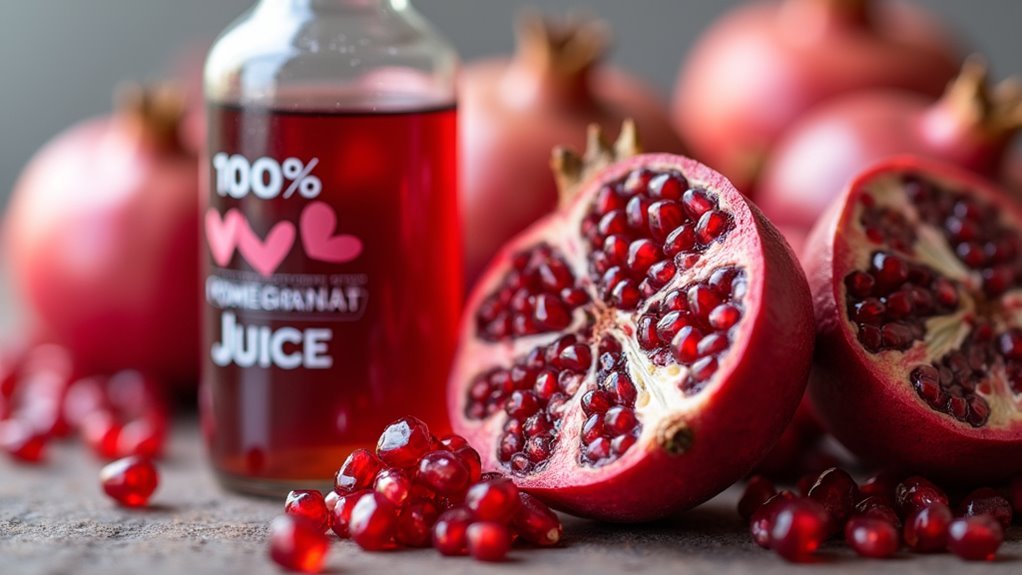
How can you guarantee you’re selecting the highest quality pomegranate juice for maximum heart health benefits? Start by examining the front label for “100% juice” designation, ensuring you’re getting pure pomegranate juice without unwanted fillers.
Scrutinize the ingredient list carefully—you’ll want to avoid products containing artificial colors, flavors, or preservatives that diminish health benefits. Seek juices specifically highlighting high polyphenol content, as these powerful antioxidants directly support heart health.
Prioritize pomegranate juices with high polyphenol levels and clean ingredient lists free from artificial additives for optimal heart-protective benefits.
Monitor sugar content closely; typical servings contain around 30 grams of natural sugars. Consider organic options, which often retain superior antioxidants and minimize pesticide exposure.
These label-reading strategies help you identify premium pomegranate juice that maximizes cardiovascular protection.
Identifying 100% Pure Pomegranate Juice vs. Blends
Why do many pomegranate products fall short of delivering their promised heart benefits? The answer lies in distinguishing between 100% pomegranate juice and diluted alternatives.
When shopping, scrutinize the ingredient list carefully. Pure juice should contain only pomegranate juice, while a pomegranate blend typically includes other fruit juices and sweeteners that compromise antioxidants and health benefits.
Choose products labeled “not from concentrate” to maximize nutrient retention. Avoid anything marked “pomegranate-flavored,” as these contain minimal actual pomegranate.
Consider your serving size of four ounces daily when evaluating calorie content and sugar content. Remember, authentic pure juice delivers concentrated antioxidants that support heart health, whereas blended versions dilute these beneficial compounds with unnecessary additives.
Evaluating Polyphenol and Antioxidant Content
When you’re evaluating pomegranate juice for heart health, you’ll need to go beyond basic nutrition labels to assess the actual polyphenol and antioxidant levels that deliver cardiovascular benefits.
The processing methods used can dramatically affect these beneficial compounds, so understanding how the juice was made matters as much as what’s in it.
You’ll also want to distinguish between concentrated formulations and diluted versions, since concentration directly impacts the potency of heart-protective antioxidants.
Reading Nutrition Labels
While shopping for pomegranate juice, you’ll want to become a savvy label reader to identify products that deliver genuine heart health benefits.
Focus on these key elements when examining the nutrition label:
- Verify “100% juice” labeling – This guarantees you’re avoiding added sugars and artificial ingredients that can diminish the natural antioxidant properties.
- Check polyphenol content and calories – Look for products containing at least 135 calories per serving, indicating concentrated fruit content with higher polyphenol levels for maximum heart health benefits.
- Examine serving size and dietary fiber – The recommended 4-ounce serving should contain some fiber content, as low fiber levels suggest over-processing that strips away beneficial nutrients from whole pomegranates.
Processing Methods Matter
Beyond the nutrition label, the processing method used to create pomegranate juice greatly impacts its polyphenol and antioxidant content—the very compounds responsible for heart health benefits. Cold-pressed pomegranate juice retains considerably more beneficial nutrients than pasteurized varieties, which lose potency during heat treatment.
| Processing Method | Antioxidant Retention | Best Choice |
|---|---|---|
| Cold-Pressed | High | ✓ |
| Pasteurized | Moderate | – |
| Heat-Processed | Low | ✗ |
When selecting 100% pure juice, prioritize products specifying high punicalagins levels on labels. Juice made from whole pomegranates, including seeds, delivers superior antioxidant profiles compared to aril-only varieties. Organic certification guarantees you’re avoiding pesticides that can compromise the juice’s health benefits. These processing methods directly influence the polyphenols that make pomegranate juice effective for heart health.
Concentration Vs Dilution
Processing quality alone won’t guarantee maximum heart health benefits if you choose a diluted product over a concentrated one. When selecting pomegranate juice, you’re making a critical decision that directly impacts polyphenols and antioxidant content.
Concentrated juice delivers markedly higher levels of ellagitannins and other heart-protective compounds compared to diluted versions.
Here’s what you should prioritize:
- Choose 100% pure juice – Contains maximum polyphenol density without added fillers
- Look for high pomegranate extract concentration – Studies link higher polyphenol levels to enhanced cardiovascular benefits
- Avoid added sugars and diluting ingredients – These reduce overall antioxidant content
Regular consumption of concentrated pomegranate juice (about 4 ounces daily) effectively lowers systolic blood pressure and improves lipid profiles, delivering three times the antioxidant capacity of green tea.
Assessing Sugar Content and Natural vs. Added Sweeteners
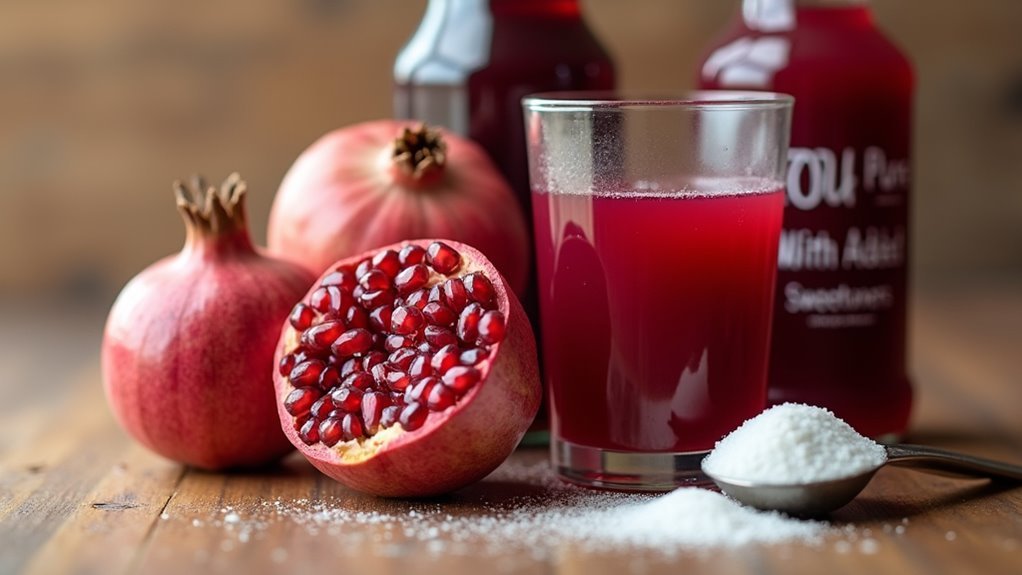
When selecting pomegranate juice for heart health, you’ll need to scrutinize the sugar content and distinguish between natural and added sweeteners.
Choose 100% pure juice without added sugars to maximize benefits while avoiding unnecessary calories. An 8-ounce serving contains approximately 135 calories and 30 grams of natural sugars.
Many commercial varieties contain high fructose corn syrup or cane sugar, which greatly increases sugar content and negates heart health benefits. Always examine the ingredient list to verify pomegranate juice is the primary component without artificial additives.
The American Heart Association advises caution with fruit juices due to their sugar levels. Practice moderation by limiting intake to 2-3 ounces daily, especially if you’re managing blood sugar levels.
Choosing Between Organic and Conventional Options
When selecting pomegranate juice, you’ll face the choice between organic and conventional options, each with distinct considerations for pesticide residue levels that could impact your health goals.
You should compare the nutrient content between these varieties, as organic options may contain higher antioxidant concentrations due to quality-focused farming practices.
Consider whether the price difference justifies the potential benefits, weighing your budget against factors like reduced chemical exposure and environmental sustainability.
Pesticide Residue Levels
Although conventional pomegranate juice offers heart health benefits, you’ll face a trade-off between cost and pesticide exposure when making your selection.
Research confirms that organic produce contains considerably lower pesticide residues than conventional alternatives, making it the safer choice for health-conscious consumers concerned about chemical exposure.
Consider these key factors when evaluating pesticide residue levels:
- USDA findings show organic pomegranate juice dramatically reduces harmful residue exposure compared to conventional options.
- EWG research identifies pomegranates as fruits that may carry concerning pesticide residues from conventional farming.
- Health studies link certain pesticides to endocrine disruption and chronic health issues.
When shopping, look for organic certification to guarantee your pomegranate juice supports both heart health and overall wellness while helping you reduce risks from chemical contamination.
Nutrient Content Comparison
The key distinction lies in antioxidant levels—studies suggest organic pomegranate juice may contain higher concentrations of polyphenols, the compounds responsible for cardiovascular protection.
However, both organic and conventional varieties provide substantial health benefits through their antioxidant properties.
Your best strategy focuses on selecting 100% juice products regardless of production method. This guarantees maximum nutrient density without added sugars or preservatives that could compromise heart health benefits.
The label matters more than organic certification for ideal pomegranate juice selection.
Price Versus Benefits
Budget considerations often drive purchasing decisions, but organic pomegranate juice typically costs 30-50% more than conventional varieties.
Despite the price difference, both options deliver significant heart health benefits through their antioxidants and polyphenols content.
Here’s how to balance cost with nutritional value:
- Compare price per ounce – Calculate the actual cost per serving to determine the best value for your budget.
- Check antioxidant levels – Look for labels showing polyphenol content, as organic pomegranate juice may contain higher concentrations due to reduced pesticide exposure.
- Prioritize “100% juice” labels – Both organic and conventional options can lower blood pressure when they’re pure juice without added sugars.
The 2017 review confirms that regular consumption of either type supports cardiovascular health, making conventional pomegranate juice an affordable choice that doesn’t compromise your nutritional profile goals.
Processing Methods That Preserve Heart-Healthy Compounds
When selecting pomegranate juice for cardiovascular benefits, you’ll want to prioritize products that use processing methods designed to preserve their natural heart-protective compounds.
Cold-pressed processing methods are your best choice, as they retain more antioxidants like polyphenols and flavonoids essential for heart health. Look for pure juice labeled “100% pure” without added sugars or artificial ingredients.
Choose products containing whole fruit extracts or arils, which preserve natural compounds that help lower blood pressure and reduce inflammation.
Organic pomegranate juice offers superior benefits, containing fewer pesticides and higher nutrient levels than conventional options.
Avoid pasteurized varieties when possible, since pasteurization reduces heart-healthy compounds and antioxidants found in fresh juice, diminishing the cardiovascular benefits you’re seeking.
Reading Research-Backed Brands and Quality Certifications
Since reputable brands invest in clinical studies to validate their products’ cardiovascular health benefits, you’ll want to prioritize pomegranate juice that references specific research or clinical trials on their packaging.
Research-backed brands often display quality certifications that guarantee you’re getting pure juice without synthetic additives.
Quality certifications from research-backed brands ensure you receive pure pomegranate juice free from synthetic additives and unnecessary fillers.
When evaluating brands, look for these key indicators:
- USDA Organic seal – Confirms the product meets strict agricultural standards and contains no synthetic pesticides or fertilizers
- High antioxidant content claims – Verified brands highlight their polyphenol levels, which directly support cardiovascular health
- Third-party testing verification – Independent laboratory testing validates safety, purity, and accurate nutritional information
Always check serving sizes and nutritional information, as some manufacturers dilute their products with fillers, reducing the health benefits you’re seeking.
Frequently Asked Questions
How Much Pomegranate Juice Should I Drink Daily for Heart Health?
You should drink about 4 ounces of pomegranate juice daily for heart health. If you’re managing blood sugar, limit intake to 2-3 ounces and choose pure juice without added sugars.
Is Bottled Pomegranate Juice as Good as Fresh?
You’ll get similar heart benefits from bottled pomegranate juice if you choose 100% pure varieties without added sugars. However, fresh juice contains more fiber and potentially higher nutrient levels overall.
Is POM Brand POMegranate Juice Good for You?
POM brand pomegranate juice can benefit your heart health with its antioxidants and potential blood pressure reduction. However, you’ll need to monitor its high sugar content and consult your doctor about medication interactions.
What Drink Opens up Arteries, Pomegranate Juice?
Pomegranate juice can help open your arteries through its antioxidants and polyphenols, which reduce inflammation and improve endothelial function. You’ll get better results with 100% pure juice without added sugars.


