

You’ll benefit from choosing premium MCT-rich coconut oil brands because they contain 54-62% medium-chain triglycerides compared to only 15-20% in standard varieties. These brands like Nutiva, Viva Naturals, and Garden of Life use cold-press extraction and fractionation to preserve beneficial caprylic and capric acids for rapid energy conversion. They’re third-party tested for purity, sourced sustainably, and offer superior bioavailability for ketogenic diets and cognitive support applications that’ll maximize your investment.
Understanding MCT Content in Premium Coconut Oil Brands
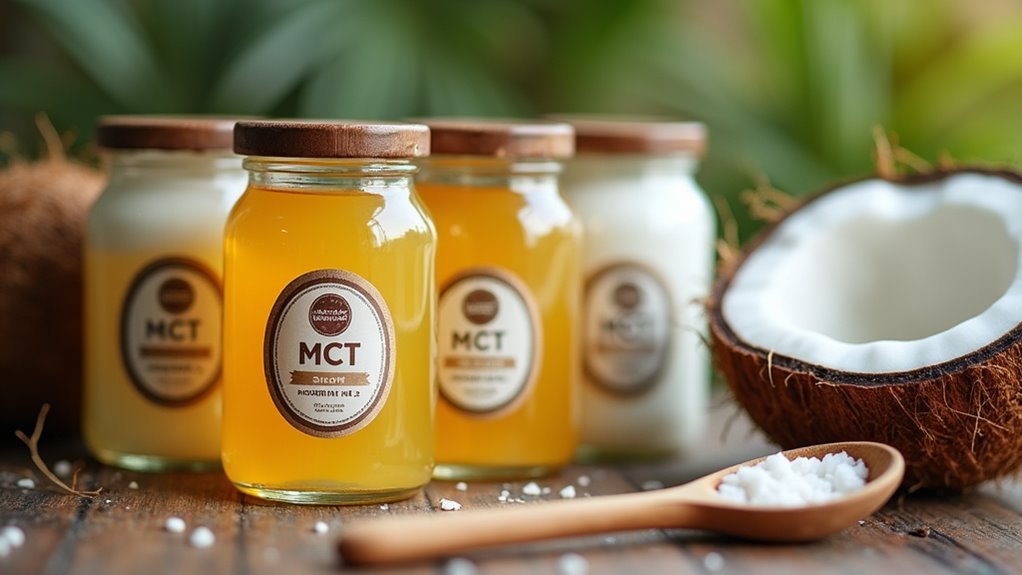
When you’re shopping for coconut oil with maximum MCT benefits, premium brands typically deliver 54% to 62% MCT content, concentrating primarily on caprylic (C8) and capric (C10) acids that your body converts rapidly into energy and ketones.
These higher concentration levels distinguish premium coconut oil from standard varieties that contain considerably less MCTs.
Premium coconut oil brands contain significantly higher MCT concentrations compared to standard varieties, delivering superior health benefits.
The extraction process used by reputable manufacturers enhances MCT purity while preserving beneficial compounds.
Through rigorous quality testing, these brands guarantee minimal contaminants and consistent MCT levels. This reliability becomes essential when you’re targeting specific health benefits like weight management and cognitive function.
Cold-pressing and minimal refining techniques help retain both caprylic acid and capric acid concentrations, giving you dependable MCT sources that support your wellness goals effectively.
Top Coconut Oil Brands With Highest MCT Concentrations
Since premium MCT content sets exceptional brands apart, Nutiva stands out with its cold-pressed coconut oil delivering approximately 54% MCT concentration, providing you with substantial amounts of caprylic and capric acids for rapid energy conversion.
Viva Naturals matches this performance with similar medium-chain triglycerides levels.
Garden of Life’s organic option excels through high lauric acid content, delivering antimicrobial properties alongside energy benefits.
You’ll find Dr. Bronner’s offers comparable MCT concentration while maintaining sustainable sourcing practices.
For specialized applications, Carrington Farms provides dedicated MCT oil extracted from coconut oil, maximizing caprylic and capric acids for quick energy and cognitive support.
Thai Kitchen bridges culinary and health needs, offering significant MCT content in cooking oils that deliver both flavor and health benefits.
Quality Processing Methods That Preserve MCT Benefits

You’ll want to prioritize brands that use cold-press extraction methods, as they preserve MCTs without heat damage that can degrade beneficial compounds.
The fractionation process becomes essential when you’re seeking maximum MCT concentration, allowing manufacturers to selectively isolate caprylic and capric acids for enhanced potency.
Heat-free processing offers you the advantage of maintaining the oil’s natural properties while ensuring the MCTs remain intact and bioavailable.
Cold-Press Extraction Benefits
Although many coconut oil extraction methods exist, cold-press extraction stands out as the gold standard for preserving MCT integrity and nutritional value.
When you choose cold-press extraction coconut oil, you’re ensuring maximum retention of medium-chain triglycerides, particularly caprylic acid and capric acid essential for rapid energy production and cognitive function.
This mechanical pressing process doesn’t use heat, protecting the natural flavor and aroma while preserving antioxidants and vitamins that deliver significant health benefits.
You’ll appreciate that cold-press extraction eliminates harmful solvents and chemicals, making it safer for consumption.
The nutritional benefits remain intact, giving you higher MCT concentrations than heat-processed alternatives.
Many brands emphasizing cold-press extraction also follow sustainable practices, ensuring ethical sourcing without compromising quality or your health goals.
Fractionation Process Preservation
Beyond mechanical extraction methods, fractionation represents another advanced processing technique that concentrates medium-chain triglycerides while maintaining their therapeutic properties.
This coconut oil processing heats the oil to separate MCTs based on differing melting points, effectively concentrating beneficial fatty acids. You’ll find fractionated oils rich in caprylic acid and capric acid, which your body metabolizes quickly for energy production and cognitive health benefits.
Quality brands employ cold-pressing or steam distillation during the fractionation process to preserve nutritional quality without introducing harmful chemicals. These methods guarantee maximum purity by minimizing lauric acid content, which behaves like long-chain fats.
Advanced fractionation techniques deliver concentrated MCT oils that provide superior ketogenic potential and efficient energy conversion for peak health benefits.
Heat-Free Processing Advantages
When manufacturers employ heat-free processing methods like cold pressing, they preserve the delicate molecular structure of MCTs that high temperatures would otherwise compromise.
You’ll find that cold pressing maintains higher concentrations of caprylic acid and capric acid, delivering faster energy conversion and enhanced cognitive benefits. This gentle extraction preserves natural antioxidants and phytonutrients that boost coconut oil’s antimicrobial properties.
Heat-free processing prevents harmful byproduct formation, ensuring you receive a cleaner product without chemical alterations. You’re getting minimally processed oil that retains its original nutritional profile.
Brands emphasizing these methods often prioritize sustainability, appealing to health-conscious consumers who value purity. When you choose heat-free processed coconut oil, you’re maximizing MCTs’ health benefits while supporting environmentally responsible manufacturing practices.
Organic vs. Conventional MCT-Rich Coconut Oil Options
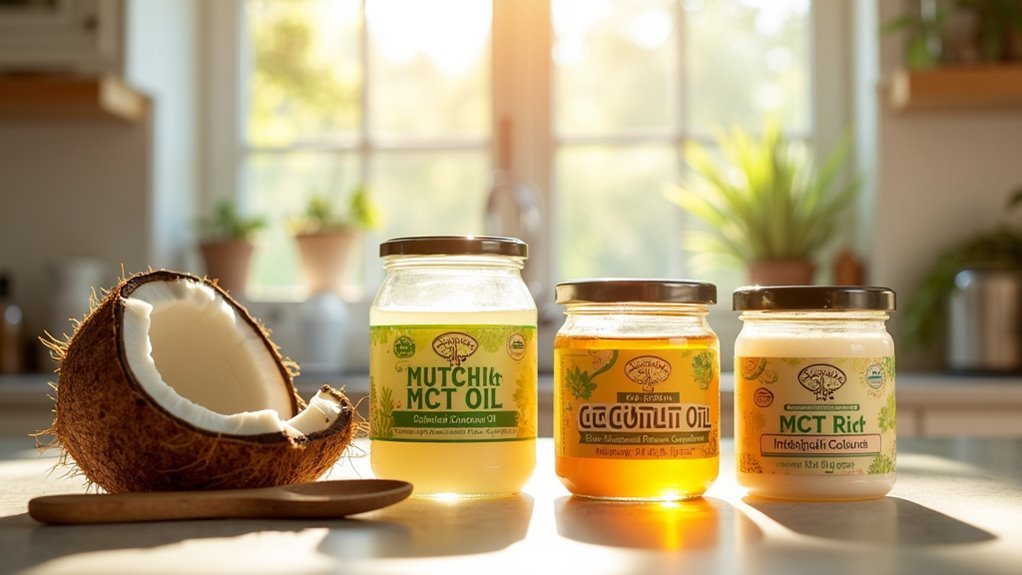
As you explore MCT-rich coconut oil options, you’ll encounter a fundamental choice between organic and conventional varieties that greatly impacts both product quality and your health outcomes.
Organic MCT-rich coconut oil delivers superior health benefits through minimal processing that preserves natural nutrients and antioxidants, while conventional options often undergo extensive refinement that diminishes their therapeutic value.
Consider these key differences when choosing:
- Purity: Organic varieties contain no synthetic pesticide or fertilizer residues.
- Processing: Minimal processing retains more beneficial compounds in organic oils.
- Ethics: Sustainable sourcing supports local farmers through ethical agricultural methods.
- Investment: Higher price reflects increased quality standards and certification costs.
While conventional options cost less, organic MCT-rich coconut oil provides cleaner, more potent benefits worth the investment.
Price Comparison and Value Analysis of Leading Brands
How much should you expect to pay for quality MCT-rich coconut oil, and which brands deliver the best value for your investment?
When conducting a price comparison, MCT oil brands typically range from $14.99 to $36.99, making cost-effectiveness essential for your consumer choices.
You’ll find serving size notably impacts value analysis, with prices ranging from $0.50 to $1.00+ per 15 mL serving.
Bulk buying offers substantial savings if you’re a regular user, while brands emphasizing additional health benefits like enhanced vitamin absorption command higher prices.
Don’t overlook discounts and promotions that can dramatically improve your coconut oil investment.
Monitor deals regularly to maximize value while maintaining quality standards for ideal health benefits.
Third-Party Testing and Purity Standards for MCT Coconut Oils
Third-party testing serves as your most reliable safeguard against substandard MCT coconut oils flooding today’s supplement market.
When you’re evaluating MCT oil brands, you’ll want to prioritize those that submit their products to independent laboratories for thorough purity standards verification.
Look for brands that test these critical factors:
- Fatty acid composition – Confirming actual MCT content matches label claims
- Microbial contamination – Ensuring product safety from harmful bacteria
- Heavy metal levels – Protecting against toxic contaminants
- Source verification – Validating use of high-quality sources like organic coconut
Reputable coconut oil manufacturers display these certifications prominently and often provide batch testing results online.
You’ll find that brands adhering to strict quality protocols consistently source from organic coconut, delivering safer, more effective supplements without harmful additives or fillers.
Best Uses and Applications for Different MCT Coconut Oil Brands
When choosing between MCT-rich coconut oil brands, you’ll discover that specific applications determine which product delivers ideal results for your health and performance goals.
Brands with higher caprylic acid and capric acid concentrations excel as energy sources for ketogenic diets, particularly when added to coffee or smoothies for sustained mental clarity. These fractionation process products boost metabolism more effectively than traditional coconut oils.
MCT oils with concentrated caprylic and capric acids provide superior ketogenic fuel and metabolic enhancement compared to standard coconut oil.
For cooking applications, look for MCT-rich coconut oil that maintains stability at medium temperatures while enhancing absorption of fat-soluble vitamins in your meals.
Weight management benefits maximize when you incorporate these oils into salad dressings or pre-workout beverages. Choose brands specifically formulated for supplementation versus cooking, as each undergoes different processing methods to optimize their intended nutritional applications.
Frequently Asked Questions
How to Choose the Best MCT Oil?
You’ll want to prioritize MCT oils with high C8 and C10 concentrations from organic sources. Look for third-party testing, cold-pressed extraction methods, and dark glass packaging to guarantee you’re getting quality.
What Is the Downside of MCT Oil?
You’ll experience digestive issues like nausea and diarrhea from high doses. MCT oil’s caloric density causes weight gain, while excessive saturated fats may raise cholesterol levels and stimulate hunger hormones.
Which Is Better, C8 or C10 MCT Oil?
C8 MCT oil’s better if you’re seeking rapid energy and enhanced cognitive function. It converts to ketones faster than C10, making it ideal for ketogenic diets and immediate brain fuel.
Should I Use Coconut Oil or MCT Oil?
You’ll get faster ketosis and immediate energy with MCT oil since it’s 100% MCTs. However, if you’re cooking at high heat, coconut oil’s better with its higher smoke point.


