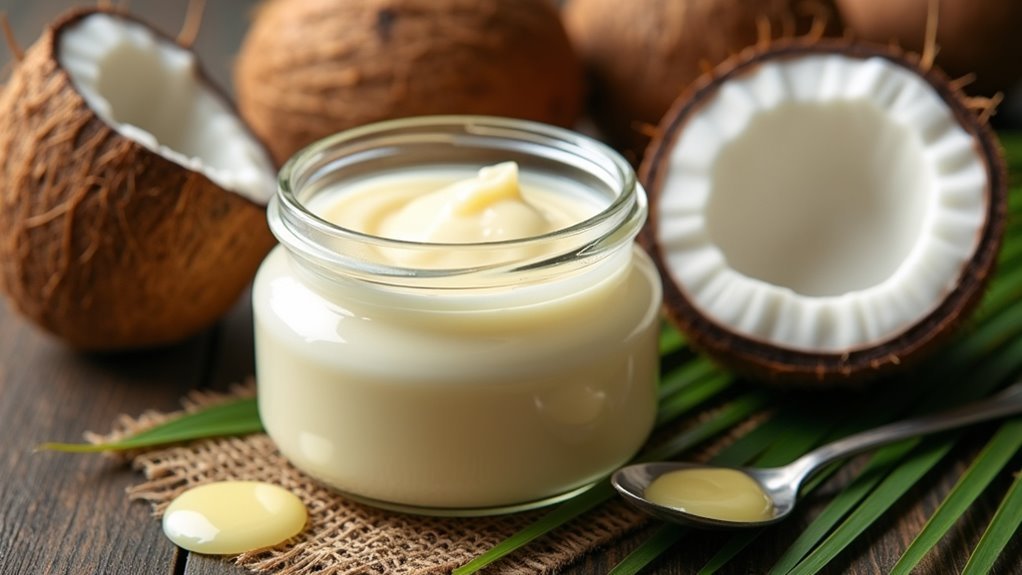
You’ll get considerably higher concentrations of medium-chain triglycerides when you choose organic coconut oil, which contains up to 54% MCTs compared to conventional varieties that lose potency through chemical processing. Organic certification guarantees chemical-free extraction methods like cold pressing that preserve lauric acid levels at 50-60%, maintaining the oil’s antimicrobial properties and metabolic benefits. You won’t encounter synthetic pesticide residues that can interfere with nutrient absorption, making organic coconut oil a cleaner, more effective MCT source for ideal health outcomes.
Understanding Medium-Chain Triglycerides in Organic Coconut Oil
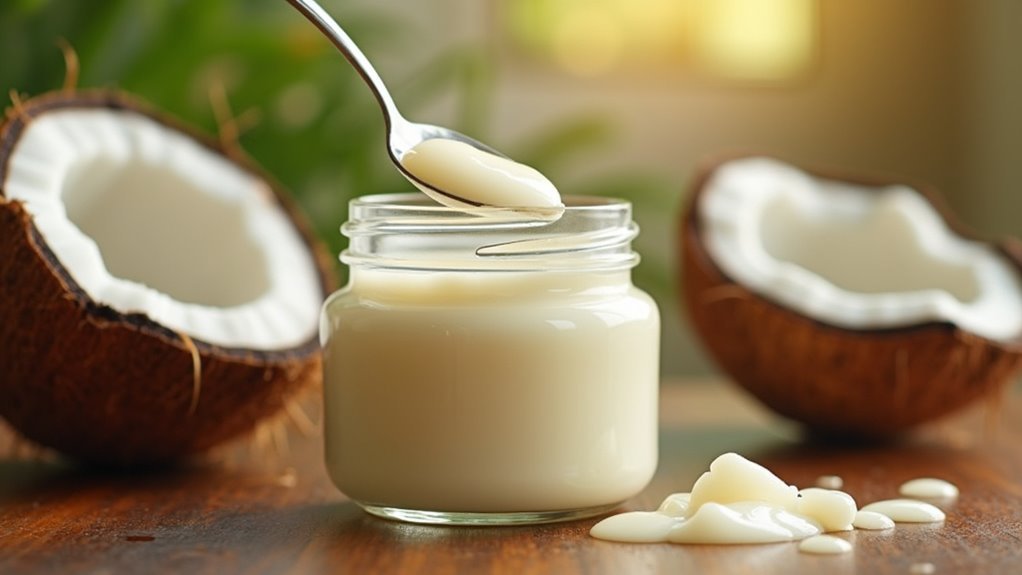
When you’re looking to harness the power of medium-chain triglycerides, organic coconut oil stands out as one of nature’s richest sources, containing approximately 54% MCTs that your body can quickly convert into energy.
Unlike long-chain triglycerides found in most dietary fats, these MCTs undergo rapid energy conversion, bypassing typical fat storage processes. The primary MCT in organic coconut oil is lauric acid, which comprises the majority of its medium-chain triglycerides content.
MCTs in organic coconut oil convert rapidly to energy while skipping fat storage, with lauric acid as the dominant medium-chain triglyceride.
You’ll also find caprylic and capric acids, both highly ketogenic compounds that support cognitive function. These MCTs offer significant health benefits, including enhanced weight management through increased satiety and anti-inflammatory properties that support overall wellness.
Organic coconut oil retains these beneficial compounds naturally.
The Organic Certification Process for Coconut Oil Production
When you’re shopping for organic coconut oil, you’ll encounter products that have undergone rigorous certification processes to meet strict organic standards requirements.
These standards prohibit the use of synthetic pesticides, fertilizers, and other non-organic substances throughout cultivation and processing.
You can trust that certification body verification involves regular inspections and audits to guarantee producers maintain compliance with these organic regulations.
Organic Standards Requirements
The certification process for organic coconut oil involves strict adherence to standards that prohibit synthetic pesticides, herbicides, and genetically modified organisms throughout cultivation and processing.
When you’re selecting organic coconut oil, you’ll benefit from products that meet these rigorous requirements ensuring freedom from harmful chemicals.
Organic certification mandates sustainable agricultural practices that producers must implement:
- Crop rotation systems that maintain soil health and promote biodiversity
- Natural fertilizer usage instead of synthetic alternatives
- Comprehensive traceability throughout the entire supply chain
Coconuts grown in tropical regions following organic farming principles undergo thorough inspections of farms and processing facilities.
This certification guarantees that your organic coconut oil maintains its integrity from cultivation to consumption, delivering pure MCTs without chemical contamination or additives.
Certification Body Verification
How do certification bodies guarantee your coconut oil meets authentic organic standards?
Certification bodies like USDA and EU Organic conduct regular inspections and audits of coconut farms to verify compliance with organic farming practices.
They’ll examine your producer’s processing methods to affirm they avoid synthetic pesticides, herbicides, and GMOs while maintaining environmentally sustainable practices.
These organizations require coconut oil processing in certified organic facilities where cross-contamination with non-organic products is strictly controlled.
You’ll find verification through rigorous documentation review and on-site evaluations of farming operations.
When you see organic certification labels on coconut oil products, you’re getting assurance that independent third-party verification has confirmed the product quality meets stringent organic standards throughout the entire production chain.
Natural MCT Content Comparison Between Organic and Conventional Coconut Oil
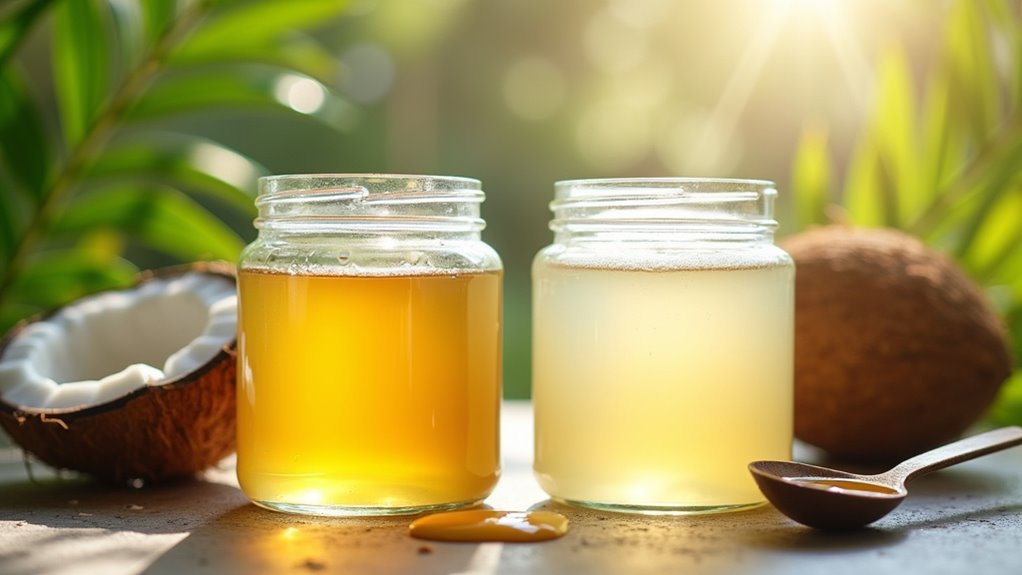
When you’re comparing organic and conventional coconut oil, you’ll find that organic processing methods preserve higher concentrations of naturally occurring MCTs through gentler extraction techniques.
You’ll also notice that organic varieties maintain superior MCT concentration levels, typically around 54%, while avoiding the chemical residues that can interfere with nutrient absorption.
These differences stem from organic coconut oil’s commitment to chemical-free farming and cold-press extraction methods that protect the oil’s natural MCT profile.
Organic Processing Methods
While both organic and conventional coconut oils contain medium-chain triglycerides, organic processing methods preserve remarkably higher levels of these beneficial compounds.
When you choose organic coconut oil, you’re getting a product that undergoes cold-pressing methods which maintain the natural integrity of lauric acid and other MCTs. This careful processing greatly impacts nutritional quality compared to conventional alternatives.
Organic processing methods offer three key advantages:
- Cold-pressing preservation – Maintains heat-sensitive MCTs and nutrients
- Chemical-free extraction – Eliminates solvents that can degrade beneficial compounds
- Enhanced antioxidant retention – Preserves natural antioxidants that support MCT absorption
You’ll find that these organic processing methods result in higher antioxidant content, delivering superior health benefits while ensuring you receive the maximum potency of medium-chain triglycerides in their most natural form.
MCT Concentration Levels
Understanding the actual MCT concentration levels reveals significant differences between organic and conventional coconut oil varieties.
You’ll find that organic coconut oil contains approximately 54% MCTs, with lauric acid comprising the largest portion and delivering antimicrobial health benefits. The remaining MCTs include caprylic acid and capric acid, which your body metabolizes more rapidly for energy production.
When you choose organic coconut oil, you’re getting a superior nutritional profile due to minimal processing methods that preserve natural compounds.
Unlike conventional varieties, organic processing doesn’t introduce synthetic pesticides or fertilizers that can compromise MCT quality. This cleaner production approach guarantees you receive higher-quality MCTs with enhanced bioavailability.
For peak health benefits, organic coconut oil provides the most concentrated and pure MCT content available naturally.
Chemical Residue Differences
Two critical factors distinguish organic coconut oil from conventional varieties: chemical residue levels and the preservation of natural MCT integrity.
When you choose organic coconut oil, you’re avoiding synthetic pesticides and fertilizers that can compromise your health profile. While both organic and conventional oils maintain approximately 54% MCT content, the extraction process for organic varieties preserves beneficial compounds more effectively.
The absence of chemical residues in organic coconut oil offers three key advantages:
- Enhanced metabolic effectiveness of MCTs without interference from agricultural chemicals
- Higher retention of antioxidants and phenolic compounds that support overall health
- Cleaner dietary choice free from contaminants that can diminish MCT benefits
You’ll receive superior quality MCTs when selecting organic coconut oil over conventional alternatives.
Enhanced Bioavailability of MCTs in Minimally Processed Organic Oil
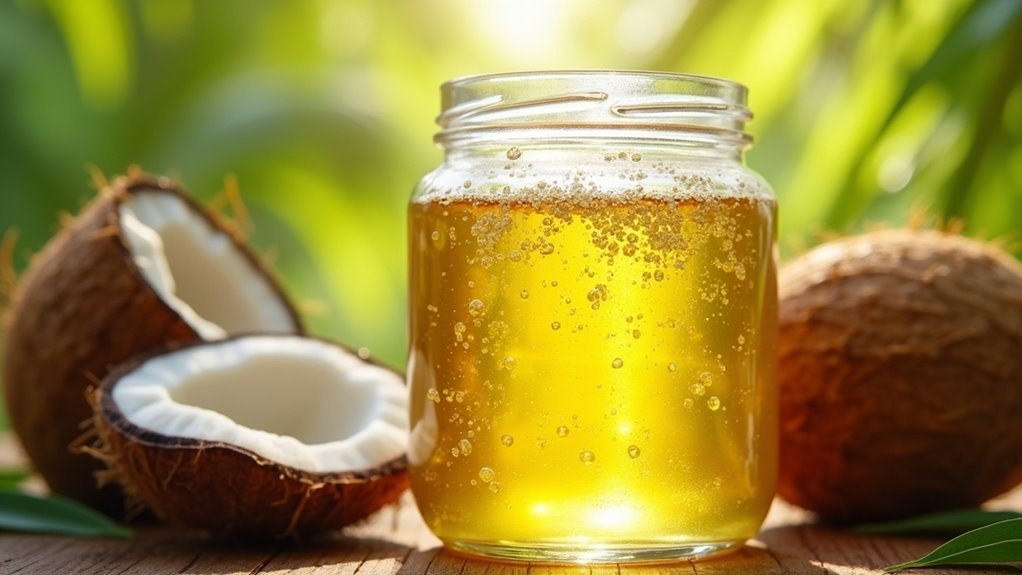
When you choose minimally processed organic coconut oil, you’re getting a product that retains considerably more of its natural medium-chain triglycerides compared to heavily refined alternatives.
This enhanced bioavailability stems from the absence of chemical refining processes that typically diminish beneficial compounds. Your organic coconut oil preserves 50-60% lauric acid content, maximizing MCTs’ effectiveness in your body.
The minimal processing also maintains higher levels of antioxidants and phytonutrients, which actively support MCT absorption and utilization.
Minimal processing preserves vital antioxidants and phytonutrients that enhance your body’s ability to absorb and effectively utilize MCTs.
You’ll benefit from lauric acid’s antimicrobial properties that complement the energy-boosting effects while supporting your immune function.
Lauric Acid Benefits Preserved Through Organic Extraction Methods
Since organic extraction methods eliminate harsh chemical solvents and high-heat processing, they preserve lauric acid’s delicate molecular structure and maintain its full concentration at 50-60% of total fatty acids.
You’ll get maximum antimicrobial properties when you choose organic coconut oil that’s been carefully extracted to protect this valuable compound.
The gentle processing techniques used in sustainable farming operations guarantee your coconut oil retains its complete nutrient profile.
Here’s what you’re protecting when you select properly extracted organic coconut oil:
- Antimicrobial effectiveness – Full-strength lauric acid fights bacteria, viruses, and fungi
- Cardiovascular support – Intact compounds help boost HDL cholesterol levels
- Antioxidant preservation – Tocopherols and phenolic compounds remain undamaged
These extraction methods deliver superior health benefits compared to conventional processing that can degrade lauric acid’s potency and reduce the oil’s overall therapeutic value.
Chemical-Free Processing Maintains MCT Nutritional Integrity
You’ll find that organic extraction methods protect your coconut oil’s MCT content by eliminating synthetic chemicals from the processing equation.
When you choose chemically-processed oils, you’re risking exposure to harmful residues that can compromise the oil’s nutritional profile and diminish its health benefits.
Organic Extraction Methods
Two critical factors determine the quality of MCTs in your coconut oil: the extraction method and whether harmful chemicals touch the product during processing.
Organic extraction methods like cold pressing preserve medium-chain triglycerides without compromising their health-promoting properties. You’ll find these chemical-free methods maintain higher lauric acid levels and enhanced anti-inflammatory properties.
When you choose organic coconut oil, you’re getting three key advantages:
- Pure MCT preservation – No solvents damage the nutritional integrity
- Enhanced beneficial compounds – Higher concentrations of lauric acid and antimicrobials
- Rapid digestion benefits – MCTs retain their weight management potential
Your choice also supports sustainable farms that avoid synthetic pesticides and fair trade practices, ensuring farmers receive proper compensation while maintaining oil quality.
Preserving MCT Content
When manufacturers process coconut oil with harsh chemicals and high heat, they destroy the very MCTs you’re seeking for health benefits.
Organic coconut oil preserves these essential nutrients through chemical-free processing methods that maintain the integrity of medium-chain triglycerides.
Cold-press extraction protects delicate MCTs like caprylic and capric acids from degradation.
You’ll retain the full 54% MCT content when choosing organic varieties, ensuring maximum nutritional value.
The absence of artificial additives means lauric acid’s antimicrobial properties remain intact, giving you the health benefits you’re after.
Avoiding Chemical Residues
Conventional coconut oil production relies heavily on synthetic pesticides, fertilizers, and chemical solvents that leave harmful residues in the final product.
When you choose organic coconut oil, you’re protecting yourself from these chemical residues that can compromise the nutritional integrity of your medium-chain triglycerides.
Organic coconut oil offers three key advantages:
- Chemical-free processing preserves natural beneficial compounds without degradation
- Cold-pressed extraction maintains MCT concentration and essential nutrients
- Sustainable farming practices eliminate synthetic pesticide and fertilizer contamination
Sustainable Farming Practices That Optimize MCT Production
Since organic coconut farming prioritizes environmental health, you’ll find that these sustainable farming practices directly enhance the quality and MCT content of the coconuts themselves. When farmers use crop rotation and intercropping techniques, they’re maintaining soil health without synthetic pesticides, which directly impacts the nutritional profile of coconuts and supports higher MCT yields.
| Sustainable Practice | MCT Production Benefit |
|---|---|
| Traditional harvesting techniques | Ideal coconut maturity for peak MCT content |
| Chemical-free cultivation | Enhanced nutritional density in coconut meat |
| Ethical labor practices | Careful handling preserving oil quality |
These agricultural practices minimize environmental impact while maximizing coconut quality. You’re supporting farming methods that don’t compromise the coconut’s natural MCT development, ensuring your organic coconut oil delivers superior nutritional benefits.
Energy Metabolism Advantages of Organic Coconut Oil MCTs
Beyond supporting sustainable agriculture, organic coconut oil’s MCT composition delivers remarkable energy metabolism advantages that set it apart from conventional cooking oils.
Organic coconut oil’s unique MCT profile provides superior energy metabolism benefits that conventional cooking oils simply cannot match.
You’ll benefit from approximately 54% MCTs, with lauric acid providing rapid energy conversion compared to long-chain triglycerides.
The energy metabolism benefits include:
- Quick absorption – Caprylic and capric acids bypass normal fat digestion, going directly to your liver for immediate energy.
- Enhanced satiety – MCTs stimulate satiety hormones, supporting weight management goals.
- Ketone production – Perfect fuel source for ketogenic diets and brain energy.
You’ll experience less fat storage likelihood while gaining sustainable energy.
The antioxidants in organic coconut oil further optimize metabolic health, making it a superior choice for energy-focused nutrition strategies.
Immune System Support From Organic Coconut Oil’s Natural MCTs
While organic coconut oil’s MCTs excel at boosting your energy metabolism, they’re equally powerful at strengthening your immune defenses. The medium-chain triglycerides in organic coconut oil, especially lauric acid, deliver potent antimicrobial properties that help your immune system combat harmful bacteria, viruses, and fungi.
When your body metabolizes these MCTs, they create an immediate energy source for immune cells during stress or illness, keeping your defenses operating at peak performance.
Your gut health particularly benefits from organic coconut oil’s natural MCT content. These compounds promote beneficial gut bacteria growth, which directly supports your immune system’s effectiveness.
Additionally, organic coconut oil enhances fat-soluble vitamin absorption, providing your immune system with essential nutrients it needs to function effectively and protect you from infections.
Weight Management Benefits of Choosing Organic MCT Sources
When you’re seeking effective weight management support, organic coconut oil’s MCT content delivers remarkable metabolic advantages that help you achieve your goals naturally. With approximately 54% MCTs, primarily lauric acid, you’ll experience enhanced feelings of fullness that reduce your overall calorie intake.
Organic coconut oil’s 54% MCT content naturally boosts metabolism and enhances satiety for effective weight management support.
Organic coconut oil provides three key weight management benefits:
- Increased energy expenditure – MCTs boost your metabolism and fat-burning potential
- Reduced cravings – Rapid digestion provides immediate energy, controlling hunger
- Enhanced gut health – Antimicrobial properties improve your digestive system
The unique MCT structure guarantees quick absorption while supporting better nutrient absorption.
Digestive Health Improvements With Clean Organic MCT Oil
Your digestive system receives powerful support from organic coconut oil’s clean MCT profile, which enhances gut health through multiple mechanisms.
The MCTs, particularly lauric acid, work as natural antimicrobial agents that promote beneficial gut bacteria growth while reducing harmful microorganisms. This creates an ideal environment for gastrointestinal health and may alleviate IBS symptoms.
Organic coconut oil’s MCTs provide quick energy without causing digestive distress, making them suitable for sensitive stomachs.
They naturally combat constipation by acting as gentle laxatives, improving bowel regularity.
Most importantly, MCTs enhance nutrient absorption in your gut, ensuring your body efficiently utilizes vitamins and minerals from food.
This improved digestive health translates to better overall well-being and energy levels throughout your day.
Athletic Performance Enhancement Using Organic Coconut Oil MCTs
Athletes consistently seek natural performance enhancers that don’t compromise their health, and organic coconut oil’s MCT content delivers exactly that advantage.
You’ll experience rapid energy absorption during prolonged exercise, as MCTs bypass traditional digestion pathways to fuel your muscles directly. This enhanced energy expenditure translates into improved endurance and faster recovery times.
Your athletic performance benefits extend beyond immediate energy:
- Weight management – MCTs support ideal body composition for peak performance
- Muscle recovery – Anti-inflammatory properties reduce exercise-induced soreness
- Mental clarity – Sustained cognitive function during high-intensity training
You’ll find that incorporating organic coconut oil into your nutrition plan provides consistent energy levels while supporting your body’s natural recovery processes, allowing you to train more effectively.
Long-Term Health Benefits of Chemical-Free MCT Consumption
Beyond immediate performance gains, choosing chemical-free MCTs from organic coconut oil establishes a foundation for sustained wellness that compounds over years of consistent use. You’ll experience thorough long-term health benefits that extend far beyond basic nutrition.
| Health System | Primary Benefit | Long-Term Impact |
|---|---|---|
| Cardiovascular | Improved cholesterol levels | Enhanced heart health |
| Immune | Antimicrobial properties | Reduced infection risk |
| Metabolic | Enhanced weight management | Better body composition |
| Cellular | Natural antioxidants | Reduced inflammation |
The lauric acid in organic coconut oil provides antimicrobial properties that strengthen your immune defenses over time. Medium-chain triglycerides support cardiovascular health by optimizing your cholesterol profile, while natural antioxidants combat oxidative stress. This chemical-free approach guarantees you’re building lasting wellness without pesticide accumulation in your system.
Frequently Asked Questions
Is Organic Coconut Oil as Good as MCT Oil?
You’ll find organic coconut oil isn’t as effective as MCT oil for quick energy and ketosis since it’s only 54% MCTs versus MCT oil’s 100% concentration, though it offers broader nutritional benefits.
Does MCT Oil Need to Be Organic?
You don’t need organic MCT oil, but choosing it reduces your exposure to synthetic pesticides and chemicals while supporting sustainable farming practices and potentially providing better nutritional quality.
What Is the Most Effective Form of MCT Oil?
You’ll find the most effective MCT oil contains higher concentrations of caprylic acid (C8) and capric acid (C10). These pure MCT oils provide faster energy conversion and better ketone production than coconut oil’s mixed composition.
Is It Important for Coconut Oil to Be Organic?
You’ll benefit from choosing organic coconut oil since it’s free from synthetic pesticides and chemicals, contains higher antioxidant levels, and supports sustainable farming while preserving the oil’s natural nutrients.


