You can combat iron deficiency anemia by consuming 1-2 teaspoons of cumin daily, which provides 17.5% of your iron needs per teaspoon. Pair cumin with vitamin C-rich foods like lemon juice or bell peppers to boost absorption by up to 67%. Use gentle cooking methods, add cumin at the end of cooking, or try cumin tea for maximum iron retention. Avoid coffee and tea with cumin meals since tannins inhibit absorption. These strategic approaches will release cumin’s full potential for naturally increasing your hemoglobin levels.
Understanding Cumin’s High Iron Content for Anemia Relief
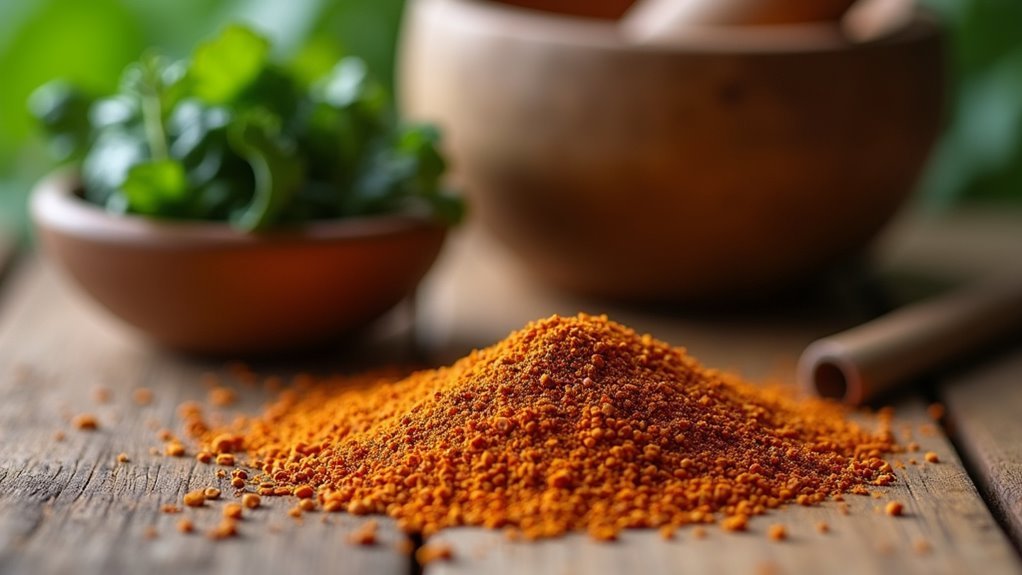
Iron deficiency anemia affects millions worldwide, yet a simple spice sitting in your kitchen cabinet might offer surprising relief. Cumin seeds pack an impressive nutritional punch, delivering approximately 1.4 mg of iron per teaspoon—that’s 17.5% of your daily iron requirements. This makes cumin one of the most potent iron-rich foods you can easily incorporate into your healthy diet.
What sets cumin apart from other iron sources is its convenience and versatility. You don’t need large quantities to make a difference. Just a small sprinkle enhances your iron intake considerably.
The spice also contains beneficial plant compounds that may boost iron absorption, especially when you pair it with vitamin C-rich foods like citrus fruits or bell peppers during meals.
Daily Cumin Dosage Recommendations for Iron Deficiency
When you’re dealing with iron deficiency anemia, determining the right amount of cumin for your daily routine becomes essential for maximizing its therapeutic benefits. Start with 1-2 teaspoons of cumin seeds daily, providing 1.4-2.8 mg of iron to boost your iron levels effectively.
| Form | Recommended Daily Intake |
|---|---|
| Ground Cumin | 1-2 teaspoons in cooking |
| Supplement | 75 mg capsules |
You’ll absorb iron more efficiently when you combine cumin with vitamin C-rich foods like citrus fruits or bell peppers during meals. This pairing greatly enhances iron absorption, making your anemia treatment more effective. Regular incorporation into your cooking routine provides consistent iron support without requiring high doses or additional supplements, offering a natural approach to managing iron deficiency.
Combining Cumin With Vitamin C Foods to Maximize Iron Absorption

Since vitamin C can boost non-heme iron absorption by up to 67%, pairing your cumin intake with vitamin C-rich foods becomes a game-changer for managing iron deficiency anemia.
Squeeze fresh lemon juice over cumin-seasoned spinach dishes to create a powerful combination that enhances hemoglobin levels. You’ll maximize iron absorption by adding cumin to meals featuring bell peppers, tomatoes, or citrus fruits.
Try incorporating cumin into chickpea dishes, which naturally contain vitamin C, creating an ideal synergy for fighting iron deficiency anemia.
Cumin-spiced chickpeas deliver a natural vitamin C and iron combination that supercharges your body’s fight against anemia.
This strategic pairing transforms ordinary meals into therapeutic tools. When you consistently combine cumin with vitamin C sources, you’re optimizing your body’s ability to absorb non-heme iron, effectively supporting hemoglobin production and combating anemia symptoms.
Best Cooking Methods to Preserve Cumin’s Iron Benefits
You’ll maximize cumin’s iron content by using gentle cooking methods that don’t expose the spice to excessive heat for prolonged periods.
Whole cumin seeds retain more nutrients than pre-ground powder, so you should toast them lightly in a dry pan before grinding them fresh for each dish.
This approach preserves the spice’s iron while enhancing its flavor, giving you the best of both nutritional and culinary benefits.
Gentle Heat Preservation
Although cumin naturally contains beneficial iron for combating anemia, you’ll maximize these nutritional benefits by choosing the right cooking methods.
Gentle cooking methods like steaming and low-temperature sautéing preserve cumin’s iron content far better than high-heat techniques such as frying or boiling, which cause significant nutrient loss.
You should add cumin toward the end of cooking to minimize heat exposure and protect its iron properties. Light toasting of cumin seeds enhances flavor without compromising nutritional value.
Consider using cumin in uncooked applications like dressings and sauces to keep iron levels intact.
Pair cumin with vitamin C-rich foods such as citrus fruits or bell peppers to boost iron absorption, creating an effective strategy for fighting iron deficiency anemia.
Whole Seed Benefits
When you use whole cumin seeds instead of pre-ground powder, you’re getting maximum iron content along with superior flavor. Grinding them just before cooking preserves essential oils and nutrients that pre-ground versions lose over time.
You’ll boost iron intake markedly by incorporating whole cumin seeds into curries, stews, and breads. One teaspoon provides about 1.4 mg of iron toward your daily requirements.
To maximize these iron-rich benefits, dry roast the seeds first to enhance their aromatic qualities while maintaining nutritional benefits.
Soaking whole cumin seeds before cooking softens them for better digestion. Add them near the end of cooking to preserve their iron content and prevent nutrient loss from prolonged heat exposure.
Fresh Ground Advantage
Building on the benefits of whole seeds, freshly ground cumin right before cooking delivers even greater iron preservation and bioavailability.
You’ll retain higher essential nutrient levels, including iron, compared to pre-ground varieties that’ve lost potency over time. This makes freshly ground cumin more effective for combating iron deficiency.
To maximize iron absorption, you should lightly toast cumin seeds before grinding. This enhances flavor while increasing nutrient absorption during digestion.
Cook your toasted cumin in oil like olive or coconut oil to extract beneficial compounds effectively.
You can easily boost your iron intake by adding freshly ground cumin to vitamin C-rich dishes.
Combine it with tomatoes in curries or sprinkle over citrus-dressed salads. Adding it to soups, stews, and lentil dishes provides delicious iron supplementation.
Cumin Tea and Water Infusions for Enhanced Iron Intake
You can easily boost your iron intake by incorporating cumin tea and infused water into your daily routine.
These simple beverages deliver approximately 1.4 mg of iron per teaspoon while enhancing hydration and supporting digestive health.
Creating iron-rich tea recipes with cumin seeds offers a flavorful way to combat anemia alongside your regular iron-rich meals.
Daily Cumin Water Benefits
How can something as simple as soaking cumin seeds in water overnight transform your fight against iron deficiency anemia? This powerful cumin water delivers approximately 1.4 mg of iron per teaspoon—that’s 17.5% of your daily iron needs.
When you drink this iron-rich infusion regularly, you’ll boost iron levels while supporting better nutrient absorption throughout your digestive system.
The antimicrobial properties in cumin water protect against foodborne illnesses that can interfere with iron uptake. You’ll notice improved hemoglobin levels as the essential minerals and antioxidants work together to combat iron deficiency.
Iron Absorption Tea Recipes
Beyond simple cumin water, preparing targeted tea recipes amplifies your iron absorption potential even further. You can create powerful cumin tea by steeping one teaspoon of cumin seeds in hot water for 5-10 minutes. This delivers 1.4 mg of iron, providing 17.5% of your daily needs to improve iron levels naturally.
For maximum effectiveness against iron deficiency, add fresh lemon juice to your cumin tea. The vitamin C dramatically enhances iron absorption, making this combination particularly effective for combating anemia symptoms like fatigue and weakness.
You can also prepare overnight cumin-infused water by soaking seeds and straining the liquid each morning. These antioxidant-rich preparations don’t just boost iron intake—they enhance absorption from other foods you consume throughout the day.
Creating Iron-Rich Spice Blends With Cumin as the Base
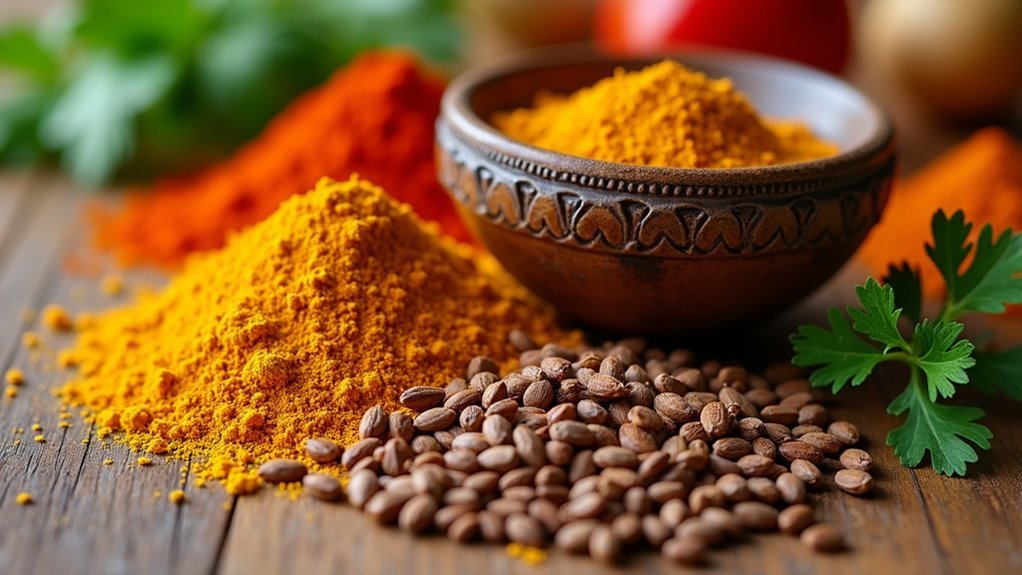
Since cumin contains 1.4 mg of iron per teaspoon, it serves as an excellent foundation for creating spice blends that can meaningfully boost your daily iron intake.
You’ll maximize iron deficiency recovery by combining cumin with coriander and turmeric, creating flavorful iron-rich blends that enhance both taste and nutritional value.
Focus on pairing these spice blends with legumes like lentils and chickpeas, as this combination optimizes iron absorption while supporting digestive health.
You can also create marinades using cumin-based blends for meat and poultry, improving both iron content and digestibility.
Try mixing cumin with paprika and dried herbs for a versatile seasoning that transforms roasted vegetables into iron-packed side dishes.
These strategic spice blends make iron supplementation delicious and sustainable.
Timing Your Cumin Consumption for Optimal Iron Absorption
While creating powerful iron-rich spice blends sets the foundation for better nutrition, the timing of when you consume these cumin-based mixtures can dramatically impact how much iron your body actually absorbs.
You’ll maximize iron absorption by consuming cumin during meals rather than on an empty stomach. This meal timing strategy prevents digestive discomfort while ensuring peak utilization of cumin’s iron content.
Pair your cumin with vitamin C-rich foods like citrus fruits or bell peppers during the same meal. This combination creates a synergistic effect that enhances non-heme iron absorption, making your iron deficiency management more effective.
Vitamin C and cumin create a powerful synergy that supercharges your body’s ability to absorb iron from plant-based sources.
However, avoid drinking tea or coffee with cumin-seasoned meals, as their tannins can inhibit iron absorption and counteract cumin’s benefits.
Frequently Asked Questions
Does Cumin Help With Iron Deficiency?
Yes, you’ll benefit from cumin’s iron content since one teaspoon provides 1.4 mg of iron. It enhances iron absorption, improves hemoglobin levels, and you can easily incorporate it into various dishes.
What Is the Fastest Way to Cure Iron Deficiency Anemia?
You’ll cure iron deficiency anemia fastest by taking prescribed iron supplements, eating iron-rich foods like red meat and spinach, and consuming vitamin C to enhance absorption while avoiding coffee during meals.
What Is the Best Herb for Low Iron?
You’ll find cumin’s the best herb for low iron since it contains 1.4 mg iron per teaspoon. Its antioxidants boost iron absorption, and you’ll maximize benefits by pairing it with vitamin C-rich foods.
How to Boost Iron Levels Asap?
You’ll need immediate dietary changes and supplements. Eat iron-rich foods like red meat, spinach, and lentils. Take iron supplements with vitamin C. Cook in cast iron pans and avoid coffee with meals.


