
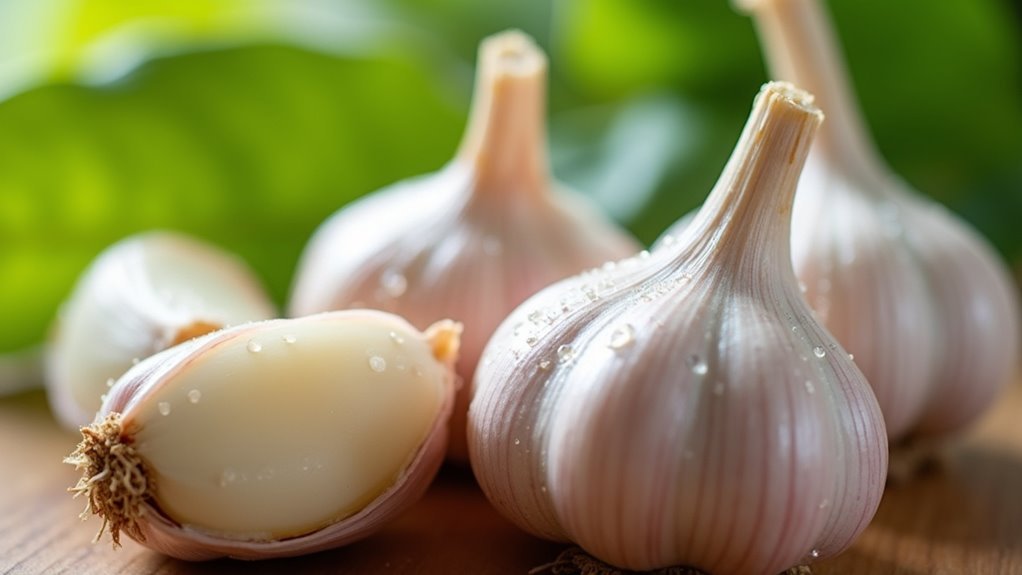
You’ll find garlic’s reputation as nature’s antibiotic comes from allicin, a potent antimicrobial compound that forms when you crush fresh garlic cloves. This powerful substance targets thiol-containing enzymes in harmful bacteria, viruses, and fungi while sparing your beneficial gut microbes. Allicin’s multi-target approach makes it effective against superbugs like MRSA and VRE, with minimal resistance development. Its broad-spectrum properties have earned garlic recognition across ancient civilizations for thousands of years, and modern science continues uncovering its therapeutic potential.
The Science Behind Allicin: Garlic’s Active Antimicrobial Compound
When you crush fresh garlic, you’re triggering a remarkable biochemical reaction that produces allicin, the powerhouse compound responsible for garlic’s impressive antimicrobial properties.
This potent molecule works by targeting thiol-containing enzymes specifically found in non-mammalian cells, effectively disrupting critical microbial processes while leaving your healthy cells unharmed.
What makes allicin particularly fascinating is its broad-spectrum effectiveness against bacteria, viruses, and fungi. Unlike traditional antibiotics that often target specific pathways, allicin’s unique mechanism creates multiple disruption points in pathogenic organisms.
Research demonstrates that even microgram quantities can notably inhibit dangerous pathogens like MRSA and vancomycin-resistant Enterococcus.
Perhaps most importantly, allicin shows remarkably low potential for resistance development, making it an invaluable natural weapon against increasingly antibiotic-resistant infections threatening modern medicine.
Historical Use of Garlic Across Ancient Civilizations
Long before modern science validated allicin’s remarkable antimicrobial properties, ancient civilizations across the globe had already recognized garlic as a powerful healing agent. You’ll find remarkable consistency in how different cultures understood that garlic can help combat illness and disease.
| Civilization | Time Period | Primary Uses |
|---|---|---|
| Chinese Medicine | 2000+ BC | Respiratory & digestive ailments |
| Ancient Egypt | Ancient times | Circulation improvement & parasite control |
| Ayurveda | 6th century BCE | Various healing applications |
| Indigenous North Americans | Historical period | Flu-like symptom relief via teas |
These diverse cultures independently discovered garlic’s therapeutic potential, treating everything from parasitic infections to respiratory problems. Their empirical observations perfectly align with today’s scientific understanding of garlic’s antimicrobial effectiveness against pathogens.
How Garlic Targets and Destroys Harmful Bacteria
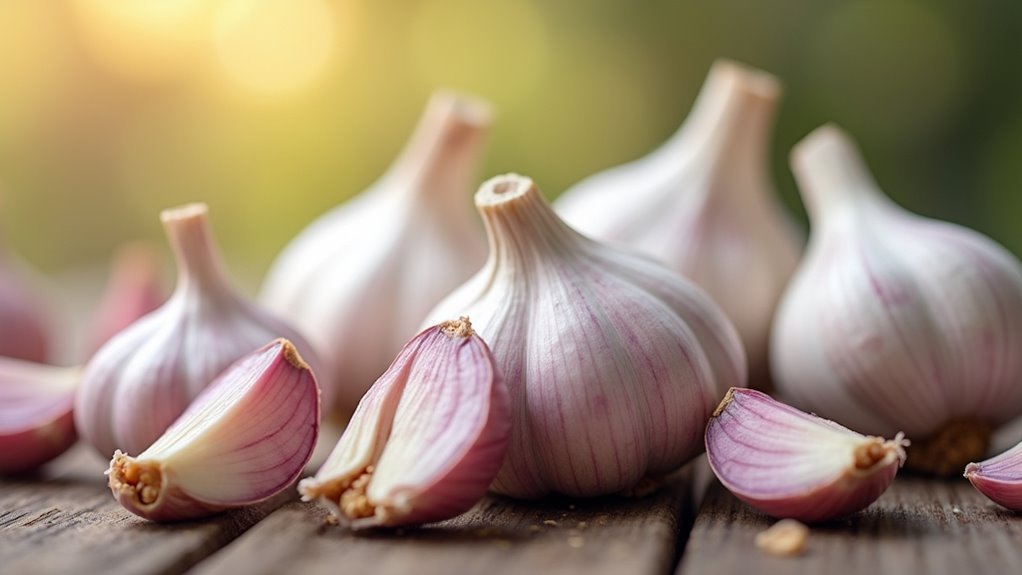
When you crush garlic, you’re releasing allicin, a powerful compound that systematically targets the thiol-containing enzymes essential for bacterial survival.
This precise attack disrupts critical microbial processes within harmful bacteria, effectively breaking down their cellular defenses and metabolic functions.
You’ll find that allicin’s multi-pronged approach makes it remarkably effective against various pathogens, including notorious superbugs that resist conventional antibiotics.
Allicin’s Antimicrobial Mechanism
As soon as you crush fresh garlic, you’ll trigger the formation of allicin—a remarkably potent antimicrobial compound that acts as nature’s precision weapon against harmful pathogens. This powerful molecule specifically targets thiol-containing enzymes found exclusively in non-mammalian cells, disrupting essential microbial processes while leaving your healthy cells unharmed.
| Target | Effect | Result |
|---|---|---|
| Bacterial enzymes | Disrupts metabolism | Growth inhibition |
| Viral proteins | Interferes with replication | Reduced viral activity |
| Fungal cell walls | Compromises integrity | Cell death |
You’ll find that allicin demonstrates extraordinary effectiveness against dangerous superbugs like MRSA and VRE, requiring only microgram quantities to considerably inhibit bacterial growth. Unlike conventional antibiotics, allicin’s unique mechanism makes it extremely difficult for pathogens to develop resistance, positioning it as a promising natural alternative in our ongoing battle against antibiotic-resistant infections.
Bacterial Cell Disruption
Beyond simply interfering with microbial enzymes, allicin launches a devastating multi-pronged assault that completely destroys bacterial cells from the inside out.
When you crush garlic, allicin targets bacterial cell membranes with surgical precision, damaging their structural integrity until they can no longer maintain their protective barriers. This membrane disruption causes cell lysis, where bacteria literally burst and die as their internal contents spill out.
You’ll find that allicin doesn’t stop there—it also prevents bacteria from forming protective biofilms, those sticky shields that help pathogens resist conventional antibiotics.
This dual action makes garlic particularly effective against notorious superbugs like MRSA and VRE. Just microgram quantities of allicin can greatly inhibit bacterial growth, demonstrating nature’s remarkable efficiency in creating this powerful antimicrobial weapon.
Pathogen Resistance Breakdown
While traditional antibiotics often fail against resistant pathogens, garlic’s allicin compound operates through mechanisms that make bacterial resistance extremely difficult to develop.
Unlike conventional antibiotics that target single pathways, allicin disrupts multiple bacterial systems simultaneously, creating an overwhelming assault that pathogens can’t easily overcome.
Here’s how allicin breaks down pathogen resistance:
- Multi-target approach – It attacks various thiol-containing enzymes essential for bacterial survival.
- Non-specific disruption – Damages multiple cellular processes rather than one specific pathway.
- Broad-spectrum effectiveness – Works against VRE, MRSA, and other antibiotic-resistant strains.
- Resistance prevention – Bacteria can’t easily develop immunity to such widespread cellular damage.
You’re fundamentally getting a natural antibiotic that overwhelms harmful bacteria through diverse attack mechanisms.
Garlic’s Effectiveness Against Antibiotic-Resistant Superbugs
When antibiotic-resistant bacteria threaten modern medicine’s arsenal, garlic’s allicin emerges as a powerful natural weapon against these dangerous superbugs.
You’ll find that microgram quantities effectively inhibit Vancomycin-resistant Enterococcus (VRE) growth, demonstrating remarkable potency. Research by Ron Cutler shows both liquid and cream allicin formulations successfully combat MRSA isolates that resist conventional treatments.
What makes garlic particularly valuable is its low resistance development potential, unlike traditional antibiotics that bacteria eventually outsmart.
You can leverage this natural compound to help prevent colonization of resistant bacteria strains. Studies consistently demonstrate allicin’s effectiveness against notorious superbugs like MRSA and VRE, positioning garlic as a promising alternative in our fight against antibiotic resistance while offering practical healthcare applications.
Supporting Your Immune System With Garlic Consumption
You can harness garlic’s natural antibiotic properties to strengthen your immune defenses against common pathogens.
The key lies in understanding how allicin’s antimicrobial power works, establishing consistent daily consumption habits, and leveraging garlic as your first line of defense against colds.
Let’s explore practical strategies for incorporating this powerful immune booster into your wellness routine.
Allicin’s Antimicrobial Power
The powerhouse compound allicin gives garlic its remarkable antimicrobial properties, transforming this common kitchen ingredient into nature’s own antibiotic. When you crush garlic, you’re releasing allicin’s full potential to combat harmful pathogens effectively.
Allicin’s antimicrobial capabilities include:
- Fighting superbugs – It inhibits antibiotic-resistant bacteria like MRSA and VRE that traditional medicines can’t handle.
- Broad-spectrum protection – You’ll get defense against bacteria, viruses, and fungi with one natural compound.
- Resistance prevention – Unlike synthetic antibiotics, pathogens don’t easily develop immunity to allicin.
- Microscopic efficiency – Just microgram quantities disrupt essential microbial processes in harmful organisms.
This natural defense mechanism makes garlic an invaluable addition to your health arsenal, offering protection without the drawbacks of conventional antibiotics.
Daily Garlic Consumption Guidelines
Ideal garlic consumption for immune support starts with understanding how much you’ll need to harness allicin’s protective benefits. Research shows consuming up to 25 grams of garlic a day remains safe while delivering substantial health benefits.
| Garlic Form | Daily Amount | Allicin Content |
|---|---|---|
| Raw Cloves | 1-2 cloves | 4,000 µg per clove |
| Aged Extract | 600-1,200 mg | Standardized dose |
| Cooked Garlic | 2-4 cloves | Reduced potency |
You’ll maximize antimicrobial effects by consuming raw garlic, as cooking reduces allicin content. Aged garlic extract offers a gentler alternative that’s shown to reduce cold symptom severity. Start with smaller amounts and gradually increase to assess your tolerance while supporting your immune system effectively.
Natural Cold Defense
Beyond establishing proper dosage, garlic’s antimicrobial properties make it a powerful ally when cold season arrives.
You’ll benefit from allicin’s potent ability to enhance your immune system’s fight against cold and flu pathogens.
Studies show aged garlic extract reduces symptom severity, helping you avoid missing work or school.
Here’s how garlic strengthens your natural defenses:
- Boosts immune function – Regular consumption makes your body more resilient against infections
- Provides antiviral protection – Traditional medicine has long recognized garlic’s respiratory health benefits
- Delivers antioxidant support – Combat oxidative stress while strengthening immune response
- Offers convenient options – Garlic tablets provide consistent antimicrobial benefits when fresh garlic isn’t practical
Your body’s natural defense system becomes considerably more effective with consistent garlic consumption.
Research Evidence: Garlic vs. MRSA and VRE Infections
When scientists began testing garlic’s active compound allicin against some of medicine’s most stubborn bacterial foes, they discovered remarkable results that challenge conventional approaches to antibiotic resistance.
Research by Jaya Prakash at the National University of Health Sciences revealed that allicin effectively prevents vancomycin-resistant Enterococcus (VRE) colonization without disrupting your normal gut flora—something traditional antibiotics can’t achieve.
Allicin prevents antibiotic-resistant bacterial colonization while preserving beneficial gut microbes—a breakthrough traditional antibiotics cannot replicate.
Even more impressive, studies from the University of East London demonstrated that topical allicin formulations successfully combat multiple strains of methicillin-resistant Staphylococcus aureus (MRSA), including those resistant to mupirocin.
You’ll find it remarkable that microgram quantities of allicin can greatly inhibit VRE growth in laboratory tests, opening doors for natural antibacterial soaps and treatments that offer genuine alternatives to conventional antibiotics.
Proper Preparation Methods to Maximize Allicin Potency
You can’t simply toss whole garlic cloves into your cooking and expect maximum antibiotic benefits.
The way you prepare garlic directly impacts how much allicin your body actually receives, making proper technique essential for therapeutic effects.
Understanding when to crush, whether to cook, and how to time your preparation will determine if you’re getting garlic’s full medicinal potential.
Crushing Activates Allicin Formation
Crushing garlic triggers a fascinating biochemical transformation that reveals its most powerful antimicrobial properties. When you crush or chop garlic, you’re activating the enzyme alliinase, which converts alliin into allicin – the compound responsible for garlic’s antibiotic effects.
Here’s how to maximize your crushed garlic’s potency:
- Crush thoroughly – Use a garlic press, knife, or mortar and pestle to break down cell walls completely.
- Wait 10-15 minutes – Let crushed garlic sit before cooking to enhance allicin formation.
- Add late in cooking – High heat destroys allicin, so incorporate garlic toward the end.
- Consider raw consumption – Fresh crushed garlic retains maximum antimicrobial activity.
One clove contains approximately 4000 µg of allicin, making properly prepared crushed garlic a potent natural antibiotic.
Raw Versus Cooked Garlic
Understanding how crushing activates allicin sets the stage for exploring raw versus cooked garlic preparation methods.
When you eat raw garlic, you’re getting maximum allicin content and antimicrobial benefits. High-temperature cooking like frying or roasting greatly reduces allicin levels, diminishing garlic’s antibiotic properties.
You’ll maximize health benefits by consuming about one clove of raw garlic daily. If you must cook garlic, let crushed cloves sit for 10-15 minutes first—this allows more enzymatic conversion before heat destroys the compounds.
While cooked garlic still offers some benefits, they’re notably less than raw preparations.
Garlic supplements, particularly aged extracts, contain lower allicin levels compared to fresh raw garlic. For ideal antibiotic effects, raw garlic remains your best choice.
Timing and Storage Tips
Three critical factors determine garlic’s antibiotic effectiveness: timing, storage, and preparation method.
These timing and storage tips guarantee you maximize allicin production for peak health benefits.
Here are four essential steps to preserve garlic’s antibiotic power:
- Crush and wait – Chop or crush garlic cloves, then let them sit for 10-15 minutes before cooking to activate the enzymatic process that creates allicin.
- Store whole cloves properly – Keep unpeeled garlic in a cool, dry place to maintain freshness and potency.
- Use crushed garlic quickly – Consume chopped garlic immediately or refrigerate for maximum three days to prevent allicin degradation.
- Add garlic late – Incorporate crushed garlic toward cooking’s end or use it raw in dressings to avoid destroying heat-sensitive allicin compounds.
Safe Daily Dosage and Consumption Guidelines
When incorporating garlic into your daily routine for its antibiotic properties, you’ll want to stick to safe consumption levels that maximize benefits while minimizing potential side effects. The safe daily dosage is up to 25 grams, equivalent to roughly four cloves of garlic. Each clove provides approximately 4000 µg of allicin, garlic’s active compound responsible for its antibiotic effects.
You’ll get maximum benefits from raw garlic since cooking it in oil destroys allicin’s effectiveness.
If you prefer supplements, aged garlic extracts offer standardized allicin doses without the strong taste. However, consult your healthcare professional before greatly increasing garlic intake, especially if you’re taking anticoagulant medications. Garlic’s blood-thinning properties could interact with these drugs, creating potential health risks.
Garlic’s Antifungal and Antiviral Properties Beyond Bacteria
While garlic’s bacterial-fighting abilities often steal the spotlight, this remarkable bulb packs equally impressive antifungal and antiviral properties that extend its therapeutic reach far beyond bacterial infections.
Garlic’s therapeutic power extends well beyond bacteria, delivering potent antifungal and antiviral benefits that showcase this bulb’s remarkable versatility.
You’ll find that allicin, garlic’s primary bioactive compound, demonstrates remarkable effectiveness against various pathogens:
- Candida fungal infections – Studies show garlic extracts notably inhibit Candida species growth, offering natural relief from yeast infections.
- Influenza virus replication – Research reveals garlic can considerably reduce viral multiplication in your system.
- Herpes simplex virus (HSV) – Laboratory studies demonstrate allicin’s ability to decrease viral load and infection rates.
- Enhanced immune response – Garlic boosts your immune cell production, strengthening your body’s natural defense mechanisms.
As antibiotic resistance rises, you’re seeing researchers increasingly explore garlic as a promising natural alternative to synthetic antifungal and antiviral medications.
Comparing Garlic to Traditional Antibiotics: Benefits and Limitations
As researchers explore deeper into garlic’s antimicrobial properties, you’ll discover that this natural remedy offers distinct advantages over conventional antibiotics while facing certain limitations that prevent it from being a complete replacement.
When you compare how garlic works against pathogens, allicin shows remarkable effectiveness against superbugs like MRSA and VRE. Unlike traditional antibiotics that disrupt your gut flora and promote resistance, garlic maintains your digestive health while showing low resistance development potential.
You’ll also gain additional benefits like cholesterol management and anti-inflammatory effects.
However, garlic’s limitations become apparent when facing certain bacterial toxins, particularly those from Clostridium botulinum. While in vitro studies show promise, you’ll need more clinical research to establish proper dosages and application methods for consistent therapeutic results.
Frequently Asked Questions
How Powerful Is Garlic as an Antibiotic?
You’ll find garlic’s antibiotic power impressive – its allicin compound kills antibiotic-resistant bacteria like MRSA in microgram quantities. However, you shouldn’t replace medical treatment with garlic for serious infections.
What Is the Strongest Natural Antibiotic?
You’ll find garlic’s allicin stands among nature’s strongest antibiotics, effectively fighting antibiotic-resistant bacteria like MRSA. However, oregano oil, manuka honey, and colloidal silver also demonstrate powerful antimicrobial properties against various pathogens.
Is Garlic Stronger Than Amoxicillin?
You can’t consider garlic stronger than amoxicillin overall. While garlic’s allicin shows promise against resistant bacteria in lab studies, amoxicillin remains more reliable and predictable for treating serious bacterial infections clinically.
How to Use Garlic as a Natural Antibiotic?
Crush fresh garlic cloves to activate allicin, then apply directly to infections or consume up to 25 grams daily. Make garlic-infused teas for respiratory issues, but consult healthcare professionals first.


