
Dried fungi boost your immune system through powerful beta-glucans and polysaccharides that directly activate your body’s defense mechanisms. These compounds stimulate macrophages, natural killer cells, and dendritic cells while increasing cytokine production to regulate inflammation. Shiitake, reishi, and turkey tail mushrooms contain the highest concentrations of these immune-enhancing substances. They work by binding to specialized receptors like Dectin-1, triggering cellular pathways that strengthen both your humoral and cellular immunity responses against pathogens.
Beta-Glucans: The Primary Immune-Modulating Compounds in Dried Fungi
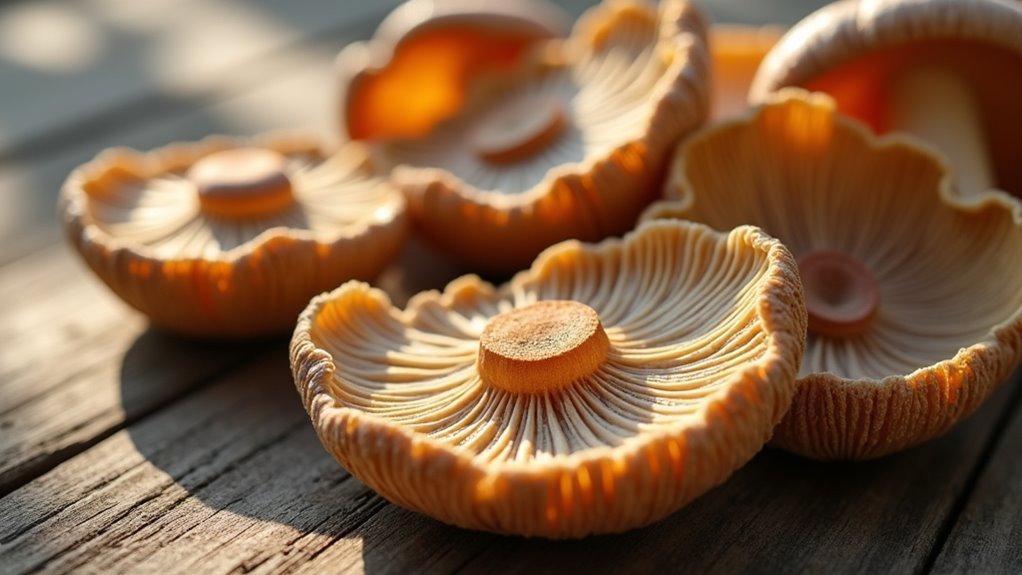
Beta-glucans represent the most significant immune-enhancing compounds you’ll find in dried fungi, functioning as powerful polysaccharides embedded within fungal cell walls.
Beta-glucans stand as nature’s most potent immune-boosting polysaccharides, strategically positioned within dried mushroom cell walls to maximize your body’s defensive capabilities.
When you consume these mushrooms, you’re activating your immune system through multiple pathways. Beta-glucans stimulate your macrophages and natural killer cells, creating a stronger defensive response against pathogens. They also enhance your dendritic cells’ activity and boost cytokine production, which regulates inflammation and immune responses throughout your body.
You’ll find the highest concentrations of these beneficial compounds in specific varieties like shiitake, reishi, and turkey tail mushrooms.
Clinical research demonstrates that beta-glucans can improve vaccine effectiveness and, when used alongside conventional treatments, potentially increase cancer patient survival rates.
Polysaccharides and Their Role in Cellular Immunity Enhancement
When you consume dried fungi, you’re activating powerful polysaccharides that directly enhance your cellular immunity through multiple pathways.
These compounds, particularly β-glucans, PSK, and PSP, work by stimulating your immune cells like macrophages, dendritic cells, and natural killer cells to mount stronger defenses against threats.
You’ll benefit from increased cytokine production and enhanced lymphocyte proliferation, creating a more robust immune response that can better protect you from pathogens and potentially cancerous cells.
Beta-Glucan Immune Activation
Among the most powerful immune-enhancing compounds found in dried fungi, beta-glucans stand out as remarkable polysaccharides that can greatly boost your body’s cellular defense mechanisms.
When you consume these beta-glucan-rich mushrooms, they activate your immune cells through specialized receptors like Dectin-1, triggering powerful signaling pathways that enhance macrophage and natural killer cell activity.
Your body’s response includes both humoral and cellular immunity improvements, strengthening your defense against pathogens and diseases.
Significantly, beta-glucans from shiitake mushrooms don’t just boost immunity—they also reduce inflammation by inhibiting pro-inflammatory cytokines.
This dual action creates a balanced immune response that’s particularly beneficial if you’re at higher risk for infections or immune-related conditions.
PSK and PSP Functions
The turkey tail mushroom produces two extraordinary polysaccharide compounds—PSK (Polysaccharide-K) and PSP (Polysaccharide Peptide)—that deliver potent immune-enhancing effects through direct cellular activation.
When you consume these compounds, they stimulate dendritic cells and natural killer cells, creating a robust immune response against threats. PSK specifically targets cancer cells by inhibiting growth and spread, particularly in human colon cancer studies.
You’ll benefit from enhanced monocyte production, which strengthens your body’s infection-fighting capabilities. Research shows PSK can improve survival rates in colorectal cancer patients when combined with chemotherapy.
Both compounds work by suppressing harmful inflammation while simultaneously activating essential immune cells. This dual action makes them valuable therapeutic allies in traditional cancer treatment protocols, offering natural immune system reinforcement.
Cellular Response Mechanisms
Beyond simply activating specific immune cells, polysaccharides orchestrate a sophisticated cellular defense network that transforms your body’s immune landscape.
These compounds trigger cascading effects that enhance your cellular immunity through multiple pathways.
Your immune response becomes markedly more robust when polysaccharides interact with various immune cells:
- Macrophage and NK cell activation – β-glucans stimulate these frontline defenders to eliminate pathogens and tumor cells more effectively.
- Cytokine modulation – Polysaccharides balance inflammatory responses while promoting necessary immune cell activation.
- Lymphocyte proliferation – Enhanced adaptive immunity through increased lymphocyte reproduction improves pathogen memory and response.
This multi-layered approach creates a thorough defense system that doesn’t just react to threats but actively prepares your immune cells for enhanced protection.
Reishi Mushrooms: Ganoderma Lucidum’s Bioactive Profile
Revered as the “mushroom of immortality” in traditional Chinese medicine, reishi mushrooms (Ganoderma lucidum) possess a remarkable array of bioactive compounds that make them potent allies for immune system support.
You’ll find triterpenes, polysaccharides, and peptidoglycans working synergistically to enhance your immune function through multiple pathways.
The beta-glucan polysaccharides in reishi directly activate your macrophages and natural killer cells, strengthening your body’s defense against pathogens and abnormal cells.
These bioactive compounds don’t work alone—reishi’s antioxidants combat oxidative stress while supporting overall immune health.
Clinical studies show that regular reishi supplementation increases immune markers and can enhance treatment effectiveness in cancer patients.
When you consume reishi regularly, you’re providing your immune system with scientifically-backed support for maintaining ideal balance and resilience.
Shiitake’s Lentinan: Targeting Macrophage and T-Cell Activity
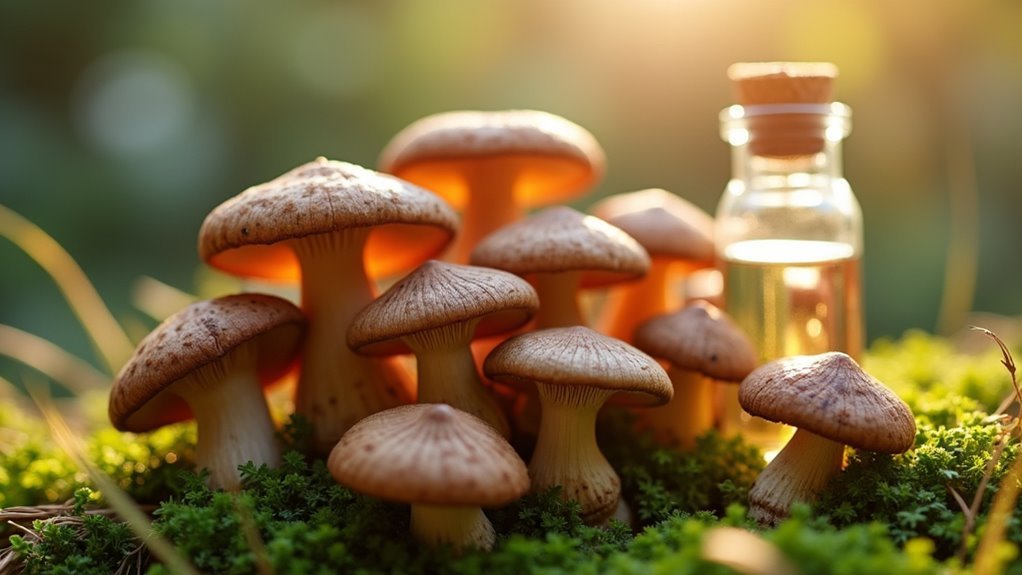
While reishi provides broad-spectrum immune support through its diverse bioactive compounds, shiitake mushrooms offer a more targeted approach through lentinan, a powerful beta-glucan polysaccharide that specifically enhances macrophage and T-cell function.
Shiitake’s lentinan delivers precise immune enhancement by directly targeting macrophage and T-cell activity for focused pathogen defense.
When you consume shiitake mushrooms, lentinan directly stimulates your immune cells, particularly activating macrophage activity to better identify and eliminate pathogens and cancer cells. This compound also increases T-cell proliferation, strengthening your adaptive immune response.
Lentinan’s targeted benefits include:
- Enhanced macrophage function – Improves pathogen detection and elimination
- Increased cytokine production – Amplifies immune cell communication and response
- Tumor reduction potential – Shows promise as cancer therapy adjunct
Clinical trials demonstrate that lentinan can improve survival rates and quality of life in cancer patients when combined with conventional treatments.
Maitake Beta-Glucan: Dectin-1 Receptor Pathway Activation
Although shiitake’s lentinan offers targeted immune enhancement, maitake mushrooms deliver their immune-boosting benefits through a distinctly different mechanism—activating your body’s dectin-1 receptor pathway.
When you consume maitake, its beta-glucans bind directly to the dectin-1 receptor on your immune cells, triggering powerful cascades that strengthen your defenses against infections and diseases.
This activation stimulates increased production of pro-inflammatory cytokines, essential for mounting effective immune responses.
You’ll benefit from enhanced proliferation of macrophages and natural killer cells, boosting your overall immune function.
Studies demonstrate that maitake beta-glucans can improve survival rates in cancer patients when used alongside conventional treatments, making this mushroom a valuable addition to your immune-supporting arsenal.
Turkey Tail Polysaccharides: PSK and PSP Immune Support Mechanisms
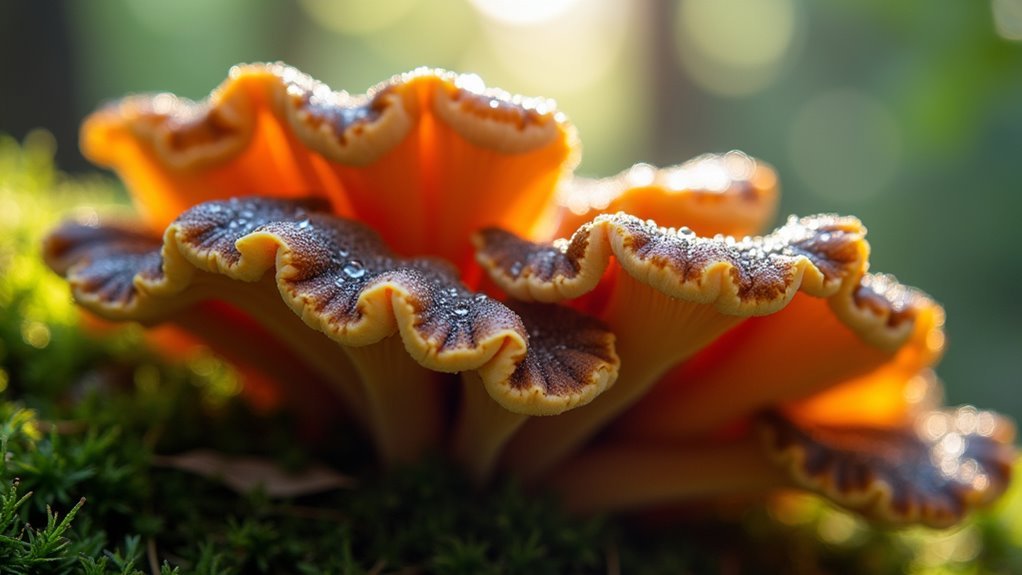
Turkey tail mushrooms take immune support to the next level through their unique polysaccharopeptides—specifically polysaccharide-K (PSK) and polysaccharide-P (PSP).
These compounds work through distinct mechanisms to strengthen your body’s defense systems.
The turkey tail mushroom delivers immune support through three key pathways:
- Dendritic cell stimulation – PSK activates these critical immune cells and enhances natural killer cell function.
- Monocyte enhancement – PSP increases monocyte levels, boosting your ability to fight infections and cancer cells.
- Anti-inflammatory action – Both compounds reduce inflammation while supporting overall immune function.
Research shows polysaccharide-K may improve colorectal cancer survival rates when combined with chemotherapy.
This illustrates how turkey tail’s polysaccharides don’t just boost your immune response—they provide targeted therapeutic benefits.
Agaricus Brasiliensis: Dendritic Cell Stimulation Properties
Beyond turkey tail’s impressive polysaccharides, Agaricus brasiliensis—commonly called the Brazilian mushroom—delivers its own powerful immune-enhancing compounds through specialized β-glucans.
These bioactive molecules target your dendritic cells, which serve as essential gatekeepers for initiating immune responses throughout your body.
When you consume Agaricus brasiliensis, its β-glucans activate the dectin-1 pathway in your immune cells, triggering increased cytokine production that enhances your pathogen-fighting capabilities.
This activation doesn’t stop there—your stimulated dendritic cells boost T cell activation, strengthening your adaptive immunity against infections.
Research shows these β-glucans also modify your macrophage activity, improving their ability to engulf and destroy harmful pathogens.
This thorough immune function enhancement makes Agaricus brasiliensis particularly valuable for supporting compromised immune systems through targeted cellular stimulation.
Processing Methods That Preserve Immune-Supporting Compounds
You’ll want to choose processing methods that maintain the delicate immune-supporting compounds in fungi rather than destroying them through excessive heat or harsh treatments.
Freeze drying stands out as the gold standard because it preserves heat-sensitive beta-glucans and polysaccharides that give mushrooms their immune-boosting power.
However, you can also use controlled heat treatment and extract concentration techniques to enhance bioavailability while protecting these valuable compounds.
Freeze Drying Benefits
When you’re looking to preserve fungi’s immune-supporting properties, freeze drying stands out as the superior processing method that maintains 90-95% of the original nutrients found in fresh mushrooms. This preservation technique removes moisture while keeping essential polysaccharides intact, ensuring your immune function benefits remain optimal.
The freeze drying process offers three key advantages:
- Extended shelf life – You can store these mushrooms without refrigeration for long periods.
- Nutrient preservation – Beta-glucans and antioxidants stay active and potent.
- Convenient supplementation – Easy incorporation into your daily diet maintains immune support.
Research shows you’ll get similar immune-boosting effects from freeze-dried fungi as fresh varieties. The process minimizes degradation of sensitive compounds that reduce inflammation and oxidative stress, making it an effective way to supplement your intake of immune-supporting nutrients.
Heat Treatment Effects
Although heat might seem counterproductive to preserving nutrients, proper heat treatment actually enhances your body’s ability to absorb immune-supporting compounds from dried fungi. When you cook mushrooms above 160°F (71°C), heat breaks down tough cell walls, releasing beneficial polysaccharides and beta-glucans that your digestive system can better absorb.
You’ll maximize antioxidant retention by using quick cooking methods like steaming, sautéing, or brief microwaving rather than prolonged boiling. Heat treatment also preserves polysaccharides’ structural integrity, which is vital for their immunomodulatory effects.
Additionally, proper cooking reduces harmful substances like agaritine while increasing ergothioneine levels, an antioxidant that directly supports immune function. This process transforms dried fungi into more bioavailable, immune-boosting powerhouses.
Extract Concentration Methods
Beyond heat treatment, modern extraction methods concentrate immune-boosting compounds from dried fungi to levels far exceeding what you’d find in whole mushrooms.
These extract concentration methods maximize your body’s access to beneficial nutrients while preserving their bioactivity for peak immune support.
The most effective techniques include:
- Hot water extraction – Solubilizes polysaccharides and beta-glucans essential for immune function
- Alcohol extraction – Isolates triterpenoids and phenolic compounds that enhance immunity
- Supercritical fluid extraction – Uses CO2 to selectively extract compounds without damaging heat-sensitive ingredients
You’ll also encounter lyophilization, which freeze-dries extracts to maintain structural integrity, plus cold pressing and enzymatic methods that gently concentrate beneficial compounds.
These advanced processes guarantee you’re getting maximum immune-boosting potential from every dose.
Optimal Dosing and Bioavailability of Dried Mushroom Extracts
Three key factors determine how effectively your body absorbs and utilizes dried mushroom extracts: dosage amount, preparation method, and timing of consumption.
For ideal dosing, you’ll want to consume 1-3 grams daily of concentrated extracts or 2-5 grams of dried mushroom powder. The bioavailability of dried mushroom extracts greatly improves when you choose hot water-extracted products, as this method increases polysaccharide solubility and absorption.
You’ll maximize the immune-boosting compounds like polysaccharopeptides, ergothioneine, and beta-glucans by taking your supplements with a fat source. This enhances absorption of fat-soluble compounds in your digestive system.
Remember that individual health conditions and dietary factors may require dosage adjustments, so you should consult healthcare professionals for personalized recommendations.
Frequently Asked Questions
What Does Fungi Do to the Immune System?
Fungi strengthen your immune system by stimulating dendritic cells and natural killer cells. They’re packed with antioxidants that fight inflammation, serve as prebiotics for gut health, and can reduce cancer risk considerably.
How Do Mushroom Extracts Improve Your Immune System?
Mushroom extracts activate your natural killer cells and stimulate dendritic cells through compounds like PSK and PSP. They’ll boost your antioxidant levels, reduce inflammation, and strengthen your body’s defense mechanisms against diseases.
Which Chemical Present in Mushroom Is Responsible for Boosting Immunity?
β-Glucans are the primary immune-boosting chemicals you’ll find in mushrooms. They activate your macrophages and stimulate cytokine production, directly enhancing your body’s natural defense mechanisms against pathogens and diseases.
Do Mushroom Powders Really Work?
You’ll likely see real benefits from mushroom powders since they contain proven immune-boosting compounds like beta-glucans. Research shows they can enhance your immune response, though individual results vary depending on mushroom type.


