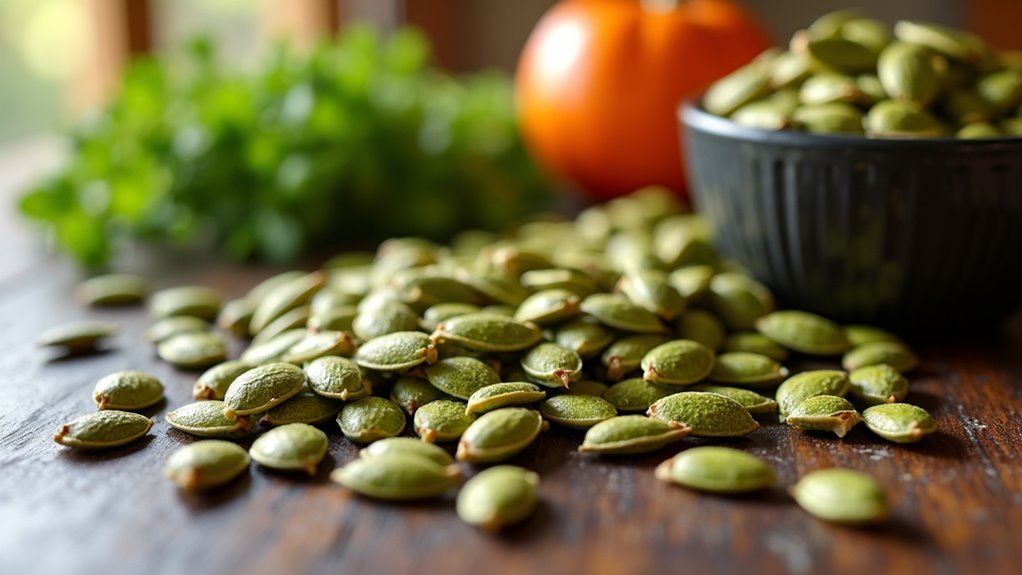
Pumpkin seeds serve as one of nature’s most potent zinc sources, delivering approximately 2.2 mg of zinc per ounce – that’s about 20% of your daily requirements. This essential mineral strengthens your immune system by enhancing T-lymphocyte development, boosting antibody production, and improving your body’s defense against respiratory infections. You’ll also benefit from additional antioxidants like vitamin E and carotenoids that work synergistically with zinc to combat oxidative stress and inflammation. Discover how to maximize absorption and optimize your immune health naturally.
The Zinc Powerhouse in Every Pumpkin Seed
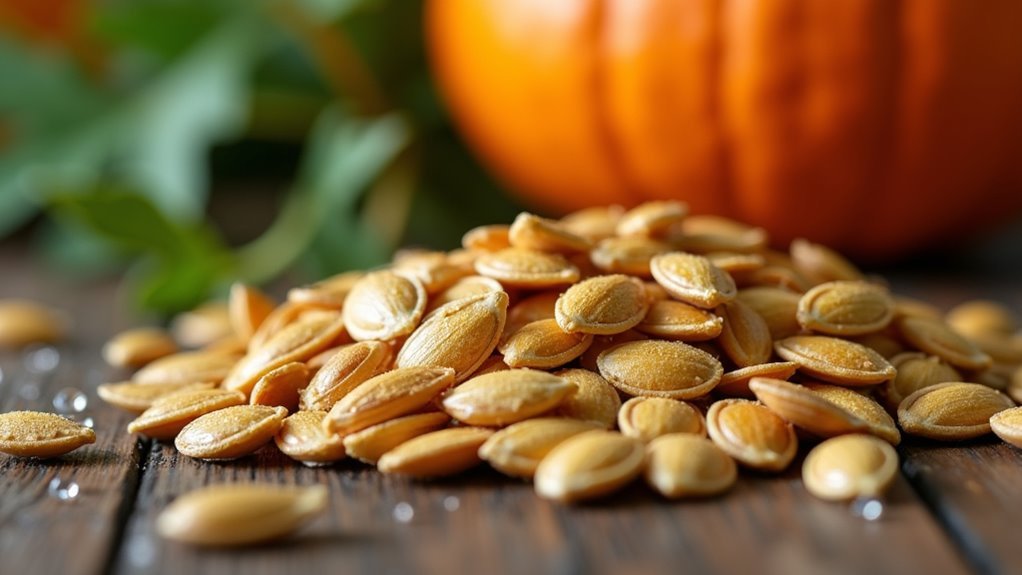
Tucked inside every carved jack-o’-lantern lies a nutritional treasure that rivals the most expensive supplements on pharmacy shelves. Pumpkin seeds pack an impressive zinc punch, delivering approximately 20% of your Daily Value in just one ounce. This makes them one of nature’s most potent zinc sources.
Your immune system depends heavily on adequate zinc levels to function efficiently. This essential mineral fuels the development and activation of T-lymphocytes, the specialized white blood cells that form your body’s frontline defense against infections and diseases.
When you regularly consume pumpkin seeds, you’re providing your immune system with the zinc it needs to maintain peak performance. Rather than reaching for synthetic supplements, you can harness this natural zinc powerhouse that’s been hiding in plain sight.
How Zinc Strengthens Your Immune Defense System
Zinc transforms your immune system into a formidable defense network by orchestrating multiple protective mechanisms throughout your body.
When you maintain adequate zinc levels, you’re empowering your T-cells to activate properly and recognize threats efficiently. This essential mineral directly enhances your adaptive immunity, enabling your body to mount targeted responses against specific pathogens.
Your antibody production considerably improves with sufficient zinc, creating stronger barriers against viruses and bacteria.
Research demonstrates that zinc supplementation reduces both the duration and severity of respiratory infections, proving its crucial role in immune health.
Pumpkin seeds deliver approximately 20% of your daily zinc requirements in just one ounce, making them a convenient and natural way to fortify your immune defenses while supporting peak immune function.
Pumpkin Seeds Vs Other Zinc-Rich Foods: a Nutritional Comparison

While many foods contain zinc, pumpkin seeds stand out as an exceptional plant-based source that delivers impressive nutritional value in a compact serving. When you’re conducting a nutritional comparison, pumpkin seeds prove their worth against various zinc-rich alternatives.
| Food Source | Serving Size | Zinc Content |
|---|---|---|
| Oysters | 3 oz | 74 mg |
| Beef | 3 oz | 7 mg |
| Pumpkin Seeds | 1 oz | ~2.2 mg |
| Chickpeas | 1 cup cooked | 1.3 mg |
You’ll find that pumpkin seeds offer concentrated zinc in smaller portions compared to legumes like chickpeas. While beef provides more zinc per serving, pumpkin seeds deliver 20% of your daily value in just one ounce, making them incredibly efficient for meeting your recommended intake of 8-11 mg daily.
The Science Behind Zinc and Immune Cell Function
Your body’s immune cells depend on zinc to function properly, with this essential mineral acting as a cellular defense coordinator that keeps neutrophils, macrophages, and T lymphocytes operating at peak performance.
When you don’t get enough zinc, these critical immune warriors can’t respond effectively to threats, leaving you more vulnerable to infections and illnesses.
The science shows that zinc doesn’t just support your immune cells—it actively enhances their response speed and strength, helping you fight off pathogens more efficiently.
Zinc’s Cellular Defense Role
Although many people focus on vitamin C for immune support, zinc operates as a cellular commander that orchestrates your body’s defense mechanisms at the microscopic level. This essential mineral directly influences your T lymphocytes and macrophages, ensuring they’re properly activated when pathogens threaten your health. Without adequate zinc, your immune function becomes compromised, leaving you vulnerable to infections.
| Defense Mechanism | Zinc’s Role |
|---|---|
| T Cell Development | Activates adaptive immunity responses |
| Macrophage Function | Enhances pathogen elimination |
| Antioxidant Activity | Reduces oxidative stress damage |
| Cell Proliferation | Speeds immune cell reproduction |
| Inflammatory Response | Modulates inflammation levels |
Zinc’s antioxidant properties combat oxidative stress while promoting rapid immune cell multiplication during illness recovery. Your respiratory system particularly benefits from ideal zinc levels, experiencing fewer infections and faster healing times.
Immune Response Enhancement
When pathogens invade your system, zinc immediately mobilizes your immune cells into coordinated action, transforming dormant defenders into active warriors.
Your T-lymphocytes depend on adequate zinc levels to mount effective adaptive immune responses against threatening invaders.
Pumpkin seeds deliver this critical mineral efficiently, providing 20% of your daily zinc needs in just one ounce.
This powerhouse snack fuels your immune response through:
- Activating T-lymphocytes – Your body’s specialized infection-fighting cells
- Reducing infection susceptibility – Stronger defenses mean fewer sick days
- Protecting against oxidative damage – Preserving your immune cells’ effectiveness
- Coordinating rapid pathogen elimination – Faster recovery from threats
Research consistently shows that maintaining ideal zinc levels considerably reduces infection rates, making pumpkin seeds an essential ally in your immunity arsenal.
Daily Zinc Requirements and Pumpkin Seed Serving Sizes

You need 11 mg of zinc daily if you’re a man and 8 mg if you’re a woman to maintain ideal immune function.
A single ounce of pumpkin seeds delivers about 2.5 mg of zinc, covering roughly 20% of your daily requirement in just one handful.
Understanding these serving sizes helps you strategically incorporate pumpkin seeds into your meals to meet your zinc needs effectively.
Recommended Daily Zinc Intake
Zinc requirements differ between men and women, with adult men needing 11 mg daily while adult women require 8 mg to maintain ideal health.
These recommendations can vary based on your age and specific health conditions, making it imperative to understand your individual needs.
Meeting your zinc requirements becomes critical for optimal immune function, as this mineral directly supports the development and function of immune cells.
Consider these compelling benefits of adequate zinc intake:
- Strengthens your body’s natural defense against infections
- Accelerates wound healing and tissue repair
- Enhances your overall energy levels and liveliness
- Protects against seasonal illnesses and immune deficiencies
You’ll find that incorporating zinc-rich foods like pumpkin seeds helps bridge nutritional gaps, especially if you’re following plant-based diets where zinc sources are traditionally limited.
Optimal Pumpkin Seed Portions
A single ounce of pumpkin seeds delivers approximately 2.2 mg of zinc, representing roughly 20% of your daily requirements. This serving size makes pumpkin seeds an exceptionally convenient way to boost your zinc intake without consuming large quantities.
Men need 11 mg of zinc daily, while women require 8 mg, meaning one ounce considerably contributes to these targets.
You can easily incorporate this ideal portion into your routine by snacking on a small handful or sprinkling seeds over salads and smoothies.
This daily serving supports immune function through zinc’s essential role in maintaining healthy immune responses. Beyond meeting zinc needs, pumpkin seeds provide additional antioxidants and nutrients that enhance overall wellness while making immune support both delicious and practical.
Meeting Zinc Needs
Understanding your specific zinc requirements helps you determine exactly how pumpkin seeds fit into your nutritional plan. Adult men need 11 mg daily while women require 8 mg to maintain optimal immunity and health.
Just one ounce of pumpkin seeds delivers approximately 20% of your daily zinc value, making them a nutrient-dense powerhouse.
Consider these compelling reasons to include pumpkin seeds in your routine:
- Combat deficiency worries – Regular consumption guarantees you’re never falling short on this essential immunity mineral
- Plant-based peace of mind – Vegetarians finally have a reliable, tasty zinc source
- Effortless daily nutrition – One simple handful transforms any meal into an immune-boosting experience
- Natural health protection – Your body gets the zinc foundation it craves for strong immunity
Antioxidants in Pumpkin Seeds That Support Immunity
When you snack on pumpkin seeds, you’re consuming a powerhouse of antioxidants that actively shield your immune cells from harm. These nutritional gems contain flavonoids, phenolic acids, vitamin E, and carotenoids that neutralize free radicals threatening your immune system.
| Antioxidant Type | Primary Function | Immune Benefit |
|---|---|---|
| Flavonoids | Reduce inflammation | Protect immune cells |
| Vitamin E | Neutralize free radicals | Strengthen immune response |
| Carotenoids | Combat oxidative stress | Enhance cell protection |
Combined with their impressive zinc content, these antioxidants create a synergistic effect that enhances your body’s infection-fighting capabilities. Studies indicate this antioxidant profile may improve immune system efficiency, potentially reducing your risk of chronic diseases and infections while maintaining peak immune health.
Maximizing Zinc Absorption From Pumpkin Seeds
While pumpkin seeds naturally contain about 20% of your daily zinc needs per ounce, you can greatly boost your body’s ability to absorb this essential immune-supporting mineral through simple preparation and pairing strategies.
To maximize zinc absorption from pumpkin seeds:
- Soak or sprout your seeds – This reduces phytic acid levels that typically block mineral uptake.
- Pair with vitamin C-rich foods – Add citrus fruits or bell peppers to create powerful nutrient synergy.
- Roast them lightly – This increases antioxidants that protect zinc from oxidative damage.
- Eat them regularly – Consistent consumption guarantees steady immune support alongside magnesium and phosphorus.
These strategies transform ordinary pumpkin seeds into immunity powerhouses, helping your body access more of zinc’s immune-boosting benefits.
Signs Your Body Needs More Zinc for Immune Health
Your body sends clear signals when it’s running low on zinc, and recognizing these signs can help you take action before your immune system becomes compromised.
You’ll often notice frequent colds that seem to drag on longer than usual, cuts and scrapes that heal slower than they should, and an overall sense that your immune system isn’t fighting off infections as effectively as before.
These warning signs indicate it’s time to boost your zinc intake through foods like pumpkin seeds or consider whether you’re getting enough of this vital immune-supporting mineral.
Frequent Cold Symptoms
If you’re catching colds more often than usual, your body might be signaling a zinc deficiency that’s compromising your immune system.
Zinc is essential for developing and maintaining healthy immune cells, and when levels drop, you become more vulnerable to infections.
Research shows that adequate zinc intake can dramatically reduce both the duration and severity of cold symptoms.
Here’s what frequent colds might mean for your immune health:
- Your immune cells aren’t functioning properly without sufficient zinc support
- You’re missing out on zinc’s infection-fighting power that could protect you
- Simple dietary changes like adding pumpkin seeds could make a real difference
- Each ounce of pumpkin seeds delivers 20% of your daily zinc needs for stronger immunity
Slow Wound Healing
When cuts and scrapes take weeks instead of days to heal, zinc deficiency might be sabotaging your body’s natural repair process. Your body relies on zinc to produce new cells and repair damaged tissue. Without adequate levels, even minor wounds become stubborn problems that refuse to close properly.
Zinc plays an essential role in collagen synthesis and immune cell function, both vital for effective healing. When you’re zinc-deficient, your skin can’t regenerate efficiently, leaving you vulnerable to infections and prolonged recovery times.
Pumpkin seeds offer an excellent solution, delivering 20% of your daily zinc needs per ounce. During illness or stress, your zinc requirements increase considerably, making these nutrient-dense seeds particularly valuable for supporting your body’s healing mechanisms.
Weakened Immune Response
Frequent colds, lingering infections, and that run-down feeling that won’t quit signal your immune system isn’t operating at full capacity.
When your body lacks adequate zinc, your immune response becomes compromised, leaving you vulnerable to pathogens that healthy immune systems easily fight off.
Your body needs zinc to produce and activate essential immune cells like T cells and macrophages. Without sufficient levels, these cellular defenders can’t function properly.
Watch for these warning signs of weakened immunity:
- Getting sick more often than usual with longer recovery times
- Struggling to shake off minor infections that typically resolve quickly
- Feeling constantly exhausted despite adequate rest and sleep
- Experiencing recurring respiratory issues or persistent congestion
Pumpkin seeds offer an excellent solution, delivering approximately 20% of your daily zinc needs per ounce.
Raw Vs Roasted Pumpkin Seeds: Which Provides Better Zinc Benefits
How do raw and roasted pumpkin seeds compare when it comes to delivering zinc for immune support?
You’ll find that raw pumpkin seeds contain approximately 20% of your Daily Value for zinc per ounce, making them incredibly potent for boosting immunity.
While roasted pumpkin seeds experience a slight reduction in zinc content during cooking, the difference is minimal—both varieties still deliver significant zinc benefits.
Here’s what matters most: you can enhance zinc absorption from either option by soaking or sprouting the seeds beforehand.
One ounce provides around 2.2 mg of zinc, contributing meaningfully toward the 11 mg daily recommendation for men and 8 mg for women.
Whether you choose raw or roasted, you’re getting versatile, immune-supporting nutrition that’s easily incorporated into meals.
Building an Immunity-Boosting Diet With Pumpkin Seeds
Since pumpkin seeds pack such impressive zinc content alongside powerful antioxidants, they’re perfectly positioned to anchor your immunity-boosting meal plan.
You’ll get 20% of your daily zinc needs from just one ounce, making it easy to fortify your immune defenses naturally.
Transform your meals with these simple immunity-boosting strategies:
- Sprinkle seeds on morning yogurt – Start each day with zinc-powered immune protection
- Blend into smoothies – Create creamy, nutrient-dense drinks that fight infections
- Toss into salads – Add satisfying crunch while meeting daily zinc requirements
- Mix into homemade trail mix – Fuel your body’s defense system on-the-go
Regular pumpkin seeds consumption elevates your zinc levels, strengthening your body’s ability to ward off diseases while supporting ideal hormonal health and immune cell function.
Frequently Asked Questions
How Many Pumpkin Seeds a Day for Zinc?
You’ll want to eat about one ounce of pumpkin seeds daily, which equals roughly a handful or quarter cup. This provides 20% of your daily zinc needs, supporting immune function effectively.
Do Pumpkin Seeds Boost Immune System?
Yes, pumpkin seeds boost your immune system through their high zinc content, which supports immune cell production and function. Their antioxidants also help fight inflammation and protect against infections naturally.
What Happens if We Eat Pumpkin Seeds Daily?
You’ll considerably increase your zinc intake by 20% daily value per ounce, strengthening your immune system, improving prostate health, enhancing sleep quality through magnesium, and reducing inflammation with powerful antioxidants.
How to Eat Pumpkin Seeds for Zinc?
You’ll maximize zinc absorption by eating raw or lightly roasted pumpkin seeds. Sprinkle them on salads, yogurt, or oatmeal, or pair them with vitamin C-rich foods like citrus fruits.


