
You’ll get the highest omega-3 content from walnuts at 2,570 mg ALA per ounce, making them your top choice for heart health. Store nuts in cool, dark places using airtight containers to preserve their omega-3 fatty acids. Choose pecans and pistachios as secondary options, stick to one-ounce servings, and pair nuts with citrus fruits to enhance absorption. Select raw or dry-roasted varieties over salted options for maximum benefits. These strategies will reveal even more nutritional potential.
Top Omega-3 Rich Nuts to Include in Your Daily Diet
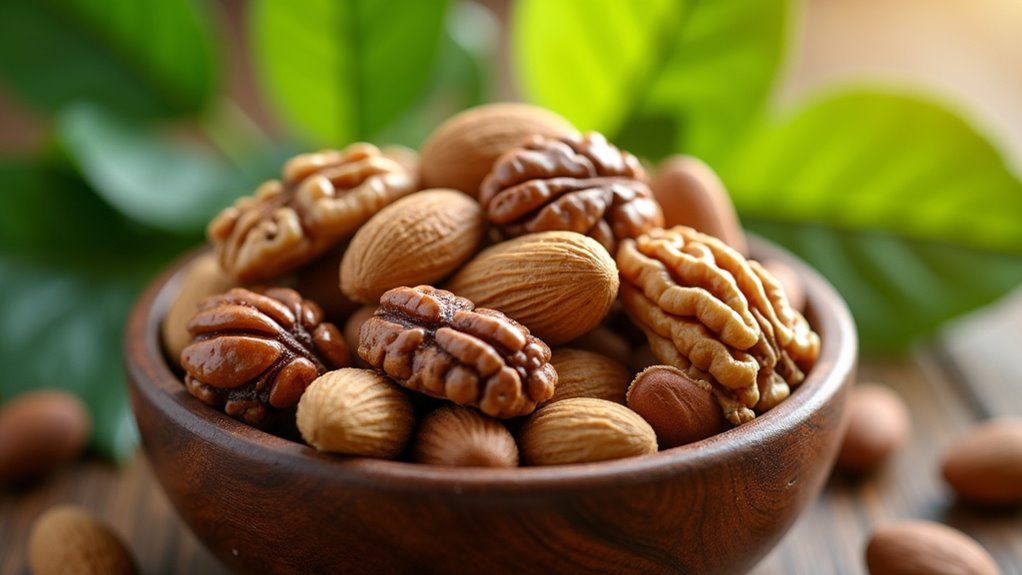
When you’re looking to boost your omega-3 intake naturally, walnuts stand out as the clear winner among nuts, delivering an impressive 2,570 mg of ALA per ounce—more than ten times the amount found in most other varieties.
Pecans follow as your second-best choice, providing 280 mg of omega-3 fatty acids along with essential nutrients for overall wellness.
Pistachios offer 82 mg per ounce and pack extra protein, making them perfect for snacking.
Macadamia nuts contribute 58 mg of ALA while supplying powerful antioxidants that support heart health.
Brazil nuts round out your options with 10 mg of omega-3 fatty acids plus selenium for additional antioxidant benefits.
Including these nuts in your healthy diet guarantees consistent omega-3 intake.
Understanding ALA Content in Different Nut Varieties
When you’re choosing nuts for omega-3 benefits, you’ll find that walnuts absolutely dominate the ALA content with an impressive 2,570 mg per ounce.
Other nuts can’t compete with walnut’s omega-3 levels, as pecans trail far behind at just 280 mg per ounce, while pistachios, macadamias, and hazelnuts offer even smaller amounts.
Understanding these dramatic differences helps you make informed decisions about which nuts will truly boost your omega-3 intake.
Walnut ALA Dominance
Among all nuts, walnuts reign supreme as the omega-3 powerhouse, delivering an impressive 2,570 mg of alpha-linolenic acid (ALA) per ounce—dramatically outpacing their competition.
When you’re choosing nuts for ideal omega-3 content, walnuts dominate the field. Their exceptional ALA levels dwarf other options like cashews (46 mg) and pistachios (82 mg) per ounce. This massive difference makes walnuts your best bet for supporting heart health and reducing cardiovascular disease risk through nuts alone.
- Daily intake achievement: One ounce provides nearly twice women’s recommended ALA needs
- Triple benefits: Combines omega-3 fatty acids with fiber and antioxidant properties
- Unmatched potency: Contains 56 times more ALA than cashews
You’ll maximize your omega-3 intake efficiently by incorporating walnuts into your diet.
Comparing Nut Varieties
While walnuts clearly lead in omega-3 content, understanding how other nuts stack up helps you make informed choices for your dietary needs. Each variety offers unique health benefits beyond omega-3 fatty acids, contributing to heart health through different mechanisms.
| Nut Variety | Omega-3 (mg/oz) | ALA Content |
|---|---|---|
| Walnuts | 2,570 | Highest |
| Pecans | 280 | Moderate |
| Macadamia nuts | 58 | Low |
| Cashews | 46 | Low |
| Hazelnuts | 25 | Lowest |
When you’re selecting nuts for healthy fats, walnuts remain unmatched. However, pecans provide decent ALA levels while delivering antioxidants. Macadamia nuts, cashews, and hazelnuts contribute minimal omega-3s but offer other nutrients supporting overall wellness.
Optimal Serving Sizes for Maximum Omega-3 Benefits
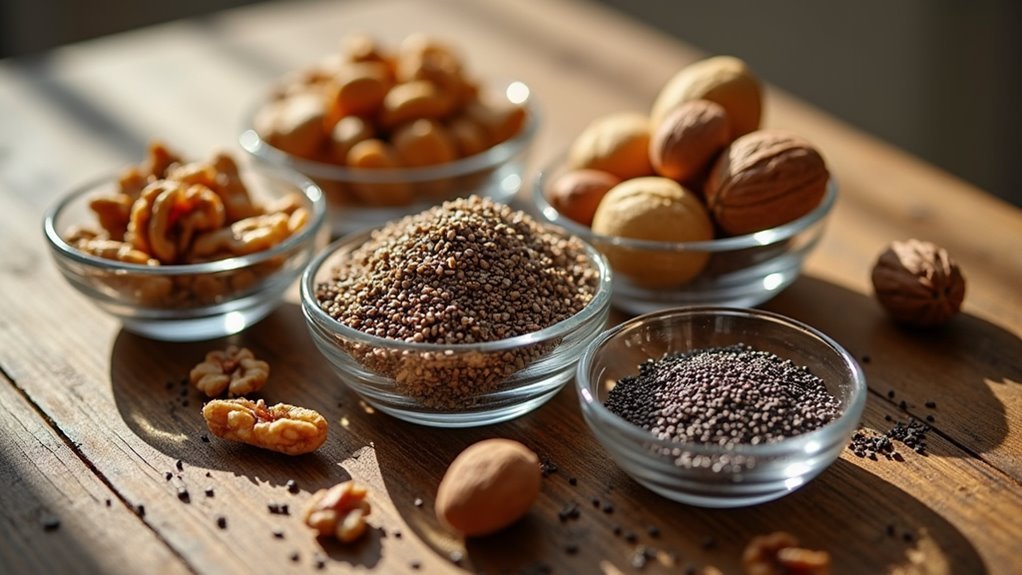
One ounce represents the perfect serving size for nuts, equaling roughly a small handful or two tablespoons of nut butter. This portion delivers considerable omega-3 fatty acids while managing calorie content effectively.
Walnuts excel with 2.57 grams of ALA per serving, making them exceptional for cardiovascular support. You’ll enhance heart health benefits by consuming 4-6 servings of unsalted nuts weekly. This frequency provides consistent omega-3 intake without excessive calories.
Daily walnut consumption greatly reduces inflammation and supports cardiovascular function.
- Target 1 ounce daily: Provides ideal omega-3 fatty acids without calorie overload
- Choose variety: Rotate between walnuts, pistachios, and pecans for diverse nutrient profiles
- Stick to unsalted: Reduces sodium intake while maintaining heart-protective benefits
Consistent portion control guarantees you’re getting maximum nutritional value from nuts.
Balancing Omega-6 to Omega-3 Ratios When Eating Nuts
Modern diets create an alarming imbalance between omega-6 and omega-3 fatty acids, with ratios reaching 8:1 instead of the ideal 1:1.
When eating nuts, you’re balancing these essential fats for peak heart-healthy benefits.
Walnuts lead the charge with 2,570 mg of omega-3 ALA per ounce, making them your best choice for improving ratios.
While cashews and macadamia nuts contain minimal omega-3s, they still offer valuable nutrients.
You’ll benefit from choosing pecans and hazelnuts, which have lower omega-6 content compared to other sources.
Focus on incorporating walnuts regularly while moderating omega-6 intake from vegetable oils.
Creative Ways to Incorporate High-Omega-3 Nuts Into Meals
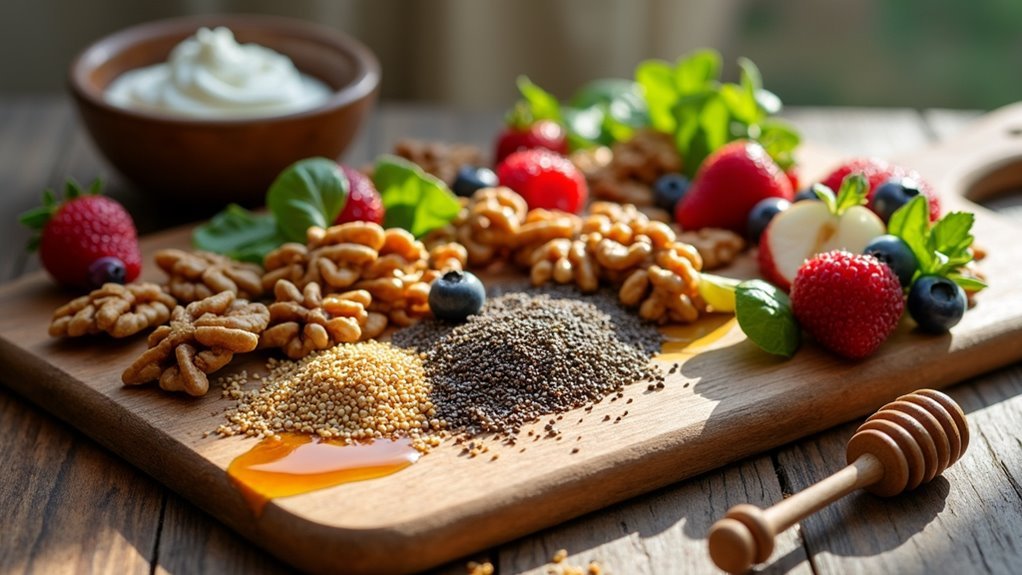
You’ve learned about balancing omega ratios, but now it’s time to put that knowledge into action with practical meal ideas.
Whether you’re starting your day with a nutrient-packed breakfast bowl or finishing it with a savory dinner, high-omega-3 nuts can transform ordinary dishes into nutritional powerhouses.
Let’s explore specific ways to seamlessly integrate these healthy fats into your daily meals without sacrificing flavor or convenience.
Breakfast Bowl Enhancements
While breakfast often gets rushed in our busy schedules, transforming your morning bowl into an omega-3 powerhouse doesn’t require complicated recipes or extra time. You can easily boost your heart health by incorporating nuts and seeds rich in ALA omega-3 fatty acids into your breakfast bowl routine.
These simple additions deliver substantial healthy fats and protein to fuel your morning:
- Chia seed overnight oats – Mix chia seeds directly into your oats for an impressive 5,050 mg of ALA per ounce
- Walnut-topped yogurt parfait – Sprinkle chopped walnuts over yogurt for 2,570 mg of omega-3s and satisfying crunch
- Flaxseed oatmeal boost – Stir ground flaxseeds into hot oatmeal, adding 2,350 mg of ALA per tablespoon
Savory Dinner Applications
After mastering omega-3-rich breakfast additions, you can transform your dinner routine with equally simple yet sophisticated applications that elevate both nutrition and flavor.
Walnuts deliver the highest omega-3 fatty acids content at 2.57g per ounce, making them perfect for savory salads and grain bowls where they provide nutritious crunch.
You’ll find pistachios create exceptional coatings for baked proteins, while macadamia nuts enhance stir-fries with their creamy texture.
Brazil nuts blend beautifully into homemade pestos, adding depth to pasta dishes.
Create versatile nut-based sauce using cashews – their mild flavor pairs perfectly with herbs and spices for drizzling over vegetables or grilled meats.
These heart-healthy additions seamlessly integrate omega-3s into your evening meals.
Storage and Preparation Tips to Preserve Omega-3 Content
Because omega-3 fatty acids are delicate compounds that easily deteriorate when exposed to heat, light, and air, you’ll need to store your nuts properly to maintain their nutritional value.
Keep walnuts and other omega-3-rich nuts in a dark place or refrigerator using airtight containers to prevent oxidation and preserve health benefits.
Choose raw or dry-roasted varieties over oil-cooked options to maximize omega-3 content.
For flaxseeds, grinding before consumption enhances nutrient absorption since whole seeds often pass through undigested.
Key Storage Tips:
- Store nuts in cool, dark places using airtight containers to minimize air and moisture exposure
- Consume omega-3-rich nuts soon after opening to prevent nutrient decline
- Grind flaxseeds before eating to improve omega-3 availability and absorption
Combining Nuts With Other Foods to Enhance Absorption
Although nuts provide excellent omega-3 content on their own, you’ll maximize their nutritional benefits by pairing them strategically with complementary foods. Creating nutrient synergy enhances absorption and amplifies health benefits.
| Food Combination | Benefits | Examples |
|---|---|---|
| Nuts + Vitamin C Sources | Enhanced omega-3 fatty acids absorption | Walnuts with citrus fruits |
| Nuts + Healthy Fats | Better fat-soluble nutrient uptake | Almonds with avocado |
| Nuts + Whole Grains | Balanced fiber and nutrient profile | Pecans in oatmeal |
| Nuts + Antioxidants | Amplified health benefits | Walnuts with berries |
You can also mix nuts with protein sources like yogurt or cheese to create a satisfying snack that aids absorption while promoting satiety. These strategic combinations guarantee you’re getting maximum nutritional value from your omega-3-rich nuts.
Frequently Asked Questions
Which Nut Is Highest in Omega-3?
Walnuts are your best choice among nuts for omega-3 fatty acids. You’ll get approximately 2.57 grams of ALA omega-3s per ounce, making them superior to other nuts for heart health.
What Is the Healthiest Nut to Eat Every Day?
You should eat walnuts daily as they’re the healthiest nut choice. They contain the highest omega-3 content among nuts, support heart health, reduce inflammation, and provide essential nutrients for peak brain function.
What Nuts Clean Arteries?
Walnuts clean your arteries best due to their high ALA omega-3 content. You’ll also benefit from almonds and hazelnuts, which contain unsaturated fats that lower bad cholesterol and reduce plaque buildup.
Which Food Is Highest in Omega-3 Fatty Acids?
You’ll find chia seeds contain the highest omega-3 levels at 5,050 mg ALA per ounce, followed by walnuts with 2,570 mg per ounce, then flaxseeds offering 2,350 mg per tablespoon.


