

Citrus fruits are your immune system’s best ally, delivering 70mg of vitamin C per orange—nearly your entire daily requirement of 75-90mg. This essential nutrient enhances white blood cell production and function while providing powerful antioxidants like flavonoids and limonene that supplements can’t replicate. Fresh oranges, grapefruits, and lemons offer superior bioavailability compared to synthetic alternatives, supporting B-cell and T-cell proliferation for stronger immune response. Discover how strategic citrus consumption maximizes your body’s natural defenses.
The Science Behind Vitamin C and Immune Function
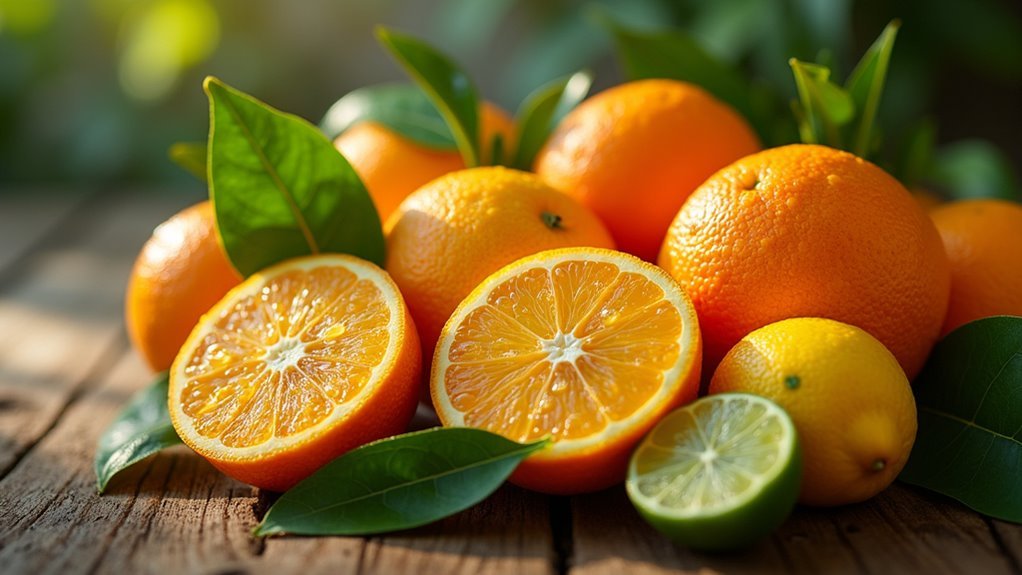
When you consume vitamin C from citrus fruits, you’re directly supporting your body’s immune defense system through several powerful mechanisms.
This essential nutrient enhances white blood cell production and function, which are your body’s primary infection-fighting soldiers. As a potent antioxidant, vitamin C neutralizes harmful free radicals that can weaken your immune system’s effectiveness.
Your immune system particularly benefits from vitamin C’s ability to improve B-cell and T-cell proliferation—crucial components of your adaptive immune response that remember and combat specific threats.
Research demonstrates that maintaining adequate vitamin C levels can reduce both the duration and severity of respiratory infections.
Adults need 75-90 mg daily, though higher amounts may benefit those with increased physical demands or specific health conditions.
Top Citrus Varieties for Maximum Vitamin C Content
Five citrus varieties stand out as vitamin C powerhouses that’ll give your immune system the strongest support.
Oranges top the list, delivering 70 mg of vitamin C per medium fruit—that’s 78% of your daily needs.
A single medium orange delivers nearly 80% of your daily vitamin C requirements, making it the ultimate immune-boosting citrus choice.
You’ll get substantial benefits from grapefruit halves containing 38 mg, perfect for breakfast routines.
Clementines offer 36 mg each, making them ideal portable snacks when you need quick immune support.
Lemons pack 31 mg per fruit, easily added to water or meals for extra vitamin C throughout your day.
Limes provide 20 mg each, enhancing both flavor and nutrition in beverages and cooking.
These varieties consistently support a healthy immune system while fitting seamlessly into your daily eating habits.
How Citrus Fruits Enhance White Blood Cell Production
Beyond their impressive vitamin C content, these citrus powerhouses work at the cellular level to strengthen your body’s defense system by boosting white blood cell production.
When you consume oranges, lemons, and other citrus fruits, you’re delivering vitamin C directly to your immune system’s command center. This essential nutrient acts as a catalyst, enhancing white blood cell production and stimulating the proliferation of B- and T-cells that form your adaptive immune response.
Your white blood cells benefit doubly from citrus consumption. The vitamin C doesn’t just increase their numbers—it also provides antioxidant protection against oxidative stress, ensuring these immune warriors function effectively and live longer.
Regular citrus intake maintains adequate vitamin C levels, keeping your white blood cell counts robust and ready to combat infections effectively.
Daily Vitamin C Requirements and Citrus Serving Sizes
You’ll need 75-90 mg of vitamin C daily depending on your gender, but meeting this requirement through citrus fruits is simpler than you might think.
A single medium orange provides about 70 mg, while one cup of strawberries delivers 85 mg—already covering most adults’ daily needs.
Understanding proper portion sizes helps you naturally fulfill your nutritional requirements without relying on supplements.
Recommended Daily Vitamin Intake
When it comes to meeting your daily vitamin C needs, understanding the recommended intake amounts can help you make informed choices about citrus consumption. The recommended daily intake varies by gender and life stage, making it essential to know your specific requirements.
Here’s what you need to know about daily vitamin C targets:
- Adult men require 90 mg of vitamin C daily to maintain ideal health.
- Adult women need 75 mg per day, with increased amounts during pregnancy and breastfeeding.
- Upper safety limit stands at 2,000 mg from supplements to prevent adverse effects.
One medium orange provides about 70 mg of vitamin C, nearly meeting most adults’ daily needs. You can supplement this with half a grapefruit (38 mg) or a medium lemon (30 mg) for additional intake.
Citrus Portion Size Guidelines
Knowing your recommended vitamin C intake helps you determine the right amount of citrus fruits to include in your daily diet. Understanding proper portion sizes guarantees you’re getting adequate vitamin C to support your immune system effectively.
| Citrus Fruit | Serving Size | Vitamin C Content |
|---|---|---|
| Orange | 1 medium | 70 mg |
| Grapefruit | 1 medium | 80 mg |
| Lemon | 1 whole | 30 mg |
| Lime | 1 medium | 20 mg |
Women need 75 mg daily, while men require 90 mg. You’ll meet these requirements with one medium orange or half a grapefruit daily. If you prefer lemons, you’ll need two to three throughout the day. Combining different citrus fruits provides variety while guaranteeing maximum immune system support through consistent vitamin C intake.
Meeting Nutritional Requirements Naturally
Since your body can’t produce vitamin C naturally, you must obtain this essential nutrient through your diet, and citrus fruits offer one of the most reliable and accessible sources.
Meeting your daily requirements doesn’t require complicated meal planning when you understand proper serving sizes.
Here’s how different citrus fruits contribute to your vitamin C needs:
- One medium orange provides 70 mg, covering nearly your entire daily requirement.
- A cup of strawberries delivers 85 mg, exceeding most adults’ needs.
- Half a large grapefruit offers 38 mg, perfect for combining with other sources.
You’ll support a healthy immune system by mixing various citrus options throughout your day.
Adult men need 90 mg daily, while women require 75 mg, making these fruits ideal natural choices.
Antioxidant Properties of Citrus Beyond Vitamin C
While you’ve likely heard about vitamin C’s immune benefits, citrus fruits pack additional antioxidant compounds that strengthen your body’s defenses in unique ways.
You’ll find powerful flavonoids that combat harmful free radicals, carotenoids that protect your vision while supporting overall health, and limonene that reduces inflammation throughout your system.
These compounds work together beyond vitamin C to create an extensive shield against oxidative stress and cellular damage.
Flavonoids Fight Free Radicals
Beyond vitamin C’s well-known immune benefits, citrus fruits pack a powerful punch of flavonoids that serve as your body’s frontline defense against cellular damage. These potent compounds, including hesperidin and naringenin, neutralize harmful free radicals that can wreak havoc on your cellular health.
When you consume citrus fruits, you’re getting a synergistic boost that enhances your antioxidant capacity beyond what vitamin C alone provides.
Key flavonoid benefits include:
- Reducing oxidative stress by neutralizing free radicals throughout your body
- Enhancing immune response through anti-inflammatory effects that support cellular protection
- Improving cardiovascular health by protecting endothelial function and reducing inflammation-related damage
This powerful combination helps lower your risk of chronic diseases while strengthening your body’s natural defense systems.
Carotenoids Support Eye Health
Although vitamin C and flavonoids steal the spotlight, citrus fruits harbor another group of powerful antioxidants called carotenoids that specifically target your eye health.
These compounds, including beta-carotene and lutein found in oranges and grapefruits, act as your eyes’ natural defense system against age-related macular degeneration and cataracts.
Carotenoids work by neutralizing harmful free radicals that damage delicate eye cells and contribute to vision problems.
When you consume citrus fruits, the vitamin C enhances your body’s absorption of these protective compounds, creating a synergistic effect that amplifies their benefits.
Research consistently shows that diets rich in carotenoids reduce your risk of developing serious eye diseases while improving overall visual function by protecting against oxidative stress.
Limonene’s Anti-Inflammatory Effects
Moving beyond carotenoids, citrus peels contain another remarkable compound called limonene that delivers powerful anti-inflammatory benefits your immune system craves.
This natural compound works by modulating cytokine production, which directly influences inflammation and immune regulation throughout your body.
When you consume citrus fruits rich in limonene, you’re supporting your health in multiple ways:
- Respiratory relief – Limonene reduces airway inflammation, improving your breathing and respiratory function.
- Antioxidant protection – It neutralizes harmful free radicals that cause cellular damage and oxidative stress.
- Disease prevention – Regular consumption decreases inflammatory disease risk factors.
Research shows that limonene’s anti-inflammatory properties help reduce chronic inflammation while enhancing your immune response.
This dual action makes citrus fruits valuable dietary components for maintaining ideal immune system function.
Comparing Citrus Fruits to Vitamin C Supplements
When you’re deciding between citrus fruits and vitamin C supplements for your immune health, you’ll find distinct advantages to each option.
Fresh citrus fruits like oranges and lemons deliver vitamin C alongside fiber and various nutrients, while supplements such as NaturesPlus Immune Vitamin C provide concentrated doses exceeding 500 mg per serving.
The vitamin C from whole fruits may be better absorbed due to accompanying phytochemicals that synthetic supplements lack. Both options support the immune system by boosting white blood cell production effectively.
If you struggle to eat enough fruit regularly, chewable supplements offer convenient alternatives. However, citrus fruits provide a delicious, invigorating approach that delivers thorough nutrition beyond just ascorbic acid.
Best Ways to Consume Citrus for Optimal Nutrient Absorption
To access citrus fruits’ full nutritional potential, you’ll want to consume them in their raw, unprocessed form whenever possible. Cooking degrades vitamin C, reducing these fruits’ ability to boost the immune system effectively.
Here are three ideal consumption methods:
- Eat whole fruits with pulp – This provides essential fiber that supports digestive health and helps regulate blood sugar levels while preserving maximum vitamin C content.
- Pair citrus with iron-rich foods – Combine oranges or grapefruits with spinach or legumes to enhance iron absorption, as vitamin C converts iron into a more bioavailable form.
- Drink fresh juice immediately – Consume citrus juice shortly after squeezing to retain antioxidants and nutrients before air exposure causes degradation.
Additionally, incorporate citrus zest into cooking for beneficial essential oils.
Seasonal Availability and Storage Tips for Citrus Fruits
Beyond knowing how to consume citrus fruits properly, you’ll need to understand when these immune-boosting powerhouses are at their peak and how to store them effectively.
The seasonal availability of citrus fruits perfectly aligns with cold and flu season, as oranges, lemons, and grapefruits peak from November to March when you need immunity support most.
Nature’s timing is perfect—citrus fruits reach their vitamin C peak precisely when winter weakens our immune defenses most.
For ideal storage tips, keep citrus at room temperature for short-term use or refrigerate them to extend freshness for weeks.
The protective rind prevents spoilage and moisture loss, but don’t wash fruits until consumption to avoid mold growth.
You can freeze citrus long-term by peeling, segmenting, or juicing them in airtight containers, preserving their nutritional benefits for future use.
Incorporating Citrus Into Your Daily Diet for Year-Round Immunity
Making citrus fruits a daily staple transforms your year-round immune defense strategy from reactive to proactive. These vitamin C powerhouses support your immune system while delivering multiple health benefits that extend beyond basic immunity protection.
Here are three simple ways to maximize citrus intake:
- Start your morning with fresh orange slices or grapefruit segments to boost vitamin C absorption and kickstart your metabolism.
- Pack portable options like clementines or tangerines in your lunch for convenient, nutrient-dense snacking throughout busy days.
- Enhance meals creatively by adding lemon zest to salads, lime juice to dressings, or orange segments to grain bowls.
This consistent approach guarantees steady vitamin C levels while improving iron absorption from plant-based foods and supporting cardiovascular health through beneficial fiber content.
Frequently Asked Questions
Does Vitamin C Boost Your Immune System?
Yes, vitamin C boosts your immune system by supporting white blood cell production and function. You’ll experience reduced cold duration and severity when you maintain daily intake, as your body doesn’t store this essential nutrient.
What Are the Side Effects of Nature Made Super C?
You might experience gastrointestinal discomfort like nausea, diarrhea, and stomach cramps with Nature Made Super C. High doses can cause kidney stones, allergic reactions, and interfere with medical tests.
Does Emergen-C Vitamin C Really Work?
Emergen-C can boost your vitamin C levels and may reduce cold duration when taken preventively, but it won’t cure existing symptoms. You’ll get mixed results, and natural food sources work better.
What Are the Side Effects of Immune Boost Vitamin C 1000MG?
You’ll likely experience gastrointestinal issues like nausea, diarrhea, and stomach cramps from 1000mg vitamin C. You’re also risking kidney stones and potential toxicity since it’s far above recommended daily amounts.


