

You’ll find that raw cacao markedly outperforms dark chocolate in flavonoid content, containing 12-18% polyphenols by dry weight compared to dark chocolate’s 108 mg per 100 grams. Raw cacao’s minimal processing preserves heat-sensitive compounds like epicatechin and catechin, while dark chocolate’s roasting and conching stages destroy beneficial antioxidants. Even high-quality 70% dark chocolate can’t match raw cacao’s antioxidant potency, though it still offers cardiovascular benefits that make understanding their differences worthwhile.
Understanding Flavonoids in Cacao and Dark Chocolate
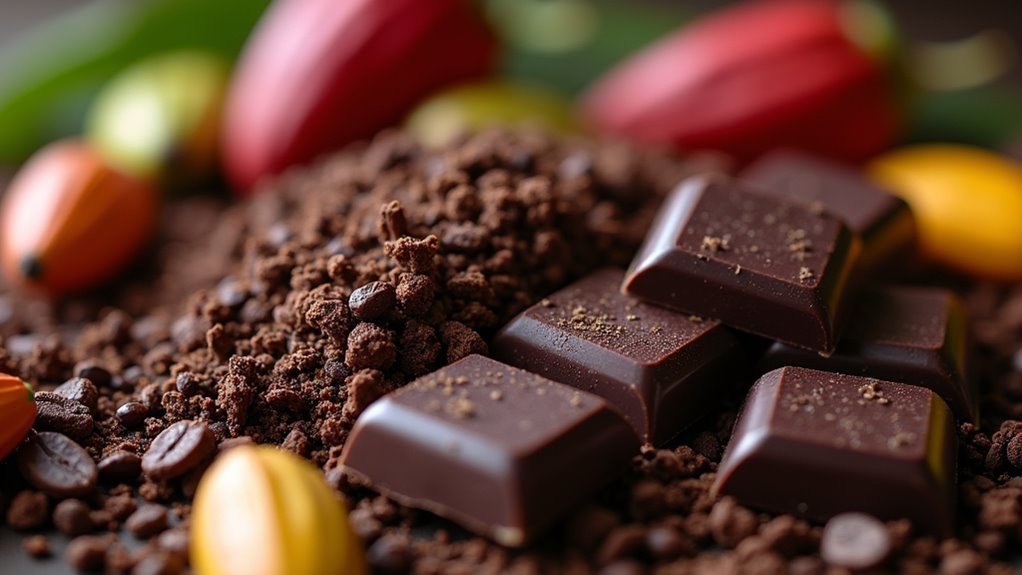
When you’re comparing cacao and dark chocolate, flavonoids represent the key compounds that make both nutritional powerhouses worth your attention.
These antioxidants, particularly epicatechin and catechin, deliver impressive health benefits including enhanced cardiovascular health through improved blood flow and reduced inflammation.
Raw cacao powder contains the highest flavonoid concentrations, exceeding 100 mg per 100 grams, since it undergoes minimal processing steps.
Dark chocolate with at least 70% cocoa content retains significant flavonoids, though roasting and other processing steps reduce these beneficial compounds compared to raw forms.
You’ll find both options provide antioxidants that combat oxidative stress, but raw cacao consistently offers superior flavonoid levels.
The less processing involved, the more these valuable compounds remain intact for your health.
Raw Cacao Processing and Flavonoid Retention
Processing methods directly determine how many beneficial flavonoids you’ll actually receive from your cacao products.
Raw cacao maintains superior antioxidants because it skips the high temperatures that destroy these valuable compounds during traditional processing.
Raw cacao’s minimal processing preserves heat-sensitive antioxidants that traditional high-temperature methods destroy, delivering maximum nutritional benefits.
Here’s how different processing stages affect your flavonoid intake:
- Fresh cacao beans contain 12-18% flavonoids by dry weight, primarily epicatechin and catechin.
- Fermentation reduces total phenolic content by 10-20%, though it’s necessary for flavor development.
- Roasting enhances taste but destroys heat-sensitive flavonoids, diminishing health benefits.
- Minimal processing preserves maximum antioxidants in products like cacao nibs and cold-pressed cocoa powder.
You’ll maximize flavonoids by choosing minimally processed raw cacao over conventional cocoa powder that’s undergone extensive heat treatment.
Dark Chocolate Manufacturing Effects on Antioxidant Levels
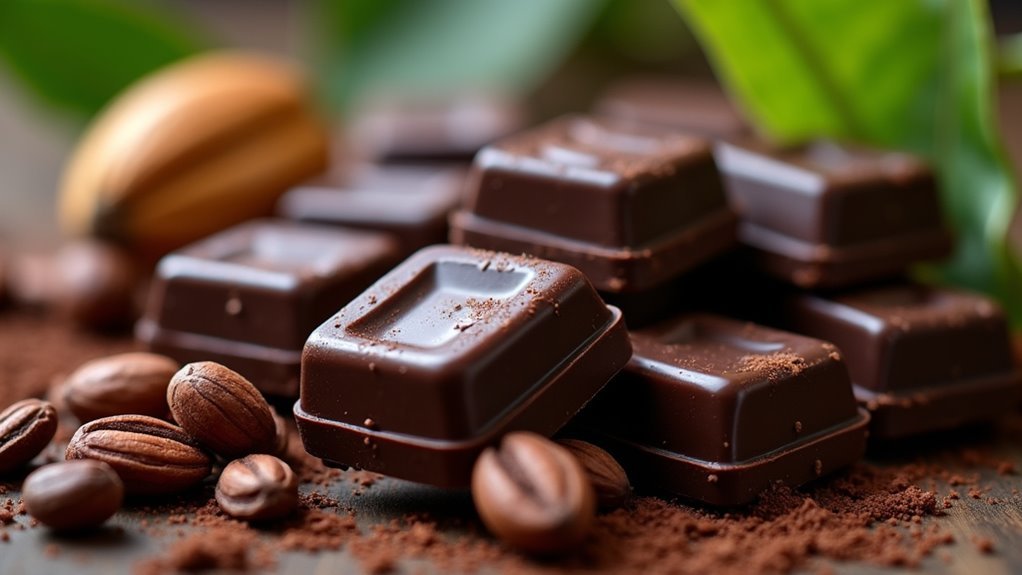
Unlike raw cacao’s minimal heat exposure, dark chocolate manufacturing subjects cocoa beans to intensive roasting that fundamentally alters their antioxidant profile.
You’ll find that the roasting process destroys certain flavonoids through high temperatures, reducing total phenolic content by 10-20%. While roasting enhances flavor and sweetness, it compromises the health advantages you’d get from raw cacao.
Chocolate manufacturing’s conching stage further impacts antioxidant levels through prolonged heat exposure, despite improving taste.
However, you can still benefit from significant flavonoid content if you choose high cocoa varieties with at least 70% cocoa content. Minimally processed dark chocolate retains over 100mg of flavonoids per 100 grams, making your selection vital for maximizing remaining antioxidant benefits.
Comparative Flavonoid Content Analysis
Raw cacao delivers an impressive flavonoid concentration that dwarfs most processed alternatives, containing 12-18% of its dry weight as polyphenols—primarily powerful flavanols like epicatechin and catechin.
Raw cacao’s exceptional 12-18% polyphenol concentration significantly outperforms processed chocolate alternatives in delivering potent flavanols like epicatechin and catechin.
When you’re choosing between chocolate types for ideal health benefits, processing methods greatly impact antioxidant effects and cognitive function support.
Here’s how different forms compare in flavonoid content:
- Raw cacao powder – Highest concentration, retaining maximum polyphenols
- Dark chocolate (70%+ cocoa) – Moderate levels at 108mg per 100g
- Processed cocoa powder – Reduced flavonoids due to manufacturing
- Lower percentage dark chocolate – Minimal beneficial compounds remaining
You’ll maximize antioxidant effects by choosing raw cacao over heavily processed alternatives, as roasting and manufacturing considerably diminish the flavonoid profile that supports cognitive function and overall wellness.
Heart Health Benefits of Raw Vs Processed Forms
When it comes to cardiovascular protection, epicatechin emerges as the star compound that sets raw cacao apart from its processed counterparts.
You’ll get the highest concentration of these heart-protective flavonoids from raw cacao, which delivers over 100mg per 100 grams.
While dark chocolate with 70% cocoa percentage still provides cardiovascular health benefits, processing reduces some antioxidants through heat exposure.
You’ll experience improved blood flow and enhanced endothelial function from both forms, but raw cacao gives you more bang for your buck.
The roasting process that transforms raw cacao into dark chocolate diminishes flavonoid potency.
However, incorporating both processed cacao and raw forms creates synergistic heart health effects.
Frequently Asked Questions
Does Cacao Have More Flavonoids Than Cocoa?
You’ll find that cacao contains markedly more flavonoids than cocoa. Processing methods like roasting reduce cocoa’s flavonoid content, while raw cacao retains its natural polyphenol levels more effectively through minimal processing.
Which Dark Chocolate Has the Highest Flavonoids?
You’ll find dark chocolate with 85% or higher cocoa content has the most flavonoids. Look for organic, minimally processed brands that use natural cocoa powder rather than alkali-treated varieties for maximum benefits.
Which Is Healthier, Cacao or Dark Chocolate?
You’ll find raw cacao slightly healthier due to higher antioxidant levels from minimal processing. However, you can’t go wrong with either choice since both offer significant heart health benefits when consumed in moderation.
What Is a High Flavanol Dark Chocolate?
You’ll find high flavanol dark chocolate contains at least 70% cocoa with minimal processing to preserve beneficial compounds. Look for brands that specify flavanol content on packaging for maximum heart health benefits.


Leave a Reply