

Cocoa flavanols are powerful plant compounds found in cocoa beans that can naturally help lower your blood pressure by enhancing blood vessel function. They work by boosting nitric oxide production, which promotes vasodilation and improves blood flow while reducing arterial stiffness. You’ll find these beneficial compounds in dark chocolate, cocoa powder, and specialized supplements, with ideal doses ranging from 200-375 mg per serving. Continue exploring to discover how you can maximize their cardiovascular benefits.
Understanding Cocoa Flavanols and Their Natural Sources

Cocoa flavanols represent a powerful subclass of flavonoids that you’ll find concentrated in cocoa beans, offering promising cardiovascular benefits including blood pressure reduction.
While you can obtain these compounds from natural sources like apples, purple grapes, red wine, and tea, cocoa and dark chocolate provide the richest concentrations available.
You should understand that cocoa flavanols’ potency varies considerably depending on several factors.
The type of cocoa bean, geographical origin, agricultural practices, and processing methods all influence their final concentration.
Epicatechin and procyanidins are the specific flavanols you’ll want to focus on, as they’re most extensively studied for their cardiovascular effects.
These compounds improve your endothelial function and reduce arterial stiffness, making them particularly valuable for managing elevated blood pressure naturally through dietary intervention.
How Cocoa Flavanols Work to Lower Blood Pressure
When you consume cocoa flavanols, they trigger a cascade of beneficial mechanisms that directly target your cardiovascular system’s ability to regulate blood pressure.
These powerful flavan-3-ols enhance your endothelial function by boosting nitric oxide production in your blood vessels, promoting vasodilation that allows blood to flow more freely.
You’ll experience reduced arterial stiffness as cocoa flavanols help your arteries become more flexible and responsive. This improved vascular function translates to lower systolic blood pressure, with effects lasting up to eight hours after consumption.
Your gut bacteria also play an essential role, metabolizing these compounds to enhance their bioavailability and amplify their cardiovascular benefits throughout your circulatory system.
Scientific Evidence for Blood Pressure Reduction
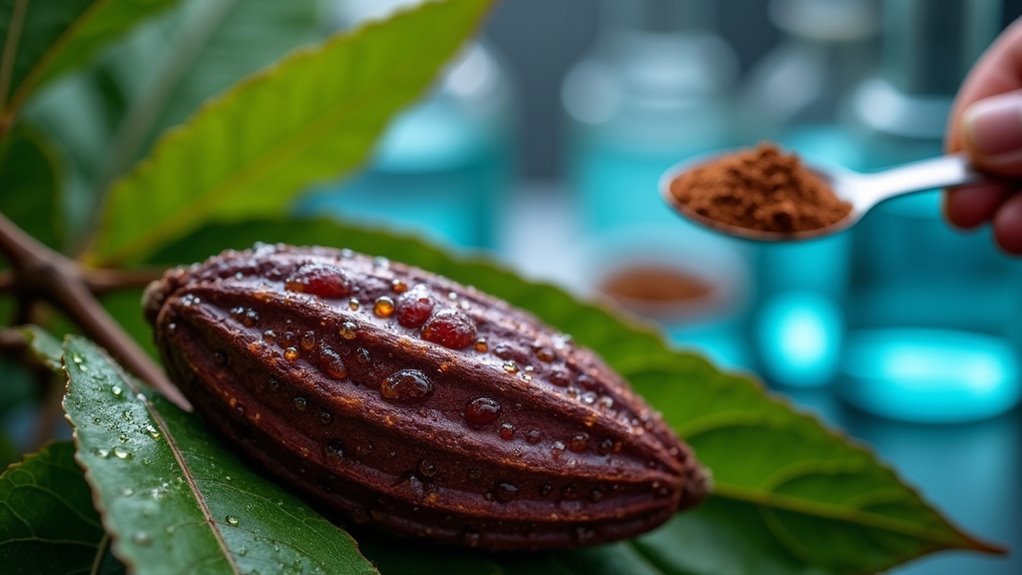
Extensive clinical research has consistently demonstrated that cocoa flavanols deliver measurable reductions in both systolic and diastolic blood pressure across diverse populations.
You’ll find the most significant benefits if you have hypertension, as studies show cocoa flavanols primarily lower blood pressure when your initial levels are elevated.
Research published in the Journal of the American College of Cardiology revealed a 47% improvement in vasodilation and decreased systolic blood pressure among coronary artery disease patients consuming high-flavanol cocoa products.
High-flavanol cocoa products improved vasodilation by 47% and reduced systolic blood pressure in coronary artery disease patients.
You can expect these cardiovascular health benefits to last up to eight hours after consumption.
The compounds also reduce arterial stiffness, which directly impacts your cardiovascular health and blood pressure regulation throughout your circulatory system.
Flavanol Content Variations in Different Cocoa Products
Understanding these blood pressure benefits requires recognizing that not all cocoa products deliver the same therapeutic effects.
The flavanol content varies dramatically between different cocoa products, directly impacting their potential health benefits for cardiovascular health.
Processing methods like fermentation, drying, and alkalization can drastically reduce flavanol levels.
You’ll find that high-flavanol cocoa drinks contain up to 375 mg of flavanols, while low-flavanol versions have just 9 mg.
- Bean variety matters – Different cocoa cultivars naturally contain varying amounts of monomeric and oligomeric flavanols.
- Processing destroys flavanols – Traditional manufacturing methods greatly reduce therapeutic compounds.
- Product selection is essential – Choose cocoa products with verified flavanol content for maximum cardiovascular benefits.
The USDA database will soon help you identify best dietary sources.
Optimal Dosage and Timing for Cardiovascular Benefits

While cocoa flavanol potency depends on product selection, maximizing cardiovascular benefits requires precise dosing and strategic timing.
You’ll find the ideal dosage typically ranges from 200 to 375 mg daily, which studies show markedly reduces blood pressure and improves arterial function.
You should consume cocoa flavanols during or after meals to enhance absorption, as dietary fats improve bioavailability.
The cardiovascular benefits last up to eight hours after ingestion, so you can time consumption strategically.
You’ll need consistent daily intake for at least 15 days to achieve sustained blood pressure reductions and improved endothelial function.
Since individual responses vary considerably, you’ll want to monitor your body’s reaction and adjust dosage accordingly for personalized cardiovascular benefits.
Processing Methods That Preserve Flavanol Potency
Because flavanols are highly sensitive to heat and chemical treatments, selecting cocoa products processed with preservation methods becomes essential for maximizing cardiovascular benefits.
You’ll want to look for products that undergo minimal fermentation and avoid alkalization, as these processes can dramatically reduce flavanol potency.
Processing methods that preserve cocoa flavanols include:
- Cold pressing techniques – Lower temperatures maintain flavanol integrity better than traditional high-heat methods
- Minimal alkalization – Avoiding this chemical treatment prevents significant flavanol degradation
- Careful bean selection – Choosing specific cultivars from certain geographical origins naturally provides higher flavanol concentrations
Dark chocolate with high cocoa content typically retains more flavanols than milk chocolate or heavily processed products.
The USDA’s developing database will help you identify high-flavanol options for ideal blood pressure benefits.
Comparing Dark Chocolate to Cocoa Supplements
When you’re choosing between dark chocolate and cocoa supplements for blood pressure management, you’ll find significant differences in flavanol content and therapeutic potential.
Dark chocolate’s flavanol levels vary widely depending on cocoa percentage and processing, while supplements offer standardized, concentrated doses that typically exceed what you’d get from chocolate alone.
You’ll also notice that supplements often provide better bioavailability since they’re formulated without the sugar and fats found in chocolate that can interfere with flavanol absorption.
Flavanol Content Differences
Although dark chocolate contains beneficial flavanols, cocoa supplements deliver considerably higher concentrations of these blood pressure-lowering compounds.
When you’re comparing flavanol content between dark chocolate and cocoa supplements, you’ll find significant differences that impact their effectiveness for blood pressure management.
Here’s how the flavanol content differs:
- Supplement concentration – Cocoa supplements provide up to 375 mg of cocoa flavanols per serving, while dark chocolate averages only 100 mg per ounce.
- Processing variations – Dark chocolate’s flavanol content varies dramatically due to alkalization and manufacturing methods that can destroy beneficial compounds.
- Ingredient interference – Chocolate’s added sugars and fats dilute the flavanol benefits, whereas supplements offer standardized, concentrated doses.
You’ll achieve more consistent blood pressure benefits with cocoa supplements due to their reliable, higher flavanol content compared to variable dark chocolate products.
Dosage and Bioavailability
While cocoa supplements offer higher flavanol concentrations, the dosage and bioavailability differences between supplements and dark chocolate greatly impact their effectiveness for blood pressure management.
You’ll find cocoa supplements deliver 200-375 mg of flavanols per serving, while dark chocolate provides only 50-100 mg per ounce. Research indicates you need 200-600 mg daily for ideal blood pressure reduction, making supplements more practical than dietary sources alone.
However, bioavailability varies considerably based on processing methods. Natural cocoa powder retains more flavanols than alkalized versions, affecting absorption rates.
You should also consider that individual responses differ—some people experience considerable blood pressure improvements while others see minimal effects. This variation suggests you might need personalized dosage strategies to maximize cocoa flavanols’ cardiovascular benefits.
Mechanisms of Vascular Health Improvement
Because cocoa flavanols directly target your blood vessel walls, they create measurable improvements in vascular health through several interconnected pathways.
These compounds enhance endothelial function, which maintains your blood vessels’ flexibility and overall health. When you consume cocoa flavanols, they boost nitric oxide production, an essential molecule that promotes vasodilation and improves blood flow while reducing arterial stiffness.
Cocoa flavanols boost nitric oxide production in blood vessels, promoting improved circulation and reducing arterial stiffness for better cardiovascular health.
The mechanisms through which cocoa flavanols improve your vascular health include:
- Enhanced endothelial function – strengthening the inner lining of blood vessels for better flexibility
- Increased nitric oxide production – promoting vasodilation and improved circulation throughout your cardiovascular system
- Reduced platelet activation – decreasing blood clotting risks and supporting antithrombotic effects
These processes work together to lower your blood pressure, particularly when you have elevated baseline levels.
Real-World Studies on Blood Pressure Management
These biological mechanisms translate into measurable results when cocoa flavanols are tested in real-world settings.
Multiple studies demonstrate that you’ll experience significant blood pressure reductions, particularly if you have elevated levels. Research shows cocoa flavanols’ effects can last up to eight hours after consumption, providing sustained cardiovascular health benefits.
In controlled trials, you’ll see the most pronounced improvements when you have hypertension. One study found that cocoa flavanol capsules reduced arterial stiffness and lowered blood pressure readings specifically in participants with high blood pressure.
For those with coronary artery disease, consuming 375 mg of cocoa flavanols improved vasodilation by 47% while decreasing systolic pressure.
These real-world studies confirm cocoa flavanols offer targeted, measurable benefits for blood pressure management in clinical populations.
Individual Response Variations to Flavanol Therapy
Your response to cocoa flavanol therapy won’t be identical to someone else’s, as individual variations greatly impact blood pressure outcomes.
Your baseline blood pressure level plays an essential role—you’ll likely see more dramatic improvements if you start with elevated readings compared to normal ones.
Your genetic makeup and personal health profile mean you’ll benefit most from a personalized treatment approach rather than a one-size-fits-all dosing strategy.
Baseline Blood Pressure Effects
When you’re considering cocoa flavanol therapy for blood pressure management, your baseline blood pressure levels considerably influence how well you’ll respond to treatment.
Research shows that cocoa flavanols work most effectively when your starting blood pressure is elevated, while individuals with already low baseline levels experience minimal benefits.
Your current blood pressure status determines treatment effectiveness through these key factors:
- High baseline pressure – You’ll likely see significant reductions of several mmHg
- Normal baseline pressure – You’ll experience modest improvements in arterial function
- Low baseline pressure – You’ll notice minimal to no measurable changes
This baseline-dependent response highlights why personalized approaches are essential for cocoa flavanol therapy.
Rather than expecting universal results, understanding your individual responses based on starting blood pressure helps set realistic expectations for treatment outcomes.
Genetic Response Differences
Beyond baseline blood pressure levels, your genetic makeup plays a major role in determining how well you’ll respond to cocoa flavanol therapy. Genetic differences in enzymes like UDP-glucuronosyltransferases affect flavanol metabolism, influencing how effectively your body processes these compounds. Some individuals experience considerably greater blood pressure reductions than others due to these variations.
| Factor | Impact on Response | Clinical Significance |
|---|---|---|
| Genetic polymorphisms | Alters enzyme efficiency | Determines bioavailability |
| Gut microbiota composition | Affects flavanol breakdown | Influences metabolite production |
| Metabolic pathways | Changes compound utilization | Modifies therapeutic outcomes |
Your gut microbiota also influences how cocoa flavanols are metabolized, creating additional response variability. Understanding these factors supports personalized dietary interventions, helping optimize cardiovascular benefits for your specific genetic and microbiome profile rather than using one-size-fits-all approaches.
Personalized Treatment Approaches
While genetic factors provide the foundation for response variability, developing personalized treatment approaches requires examining the full spectrum of factors that determine your individual response to cocoa flavanol therapy.
Effective personalized treatment approaches for cocoa flavanols consider your unique physiological profile to maximize cardiovascular benefits:
- Baseline Blood Pressure Assessment – Your starting blood pressure levels determine potential benefit magnitude, with higher readings typically showing greater response to flavanol intervention.
- Metabolic Health Evaluation – Your gut microbiota composition, dietary habits, and metabolic markers influence how effectively you process and utilize cocoa flavanols.
- Targeted Dosing Protocols – Your individual variations require customized flavanol intake recommendations based on health metrics rather than standard dosing approaches.
These individual variations emphasize why personalized treatment approaches represent the future of cocoa flavanol therapy for optimizing blood pressure management.
Safety Considerations and Potential Side Effects
Cocoa flavanols carry a strong safety profile for most people, but you should understand the potential side effects before incorporating them into your routine. High doses can cause gastrointestinal discomfort, including bloating or diarrhea.
While cocoa flavanols are generally safe, high doses may trigger digestive issues like bloating and diarrhea in some individuals.
If you’re caffeine-sensitive, you might experience increased heart rate or anxiety from methylxanthines in cocoa products.
You should avoid cocoa flavanols if you have cocoa or chocolate allergies, as they can trigger allergic reactions.
These compounds may interact with certain medications, particularly blood pressure medication and anticoagulants. Since cocoa flavanols can lower blood pressure, combining them with prescription medications could cause excessive drops.
Always consult your healthcare provider before starting supplementation, especially if you’re taking medications or have underlying health conditions.
Combining Flavanols With Traditional Blood Pressure Treatments
Although traditional blood pressure medications remain the cornerstone of hypertension treatment, cocoa flavanols can enhance their effectiveness when used as complementary therapy.
You’ll find that flavanols work alongside your current medications by improving endothelial function and promoting vasodilation, potentially leading to better blood pressure control.
Research shows promising results when combining these approaches:
- Enhanced vessel function – Cocoa flavanols can improve brachial artery vasodilation by up to 47% while reducing systolic blood pressure.
- Improved cardiovascular repair – Increased angiogenic cells help repair damaged blood vessels, supporting overall cardiovascular health.
- Personalized treatment benefits – Individual responses vary, so combining dietary flavanols with traditional treatments may improve adherence and effectiveness.
This integrated approach particularly benefits individuals with pre-existing hypertension by reducing arterial stiffness.
Long-Term Cardiovascular Protection Benefits
Beyond the immediate blood pressure benefits, regular cocoa flavanol consumption provides sustained cardiovascular protection that extends far beyond temporary improvements.
You’ll experience enhanced endothelial function as cocoa flavanols increase nitric oxide levels, creating lasting improvements in your vascular health. Research shows a remarkable 47% improvement in vasodilation of the brachial artery, demonstrating how these compounds enhance blood flow throughout your cardiovascular system.
Your arterial stiffness decreases considerably with consistent consumption, reducing long-term cardiovascular risk.
The Kuna Indians of Panama exemplify this protection, showing dramatically lower hypertension rates due to their high-flavanol cocoa diet. While long-term trials continue, current evidence strongly suggests that cocoa flavanols can safely complement traditional blood pressure medications, offering you extensive cardiovascular health benefits that compound over time.
Selecting High-Quality Flavanol-Rich Products
Since not all cocoa products deliver the same cardiovascular benefits, you’ll need to carefully evaluate flavanol content when making your selection. High-quality flavanol-rich products require specific criteria to maximize their blood pressure benefits.
When choosing cocoa flavanols for best results, focus on these key factors:
- Target 200-375mg per serving – Look for products containing at least this amount of cocoa flavanols, as higher concentrations are linked to cardiovascular benefits.
- Select 70%+ dark chocolate – Higher cocoa content generally means more flavanols compared to milk chocolate or lower percentage options.
- Choose minimally processed products – Processing techniques like alkalization greatly reduce flavanol content, so opt for raw or lightly processed cocoa.
Check labels for specific flavanol information and consider certified products with clinical testing backing their health claims.
Frequently Asked Questions
Do Cocoa Flavanols Lower Blood Pressure?
Yes, cocoa flavanols can lower your blood pressure, especially when it’s elevated. They’ll improve your blood vessel function and increase nitric oxide levels, promoting better circulation and reducing arterial stiffness.
What Foods Are High in Cocoa Flavanols?
You’ll find the highest cocoa flavanols in dark chocolate containing at least 70% cocoa and unsweetened cocoa powder. Raw cacao contains even more flavanols than processed versions due to minimal processing methods.
What Kind of Cocoa Is Good for High Blood Pressure?
You’ll want dark chocolate with at least 70% cocoa content or raw cacao powder. Choose minimally processed products that specify high flavanol levels, avoiding heavily alkalized cocoa that’s lost its beneficial compounds.
Which Chocolate Is Highest in Cocoa Flavanols?
You’ll find dark chocolate with 70%+ cocoa solids contains the highest flavanols, especially varieties labeled “high-flavanol.” Choose brands that aren’t alkalized and specify flavanol content for maximum benefits.


