

You’ll maximize gut health by incorporating cabbage family vegetables rich in prebiotic fiber into your weekly meals. Start with savoy cabbage’s 2.2 grams of fiber per cup, add raw red cabbage for antioxidants, and steam green cabbage for 6-8 minutes to preserve 90% of nutrients. Include fermented sauerkraut for probiotics, combine leeks with cruciferous vegetables, and gradually increase intake starting with 1/4 cup servings. These strategic approaches will reveal even greater digestive benefits.
Understanding How Cabbage Family Vegetables Feed Gut Bacteria
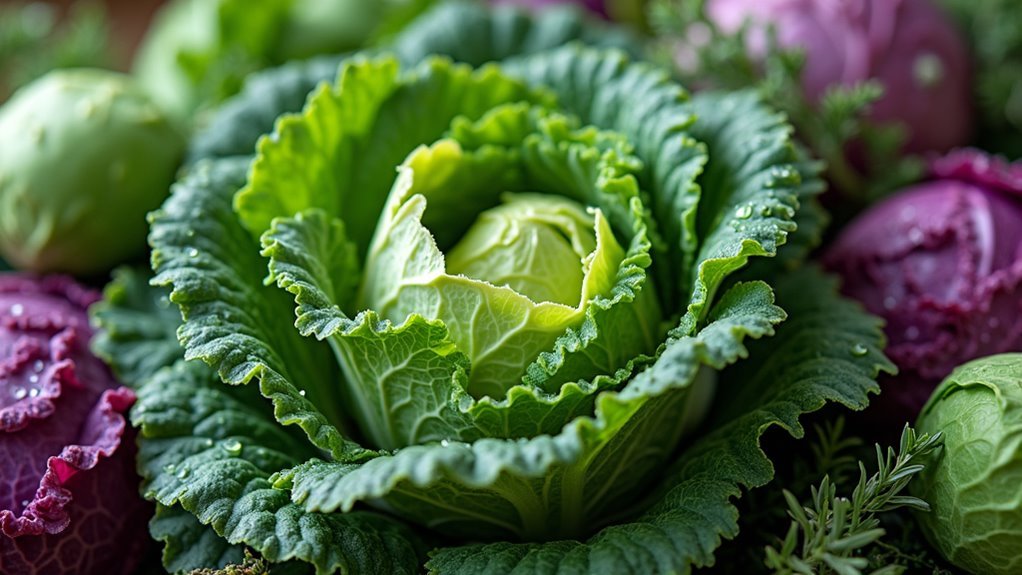
While most people know cabbage as a crunchy addition to salads or coleslaw, this humble vegetable actually serves as a powerhouse fuel source for your gut’s beneficial bacteria.
Cabbage family vegetables contain prebiotic fiber, particularly inulin, which your digestive system can’t break down but your gut bacteria absolutely thrive on. When you eat cabbage, you’re fundamentally delivering a specialized meal to the beneficial bacteria living in your intestines.
These helpful microorganisms ferment the prebiotic fiber, producing beneficial compounds that support your digestive health. Savoy cabbage provides about 2.2 grams of this crucial prebiotic fiber per cup, while red cabbage offers anthocyanins that double as prebiotics, creating an ideal environment for your gut bacteria to flourish and multiply.
Start With Savoy Cabbage for Maximum Prebiotic Benefits
When you’re ready to maximize your prebiotic fiber intake, savoy cabbage stands out as your best starting point among cabbage varieties. Each cup delivers 2.2 grams of prebiotic fiber that directly feeds beneficial bacteria in your digestive system.
Savoy cabbage delivers 2.2 grams of prebiotic fiber per cup, making it the top choice for feeding your beneficial gut bacteria.
You’ll also get essential vitamins B6, C, and K that support overall gut health while promoting bacterial growth.
The crinkled leaves make savoy cabbage incredibly versatile for cooking. They retain moisture and flavor better than regular cabbage, so you can easily incorporate them into soups, stir-fries, or salads without sacrificing taste.
Since children need at least 5 grams of prebiotic fiber daily, adding savoy cabbage to meals helps you reach this goal naturally. Your digestion will improve as this fiber nourishes your microbiome effectively.
Add Raw Red Cabbage to Boost Antioxidant Power

Beyond fiber content, red cabbage’s deep purple hue signals an abundance of anthocyanins that’ll supercharge your prebiotic routine with antioxidant protection.
Raw red cabbage delivers 2.1 grams of fiber per cup while flooding your system with inflammation-fighting compounds that support gut health and overall wellness.
You’ll maximize benefits by incorporating raw red cabbage into your prebiotic foods arsenal through these simple strategies:
- Colorful Rainbow Slaw – Shred raw red cabbage with carrots and apples for a vibrant, crunchy side dish that delivers both prebiotics and antioxidants.
- Purple Power Salad – Layer thin ribbons of raw red cabbage over mixed greens for an antioxidant-rich foundation.
- Fermented Purple Kraut – Transform raw red cabbage into probiotic-rich sauerkraut that combines beneficial bacteria with prebiotic fiber.
Half a cup provides 50% of your daily vitamin C needs.
Steam Green Cabbage to Preserve Fiber Content
You’ll preserve green cabbage’s prebiotic fiber by steaming it for just 6-8 minutes, which maintains about 90% of its valuable nutrients.
This gentle cooking method keeps the 2.2 grams of prebiotic fiber per cup intact while making the cabbage easier to digest than raw varieties.
Simply place chopped cabbage in a steamer basket over boiling water, cover, and you’re done when it’s tender-crisp.
Optimal Steaming Time
Since fiber content decreases with prolonged heat exposure, you’ll want to steam green cabbage for exactly 6-8 minutes to enhance its prebiotic benefits. This ideal steaming time guarantees you maintain fiber content while preserving high levels of vitamins C and K.
Picture perfectly steamed cabbage that delivers maximum nutritional value:
- Vibrant green leaves that retain their natural color and crisp texture
- Tender-crisp bite that’s neither mushy nor too firm when pierced with a fork
- Fresh, sweet aroma rising from your steamer basket without any sulfurous smell
Beyond this timeframe, you’ll start losing those valuable prebiotics that support digestive health. Your steamed cabbage should maintain its structural integrity while becoming tender enough to enjoy in salads, stir-fries, or as a standalone side dish.
Nutrient Retention Benefits
When you steam green cabbage properly, you preserve an impressive 90% of its nutrients compared to other cooking methods that strip away valuable compounds.
This superior nutrient retention means you’ll maintain essential vitamins like C and K that typically disappear during boiling or overcooking. Your steamed cabbage delivers approximately 2 grams of prebiotic fiber per cup, supporting your digestive system and feeding beneficial gut bacteria effectively.
Unlike boiling, which leaches nutrients into cooking water, steaming keeps these valuable compounds locked inside the vegetable.
You’ll notice your cabbage maintains its vibrant color and crisp texture while delivering maximum health benefits. This cooking method guarantees you’re getting the full spectrum of vitamins and prebiotic fiber that make cabbage such a powerful addition to your wellness routine.
Simple Preparation Method
Steaming green cabbage transforms this nutritious vegetable into a fiber-rich powerhouse while maintaining its natural crunch and vibrant color.
This gentle cooking method preserves prebiotic fiber that feeds healthy gut bacteria in your digestive system. You’ll retain essential vitamin C and other nutrients that disappear when you boil or overcook cabbage.
Follow these simple steps for perfect steamed cabbage:
- Cut half a cabbage head into uniform wedges – ensuring even cooking throughout each piece
- Place wedges in a steamer basket over boiling water – creating the ideal steaming environment
- Steam for 6-8 minutes until tender-crisp – preserving maximum dietary fibers and nutrients
Drizzle your steamed cabbage with olive oil for enhanced flavor while keeping this low-calorie option nutritious and satisfying.
Incorporate Fermented Sauerkraut for Dual Prebiotic-Probiotic Support
Although many people think of sauerkraut as just a tangy condiment, this fermented cabbage powerhouse delivers an exceptional one-two punch for your gut health. You’ll get both prebiotic fiber that feeds beneficial bacteria and live probiotics that directly colonize your digestive system.
One cup provides up to 4 grams of fiber while delivering active cultures from fermentation. This dual action enhances nutrient absorption and strengthens immune function more effectively than either component alone.
| Benefit | Daily Impact |
|---|---|
| Prebiotic Fiber | Nourishes existing gut bacteria |
| Live Probiotics | Introduces beneficial cultures |
| Combined Effect | Optimizes microbiome balance |
Add unpasteurized sauerkraut to salads, sandwiches, or serve it as a side dish. You’ll maximize gut health benefits through this convenient, versatile option that works harder than typical fermented foods.
Choose Brussels Sprouts for High Fiber Density

Brussels sprouts pack an impressive 3.8 grams of fiber per 100-gram serving, making them one of the most fiber-dense vegetables in the cabbage family. Their prebiotic fiber specifically nourishes beneficial gut bacteria, creating a thriving environment for ideal digestive health.
Brussels sprouts deliver 3.8 grams of prebiotic fiber per serving, making them powerhouse vegetables for optimal gut health and digestive wellness.
You’ll also get substantial vitamins C and K alongside this high fiber density.
Consider these preparation methods to maximize their appeal:
- Golden roasted sprouts – halved and caramelized until crispy edges form, bringing out natural sweetness while preserving prebiotic properties
- Shredded raw Brussels – finely sliced into fresh salads for maximum fiber retention and satisfying crunch
- Pan-seared medallions – thick-cut rounds seared until tender, creating restaurant-quality presentation
Regular consumption supports weight management through enhanced satiety, making Brussels sprouts an excellent strategic choice for your prebiotic fiber goals.
Include Cauliflower and Broccoli in Weekly Meal Planning
Cauliflower and broccoli deserve equal attention in your weekly meal rotation, offering similar prebiotic fiber benefits with remarkable versatility.
Like cabbage, these cruciferous vegetables pack powerful prebiotic fibers that boost gut health and support digestive wellness. You’ll get over 100% of your daily vitamin C needs from just one cup of cooked broccoli, plus essential vitamin K.
Transform cauliflower into rice, mash it as a potato substitute, or roast it for crispy texture.
Broccoli provides cancer-fighting glucosinolates alongside its fiber content. Plan these vegetables into three meals weekly to maximize nutrient intake.
Their adaptability makes them perfect for stir-fries, soups, and side dishes while consistently delivering the prebiotic benefits your digestive system craves.
Combine Leeks With Other Cruciferous Vegetables
You’ll maximize your prebiotic fiber intake when you combine leeks with cabbage and other cruciferous vegetables in your meals.
This powerful pairing doesn’t just boost your fiber content—it creates synergistic benefits that support gut health and reduce inflammation throughout your body.
You can easily incorporate these fiber-boosting combinations into simple recipes like hearty soups, quick stir-fries, or roasted vegetable medleys.
Leeks Plus Cabbage Benefits
When you combine leeks with cabbage and other cruciferous vegetables, you’re creating a powerhouse duo that delivers exceptional prebiotic benefits for your digestive system.
Leeks provide 1.6 grams of fiber per cup, rich in inulin that nourishes beneficial gut bacteria, while cabbage adds essential vitamins B6, C, and K plus powerful antioxidants.
This dynamic pairing supports both gut health and cardiovascular health by lowering cholesterol levels and reducing inflammation. The prebiotic fibers work together to enhance your digestive wellness.
Here’s what you’ll gain from this combination:
- Enhanced nutrient absorption through improved gut bacteria balance
- Reduced inflammation throughout your cardiovascular system
- Increased dietary fiber intake supporting ideal digestive function
You’ll retain these prebiotic properties even when cooking leeks and cabbage together, making flavorful dishes that promote overall well-being.
Fiber Boosting Combinations
Expanding beyond cabbage, you can create even more fiber-rich meals by pairing leeks with broccoli, Brussels sprouts, kale, and cauliflower.
These fiber boosting combinations maximize your intake of prebiotic fibers, with leeks contributing 1.6 grams per cup while other cruciferous vegetables add substantial amounts. You’ll enhance healthy gut bacteria growth through leeks’ inulin content, which works synergistically with the fiber from broccoli and cauliflower.
These combinations also boost antioxidant levels considerably, as both leeks and cruciferous vegetables contain cancer-fighting compounds.
Try roasting leeks with Brussels sprouts or sautéing them with kale for flavorful dishes. You can experiment with different cooking methods to elevate taste while ensuring maximum nutritional benefits from these powerful vegetable partnerships.
Easy Mixed Vegetable Recipes
Since leeks pair beautifully with other cruciferous vegetables, creating mixed dishes becomes both simple and nutritionally powerful.
You’ll boost your intake of prebiotic fibers while supporting gut health through these flavorful combinations.
Here are three easy mixed vegetable recipes:
- Quick Stir-Fry Medley – Toss sliced leeks with broccoli florets and Brussels sprouts in a hot pan with olive oil for 5-7 minutes, preserving nutrients while creating a fiber-rich side dish.
- Roasted Vegetable Mix – Combine chunked leeks and cabbage, roast at 400°F for 20-25 minutes until caramelized, enhancing natural sweetness while maintaining prebiotic benefits.
- Colorful Cauliflower Blend – Steam leeks with cauliflower and cabbage, then season with herbs for a nutrient-dense combination packed with antioxidants that support heart health.
Gradually Increase Cabbage Family Intake to Avoid Digestive Discomfort
Although cabbage family vegetables offer impressive prebiotic benefits, you’ll want to introduce them slowly to prevent uncomfortable digestive side effects. When you gradually increase your intake of these fiber-rich foods, your gut can adapt without experiencing digestive discomfort.
Start with small servings like 1/4 cup of cooked cabbage, then boost your prebiotic fiber consumption by about 1/2 cup weekly. This measured approach helps your digestive system adjust to the increased fiber load.
Begin with 1/4 cup servings of cooked cabbage and gradually increase by 1/2 cup weekly for optimal digestive adaptation.
Diversify your cabbage family choices by rotating between green, red, and savoy varieties. Drink plenty of water alongside these vegetables to support proper digestion.
Pay attention to your body’s response, as tolerance levels vary between individuals. Some people handle higher fiber amounts better than others, so adjust your pace accordingly.
Store Cabbage Properly to Maintain Prebiotic Fiber Quality
Proper storage techniques preserve cabbage’s prebiotic fiber content and maximize its nutritional benefits. When you store cabbage correctly, you’ll maintain its nutrients and freshness for up to two weeks.
Keep your cabbage in the refrigerator using a perforated plastic bag that allows proper airflow while protecting the prebiotic fiber quality.
Follow these essential storage practices:
- Keep it dry and cool – Store whole cabbage heads in your refrigerator’s crisper drawer, avoiding moisture until ready to use.
- Separate from ethylene producers – Place cabbage away from apples and bananas, which release gases that accelerate spoilage.
- Container cut portions – Transfer shredded or cut cabbage into airtight containers to preserve freshness for one week.
These methods guarantee your cabbage retains maximum prebiotic fiber potency.
Frequently Asked Questions
How Do You Make Cabbage Easier to Digest?
You’ll find cabbage easier to digest by steaming or roasting it to break down tough fibers. Add garlic or ginger while cooking, start with smaller portions, and consider fermenting it into sauerkraut for better digestibility.
Does Cabbage Have Prebiotic Fiber?
Yes, cabbage contains prebiotic fiber that feeds your beneficial gut bacteria. You’ll get about 2.2 grams per cup, which supports digestive health and enhances your gut microbiome diversity when eaten regularly.
Can Cabbage Heal Your Gut?
You can’t completely heal your gut with cabbage alone, but it’ll greatly support gut health. Its prebiotic fiber feeds beneficial bacteria, while compounds like sinigrin promote digestive wellness and help suppress harmful microorganisms naturally.
Does Cabbage Cleanse the Stomach?
You’ll find cabbage does cleanse your stomach through its high fiber content, which promotes regular bowel movements and supports beneficial gut bacteria that help eliminate toxins and improve overall digestive health.


