

You’ll maximize gut restoration by choosing high-fiber berries like raspberries and blackberries, which deliver 8 grams of prebiotic fiber per cup. Combine them with fermented foods like yogurt to amplify probiotic activity, and time consumption strategically—morning intake jumpstarts digestion while evening portions promote overnight regularity. Rotate fresh seasonal varieties with frozen options for year-round consistency, balance with prebiotic-rich oats or bananas, and monitor your body’s response to different types and amounts for ideal digestive transformation ahead.
Choose High-Fiber Berry Varieties for Maximum Prebiotic Benefits
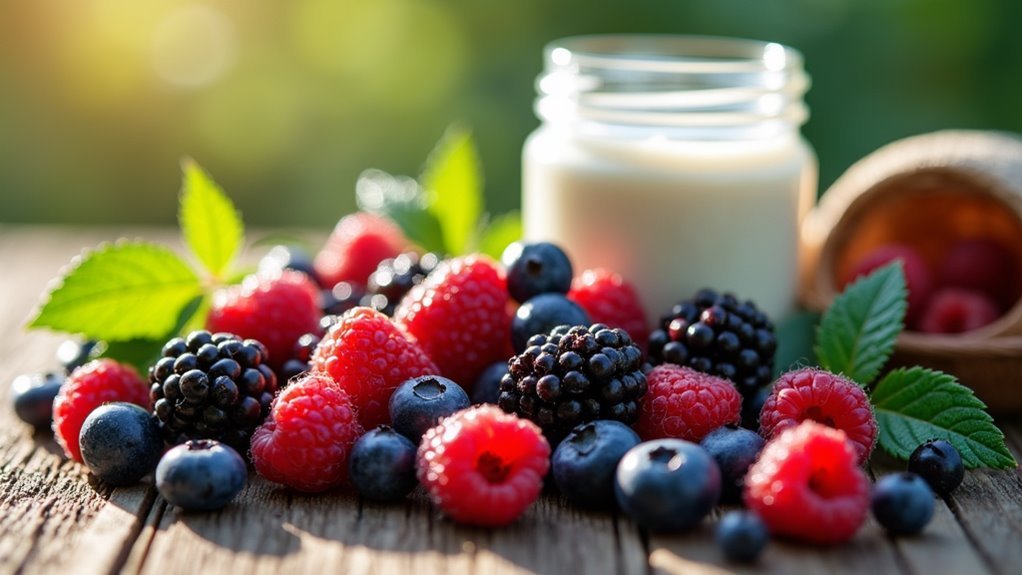
When you’re selecting berries for gut restoration, prioritize high-fiber varieties that’ll deliver maximum prebiotic benefits to your digestive system.
Raspberries top the list with approximately 8 grams of fiber per cup, promoting regular bowel movements and supporting beneficial gut bacteria growth.
Raspberries deliver exceptional fiber content at 8 grams per cup, making them superior for promoting digestive regularity and nurturing beneficial gut bacteria.
Blueberries combine antioxidants with substantial fiber content, enhancing gut health while improving digestive processes.
Strawberries provide natural enzymes alongside significant fiber, helping enhance gut microbiota composition.
Blackberries offer rich antioxidants and dietary fiber that alleviate digestive issues effectively.
You’ll maximize prebiotic benefits by consuming a diverse mix of these high-fiber berries daily. This variety supports gut microbiota diversity and strengthens overall digestive health, creating an ideal environment for beneficial bacteria to thrive and restore your gut’s natural balance.
Combine Berries With Fermented Foods to Boost Probiotic Activity
By pairing berries with fermented foods like yogurt, kefir, or sauerkraut, you’ll create a powerful synergy that amplifies probiotic activity in your digestive system.
The fiber in berries acts as prebiotic fuel, nourishing the beneficial bacteria from fermented foods and strengthening your gut microbiome. This combination doesn’t just increase bacterial diversity—it helps reduce inflammation throughout your intestinal tract.
Berry antioxidants work alongside probiotics to repair damaged gut tissue and restore digestive health more effectively than either component alone. You’ll notice improved digestion when you regularly consume this dynamic duo.
The vitamins and nutrients from both sources support your gut lining’s structural integrity, creating an ideal environment for long-term restoration and maintaining balanced digestive function.
Time Your Berry Consumption to Optimize Digestive Function
Strategic timing of your berry intake can dramatically enhance their digestive benefits and maximize gut restoration throughout the day.
Start your morning with berries to kickstart digestion—their high fiber content promotes regular bowel movements and sets the foundation for ideal gut health. Incorporate berries into mid-morning smoothies to maintain steady energy while delivering antioxidants that support digestive function.
Morning berries deliver powerful fiber to jumpstart digestion and establish optimal gut health from the day’s first meal.
Post-lunch berry consumption helps reduce bloating through natural enzymes and anti-inflammatory compounds that soothe your digestive tract.
Evening berries in salads or desserts work overnight, adding bulk to stool and promoting regularity while you sleep.
Time berry intake around workouts for dual benefits—their carbohydrates fuel your exercise while antioxidants combat inflammation and support digestive recovery throughout your system.
Use Fresh and Frozen Berries to Maintain Year-Round Gut Health
Beyond timing your berry consumption effectively, maintaining consistent access to these gut-healing powerhouses throughout the year requires smart sourcing strategies.
You can support your digestive system and healthy gut microbiome by utilizing both fresh and frozen options strategically.
Here’s how to maximize year-round berry benefits:
- Rotate seasonal fresh varieties – Choose strawberries in spring, blueberries in summer, and mix with frozen options during off-seasons.
- Stock frozen berries – They retain anti-inflammatory properties and fiber content while providing convenience and longer shelf life.
- Combine both types daily – Mix fresh and frozen berries to guarantee consistent fiber intake (8 grams per cup) that feeds beneficial bacteria.
This approach enhances gut microbiota diversity while supporting your overall well-being through steady nutrient delivery.
Balance Berry Intake With Other Prebiotic Foods for Microbiome Diversity

While berries provide powerful gut-healing compounds, you’ll amplify their benefits by pairing them with complementary prebiotic foods that feed your beneficial bacteria. Incorporate garlic, onions, and asparagus alongside your daily berry intake to promote the growth of diverse microorganisms in your digestive system.
This combination delivers both probiotics and prebiotics essential for ideal gut function. The fiber content in berries works synergistically with prebiotic foods to support regular bowel movements and enhance your gut microbiota diversity.
A balanced diet including various berries and high-fiber prebiotics maximizes nutrient absorption while reducing inflammation in the gut. Raspberries alone provide 8 grams of fiber per cup, making them excellent partners for other prebiotic sources.
This strategic pairing helps regulate blood sugar levels and supports sustainable weight management for thorough health benefits.
Prepare Berry-Based Meals That Support Beneficial Bacteria Growth
You can transform simple berries into powerful gut-healing meals by combining them with probiotic and prebiotic ingredients that work together to restore your microbiome.
Creating smoothies with yogurt and kefir alongside fiber-rich berries delivers both beneficial bacteria and the nutrients they need to thrive in your digestive system.
These strategic berry combinations don’t just taste great—they actively support the growth of good bacteria while providing the prebiotic fiber that keeps your gut ecosystem balanced.
Probiotic Berry Smoothie Recipes
When you’re looking to restore your gut health naturally, probiotic berry smoothies offer a delicious and effective solution that combines the fiber-rich benefits of berries with beneficial bacteria from fermented dairy products.
These nutrient-packed drinks help reduce gut inflammation while supporting your digestive system’s natural balance.
To create the perfect probiotic berry smoothie that’ll maintain a healthy gut, follow these essential additions:
- Base ingredients: Blend one cup mixed berries with yogurt or kefir for maximum probiotic benefits.
- Fiber boost: Add chia seeds for omega-3s and enhanced digestive support.
- Nutrient enhancement: Include spinach or kale for vitamins and minerals.
You can also incorporate apple cider vinegar to aid digestion and promote beneficial gut bacteria growth, plus nut butter for sustained energy.
Prebiotic Fiber Berry Combinations
Building on your probiotic foundation, prebiotic fiber combinations multiply your gut health benefits by feeding the beneficial bacteria you’ve already introduced through fermented foods.
You’ll maximize these effects by pairing berries with specific prebiotic-rich ingredients that promote ideal digestive function.
Combine raspberries and blackberries with bananas or oats to create powerful prebiotic fiber meals that enhance beneficial bacteria growth. Their natural enzymes and high fiber content work together to address digestive issues while improving nutrient absorption.
Try overnight oats with strawberries and chia seeds, or add berries to salads with prebiotic ingredients like onions and garlic. These combinations create nutrient-dense dishes that promote gut microbiota diversity.
You can also layer mixed berries with granola and flaxseeds in yogurt parfaits for balanced gut health support.
Monitor Your Body’s Response to Different Berry Types and Amounts
While berries offer remarkable gut health benefits, each variety affects your digestive system differently due to their unique fiber compositions and antioxidant profiles.
Each berry variety uniquely impacts your digestive system through distinct fiber compositions and antioxidant profiles, requiring personalized consumption strategies.
You’ll need to monitor your body’s response to enhance your berry intake for maximum digestive benefits.
Start with small servings of mixed berries, then gradually increase amounts while tracking gastrointestinal symptoms like bloating or discomfort.
Different berries contain varying fructose levels that can impact individuals with IBS differently.
To systematically assess your digestive health response:
- Track bowel movement changes when introducing new berry varieties
- Note which types contribute positively or negatively to your gut
- Maintain a detailed food diary recording berry intake and corresponding reactions
This methodical approach helps you identify patterns and personalize your berry consumption strategy for superior gut restoration success.
Frequently Asked Questions
What Is the Fastest Way to Restore Gut Microbiome?
You’ll restore your gut microbiome fastest by eating fermented foods like yogurt daily, consuming prebiotic-rich bananas and garlic, drinking plenty of water, and eliminating processed foods while adding fiber-rich whole grains.
Do Berries Heal the Gut?
Berries don’t directly “heal” your gut, but they’ll considerably support gut restoration. You’ll benefit from their fiber, antioxidants, and anti-inflammatory compounds that promote beneficial bacteria growth and improve your overall digestive health.
What Are the 5 R’s of Gut Restoration?
You’ll follow five key steps: Remove harmful foods and toxins, Replace missing digestive enzymes and nutrients, Reinoculate with beneficial probiotics, Repair your gut lining, and Rebalance through sustainable lifestyle changes.
What Is the Number One Fruit for Gut Health?
Blueberries are your best choice for gut health. They’re packed with fiber that promotes regular bowel movements and contains powerful antioxidants like anthocyanins that reduce gut inflammation and support beneficial bacteria growth.


