
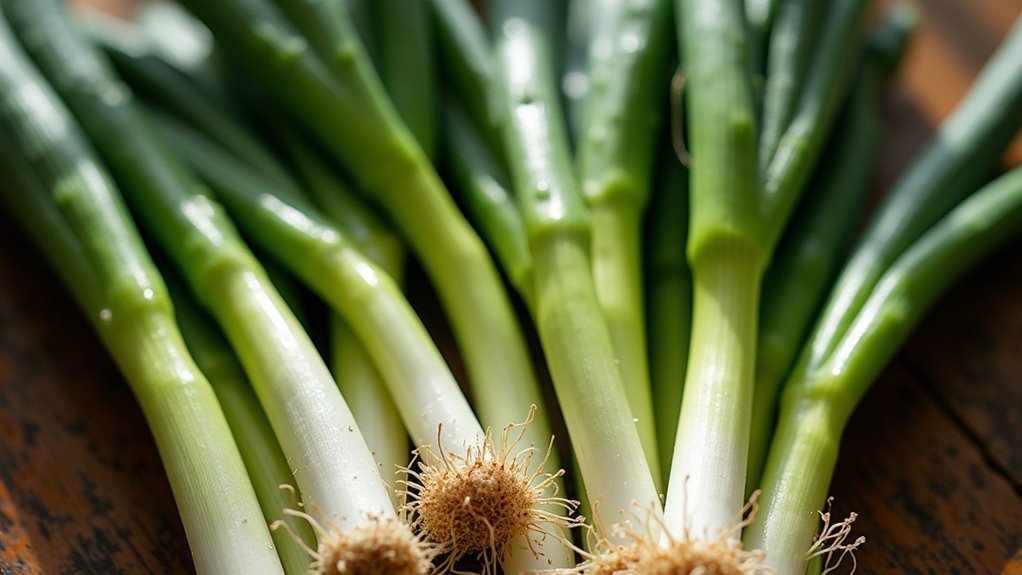
You’ll find leeks and scallions are exceptional prebiotic sources that fuel your beneficial gut bacteria. Leeks pack 1.2g of prebiotic fiber per serving compared to scallions’ 0.2g, making them particularly potent for digestive health. These indigestible fibers pass through your upper digestive tract unchanged, reaching your colon where they nourish beneficial bacteria and promote microbiome diversity. Raw preparations retain maximum benefits, though light sautéing preserves their gut-supporting properties. Discover how to optimize your daily intake for transformative digestive wellness.
What Are Prebiotics and How Do They Support Gut Health
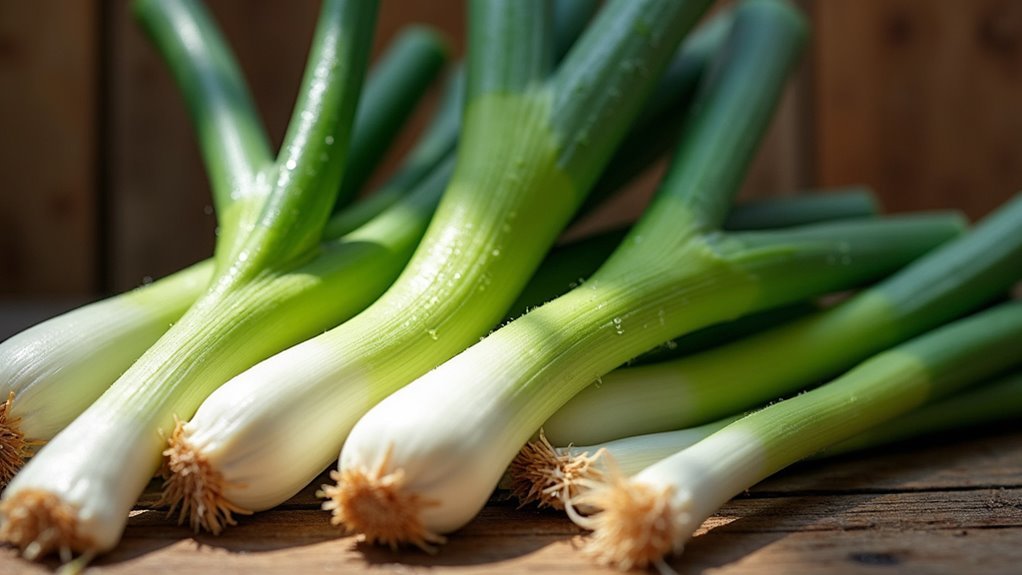
While you might recognize probiotics as the beneficial bacteria living in your gut, prebiotics serve as their essential fuel source. These indigestible fibers pass through your upper digestive tract unchanged, reaching your colon where they nourish beneficial bacteria and promote peak gut health.
Your microbiome thrives when you consistently feed it prebiotic fiber, leading to improved digestion and overall wellness. The International Scientific Association for Probiotics and Prebiotics recommends a daily intake of 5 grams to support your gut’s bacterial ecosystem effectively.
Consistent prebiotic fiber intake fuels your microbiome, improving digestion and overall wellness with just 5 grams daily.
Leeks and scallions contain powerful prebiotic compounds like inulin and fructooligosaccharides that specifically fuel Bifidobacteria growth.
These vegetables don’t just support digestion – they also help regulate blood glucose levels and enhance your body’s mineral absorption capabilities.
Leeks Vs Scallions: Understanding the Nutritional Differences
While both leeks and scallions belong to the allium family, they differ markedly in their prebiotic content and digestive health benefits.
You’ll find that leeks contain substantially higher levels of inulin and fructooligosaccharides compared to scallions, making them more potent prebiotics for supporting your gut microbiome.
Understanding these nutritional differences can help you choose the right allium for maximizing your digestive health goals.
Prebiotic Content Comparison
When you’re choosing between leeks and scallions for gut health benefits, the prebiotic content reveals a clear winner. Leeks contain markedly higher concentrations of prebiotic fibers, particularly inulin and fructooligosaccharides, which fuel beneficial bacteria in your digestive system.
| Comparison Factor | Leeks | Scallions |
|---|---|---|
| Prebiotic content per serving | 1.2g (medium leek) | 0.2g (per 100g) |
| Primary prebiotic fibers | Inulin, fructooligosaccharides | Lower concentrations |
| Gut health potency | High | Moderate |
| Daily intake contribution | Significant toward 5g goal | Minimal |
Both vegetables belong to the allium family, but leeks deliver six times more prebiotics than scallions. You’ll find it much easier to reach the recommended daily intake of 5 grams when incorporating leeks into your gut-friendly meals.
Digestive Health Benefits
Beyond their prebiotic advantages, leeks and scallions offer distinct digestive health benefits that extend far past fiber content alone. When you consume leeks, you’re delivering powerful inulin and fructooligosaccharides directly to your gut, where these prebiotic fibers fuel beneficial bacteria growth. This process enhances microbiome diversity, creating a healthier digestive environment that improves nutrient absorption and reduces inflammation.
While scallions provide milder prebiotic support, they still contribute to gut health maintenance.
Leeks’ higher fiber content promotes better bowel regularity and helps establish stronger colonies of beneficial bacteria. You’ll notice improved digestive health when incorporating leeks regularly, as their robust prebiotic profile creates lasting positive changes in your gut microbiome that scallions simply can’t match in intensity.
Prebiotic Fiber Content in Leeks and Scallions
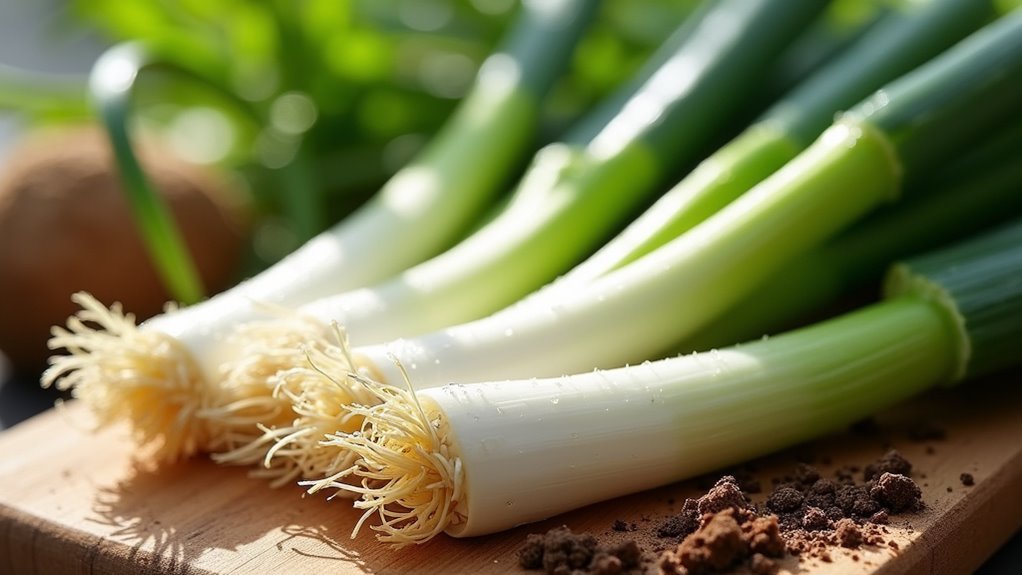
You’ll find that measuring the prebiotic fiber levels in leeks and scallions reveals important differences that can guide your dietary choices.
A quarter of a medium leek delivers a substantial portion of your daily prebiotic needs, primarily through inulin and fructooligosaccharides that feed beneficial gut bacteria.
However, how you prepare these vegetables greatly impacts their fiber content, so understanding cooking methods becomes essential for maximizing their digestive benefits.
Measuring Fiber Levels
Although you might assume all vegetables provide similar fiber benefits, leeks and scallions contain distinctly different levels of prebiotic compounds that directly impact your gut health.
When measuring prebiotic content, you’ll find that leeks deliver approximately 1.5 grams of prebiotic fibers per medium-sized portion, primarily inulin and fructooligosaccharides that feed beneficial bacteria. Scallions offer lower concentrations but still contribute meaningfully to your daily fiber intake.
You can maximize these health benefits by choosing raw preparations or minimal cooking methods, since heat reduces prebiotic effectiveness.
To meet the recommended 5 grams daily, you’d need roughly three medium leeks or larger quantities of scallions. Understanding these measurements helps you strategically incorporate both vegetables into your diet for ideal gut health support.
Cooking Impact Analysis
Heat transforms the molecular structure of prebiotic fiber in leeks and scallions, breaking down the delicate inulin and fructooligosaccharide chains that your gut bacteria depend on for nourishment.
This cooking impact considerably reduces the health benefits you’d otherwise gain from their raw form. When you subject these vegetables to prolonged cooking, you’ll lose many of their beneficial properties that support gut health.
However, you can minimize prebiotic intake losses through strategic preparation. Add leeks and scallions at the end of cooking to preserve maximum benefits, or incorporate them raw into salads and dressings.
If you prefer cooked versions, consider increasing portion sizes to compensate for reduced fiber content, ensuring you still receive meaningful prebiotic support for your digestive system.
How Leeks and Scallions Feed Beneficial Gut Bacteria
When you eat leeks and scallions, you’re delivering a powerful dose of prebiotic fibers directly to your gut microbiome. These nutritious alliums contain inulin and fructooligosaccharides that beneficial bacteria in your intestines absolutely love.
When these specialized fibers reach your colon, they become food for important microorganisms like Bifidobacteria, helping them multiply and thrive.
These beneficial fibers fuel essential gut bacteria like Bifidobacteria, allowing them to flourish and establish dominance in your digestive system.
You’ll support your digestion by creating an environment where good bacteria can outcompete harmful ones. This prebiotic effect strengthens your overall gut health and improves digestive function.
Just a quarter of a medium leek provides substantial fiber toward your daily 5-gram prebiotic goal. By regularly including leeks and scallions in your meals, you’re actively nurturing your microbiome and promoting ideal intestinal balance.
Daily Prebiotic Requirements and Serving Recommendations
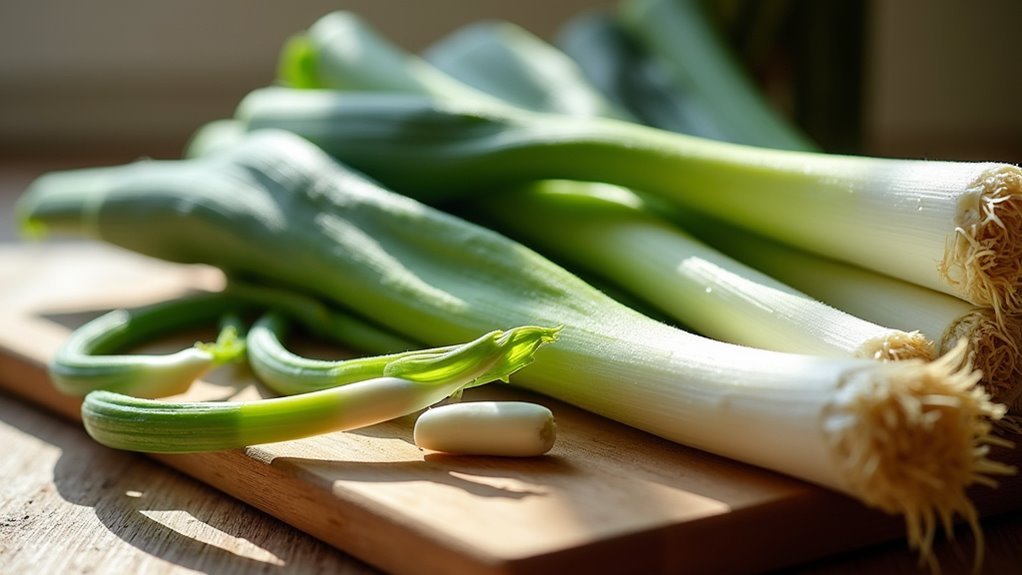
Meeting your daily prebiotic needs doesn’t require complex calculations or expensive supplements. The International Scientific Association for Probiotics and Prebiotics recommends at least 5 grams of prebiotics daily for ideal gut health. You can easily meet these requirements through simple serving sizes of common foods.
A small 4-ounce raw onion provides approximately 5 grams of prebiotics, while one-quarter of a medium leek contributes considerably to your daily intake. Scallions, being part of the same beneficial allium family as leeks, offer similar prebiotic advantages.
You can also incorporate 6 to 7 garlic cloves into your meals to help achieve your daily allowance.
Gradually increasing your prebiotic intake through a mix of these foods minimizes digestive discomfort while enhancing your gut’s beneficial bacteria population.
Best Cooking Methods to Preserve Prebiotic Content
Although cooking enhances flavor and palatability, the method you choose directly impacts how much prebiotic content your leeks and scallions retain.
Raw preparations preserve the most health benefits, but if you prefer cooked vegetables, opt for quick sautéing or steaming instead of high temperatures or lengthy cooking times.
When you cook these prebiotic-rich foods at extreme heat, you’ll damage their beneficial fibers. Light cooking methods maintain their gut-supporting properties while improving digestibility.
You can also use dried leeks and scallions as seasonings, which provide concentrated prebiotics without cooking-related losses.
Start slowly when increasing intake of these vegetables to avoid digestive discomfort.
Gradually incorporating more leeks and scallions into your meals guarantees you’re boosting gut health while allowing your system to adapt.
Incorporating Leeks and Scallions Into Your Weekly Meal Plan
Planning your weekly meals around leeks and scallions doesn’t require a complete dietary overhaul—you’ll find these versatile vegetables easily integrate into dishes you’re already making. Start by adding a quarter of a medium leek to Monday’s soup or tossing chopped scallions into Tuesday’s stir-fry. This simple approach helps you reach the recommended daily intake of 5 grams of prebiotics while supporting beneficial bacteria growth.
Create a rotating weekly meal plan that features these gut health champions in different forms. Raw scallions work perfectly in Wednesday’s salad, while lightly sautéed leeks enhance Thursday’s pasta dish.
Additional Health Benefits Beyond Gut Microbiome Support
While leeks and scallions excel at nourishing your gut microbiome, they deliver impressive health benefits that extend far beyond digestive support. These vegetables pack powerful antioxidants that combat oxidative stress, promoting overall health while their prebiotic properties work behind the scenes.
| Health Benefit | Impact | Daily Value |
|---|---|---|
| Vitamin C Content | Boost immunity naturally | 12% per serving |
| Anti-inflammatory compounds | Reduce chronic disease risk | Significant levels |
| Fiber for digestive health | Promote regular bowel movements | 2g per cup |
| Vitamin K | Support bone health | 34% per serving |
| Enhanced nutrient absorption | Maximize mineral uptake | Measurable improvement |
You’ll improve immune function through their vitamin A, C, and K content. The flavonoids provide anti-inflammatory properties that may lower heart disease risk, while enhanced nutrient absorption guarantees your body maximizes every mineral you consume.
Simple Recipes to Maximize Prebiotic Intake
Since incorporating prebiotics into your daily routine doesn’t require complicated cooking techniques, these simple recipes will help you maximize the gut-healthy benefits of leeks and scallions.
Light sautéing preserves their fiber content while enhancing flavor, making these cooking methods perfect for boosting prebiotic intake. You’ll need just one-quarter medium leek or a handful of chopped scallions in your daily meals to reach ideal nutritional benefits.
- Prebiotic Stir-Fry: Combine sliced leeks and scallions with seasonal vegetables, lightly sautéing to maintain gut health properties.
- Savory Leek Frittata: Fold sautéed leeks into eggs with fresh scallions for maximum prebiotic benefits.
- Roasted Leek Soup: Roast leeks until tender, blend with broth for concentrated fiber content.
- Fresh Scallion Salad: Use raw scallions as garnish on mixed greens.
- Leek and Potato Gratin: Layer sliced leeks between potatoes for comforting recipes rich in prebiotics.
Frequently Asked Questions
Are Leeks Good for Your Gut Health?
Yes, leeks are excellent for your gut health. They’re packed with prebiotic fibers like inulin that feed beneficial bacteria, improve digestion, boost microbiome diversity, and strengthen your immune system naturally.
What Is the Most Powerful Prebiotic?
You’ll find chicory root contains the highest prebiotic concentration, with up to 68% inulin content. Jerusalem artichokes and dandelion greens also pack powerful prebiotic punches, delivering more concentrated fiber than most vegetables.
Are Leeks a Prebiotic?
Yes, you’ll find leeks are excellent prebiotics containing 100-240 mg/g of inulin and fructooligosaccharides. They’ll feed your beneficial gut bacteria, improve digestive health, and help you reach daily prebiotic goals effectively.
What Vegetables Have the Most Prebiotics?
You’ll find the highest prebiotic content in Jerusalem artichokes, dandelion greens, and asparagus. Leeks and onions also pack impressive amounts of inulin and fructooligosaccharides that’ll boost your beneficial gut bacteria considerably.


