

You can harness dandelion’s powerful 240 mg per gram of inulin prebiotic fiber by starting with half a cup of fresh greens twice weekly, gradually increasing to 1-2 cups several times per week. Add them to salads for a peppery kick, sauté with garlic and onions, or blend into smoothies with bananas to mask bitterness. Brew dandelion root tea for concentrated benefits, steeping for 10-15 minutes daily. Combine with other prebiotic foods like asparagus and leeks for maximum gut bacteria support and discover additional strategies below.
Understanding Dandelion’s Prebiotic Power for Gut Bacteria

When you’re looking to boost your gut health naturally, dandelion greens pack a powerful prebiotic punch that can transform your microbiome.
These nutrient-dense greens contain inulin, a specialized prebiotic fiber that directly feeds beneficial bacteria in your digestive system. You’ll specifically promote bifidobacteria growth, which forms the foundation of a balanced gut microbiome.
The impressive prebiotic content—up to 240 mg per gram—makes dandelion greens exceptionally effective for microbiome health.
With up to 240 mg of prebiotic fiber per gram, dandelion greens deliver exceptional microbiome-boosting power for optimal gut health.
As you consume them regularly, you’ll notice improved bowel movements and enhanced digestive function. The inulin actively reduces harmful gut bacteria while increasing beneficial bacteria diversity, creating ideal conditions for better immune function.
This powerful prebiotic fiber doesn’t just support digestive health; it strengthens your entire gut ecosystem for long-term wellness.
How to Incorporate Dandelion Greens Into Your Daily Meals
Now that you understand dandelion’s remarkable prebiotic benefits, you’ll want practical ways to add these powerhouse greens to your meals.
You can easily incorporate dandelion greens into fresh salads, where their peppery flavor complements other vegetables while delivering essential prebiotic fiber for your healthy gut microbiome.
Sautéing them with onions and garlic creates a nutritious side dish that supports your digestive system.
For those sensitive to bitterness, blend dandelion greens into smoothies with bananas and apples – you’ll mask the taste while gaining high fiber content for healthy digestion.
Steep the leaves as tea or add chopped greens to soups during final cooking minutes to preserve crucial nutrients that boost gut health and strengthen your immune system.
Brewing Dandelion Root Tea for Maximum Fiber Benefits
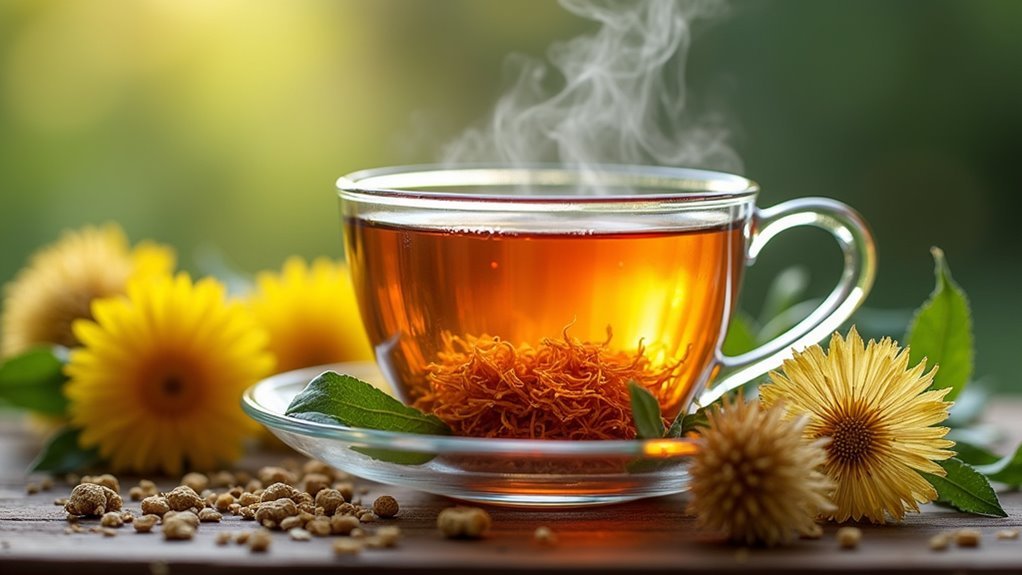
While dandelion greens offer excellent prebiotic benefits, you’ll discover that dandelion root tea provides an even more concentrated source of inulin fiber for your gut microbiome.
Brewing dandelion root tea properly maximizes these benefits—steep roasted dandelion root in hot water for 10-15 minutes to extract maximum prebiotic fiber. This brewing method releases inulin that feeds beneficial bacteria in your healthy gut, promoting improved bowel movements and ideal microbiome balance.
Steep roasted dandelion root for 10-15 minutes to release maximum inulin fiber that feeds beneficial gut bacteria and promotes optimal digestive health.
You’ll enhance both flavor and digestive benefits by adding lemon juice or honey to your tea. Regular consumption helps you meet daily dietary fiber recommendations while supporting gut health.
Most Americans don’t get enough fiber, so incorporating this antioxidant-rich tea into your routine can greatly boost your prebiotic intake and strengthen your microbiome naturally.
Combining Dandelion With Other Prebiotic Foods for Synergistic Effects
Although dandelion provides impressive prebiotic benefits on its own, you’ll amplify these effects by strategically combining it with complementary fiber-rich foods.
Pairing dandelion greens with garlic, onions, asparagus, or leeks creates synergistic effects that maximize your prebiotic fiber intake. These combinations enhance the growth of beneficial gut bacteria, particularly bifidobacteria, while promoting greater gut flora diversity.
When you consume dandelion greens alongside other high-fiber foods, you’ll experience improved nutrient absorption and enhanced digestive health.
This strategic approach helps maintain a balanced gut microbiome, which reduces inflammation and supports immune function. Regular inclusion of these prebiotic combinations in your diet prevents metabolic disorders while strengthening your body’s natural defenses through optimized gut health.
Timing and Dosage Guidelines for Optimal Microbiome Support

For maximum microbiome benefits, you should start with small amounts of dandelion greens and gradually increase your intake to prevent digestive upset.
Begin with half a cup of fresh dandelion greens twice weekly, then work up to 1-2 cups several times per week for ideal microbiome support. This approach allows your gut bacteria to adapt to the increased prebiotic fiber without causing digestive discomfort.
Incorporate dandelion greens into salads or smoothies to boost your daily fiber intake toward the recommended 21-38 grams.
You’ll also want to drink dandelion tea 1-2 times daily for concentrated health benefits. This timing strategy guarantees your microbiome receives consistent prebiotic support while maintaining digestive comfort.
Frequently Asked Questions
What Is the Fastest Way to Restore Gut Microbiome?
You’ll restore your gut microbiome fastest by combining high-fiber foods like dandelion greens, fermented foods, regular exercise, and stress management. Gradually increase fiber to 21-38 grams daily while staying hydrated for ideal results.
Does Dandelion Help Gut Health?
Yes, dandelion greatly helps your gut health. You’ll boost beneficial bacteria like bifidobacteria through its prebiotic inulin fiber, improve bowel movements, reduce cancer-linked enzymes, and create a more balanced, healthier microbiome overall.
What Is the Best Food to Heal Gut Microbiome?
You’ll find fermented foods like kefir, kimchi, and sauerkraut work best for healing your gut microbiome. They directly introduce beneficial bacteria while prebiotic-rich foods like dandelion greens feed existing good bacteria.
What Naturally Kills Bad Bacteria in the Gut?
You’ll naturally kill bad gut bacteria by eating garlic with its antimicrobial allicin, consuming fermented foods like sauerkraut that introduce competing probiotics, and including prebiotic-rich foods that starve harmful bacteria.


