

You’ll find prebiotic supplements offer distinct advantages over whole foods when you’re seeking consistent, concentrated gut health support that fits seamlessly into your demanding schedule. Supplements deliver standardized doses of beneficial fibers like inulin (2-5g per serving) compared to whole foods’ minimal amounts (0.1-1g), while accommodating dietary restrictions and food sensitivities that make traditional prebiotic-rich foods problematic. They’re cost-effective, portable, and maintain potency without spoilage concerns, ensuring reliable gut bacteria support wherever life takes you—and there’s much more to contemplate.
Convenience and Accessibility for Busy Lifestyles

While whole foods remain the gold standard for prebiotic intake, supplements offer undeniable advantages for people juggling demanding schedules.
Busy lifestyles demand practical solutions, and prebiotic supplements deliver gut health benefits without the time-intensive meal planning whole foods require.
You’ll find prebiotic supplements deliver concentrated prebiotic fibers without requiring extensive meal preparation or grocery shopping. This convenience becomes invaluable when you’re managing busy lifestyles that leave little time for planning fiber-rich meals.
The accessibility factor can’t be overlooked – you can easily keep supplements transported in your bag, car, or office desk.
Whether you’re traveling for work or rushing between appointments, maintaining consistent gut health support becomes effortless.
If you have dietary restrictions that limit whole foods options, supplements provide reliable access to health benefits.
You won’t worry about spoilage or storage issues while still supporting your digestive wellness goals effectively.
Concentrated Dosing for Targeted Gut Health Support
When you’re seeking specific gut health improvements, prebiotic supplements deliver concentrated doses that can target beneficial gut bacteria more precisely than whole foods. Unlike fruits and vegetables with varying fiber content, supplements provide standardized amounts of prebiotic fibers like inulin and FOS.
| Source | Inulin Content | Precision |
|---|---|---|
| Supplements | 2-5g per dose | High |
| Whole Foods | 0.1-1g per serving | Variable |
| Combined Sources | Mixed amounts | Moderate |
This precise dosing advantage becomes essential for individuals with dietary restrictions who can’t access diverse whole food sources. Prebiotic supplements guarantee you’ll meet daily fiber goals consistently, supporting effective health regimens. The concentrated formulation allows targeted support for beneficial gut bacteria growth, making supplements particularly valuable when you need predictable results for ideal gut health.
Dietary Restrictions and Food Sensitivities Considerations

Beyond concentrated dosing benefits, prebiotic supplements offer significant advantages for people managing dietary restrictions and food sensitivities.
If you’re following a gluten-free or low-FODMAP diet, you’ll find it challenging to obtain sufficient prebiotics from traditional prebiotic-rich foods. Supplements provide a convenient alternative that bypasses these limitations.
When you have lactose intolerance or other food sensitivities, whole foods containing dairy or specific allergens become problematic.
Prebiotic supplements eliminate these concerns while delivering targeted fiber intake.
Prebiotic supplements bypass dietary restrictions and food sensitivities while providing concentrated, targeted fiber benefits for optimal gut health.
If high-fiber foods cause you gastrointestinal discomfort, supplements offer a controlled method for increasing prebiotic consumption.
They contain specific fibers like inulin that’re often easier to digest than the complex fiber varieties found in whole foods, making them ideal for sensitive stomachs.
Standardized Potency and Quality Control Benefits
Unlike whole foods where prebiotic content varies greatly based on growing conditions, storage, and preparation methods, supplements deliver standardized dosage that guarantees you’re getting consistent potency with every serving.
Prebiotic supplements undergo rigorous quality control testing for purity and absence of contaminants—something you can’t guarantee with whole foods. These supplements concentrate beneficial fibers like inulin and fructooligosaccharides at therapeutic levels that’d be difficult to achieve through diet alone.
You’ll also find supplements formulated for specific health outcomes, letting you target your individual needs precisely.
This convenience and accessibility become especially valuable if you have dietary restrictions that limit your access to prebiotic-rich whole foods, ensuring you still receive ideal prebiotic support.
Cost-Effectiveness and Long-Term Sustainability
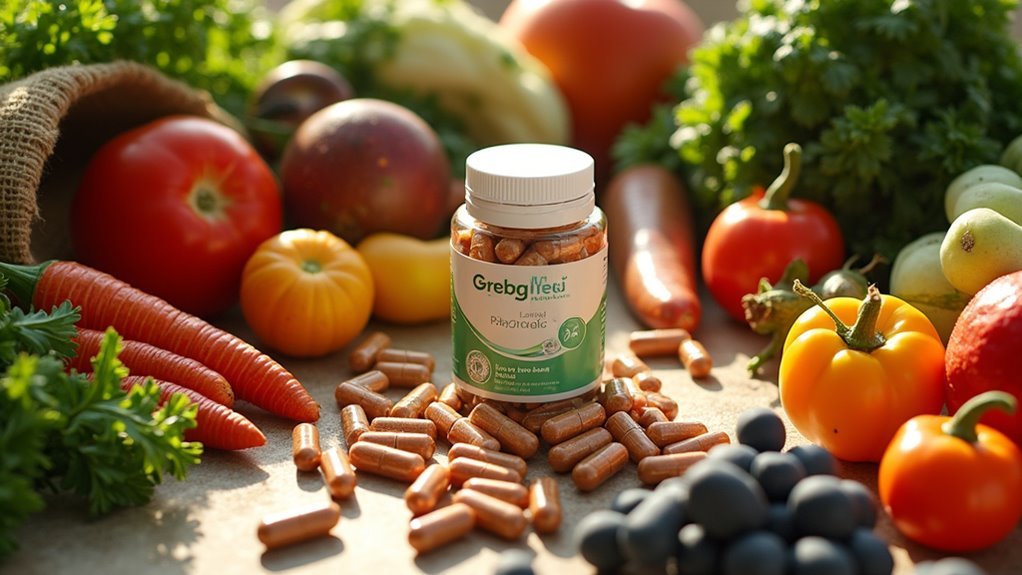
Although fresh produce prices fluctuate with seasons and supply chains, prebiotic supplements offer predictable costs that make budgeting for your gut health straightforward.
You’ll find that bulk purchase options considerably reduce your cost per serving compared to regularly buying fresh whole foods. The extended shelf life of prebiotic supplements eliminates waste from spoiled produce, making them a sustainable choice for long-term use.
You can achieve consistent fiber intake without the unpredictability of seasonal availability or price spikes. The convenience factor improves adherence to your dietary goals since you won’t need extensive meal planning or preparation.
This cost-effectiveness becomes particularly evident over time, as prebiotic supplements provide concentrated nutrition that helps you maintain ideal gut health affordably and reliably.
Frequently Asked Questions
Why Do Cardiologists Warn Against Probiotics?
You’ll face risks from unregulated supplements that can interact with heart medications, cause infections if you’re immunocompromised, and disrupt your gut balance, especially during cancer treatments or with gastrointestinal disorders.
What Are the Signs You Need Prebiotics?
You’ll notice digestive issues like bloating, gas, or constipation when you need prebiotics. Low energy, poor nutrient absorption, frequent infections, mood changes, or a low-fiber diet also signal your gut needs prebiotic support.
Which Prebiotic Supplement Is Best?
You’ll want to choose supplements containing inulin, chicory root, or resistant starch that undergo third-party testing. Look for formulations targeting your specific digestive needs and verify they’re from reputable manufacturers.
Why Is It Better to Eat Whole Foods Rather Than Supplements?
You’ll get better nutrient absorption from whole foods’ complex matrix of vitamins, minerals, and phytochemicals. They’re more satiating, support diverse gut bacteria, and provide cardiovascular benefits that isolated supplements can’t replicate.


