
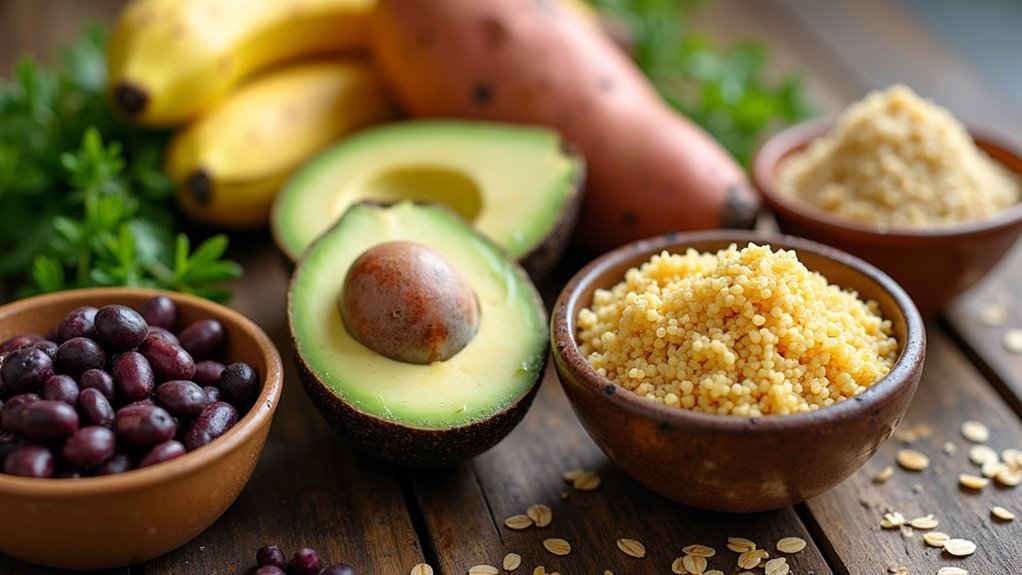
You can boost your gut health with seven resistant starch powerhouses that feed beneficial bacteria. Green bananas and plantains provide 4-8 grams per 100 grams when unripe. Cooked and cooled potatoes and rice create resistant starch through retrogradation. Legumes like white beans offer 1-5 grams per serving, while oats and barley deliver prebiotic fiber. Nuts and seeds support gut bacteria naturally. Raw potato starch contains 80% resistant starch for maximum benefits. These foods will transform your digestive wellness in remarkable ways.
Green Bananas and Plantains
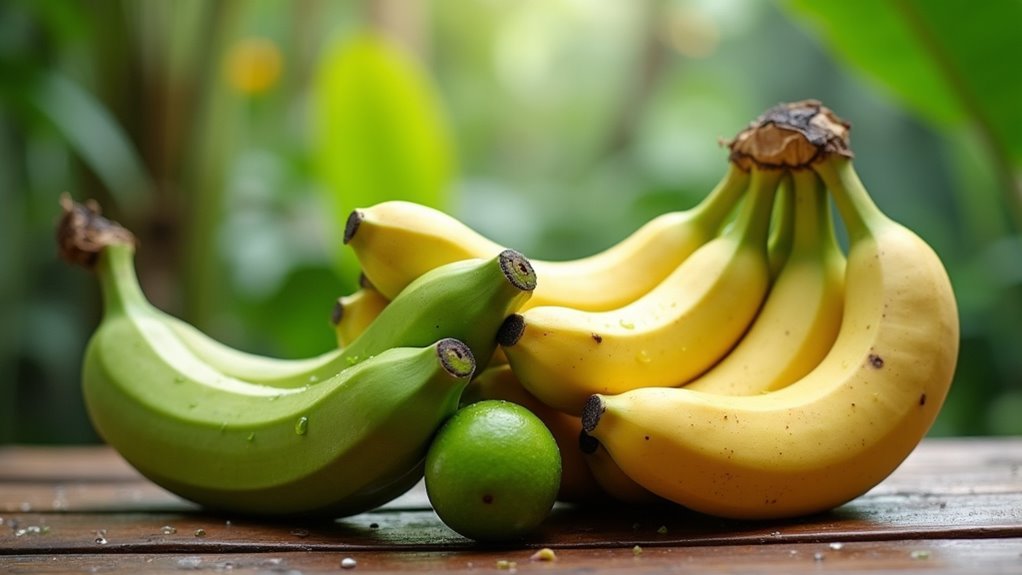
When you’re looking to boost your resistant starch intake, green bananas and plantains stand out as two of the most potent natural sources available. Green bananas pack approximately 4–5 grams of resistant starch per 100 grams, while unripe plantains deliver an impressive 8 grams per 100 grams.
This resistant starch acts as a prebiotic, feeding good bacteria in your gut and enhancing overall gut health through fermentation in your large intestine.
You’ll maximize these benefits by consuming bananas and plantains while they’re still green, as ripening converts resistant starch into simple sugars.
Adding these foods to your diet helps regulate blood sugar levels and increases satiety due to their slow digestion properties, making them excellent choices for sustained energy.
Cooked and Cooled Potatoes
You’ll find that cooling cooked potatoes dramatically transforms their starch structure, creating up to 3-4 grams of resistant starch per 100 grams.
The cooking method you choose matters, but it’s the overnight refrigeration that does the heavy lifting in maximizing these beneficial starches.
Beyond resistant starch, you’re also getting potassium and vitamin C that work together to support your gut and metabolic health.
Cooling Process Increases Starch
Although potatoes often get a bad reputation in health circles, the simple act of cooking and cooling them transforms these humble tubers into powerful gut health allies. The cooling process triggers retrogradation, where starches resist digestion and become high in resistant starch.
| Process Stage | Resistant Starch Content |
|---|---|
| Raw potato | Low levels |
| Freshly cooked | Minimal amounts |
| Cooled 4 hours | Moderate increase |
| Refrigerated overnight | Maximum levels |
| Reheated (optional) | Maintains benefits |
When you cook and cool potatoes, their starch structure fundamentally changes. This transformation creates food for healthy gut bacteria, delivering significant health benefits. You’ll maximize resistant starch by cooking potatoes in bulk, then refrigerating them overnight before consumption.
Best Cooking Methods
Since different cooking methods impact the final resistant starch content in cooled potatoes, choosing the right technique can maximize your gut health benefits.
You’ll want to focus on cooking methods that fully gelatinize the starches before cooling, which enhances the retrogradation process that creates resistant starch.
The most effective cooking approaches include:
- Boiling whole potatoes until fork-tender, then refrigerating overnight to develop maximum resistant starch content.
- Steam cooking potatoes with their skins on, preserving nutrients while creating ideal conditions for cooling.
- Baking potatoes completely before chilling, which maintains their structure during the cooling process.
After cooking, you must refrigerate your potatoes for several hours to trigger retrogradation.
This cooling transforms regular starches into resistant starch that feeds beneficial gut bacteria and delivers powerful prebiotic effects for peak health.
Nutritional Benefits Beyond Starch
While resistant starch serves as the primary health draw for cooked and cooled potatoes, these nutritional powerhouses deliver an impressive array of additional benefits that extend far beyond their prebiotic properties.
You’ll gain essential nutrients like potassium and vitamin C, supporting cardiovascular health and immune function. The cooling process transforms starch structure, creating an ideal environment for gut bacteria to thrive and produce beneficial short-chain fatty acids.
These compounds don’t just improve digestive health—they’re linked to reduced colon cancer risk through their protective effects on intestinal cells.
You’ll also experience enhanced satiety when eating cooled potatoes, supporting weight management by naturally reducing your overall calorie intake. This combination of resistant starch and crucial nutrients makes cooled potatoes exceptional for thorough nutritional benefits.
Legumes and White Beans
You’ll find legumes like white beans, lentils, and peas pack an impressive punch with 1-5 grams of resistant starch per 3.5 ounces, while fava beans can deliver up to 12.7 grams.
When you soak and fully cook these powerhouses, you’ll remove antinutrients and boost their digestibility for maximum health benefits.
Your gut bacteria will thrive on legumes’ prebiotic properties, producing beneficial short-chain fatty acids that support digestive health and help you feel satisfied longer.
High Resistant Starch Content
Although many foods contain modest amounts of resistant starch, legumes stand out as nutritional powerhouses that deliver impressive concentrations of this beneficial carbohydrate.
You’ll find these high amounts of resistant starch particularly abundant in:
- Fava beans – containing an exceptional 7.72–12.7 grams per serving when properly prepared
- Standard legumes like lentils, chickpeas, and white beans – providing 1–5 grams per 3.5-ounce cooked serving
- Thoroughly cooked and pre-soaked varieties – offering enhanced digestibility and maximum nutritional benefits
These resistant starch levels make legumes function as powerful prebiotics, feeding your gut bacteria and supporting digestive health.
When you incorporate legumes into your balanced diet, you’re not only promoting beneficial bacterial growth but also enhancing weight management through improved satiety and fullness.
Proper Cooking Methods
When you’re preparing legumes and white beans to maximize their resistant starch content, proper cooking techniques make all the difference in both safety and nutritional value.
You’ll need to soak your legumes before boiling to remove antinutrients and improve digestibility. Always verify you fully heat them to eliminate toxins that cause digestive discomfort.
For high amounts of resistant starch, use the cooking and cooling method. Cook legumes in bulk, then refrigerate them completely. This cooling process greatly increases resistant starch levels from the typical 1-5 grams per 100 grams to potentially higher amounts.
Fava beans cooked properly can provide 7.72-12.7 grams. This resistant starch feeds beneficial gut bacteria and helps promote gut health through enhanced fiber intake.
Digestive Health Benefits
Beyond the preparation benefits, these properly cooked legumes and white beans deliver remarkable digestive health advantages that extend far beyond basic nutrition.
The resistant starch in legumes feeds beneficial bacteria in your large intestine, creating a thriving ecosystem that transforms your gut health from the inside out.
When these bacteria ferment resistant starch, they produce powerful short-chain fatty acids that reduce inflammation and strengthen your digestive function.
Regular legume consumption also enhances insulin sensitivity, helping stabilize blood sugar levels for peak metabolic health.
Here’s what happens in your digestive system:
- Bacterial feast – Beneficial microbes multiply rapidly, crowding out harmful pathogens
- Inflammation reduction – Short-chain fatty acids calm intestinal walls, promoting healing
- Blood sugar control – Enhanced insulin sensitivity prevents dangerous glucose spikes
Oats and Barley
Breakfast bowls filled with oats and barley offer some of the most accessible sources of resistant starch in your kitchen. You’ll get approximately 3.6 grams of resistant starch per 100 grams of cooked oatmeal, providing essential dietary fiber that feeds beneficial gut bacteria and supports ideal gut health.
Barley delivers similar benefits while supplying crucial nutrients like vitamin B6 and selenium.
You can maximize their resistant starch content by cooking and cooling these grains, which restructures the starch for enhanced health benefits.
These whole grains excel at glycemic control, helping stabilize your blood sugar levels throughout the day. Their resistant starch content increases satiety, making them powerful tools for weight management by naturally controlling your appetite and keeping you fuller longer.
Cooked and Cooled Rice
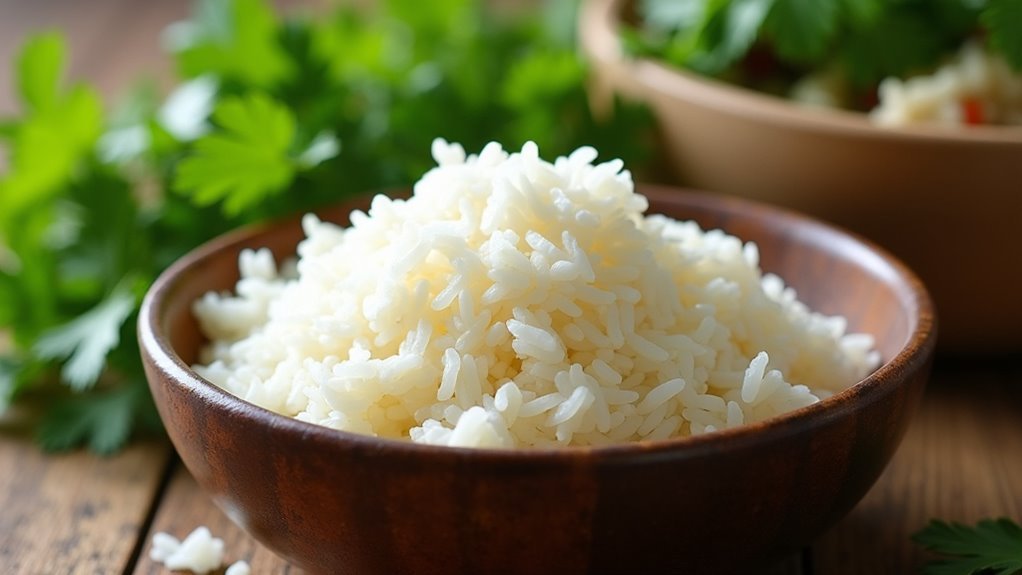
Rice transforms into a gut health powerhouse when you cook it and let it cool overnight in your refrigerator. The cooling process triggers retrogradation, converting digestible starches into resistant starch that feeds beneficial gut bacteria.
This simple preparation method makes rice a healthier option with improved blood sugar control and increased satiety.
Brown rice delivers superior benefits compared to white rice, providing essential nutrients like phosphorus and magnesium alongside resistant starch. One cup of cooked and cooled brown rice contains up to 2 grams of resistant starch.
Picture these preparation steps:
- Steam perfectly fluffy brown rice in your kitchen
- Transfer the cooked rice into glass containers for refrigeration
- Wake up to gut-friendly rice ready for your meals
Nuts and Seeds
Nature’s portable powerhouses pack a surprising gut health punch that extends far beyond their reputation for healthy fats and protein. Nuts and seeds contain resistant starch that feeds beneficial bacteria in your gut, promoting ideal digestive health. When you snack on almonds, walnuts, flaxseeds, or chia seeds, you’re delivering prebiotics that help good bacteria thrive.
The fiber in these foods works synergistically with resistant starch to enhance satiety and regulate blood sugar levels. During fermentation in your colon, this resistant starch produces short-chain fatty acids that support gut health and may reduce colon cancer risk.
| Food Type | Resistant Starch Benefit | Additional Gut Support |
|---|---|---|
| Almonds/Walnuts | Feeds beneficial bacteria | Healthy fats + fiber |
| Flaxseeds | Prebiotic fermentation | Omega-3s + soluble fiber |
| Chia Seeds | SCFA production | Mucilage + antioxidants |
Raw Potato Starch

While nuts and seeds offer convenient ways to boost your resistant starch intake, raw potato starch delivers an exceptionally concentrated dose that’s hard to match. With approximately 80% resistant starch content, one tablespoon provides 8 grams of fiber with minimal calories, making it incredibly efficient for gut health.
You can easily incorporate raw potato starch into your daily routine:
- Blend into morning smoothies for an invisible fiber boost that won’t alter taste
- Stir into cold yogurt creating a creamy texture while feeding beneficial gut bacteria
- Mix into overnight oats for sustained digestive support throughout the day
Start gradually to minimize digestive discomfort like gas and bloating. Never heat raw potato starch, as cooking destroys its resistant properties.
This powerhouse ingredient promotes short-chain fatty acids production, supporting improved metabolic function and thriving gut bacteria colonies.
Frequently Asked Questions
What Are the Best Resistant Starches for Gut Health?
You’ll get the best gut health benefits from cooked and cooled potatoes, green bananas, cooled rice, and legumes like lentils. Hi-Maize resistant starch concentrates offer maximum potency for feeding beneficial bacteria.
What Food Has the Highest Amount of Resistant Starch?
Raw potato starch contains the highest amount of resistant starch you’ll find, with approximately 80% resistant starch content. You can easily add this concentrated powder to smoothies, yogurt, or other foods for maximum gut health benefits.
What Is the Richest Dietary Source of Resistant Starch?
You’ll find raw potato starch is the richest dietary source of resistant starch, containing about 80% resistant starch and delivering 8 grams per tablespoon you consume.
Does Resistant Starch Feed Bacteria?
Yes, resistant starch feeds beneficial bacteria in your large intestine. When you eat it, the starch ferments and produces short-chain fatty acids that nourish good bacteria while creating an environment that inhibits harmful bacterial growth.


