
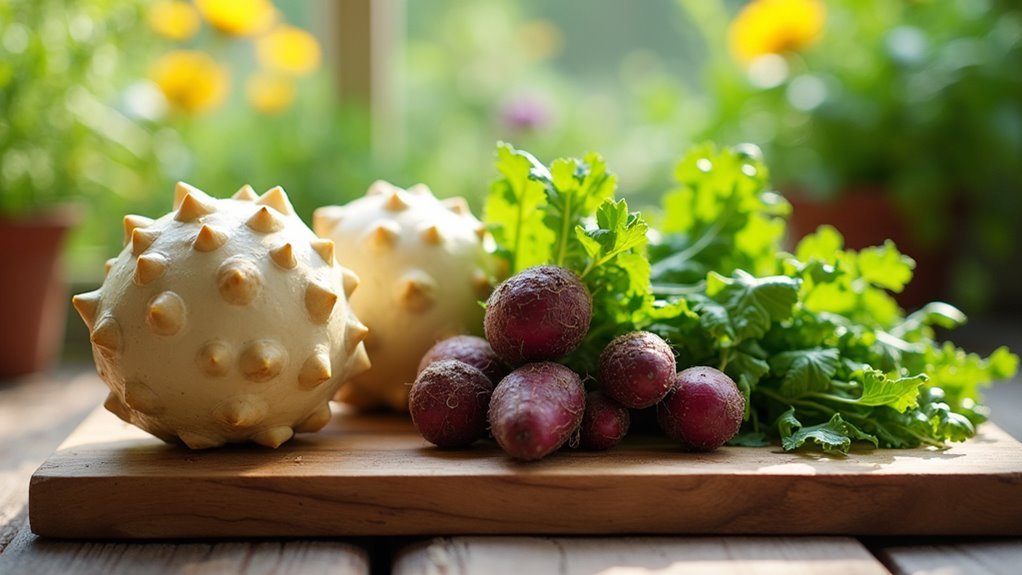
You’ll boost your gut bacteria with these three inulin powerhouses: chicory root contains the highest concentration at 41.6 grams per 100 grams, making it exceptional for promoting beneficial microorganisms. Jerusalem artichokes provide 18 grams of prebiotic fiber while delivering essential minerals like iron and copper. Garlic offers 12.5 grams of inulin and specifically encourages Bifidobacteria growth while providing antimicrobial benefits. These foods enhance digestive health, improve bowel function, and increase microbiota diversity for ideal wellness.
Chicory Root: The Most Potent Source of Inulin
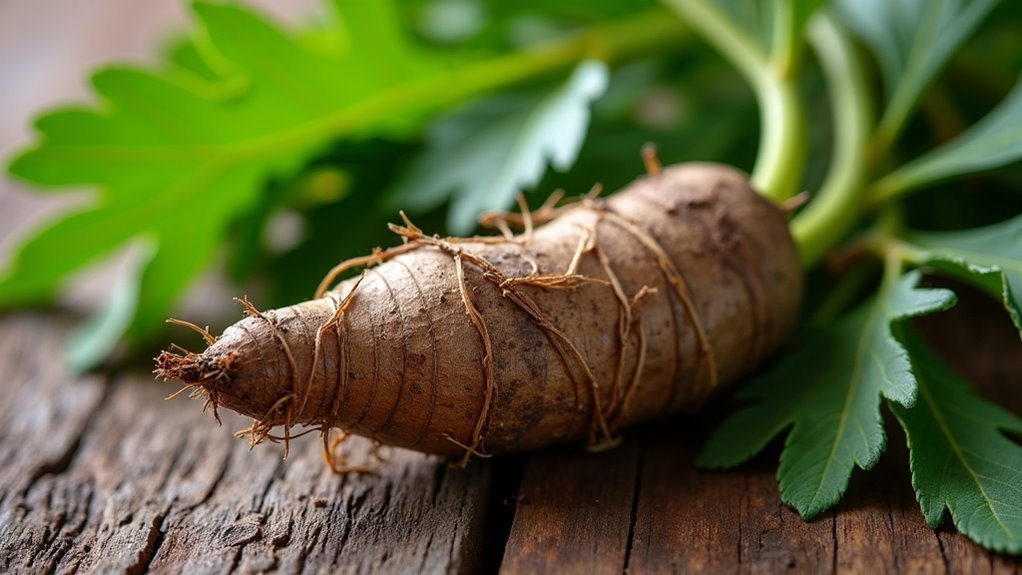
When you’re looking to maximize your inulin intake, chicory root stands out as the most potent natural source available. This remarkable root contains approximately 41.6 grams of inulin per 100 grams, making it incredibly rich in this essential prebiotic fiber.
You’ll find that chicory root markedly boosts your fiber content while promoting beneficial gut bacteria growth, which directly enhances your digestive health.
Regular consumption helps improve bowel function, particularly if you’re dealing with constipation. Research shows chicory root inulin increases microbiota diversity, creating a healthier gut environment.
You can enjoy it fresh in salads or as a roasted coffee substitute. Many dietary supplements also use chicory root inulin specifically because of its powerful gut health benefits and superior prebiotic properties.
Jerusalem Artichokes: Nutrient-Dense Tubers for Digestive Health
While chicory root offers the highest concentration of inulin, Jerusalem artichokes provide an excellent alternative that’s both delicious and incredibly nutritious.
These nutrient-dense tubers pack approximately 18 grams of prebiotic fiber per 100 grams, making them exceptional for feeding beneficial gut bacteria and supporting digestive health.
You’ll gain impressive health benefits from Jerusalem artichokes, including nearly one-fifth of your daily iron needs plus essential copper and vitamin B1.
Their high inulin content enhances mineral absorption in your large intestine, potentially supporting insulin management and diabetes control.
You can enjoy these versatile sunchokes raw in salads and salsas or cook them into various dishes.
Either way, you’re nourishing your gut bacteria while adding delicious flavor to your meals.
Garlic: Flavorful Prebiotic With Antimicrobial Benefits

Beyond being a culinary staple, garlic delivers an impressive 12.5 grams of inulin per 100 grams, making it a powerful prebiotic that actively feeds beneficial gut bacteria.
You’ll find that garlic specifically promotes Bifidobacteria growth, enhancing your digestive health and creating better gut flora balance.
What sets garlic apart from other inulin sources is its unique antimicrobial properties. While it nourishes beneficial bacteria, it simultaneously fights harmful microorganisms in your digestive system.
The bioactive compounds in garlic, including potent antioxidants, provide anti-inflammatory benefits that extend beyond gut health to support your cardiovascular system.
Regular garlic consumption can help regulate your blood sugar levels, making it particularly valuable if you’re managing diabetes or prediabetes.
This flavorful prebiotic offers extensive health benefits.
Frequently Asked Questions
What Food Is Highest in Inulin?
You’ll find chicory root contains the highest inulin levels at 41.6 grams per 100 grams. It’s an exceptional prebiotic source that’ll greatly boost your beneficial gut bacteria more than any other food.
What Is the Richest Source of Inulin?
You’ll find chicory root is the richest source of inulin, containing approximately 41.6 grams per 100 grams. It’s markedly higher than other inulin-rich foods like Jerusalem artichokes or dandelion greens.
Do Avocados Contain Inulin?
No, you won’t find inulin in avocados. They’re packed with healthy monounsaturated fats and about 10 grams of regular fiber, but they don’t contain this specific prebiotic fiber that feeds gut bacteria.
Who Should Not Eat Inulin?
You shouldn’t eat inulin if you’ve got FODMAP intolerance, ragweed allergies, IBD, or IBS. Start with small amounts if you’re unsure, as high doses can cause digestive issues.


