
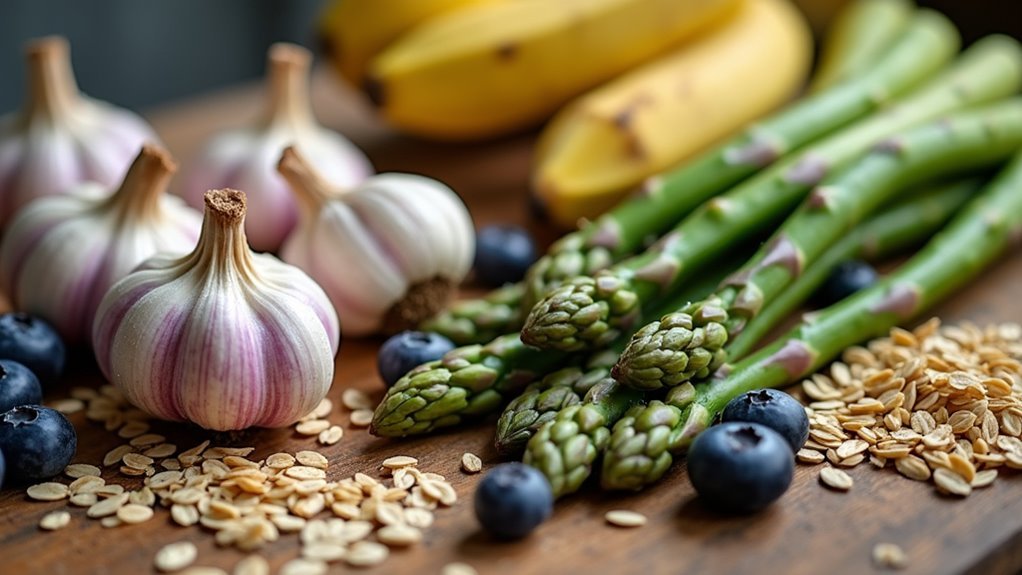
You’ll boost your gut health considerably by incorporating these seven prebiotic fiber foods: chicory root (68% inulin content), Jerusalem artichoke with blood sugar benefits, garlic rich in beneficial fructooligosaccharides, bananas providing resistant starch, oats packed with beta-glucan fiber, asparagus containing natural inulin, and apples high in gut-nourishing pectin. These foods feed beneficial bacteria, improve digestion, and support overall wellness. Continue below to discover specific preparation methods and ideal daily amounts for maximum digestive benefits.
Chicory Root: The Ultimate Prebiotic Powerhouse
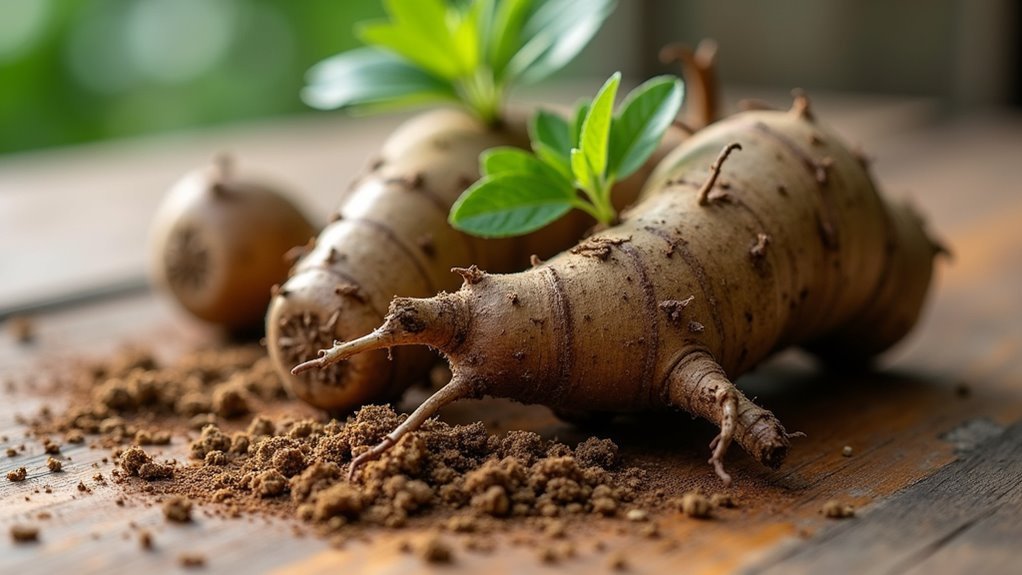
While many foods contain prebiotic fiber, chicory root stands out as nature’s most potent source, packing an impressive 68% inulin content that’ll transform your gut health. This remarkable root feeds beneficial gut bacteria, creating a thriving ecosystem that enhances your digestive health considerably.
You’ll notice improved bowel function when you incorporate chicory root into your routine, as it effectively addresses constipation while supporting healthy digestion. The inulin promotes diverse gut microbiota, which directly impacts your metabolic health and aids in weight management by increasing satiety.
Whether you’re sipping chicory coffee or taking fiber supplements, you’re investing in long-term wellness. This versatile prebiotic powerhouse doesn’t just support digestion—it optimizes your entire gut ecosystem for sustained health benefits.
Jerusalem Artichoke: Inulin-Rich Digestive Support
Though Jerusalem artichokes might sound exotic, these knobby root vegetables—also called sunchokes—deliver exceptional prebiotic benefits that’ll revolutionize your digestive wellness.
You’ll get approximately 2 grams of inulin-rich dietary fiber per 100 grams, making them a powerful source of prebiotic fiber that feeds beneficial bacteria in your gut.
When you consume Jerusalem artichokes, the inulin works specifically in your large intestine to enhance mineral absorption while promoting ideal digestive health.
Research shows they’re particularly effective for managing blood sugar levels, making them especially valuable if you’re dealing with diabetes.
Their culinary versatility means you can easily incorporate them into roasted dishes, soups, or salads, giving you both exceptional gut health benefits and delicious meal options.
Garlic: Flavorful Prebiotic With Multi-Health Benefits

You’ll find garlic packs impressive prebiotic power through its rich inulin and FOS content, which feed beneficial gut bacteria like Bifidobacteria.
Beyond digestive support, garlic’s allicin compound delivers cardiovascular benefits and immune system strengthening that make it a true multi-health powerhouse.
Whether you choose raw or cooked garlic affects how much of these benefits you’ll actually absorb, so preparation method matters more than you might think.
Prebiotic Power of Garlic
Beyond its reputation as a culinary staple, garlic emerges as a nutritional powerhouse packed with prebiotic compounds that’ll transform your gut health.
You’ll find garlic loaded with inulin and fructooligosaccharides, which feed beneficial bacteria like Bifidobacteria in your digestive system. These prebiotics strengthen your immune system while reducing inflammation throughout your digestive tract.
Raw garlic delivers maximum allicin content, providing cardiovascular protection and cancer-fighting properties. You’ll also benefit from garlic’s ability to regulate blood sugar levels, making it valuable for blood sugar control and diabetes management.
When you incorporate garlic into your daily meals, you’re considerably boosting your fiber intake while supporting digestive wellness.
This simple addition enhances your gut microbiome diversity, creating a thriving environment for beneficial bacteria that supports overall health.
Heart and Immune Support
While garlic’s prebiotic benefits support your digestive system, its cardiovascular and immune-boosting properties make it a true multi-functional superfood.
The prebiotic fiber in garlic doesn’t just nourish beneficial gut bacteria—it contributes to your overall healthy immune function.
Garlic’s bioactive compounds exhibit antimicrobial and anti-inflammatory properties that strengthen your cardiovascular system and bolster your body’s natural defenses.
When you consume garlic regularly, you’re providing dual support: the prebiotic elements feed good bacteria in your gut, while the antimicrobial properties help maintain a balanced microbiome.
This combination creates a powerful synergy that enhances both immune response and heart health, making garlic an exceptional choice for extensive wellness support.
Raw Vs Cooked Benefits
To maximize garlic’s prebiotic potential, you’ll want to contemplate how preparation methods affect its beneficial compounds.
Raw garlic contains considerably higher allicin levels compared to its cooked counterpart, delivering superior prebiotic benefits for gut health. When you consume raw garlic, you’re supporting beneficial gut bacteria growth, particularly Bifidobacteria, which enhances overall gut health and microbiota diversity.
Cooking garlic reduces prebiotic compounds like inulin and fructooligosaccharides, diminishing its gut-supporting properties. However, you can maximize nutrient absorption by incorporating raw garlic into salad dressings, dips, or cold preparations.
While cooked garlic retains some health benefits, raw garlic proves more effective for digestive wellness. The heat-sensitive compounds that promote growth of beneficial bacteria remain intact when garlic’s consumed fresh, making raw preparation your best choice for ideal prebiotic effects.
Bananas: Easy Prebiotic Addition to Any Diet
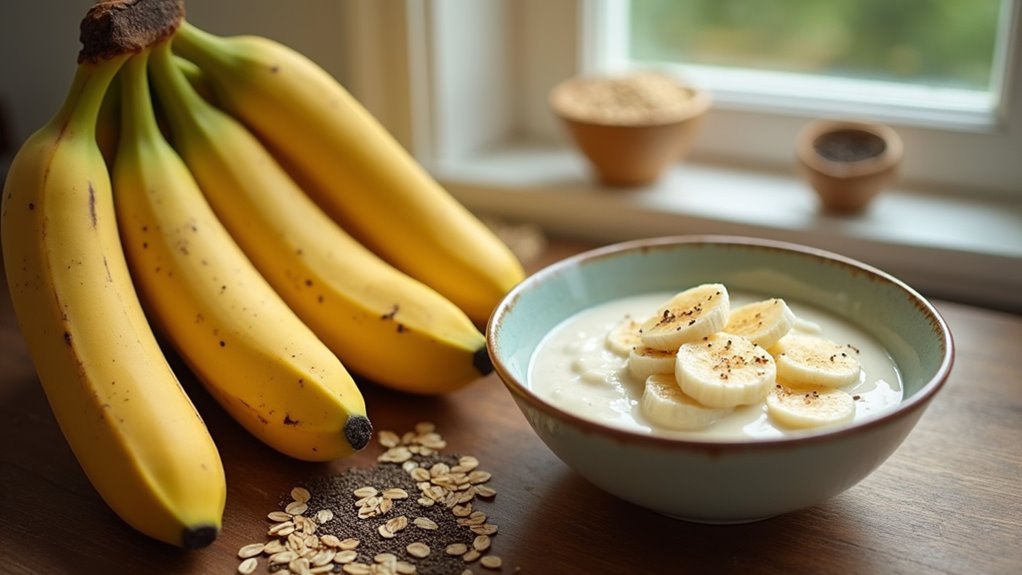
You’ll find bananas among the most accessible prebiotic foods, packed with inulin and resistant starch that feed your beneficial gut bacteria.
Each medium banana delivers about 3 grams of fiber while providing essential potassium and vitamin C for your overall health.
Adding just one banana daily to your smoothies, cereals, or snacks can greatly boost your prebiotic intake and support your digestive wellness.
Banana Prebiotic Content
When you’re looking for an effortless way to boost your gut health, bananas offer one of nature’s most convenient prebiotic packages. Each medium banana delivers approximately 3 grams of fiber, including powerful prebiotic compounds that fuel your beneficial bacteria.
Your digestive system benefits from banana’s unique prebiotic content in several ways:
- Inulin and resistant starch – These compounds specifically nourish good gut bacteria
- Enhanced nutrient absorption – Prebiotics help your body extract more vitamins and minerals
- Regular bowel movements – Fiber content promotes healthy digestive transit
You’ll find bananas incredibly versatile for incorporating prebiotics into your daily routine. Whether you’re adding them to morning cereals, blending into smoothies, or using in baked goods, you’re consistently supporting your gut’s bacterial balance while maintaining regular digestive function.
Daily Consumption Benefits
Making bananas part of your daily routine transforms gut health maintenance from a complex nutritional puzzle into a simple, enjoyable habit. Each banana delivers prebiotic fibers that directly support beneficial gut bacteria growth, enhancing digestive health and gut microbiota diversity. This versatile addition helps you reach your daily fiber goal while promoting improved gut health through better nutrient absorption and increased satiety.
| Consumption Method | Fiber Boost | Additional Benefits |
|---|---|---|
| Morning smoothie | 3g per banana | Enhanced nutrient absorption |
| Cereal topping | Combines with grain fiber | Sustained energy release |
| Post-workout snack | Quick fiber delivery | Supports recovery and satiety |
| Evening dessert | Natural sweetness | Promotes overnight digestive health |
Regular banana consumption creates lasting positive changes in your gut’s bacterial ecosystem.
Oats: Beta-Glucan Fiber for Cholesterol and Gut Health
Although many grains offer nutritional benefits, oats stand out as a powerhouse for both heart and gut health due to their exceptional beta-glucan content. This soluble dietary fiber acts as a prebiotic, feeding beneficial gut bacteria and promoting ideal digestion.
Oats deliver exceptional beta-glucan fiber that acts as a powerful prebiotic, simultaneously supporting both cardiovascular and digestive wellness.
Beta-glucan’s remarkable properties deliver multiple health advantages:
- Cholesterol reduction – Studies demonstrate significant decreases in total and LDL cholesterol levels.
- Blood sugar regulation – Helps stabilize glucose levels, potentially reducing type 2 diabetes risk.
- Enhanced bowel function – Improves digestive processes and prevents constipation.
You’ll find oats incredibly versatile for increasing your fiber intake. Their prebiotic properties support gut health while simultaneously boosting cardiovascular health.
Regular consumption creates a foundation for improved digestion and long-term wellness benefits.
Asparagus: Versatile Vegetable With Natural Inulin
Asparagus brings exceptional prebiotic power to your plate through its natural inulin content, offering a fresh vegetable approach to gut health beyond grain-based options like oats.
Each serving delivers approximately 2 grams of inulin, a prebiotic fiber that feeds beneficial bacteria throughout your digestive system.
You’ll boost your digestive wellness while gaining essential vitamins like folate, vitamin C, and vitamin E. This versatile vegetable adapts to any meal – toss it raw into salads or cook it in stir-fries without losing its gut-supporting benefits.
Regular asparagus consumption enhances gut microbiota diversity, directly improving your digestive function.
You’re not just adding flavor to meals; you’re actively cultivating a healthier gut environment that supports overall wellness through targeted prebiotic nutrition.
Apples: Pectin-Rich Fruit for Beneficial Bacteria Growth
Apples deliver powerful prebiotic benefits through their high pectin content, a soluble fiber that specifically nourishes beneficial bacteria and promotes digestive wellness. Research from 2016 demonstrates that pectin consumption actively supports healthy gut microbiota, making apples an excellent choice for improving your digestive health.
Beyond their prebiotic properties, apples offer additional health advantages:
- Rich in antioxidants and vitamin C – Combat oxidative stress throughout your body
- Blood sugar regulation – Help maintain stable glucose levels when consumed regularly
- Heart disease prevention – Reduce cardiovascular risk factors through consistent intake
With approximately 4 grams of fiber per medium apple, you’ll easily boost your daily prebiotic intake while supporting your gut health.
Including apples in your regular diet creates a foundation for better overall health through improved digestive function.
Frequently Asked Questions
What’s the Best Prebiotic for Gut Health?
You’ll find chicory root’s the most powerful prebiotic, containing 68% inulin that dramatically boosts gut bacteria diversity. However, you can’t go wrong with Jerusalem artichokes, garlic, or oats for excellent digestive benefits.
Which Fiber Is Best for Gut Health?
You’ll find inulin’s the top choice for gut health since it’s incredibly effective at promoting beneficial bacteria growth. Beta-glucan from oats also works excellently, improving microbiota diversity while lowering cholesterol levels.
What Is the Most Gut Healing Food?
Chicory root stands out as the most gut-healing food you’ll find. It’s packed with 68% inulin fiber, which feeds beneficial bacteria and dramatically improves your digestive health better than other options.
Is Prebiotic Fiber Good for Gut Health?
Yes, prebiotic fiber’s excellent for your gut health. It feeds beneficial bacteria, promoting their growth and diversity. You’ll experience improved digestion, better immune function, enhanced calcium absorption, and relief from constipation when you consume it regularly.


