
You can heal your fatty liver with three powerful cruciferous vegetables: broccoli, kale, and Brussels sprouts. These vegetables contain glucosinolates that enhance your liver’s detoxification processes while reducing inflammation. Broccoli’s indole-3-carbinol provides antioxidant effects, kale activates liver enzymes for toxin elimination, and Brussels sprouts prevent fat accumulation through anti-inflammatory properties. Their high fiber content aids digestion and regulates fat metabolism, improving your liver enzyme levels naturally. Discover how incorporating these vegetables transforms your liver health journey.
Broccoli: Powerhouse of Liver-Protective Compounds

When you’re looking to support your liver health naturally, broccoli stands out as one of the most potent cruciferous vegetables you can add to your diet. This green powerhouse contains glucosinolates, sulfur compounds that enhance your liver’s detoxification processes.
You’ll also benefit from broccoli’s indole-3-carbinol content, which delivers powerful antioxidant effects while reducing inflammation linked to fatty liver disease.
Regular broccoli consumption helps lower inflammatory markers, directly supporting ideal liver function. The high fiber content aids digestion and regulates fat metabolism, creating additional benefits for your liver.
Broccoli’s anti-inflammatory properties and high fiber content work together to optimize liver function and enhance fat metabolism naturally.
Studies show that eating broccoli consistently can improve liver enzyme levels, boosting your body’s natural detoxification abilities. By incorporating this nutrient-dense vegetable into your meals, you’re providing your liver with essential compounds needed to combat fatty liver disease effectively.
Kale: Dense Source of Detoxification Nutrients
Another exceptional cruciferous vegetable that rivals broccoli’s liver-supporting benefits is kale, which delivers an even more concentrated array of detoxification nutrients.
You’ll find kale packed with glucosinolates that activate liver enzymes responsible for eliminating toxins from your system. Its abundant antioxidants and vitamins A, C, and K work together to reduce inflammation and oxidative stress—two major contributors to fatty liver disease.
The fiber in kale supports healthy digestion while regulating blood sugar levels, making it particularly valuable for managing non-alcoholic fatty liver disease.
Research shows that increasing your consumption of kale and other cruciferous vegetables can lower pro-inflammatory markers, improving overall liver health.
Kale’s enhancement of phase II detoxification pathways helps prevent fat accumulation and promotes ideal liver function.
Brussels Sprouts: Natural Anti-Inflammatory Liver Support
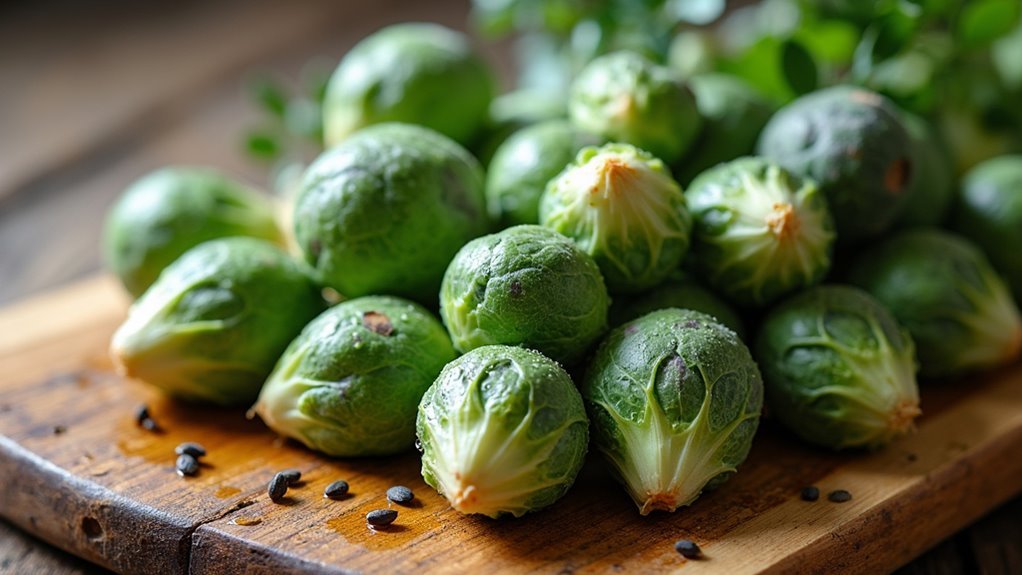
While many people overlook Brussels sprouts due to their reputation, you’ll discover they’re actually powerhouses of liver-supporting compounds that can greatly reduce inflammation and enhance your body’s natural detoxification processes.
These cruciferous vegetables pack glucosinolates, sulfur-containing compounds that boost liver detoxification and support overall liver health. Their high fiber content aids digestion while reducing liver fat accumulation—crucial for managing NAFLD. The anti-inflammatory properties help alleviate liver inflammation, a common issue in fatty liver disease.
| Liver Benefit | Active Compound | Mechanism |
|---|---|---|
| Detoxification | Glucosinolates | Enhances enzyme activity |
| Fat Reduction | Fiber | Prevents accumulation |
| Inflammation Control | Antioxidants | Reduces inflammatory markers |
Regular Brussels sprouts consumption lowers pro-inflammatory markers and enhances liver enzyme activity, promoting ideal liver function for fatty liver recovery.
Frequently Asked Questions
Are Cruciferous Vegetables Good for Fatty Liver?
You’ll benefit from eating cruciferous vegetables if you have fatty liver disease. They’ll activate your liver’s detoxification enzymes, reduce inflammation, and help eliminate toxins that contribute to fat accumulation in your liver.
What Are the Best Vegetables to Reduce Fatty Liver?
You’ll benefit most from broccoli, Brussels sprouts, cauliflower, and cabbage to reduce fatty liver. These cruciferous vegetables contain sulforaphane and glucosinolates that support liver detoxification and decrease inflammation effectively.
What Heals the Liver the Fastest?
You’ll heal your liver fastest by eliminating alcohol, processed foods, and sugar while adding cruciferous vegetables, lean proteins, and healthy fats. Stay hydrated, exercise regularly, and get adequate sleep to accelerate recovery.
What Is the Best Vegetable to Cleanse Your Liver?
You’ll find broccoli’s your best choice for liver cleansing. It’s packed with glucosinolates that boost detoxification enzymes, reduce inflammation, and help eliminate fat accumulation while supporting your liver’s natural healing processes.


