

Cruciferous vegetables like broccoli, kale, and Brussels sprouts contain powerful glucosinolates that dramatically boost your liver’s cytochrome P450 enzymes, particularly CYP1A1 and CYP1A2. When you chew these vegetables, myrosinase activates these compounds into metabolites like indole-3-carbinol, which enhance both Phase I and Phase II detoxification pathways. You’ll maximize benefits by eating them raw or lightly steamed, as boiling reduces glucosinolate content by over 50%. Understanding ideal preparation methods and specific dosages can reveal their full therapeutic potential.
Understanding Glucosinolates in Cruciferous Vegetables
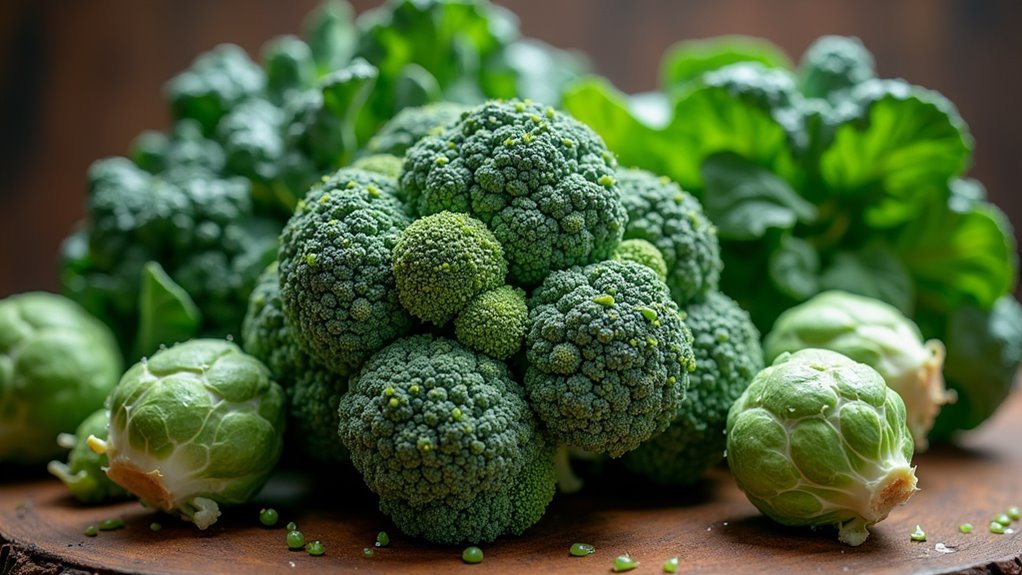
When you bite into a piece of raw broccoli or Brussels sprouts, you’re experiencing the distinctive sharp flavor of glucosinolates (GLS) – unique sulfur-containing compounds that give cruciferous vegetables their characteristic taste and aroma.
These compounds remain inactive until you chew or cut the vegetables, activating the enzyme myrosinase. This process transforms glucosinolates into bioactive derivatives, particularly isothiocyanates, which support detoxification processes in your body.
Scientists have identified over 120 different types of glucosinolates, classified as aliphatic, aromatic, or indolic based on their amino acid origins.
These compounds work specifically to enhance liver function by boosting cytochrome enzymes responsible for processing toxins.
However, your cooking method matters – boiling reduces glucosinolate content by over 50%, while steaming preserves these beneficial compounds more effectively.
The Breakdown Products That Enhance Liver Function
When you consume cruciferous vegetables, myrosinase breaks down glucosinolates into powerful metabolites like indole-3-carbinol and crambene that directly target your liver’s detoxification systems.
These breakdown products work together to ramp up your cytochrome P450 enzymes, particularly CYP1A, which are essential for processing harmful substances that enter your body.
You’ll also see increased activity in phase II detoxification enzymes like glutathione S-transferase, creating a thorough boost to your liver’s ability to neutralize and eliminate toxins.
Glucosinolate Metabolite Mechanisms
Although glucosinolates in cruciferous vegetables remain biologically inactive in their original form, they transform into powerful liver-supporting compounds once you consume them. The enzyme myrosinase breaks down these glucosinolates into bioactive derivatives like isothiocyanates and indoles, which directly enhance your liver’s detoxification capacity.
| Metabolite | Enzyme Type | Primary Function |
|---|---|---|
| Indole-3-carbinol | Bifunctional inducer | Upregulates cytochrome P450 and GST |
| Crambene | Monofunctional inducer | Enhances GST activity |
| Sulforaphane | Transcriptional modulator | Activates antioxidant response elements |
These metabolites work through sophisticated mechanisms, influencing transcriptional regulation via antioxidant and xenobiotic response elements. When combined, compounds like I3C and crambene create synergistic effects that greatly boost your liver’s detoxification enzymes beyond what individual treatments achieve.
Cytochrome Enzyme Induction
Once these glucosinolate metabolites reach your liver, they trigger a cascade of enzyme induction that markedly enhances your body’s detoxification capabilities.
Your cytochrome P450 enzymes, particularly CYP1A1 and CYP1A2, increase their activity considerably when you consume cruciferous vegetables regularly.
Indole-3-carbinol acts as a bifunctional inducer, while crambene creates synergistic effects when combined with I3C.
This powerful combination doesn’t stop at cytochrome P450 enhancement—it also boosts your glutathione S-transferase and quinone reductase activity.
These enzymes work together to metabolize harmful carcinogens more effectively.
The transcriptional mechanisms behind this enzyme induction vary based on your genetic makeup, meaning your individual response to glucosinolates may differ from others consuming similar amounts.
Phase I Detoxification and CYP450 Enzyme Activation
When you consume cruciferous vegetables, you’re directly activating your liver’s Phase I detoxification system through the induction of specific CYP450 enzymes.
Your body responds by increasing CYP1A1 and CYP1A2 enzyme activity, which ramps up the metabolism of harmful xenobiotics and potential carcinogens.
This enzyme activation creates a more robust metabolic pathway that enhances your liver’s ability to process and neutralize toxic compounds before they can cause cellular damage.
CYP1A Enzyme Induction
As your liver processes toxins and foreign compounds, cruciferous vegetables step in as powerful modulators of the cytochrome P450 enzyme system, particularly targeting CYP1A1 and CYP1A2 enzymes that drive phase I detoxification.
When you consume cruciferous vegetables, glucosinolates break down into active compounds like indole-3-carbinol (I3C) and crambene. These compounds considerably boost CYP1A activity through increased enzyme expression and mRNA levels.
| Compound | CYP1A Induction | Synergistic Effect |
|---|---|---|
| I3C alone | High | Moderate |
| Crambene alone | Minimal | Low |
| I3C + Crambene | Very High | Strong |
| Control | Baseline | None |
The combination of I3C and crambene creates synergistic effects, producing greater enzyme induction than individual treatments. However, your genetic makeup influences how effectively you’ll metabolize these beneficial compounds from cruciferous vegetables.
Metabolic Pathway Activation
This enzyme induction activates a complex network of metabolic pathways that transforms your liver into a more efficient detoxification powerhouse.
When you consume cruciferous vegetables, compounds like indole-3-carbinol and crambene work synergistically to upregulate your cytochrome P450 enzymes. This activation creates a cascade effect throughout your detoxification pathway, considerably enhancing your liver’s ability to process harmful compounds.
Your Phase I enzyme activity increases rapidly, with measurable changes occurring within just seven days of regular consumption.
The enhanced CYP1A1 and CYP1A2 activity accelerates procarcinogen metabolism, converting potentially dangerous substances into less harmful metabolites.
This metabolic activation doesn’t just improve one pathway—it orchestrates multiple detoxification processes simultaneously, creating a thorough defense system that protects your body from environmental toxins and carcinogenic compounds.
Phase II Detoxification Pathway Enhancement
Cruciferous vegetables boost your liver’s Phase II detoxification pathways through their rich glucosinolate content, which breaks down into powerful compounds called isothiocyanates and indoles.
These compounds enhance Phase II detoxification enzymes in your liver, particularly by increasing glutathione S-transferase (GST) and quinone reductase activities. When you consume vegetables like broccoli and Brussels sprouts, the combination of indole-3-carbinol and crambene creates a synergistic effect that’s more powerful than individual compounds alone.
Broccoli and Brussels sprouts work together to supercharge your liver’s detoxification enzymes beyond what individual compounds can achieve alone.
Your liver’s glucuronidation enzymes also increase with regular cruciferous vegetable intake, improving toxin elimination.
Clinical studies recommend 5-9 daily servings of fruits and vegetables for ideal detoxification benefits. However, your genetic makeup influences how effectively you’ll metabolize these beneficial isothiocyanates.
Specific Cruciferous Vegetables for Optimal Liver Support
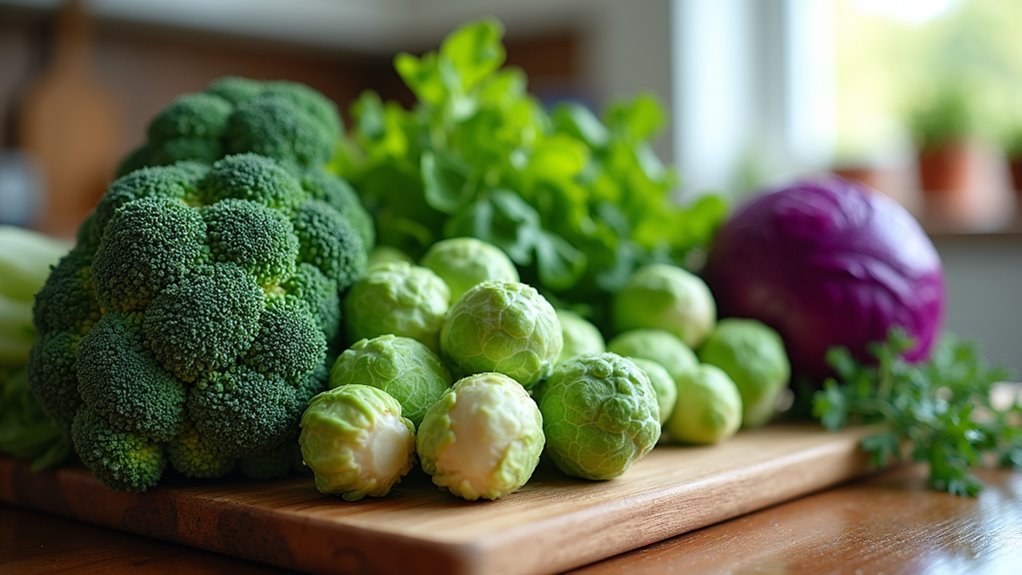
While all cruciferous vegetables offer liver support benefits, certain varieties stand out for their exceptional glucosinolate profiles and bioactive compound concentrations.
Broccoli tops the list with its high sulforaphane content, which powerfully activates your liver’s cytochrome P450 enzymes. You’ll get maximum benefits by consuming 2-3 cups daily, preferably steamed to preserve glucosinolates.
Brussels sprouts contain unique compounds that specifically target CYP1A1 and CYP1A2 enzyme activity, making them excellent for toxin metabolism. Kale provides diverse glucosinolates that enhance multiple detoxification pathways simultaneously.
- Broccoli: Highest sulforaphane content for maximum cytochrome P450 activation
- Brussels sprouts: Specialized compounds targeting CYP1A1 and CYP1A2 enzymes
- Kale: Diverse glucosinolate profile supporting thorough liver detoxification
Your genetic makeup influences how effectively you’ll metabolize these cruciferous vegetables’ beneficial compounds.
Indole-3-Carbinol and Diindolylmethane Mechanisms
When you consume cruciferous vegetables, you’re activating powerful compounds called indole-3-carbinol (I3C) and diindolylmethane (DIM) that work through three distinct mechanisms to support your liver’s detoxification capacity.
These compounds function as bifunctional enzyme modulators, simultaneously enhancing both phase I and phase II detoxification pathways while specifically altering how your body processes estrogen metabolites.
You’ll benefit from their ability to regulate gene transcription at the cellular level, particularly targeting cytochrome P450 enzymes that break down potentially harmful substances before they can damage your liver tissue.
Bifunctional Enzyme Modulation
Among the most potent bioactive compounds found in cruciferous vegetables, indole-3-carbinol (I3C) and its metabolite diindolylmethane (DIM) demonstrate remarkable bifunctional properties that simultaneously enhance both phase I and phase II liver detoxification pathways.
When you consume I3C, it upregulates cytochrome P450 enzymes while boosting glutathione S-transferase and quinone reductase activity. This dual-action approach optimizes your liver’s ability to process toxins efficiently.
- Enhanced enzyme synergy: I3C combined with crambene increases detoxification enzyme activity more effectively than individual compounds
- Genetic variability matters: Your individual metabolism affects how efficiently you process I3C and DIM
- Clinical validation: Studies confirm cruciferous vegetable intake increases CYP1A activity and improves overall detoxification capacity
Estrogen Metabolism Alteration
Beyond their detoxification benefits, I3C and DIM fundamentally reshape how your body processes estrogen, steering metabolism toward safer pathways that reduce cancer risk.
When you consume cruciferous vegetables, I3C enhances cytochrome P450 enzyme activity, particularly CYP1A1, which hydroxylates estrogens into different metabolites. This process favors 2-hydroxyestrone production over 16α-hydroxyestrone, creating a protective metabolic profile.
Your estrogen metabolism becomes more efficient through Nrf2-mediated pathways that activate detoxification enzymes. DIM, I3C’s metabolite, amplifies these effects by promoting harmful estrogen metabolite elimination.
However, your genetic variations influence how effectively these compounds alter your estrogen processing, meaning protection levels vary based on your individual enzyme polymorphisms and metabolic capacity.
Transcriptional Gene Regulation
The molecular mechanisms behind these estrogen metabolism changes operate through sophisticated gene regulatory networks that I3C and DIM orchestrate at the transcriptional level.
When you consume cruciferous vegetables, these compounds activate key transcription factors like Nrf2, which directly upregulates cytochrome P450 enzymes including CYP1A1 and CYP1A2. This transcriptional regulation creates a cascade effect throughout your liver’s detoxification pathways.
I3C functions as a bifunctional inducer, while DIM stabilizes and amplifies these enzymatic responses. Together, they rewire your liver’s gene expression profiles, enhancing both phase I and phase II detoxification enzymes.
This coordinated transcriptional response optimizes your body’s ability to process and eliminate toxins efficiently.
- Enhanced CYP enzyme production through direct gene upregulation
- Nrf2 pathway activation promoting antioxidant gene expression
- Synergistic I3C-DIM effects amplifying detoxification capacity
Glutathione S-Transferase Upregulation
When you consume cruciferous vegetables like broccoli and Brussels sprouts, you’re actively boosting your liver’s production of glutathione S-transferase (GST), a critical enzyme that serves as your body’s frontline defense against toxic compounds.
This detoxification powerhouse facilitates the conjugation of harmful substances with glutathione, enabling efficient elimination from your system.
The glucosinolates in cruciferous vegetables break down into potent compounds like crambene and indole-3-carbinol, which work synergistically to maximize GST induction.
You’ll experience enhanced detoxification capacity when consuming higher amounts of these vegetables.
However, your individual response varies based on genetic factors affecting specific GST subunits like Ya2, Yc1, and Yc2.
Clinical studies consistently demonstrate that regular consumption of these GST-inducing vegetables contributes to improved liver function and reduced chronic disease risk.
Sulforaphane’s Role in Enzyme Induction
When you consume cruciferous vegetables, you’re delivering sulforaphane directly to your liver where it activates powerful enzyme systems.
This compound specifically targets your cytochrome P450 enzymes, particularly CYP1A1 and CYP1A2, which are your body’s primary defense against carcinogenic compounds.
You’ll experience enhanced detoxification as sulforaphane triggers the Nrf2 pathway, dramatically increasing your liver’s ability to neutralize harmful substances.
Sulforaphane Enzyme Activation
Among cruciferous vegetables’ most powerful compounds, sulforaphane stands out as a remarkable catalyst for liver enzyme activation.
When you consume broccoli, Brussels sprouts, or kale, you’re triggering a sophisticated detoxification process. Sulforaphane specifically enhances cytochrome P450 enzymes, particularly CYP1A1 and CYP1A2, which metabolize harmful xenobiotics and carcinogens in your system.
This compound activates your Nrf2 signaling pathway, boosting phase II detoxification enzymes like glutathione S-transferases. You’ll benefit from enhanced conjugation and elimination of toxic compounds.
- Enhanced enzyme activity – Sulforaphane considerably increases CYP1A enzyme expression
- Improved detoxification – Phase II enzymes help eliminate harmful compounds more efficiently
- Cancer protection – Reduced bioactivation of procarcinogens through enhanced liver function
Cytochrome P450 Modulation
Although your liver processes countless toxins daily, sulforaphane acts as a master regulator that fine-tunes your cytochrome P450 enzyme system for ideal detoxification.
This potent compound from cruciferous vegetables specifically enhances CYP1A1 and CYP1A2 activity, creating a more efficient xenobiotic processing system. When you consume broccoli, kale, or Brussels sprouts, you’re activating the Nrf2 pathway, which triggers increased cytochrome P450 expression.
Sulforaphane’s genius lies in balancing phase I and phase II detoxification processes. It simultaneously induces glutathione S-transferases alongside cytochrome P450 enzymes, creating a thorough detox network.
Research confirms that higher cruciferous vegetable intake directly correlates with increased phase I enzyme activity, demonstrating how your dietary choices directly influence your liver’s ability to neutralize environmental toxins and carcinogens.
Bioavailability and Metabolism of Glucosinolate Compounds
Before cruciferous vegetables can deliver their protective benefits, your body must first convert their inactive glucosinolate compounds into biologically active forms. When you chew these vegetables, the enzyme myrosinase breaks down glucosinolates into isothiocyanates and indoles.
Your gut microbiota further enhances this conversion process, creating additional bioactive compounds that reach peak plasma concentrations about three hours after eating.
Your gut bacteria amplify cruciferous vegetables’ protective power, with beneficial compounds peaking in your bloodstream three hours after eating.
Your liver becomes the primary processing center for these active derivatives. It conjugates them with glutathione through enhanced enzyme activity, then converts them into mercapturic acid derivatives for urinary excretion.
This metabolic pathway explains why higher cruciferous vegetable consumption correlates with reduced cancer risk.
- Myrosinase activation occurs during chewing and digestion
- Peak bioactive compound levels appear 3 hours post-consumption
- Liver detoxification pathways process active metabolites efficiently
Optimal Preparation Methods for Maximum Enzyme Benefits
Your preparation method determines how much liver-protective power you’ll actually get from cruciferous vegetables. Different cooking methods greatly affect glucosinolates retention and their conversion to bioactive compounds that enhance liver enzyme activity.
| Cooking Method | Glucosinolate Retention | Liver Enzyme Benefits |
|---|---|---|
| Raw/Chopped | Highest | Maximum activation |
| Steaming | Very Good | Well-preserved |
| Boiling | Poor (50%+ loss) | Considerably reduced |
You’ll maximize benefits by chopping vegetables before eating to activate myrosinase, which converts glucosinolates into isothiocyanates and indoles. These bioactive compounds directly support your liver’s cytochrome enzyme systems. Steam vegetables lightly if you prefer them cooked, but avoid boiling which leaches beneficial compounds into water. Raw preparations consistently deliver the highest concentrations of liver-protective substances.
Dosage and Frequency for Therapeutic Effects
Beyond knowing how to prepare cruciferous vegetables properly, you need to understand the right amounts and timing to achieve meaningful liver benefits.
Research shows that consuming 5-9 servings daily maximizes cruciferous vegetable intake for enhanced enzyme activity. Clinical studies demonstrate this dosage effectively stimulates both phase I and phase II detoxification processes in your liver.
Key dosage recommendations include:
- Daily servings: Aim for 5-10 servings of cruciferous vegetables to maximize glucuronidation enzyme induction
- Specific compounds: Target 56 mg/kg of indole-3-carbinol combined with 50 mg/kg of crambene for ideal CYP1A activity
- Consistency matters: Maintain sustained daily intake to enhance biotransformation enzyme activity, particularly CYP1A1 and CYP1A2
Regular consumption over time proves more effective than sporadic high-dose intake for supporting your liver’s detoxification capacity.
Synergistic Effects With Other Detoxification Nutrients
When you combine cruciferous vegetables with other detoxification nutrients, you’ll amplify your liver’s cleansing power far beyond what each nutrient achieves alone. The glucosinolate breakdown products I3C and crambene work synergistically to boost cytochrome P450 enzymes, glutathione S-transferase, and quinone reductase activity more effectively than either compound individually.
| Nutrient Combination | Enhanced Effect |
|---|---|
| I3C + Crambene | Increased CYP1A activity and mRNA levels |
| Cruciferous vegetables + Antioxidants | Greater detoxification enzyme induction |
| I3C + Polyphenols | Enhanced harmful substance conjugation |
| Crambene + Vitamin C | Amplified liver cleansing capacity |
| Multiple glucosinolates + Selenium | Superior detoxification processes |
These strategic combinations create powerful detoxification networks, helping your liver eliminate toxins more efficiently than single nutrients alone.
Clinical Evidence for Liver Enzyme Enhancement
Clinical research provides compelling evidence that cruciferous vegetables greatly enhance liver enzyme activity in human subjects. Randomized trials demonstrate that regular consumption considerably boosts cytochrome P450 enzymes, particularly CYP1A1 and CYP1A2, which metabolize harmful carcinogens.
Clinical research confirms cruciferous vegetables significantly boost liver detoxification enzymes, particularly those that neutralize dangerous carcinogens in human subjects.
You’ll experience enhanced detoxification capabilities through increased phase I enzyme activity when you consume these nutrient-dense vegetables consistently.
Key compounds driving these benefits include:
- Indole-3-carbinol (I3C) – Upregulates glutathione S-transferase and quinone reductase
- Isothiocyanates – Activates critical detoxification pathways in your liver
- Sustained enzyme elevation – Long-term studies show cumulative effects over time
Your liver’s enzyme enhancement depends on both quantity and variety of cruciferous vegetables consumed. Different vegetables create differential enzyme induction patterns, making dietary diversity essential for ideal liver health and maximum detoxification benefits.
Incorporating Cruciferous Vegetables Into Daily Nutrition
Although cruciferous vegetables offer powerful liver-enhancing benefits, you’ll need strategic planning to incorporate ideal amounts into your daily routine. Target 5-9 total fruit and vegetable servings daily, including 1-2 servings of cruciferous vegetables like broccoli, cauliflower, kale, and Brussels sprouts.
These vegetables upregulate cytochrome P450 enzymes, specifically CYP1A1 and CYP1A2, which enhance liver detoxification.
You’ll preserve maximum glucosinolates by eating these vegetables raw or lightly cooked. Chewing activates myrosinase, converting glucosinolates into active detoxification compounds.
Consider adding raw kale to smoothies, lightly steaming broccoli, or incorporating cauliflower rice into meals. This consistent intake supports liver function while reducing cardiovascular disease mortality by 31% and improving inflammatory responses throughout your body.
Frequently Asked Questions
Do Cruciferous Vegetables Help the Liver?
Yes, you’ll boost your liver’s detoxification abilities when you eat cruciferous vegetables. They’ll enhance your cytochrome P450 enzymes, reduce inflammation, and improve your liver’s ability to process toxins and carcinogens effectively.
What Happens When You Eat Cruciferous Vegetables Everyday?
You’ll boost your liver’s detoxification power within seven days by upregulating cytochrome P450 enzymes. Your body produces more isothiocyanates from glucosinolates, enhancing toxin elimination and potentially reducing cancer risks markedly.
How to Improve Phase 1 Liver Detox?
You’ll boost phase 1 liver detox by eating cruciferous vegetables daily, consuming 5-10 servings of steamed broccoli and Brussels sprouts to enhance CYP1A enzyme activity and optimize xenobiotic metabolism.
What Are the Enzymes in Cruciferous Vegetables?
You’ll find glucosinolates in cruciferous vegetables, which aren’t enzymes themselves but break down into active compounds like indole-3-carbinol and crambene that boost your liver’s cytochrome P450 detoxification enzymes.


