

Raw cruciferous vegetables maximize liver detox by preserving myrosinase enzyme activity that converts glucosinolates into sulforaphane. You’ll get the most benefits by chopping vegetables and waiting 40 minutes before eating, as cooking destroys up to 90% of these enzymes. If you prefer cooked options, light steaming for 3-5 minutes retains significant activity. Broccoli sprouts contain 100 times more sulforaphane than mature broccoli. These ten strategic preparation methods will transform your liver’s detoxification capabilities.
Understanding Glucosinolates in Raw Cruciferous Vegetables
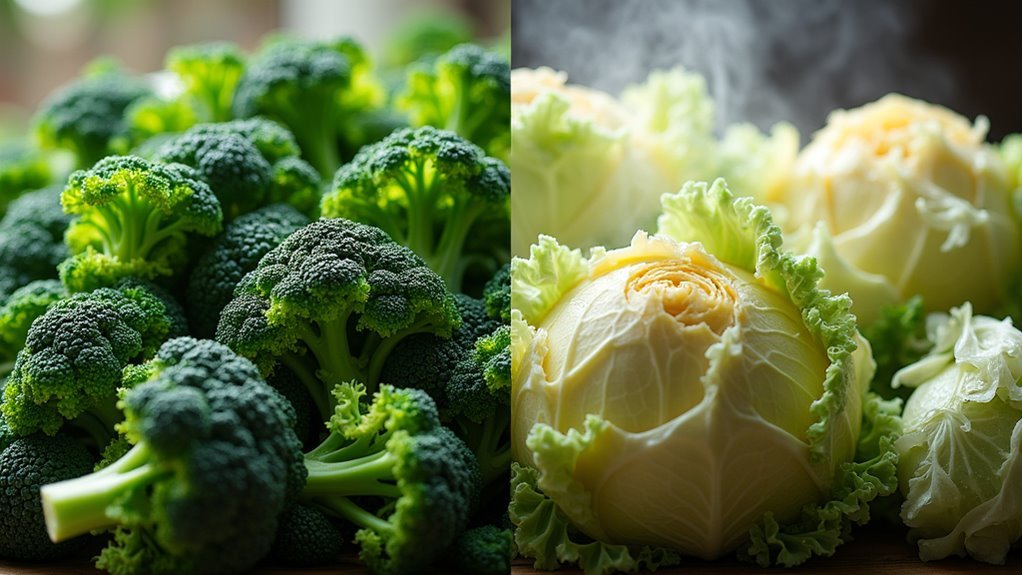
When you bite into raw broccoli or kale, you’re activating a powerful biochemical process that transforms ordinary sulfur compounds into liver-detoxifying superstars.
These sulfur-containing compounds called glucosinolates sit quietly in raw cruciferous vegetables until you chop, chew, or blend them. That’s when they spring into action with help from myrosinase, an essential enzyme that converts glucosinolates into potent detoxifying agents.
This conversion creates compounds like sulforaphane, which directly activates your liver’s detoxification enzymes. Raw cruciferous vegetables preserve myrosinase’s activity, ensuring you get maximum health benefits from each bite.
The mechanical action of breaking down plant cell walls through chewing or chopping triggers this transformation, releasing these vegetables’ full detoxifying potential for ideal liver support.
How Cooking Affects Myrosinase Enzyme Activity
When you cook cruciferous vegetables, you’re directly impacting myrosinase’s ability to convert glucosinolates into beneficial compounds.
Heat exposure destroys this essential enzyme, which means your liver detox potential decreases markedly with most cooking methods.
You’ll need to understand how different cooking techniques affect myrosinase activity to maximize the health benefits from your cruciferous vegetables.
Heat Destroys Myrosinase Activity
Although myrosinase serves as the crucial enzyme that transforms glucosinolates into powerful detoxifying compounds like sulforaphane, heat from cooking quickly destroys its activity.
When you boil or steam cruciferous vegetables for extended periods, you’re fundamentally eliminating this critical enzyme that’s responsible for activating your body’s detoxification pathways.
The temperature threshold for myrosinase destruction is relatively low. Even moderate heat exposure markedly reduces enzyme activity, which means your cooked broccoli, kale, and Brussels sprouts won’t deliver the same liver-supporting benefits as their raw counterparts.
This heat sensitivity explains why many nutrition experts recommend consuming cruciferous vegetables in their uncooked state when possible.
If you must cook them, limit heat exposure through brief steaming to preserve some myrosinase activity while improving digestibility.
Cooking Methods Comparison
Different cooking methods dramatically impact myrosinase survival, with boiling destroying up to 90% of enzyme activity within just three minutes.
When you’re choosing how to prepare your vegetables, steaming becomes your best ally among cooking methods. Light steaming for 3-5 minutes preserves significant myrosinase activity while improving digestibility.
Raw cruciferous vegetables like broccoli, kale, and cabbage deliver maximum detoxification benefits since myrosinase remains completely intact.
However, light cooking techniques can offer a compromise between nutrient preservation and digestibility.
To maximize benefits from cooked vegetables, you’ll want to combine them with raw elements containing active myrosinase.
Try adding mustard seeds or raw cabbage to your cooked dishes. This strategy helps convert glucosinolates into beneficial compounds even when the primary vegetables have reduced enzyme activity.
Maximizing Sulforaphane Production Through Proper Preparation
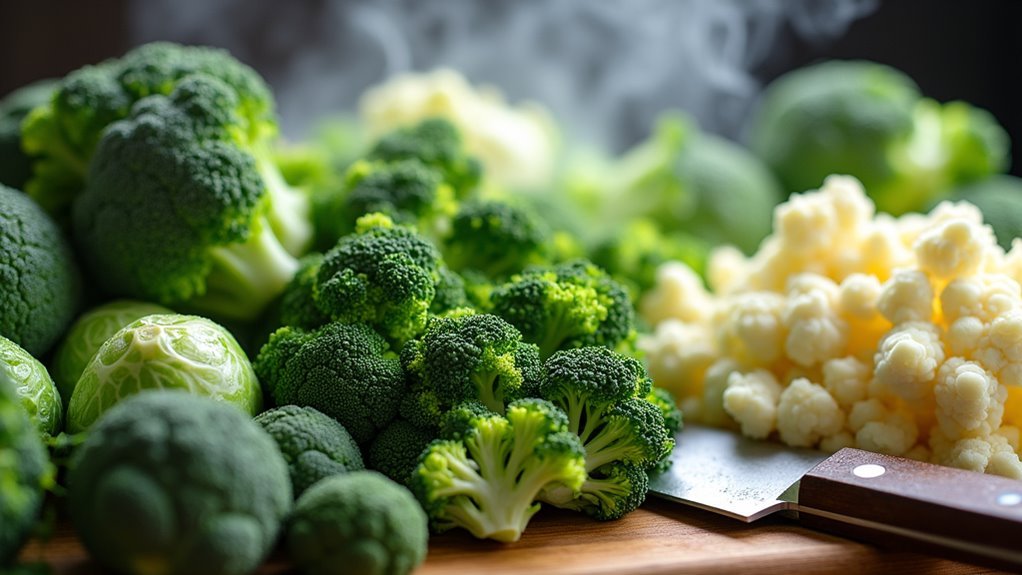
The key to unfastening cruciferous vegetables’ full detoxification potential lies in how you prepare them. Sulforaphane production depends heavily on myrosinase enzyme activity, which chopping or chewing activates.
When you consume raw cruciferous vegetables like broccoli and kale, you’ll maximize this conversion process since cooking can deactivate myrosinase.
For ideal detoxification benefits, add chopped raw cruciferous vegetables to salads or blend them into smoothies. Broccoli sprouts pack the highest concentration of glucoraphanin, making them your best choice for sulforaphane production.
If you prefer cooked vegetables, light steaming preserves some enzyme activity while improving digestibility. However, avoid high-heat methods that destroy beneficial compounds.
Balance raw and lightly cooked options throughout your week for thorough liver support.
Best Raw Cruciferous Options for Daily Liver Support
You’ll get maximum liver support by choosing the most potent raw cruciferous vegetables and eating them consistently.
Broccoli sprouts top the list with up to 100 times more sulforaphane than mature broccoli, while kale, arugula, radishes, and shredded cabbage offer powerful detoxifying compounds when eaten raw.
Aim for at least half a cup daily to activate your liver’s natural detox pathways and reduce fat accumulation.
Top Raw Cruciferous Varieties
Five powerhouse cruciferous vegetables stand out as exceptional choices for supporting your liver’s detoxification processes when eaten raw.
Broccoli sprouts top the list, containing up to 100 times more sulforaphane than mature broccoli, making them incredibly potent for liver detoxification and reducing oxidative stress.
Raw kale delivers impressive amounts of vitamins K, C, and A, plus fiber that directly supports liver health.
Arugula provides similar nutritional benefits with a peppery kick that’s perfect for salads.
Shredded raw cabbage enhances liver function through its rich glucosinolates content, which converts into beneficial isothiocyanates that promote detoxification.
Finally, raw radishes offer high water content and antioxidant properties that help flush toxins from your liver.
These raw cruciferous vegetables greatly boost your body’s natural detoxification capabilities.
Daily Serving Recommendations
Getting ideal liver support requires consuming at least half a cup of raw cruciferous vegetables daily, with broccoli sprouts leading the pack due to their extraordinary sulforaphane concentration.
Whether you choose raw or cooked options matters considerably, as cruciferous vegetables contain myrosinase enzymes that activate when consumed fresh. These detoxification enzymes convert glucosinolates into powerful compounds that reduce inflammation and promote optimal health.
Your daily serving strategy should include:
- ½ cup minimum of mixed raw varieties like arugula, kale, and shredded cabbage
- Broccoli sprouts as your primary source for maximum sulforaphane content
- Radishes and watercress to diversify your nutrient profile
- Smoothie blends combining multiple cruciferous vegetables for easy consumption
- Fresh salad additions incorporating different textures and flavors throughout the week
Optimal Cooking Methods to Preserve Detox Compounds
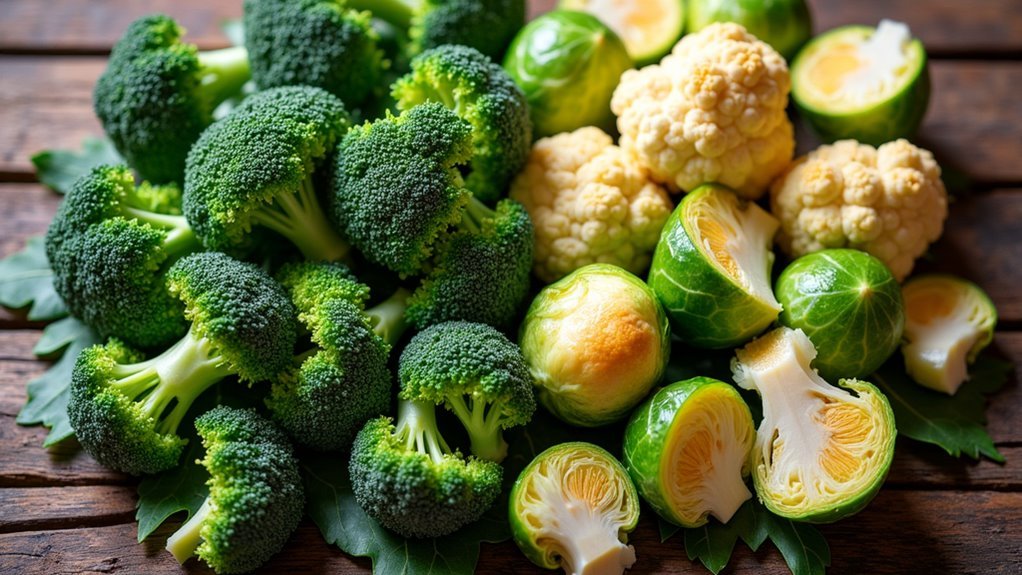
While raw cruciferous vegetables pack the most detox punch, light cooking methods can preserve their therapeutic compounds without sacrificing digestibility. You’ll want to protect myrosinase activity, the enzyme that converts glucosinolates into sulforaphane and other detoxification compounds.
| Cooking Method | Myrosinase Retention | Best For |
|---|---|---|
| Raw | 100% | Maximum sulforaphane |
| Steaming (3-4 min) | 80-90% | Tender texture |
| Light blanching | 70-80% | Easy digestion |
| Sautéing briefly | 60-70% | Flavor enhancement |
| Boiling extended | 10-30% | Avoid for detox |
Steam your cruciferous vegetables for just 3-4 minutes to maintain most beneficial compounds while improving digestibility. Lightly cooked broccoli, Brussels sprouts, and cabbage still provide considerable detoxification benefits. Avoid prolonged boiling, which destroys valuable enzymes and reduces liver-supporting properties notably.
The Chopping and Waiting Technique for Enhanced Benefits
You can release more detoxifying compounds from cruciferous vegetables by mastering a simple timing technique.
When you chop broccoli, kale, or other crucifers, let them sit for about 40 minutes before cooking to activate the myrosinase enzyme.
This waiting period allows the enzyme to convert glucosinolates into powerful compounds like sulforaphane, maximizing your liver’s detoxification potential.
Chop Then Wait Method
One simple technique can dramatically boost the liver-detoxifying power of your cruciferous vegetables: the Chop Then Wait method. This technique activates myrosinase, an enzyme that converts glucosinolates into powerful sulforaphane compounds that enhance detoxification.
Here’s how to maximize your cruciferous vegetables for ideal liver health:
- Chop broccoli, kale, or other cruciferous vegetables into desired sizes
- Let them sit undisturbed for at least 40 minutes before cooking
- Allow the enzymatic reaction to create maximum sulforaphane concentration
- Cook lightly or consume raw to preserve beneficial compounds
- Incorporate this waiting period into your regular meal prep routine
This simple waiting period considerably increases the anti-cancer and anti-inflammatory properties of your vegetables, supporting your liver’s natural detoxification processes and protecting against oxidative stress.
Myrosinase Activation Timeline
Understanding the precise timing of myrosinase activation helps you maximize the liver-detoxifying benefits from your cruciferous vegetables.
When you chop or crush these vegetables, myrosinase immediately begins converting glucosinolates into powerful compounds like sulforaphane. However, you’ll need to wait at least 40 minutes for maximum enzyme activity before cooking or consuming them.
This waiting period allows myrosinase to fully activate and create the highest concentration of beneficial compounds. If you cook cruciferous vegetables immediately after chopping, you’ll destroy the enzyme before it completes the conversion process.
The 40-minute timeline guarantees you’re getting the best detoxifying properties and health benefits from your vegetables, whether you plan to eat them raw or lightly cook them afterward.
Combining Raw and Cooked Crucifers for Maximum Impact
The smartest approach to cruciferous vegetables isn’t choosing between raw or cooked—it’s strategically combining both forms to release their full detoxification potential.
The key to maximizing cruciferous vegetables lies in strategic combination—not choosing sides between raw versus cooked preparation methods.
Raw crucifers retain myrosinase, essential for activating sulforaphane, while cooked vegetables enhance indole-3-carbinol availability. This dual approach maximizes liver detoxification and health benefits while optimizing nutrient absorption.
Here’s your strategic combination plan:
- Include one daily serving of raw crucifers like kale or arugula for liver support
- Lightly steam broccoli or Brussels sprouts to improve digestibility
- Blend raw options into smoothies with healthy fats like avocado
- Pair raw crucifers with olive oil to enhance fat-soluble vitamin absorption
- Alternate between preparation methods to support individual digestive tolerances
This balanced approach reduces bitterness, encourages greater intake, and delivers thorough detoxification support.
Broccoli Sprouts: The Ultimate Liver Detox Powerhouse
Among cruciferous vegetables, broccoli sprouts stand as nature’s most concentrated source of sulforaphane—delivering up to 100 times more of this liver-supporting compound than their mature counterparts.
These tiny powerhouses activate essential liver detoxification enzymes, helping your body eliminate toxins more efficiently while reducing liver disease risk.
You’ll maximize health benefits by eating broccoli sprouts raw, preserving the myrosinase enzyme that converts glucosinolates into beneficial isothiocyanates.
Just 1-2 servings daily markedly boost your antioxidant defenses, protecting liver cells from oxidative damage and reducing inflammation throughout your body.
Add raw broccoli sprouts to salads, smoothies, or sandwiches for ideal liver detox support.
Their concentrated nutrients make them an unmatched addition to any liver-cleansing protocol.
Timing Your Cruciferous Intake for Peak Detoxification
When you consume cruciferous vegetables matters as much as how you prepare them, as your body’s natural detoxification rhythms fluctuate throughout the day and seasons.
Strategic timing maximizes their liver-supporting benefits and enhances your body’s ability to process toxins effectively.
For ideal detoxification and liver function, consider these timing strategies:
- Eat raw cruciferous vegetables during spring and summer when your body naturally craves lighter foods.
- Consume at least ½ cup of raw cruciferous vegetables daily for maximum enzyme activity.
- Choose lightly steamed options during colder months when your body prefers warming foods.
- Have cruciferous vegetables before major meals to prime your detoxification pathways.
- Alternate between raw and cooked preparations throughout the year for balanced digestive benefits.
Creating a Weekly Cruciferous Rotation Plan
Building a strategic weekly rotation guarantees you’ll receive diverse glucosinolates while preventing cruciferous fatigue from eating the same vegetables repeatedly. You’ll maximize liver health benefits by alternating between raw crucifers and cooked crucifers throughout your week.
| Day | Raw Cruciferous | Cooked Cruciferous |
|---|---|---|
| Mon-Tue | Arugula salad | Steamed broccoli |
| Wed-Thu | Shredded cabbage | Roasted Brussels sprouts |
| Fri-Sun | Kale smoothie | Sautéed cauliflower |
This rotation guarantees you’re consuming at least ½ cup of raw cruciferous vegetables daily while incorporating different cooking methods. Raw crucifers provide active myrosinase enzymes essential for detoxification, while gentle cooking makes nutrients more bioavailable. You’ll maintain consistent liver support while enjoying varied flavors and textures that keep your cruciferous intake sustainable long-term.
Frequently Asked Questions
What Is the Best Way to Flush Toxins From Your Liver?
You’ll flush liver toxins best by drinking plenty of water, eating antioxidant-rich foods like blueberries and garlic, consuming citrus fruits, and including healthy fats from olive oil and walnuts in your diet.
Do Cruciferous Vegetables Detox the Liver?
Yes, cruciferous vegetables actively detox your liver through glucosinolates that convert into sulforaphane. You’ll enhance liver detoxification enzymes, reduce fat accumulation, and neutralize toxins when you consume them regularly.
What Not to Eat When Doing a Liver Detox?
You shouldn’t eat processed sugar, sugary drinks, alcohol, fried foods, fast food, red meat, processed meats, or refined carbohydrates like white bread during liver detox, as they’ll overload your liver.
What Is the Best Vegetable to Cleanse Your Liver?
Broccoli’s your best choice for liver cleansing. It’s packed with glucosinolates that convert into sulforaphane, activating your liver’s detox enzymes. You’ll get maximum benefits eating it raw to preserve essential myrosinase enzyme.


