
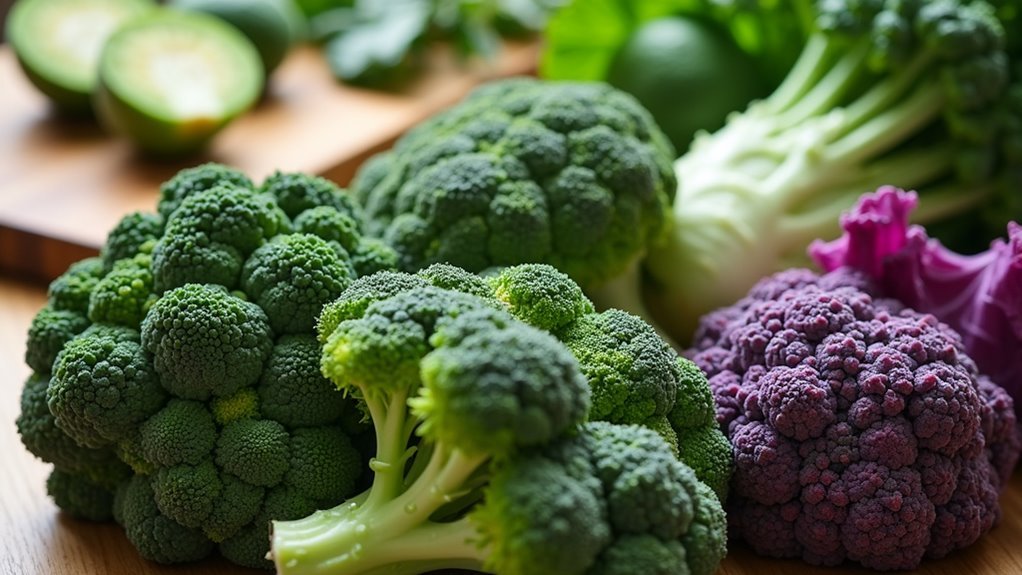
Cruciferous vegetables boost your liver’s glutathione through glucosinolates, sulfur-containing compounds that convert into powerful isothiocyanates when you chew or chop these plants. This conversion activates myrosinase enzymes, which trigger your liver’s phase II detoxification systems and enhance glutathione production. The isothiocyanates specifically stimulate glucuronidation enzymes while boosting antioxidant levels. Your genetic makeup influences how efficiently you process these compounds, with some people requiring higher servings for ideal benefits. Understanding proper preparation methods can maximize these protective effects.
Understanding Glucosinolates and Their Metabolic Pathway
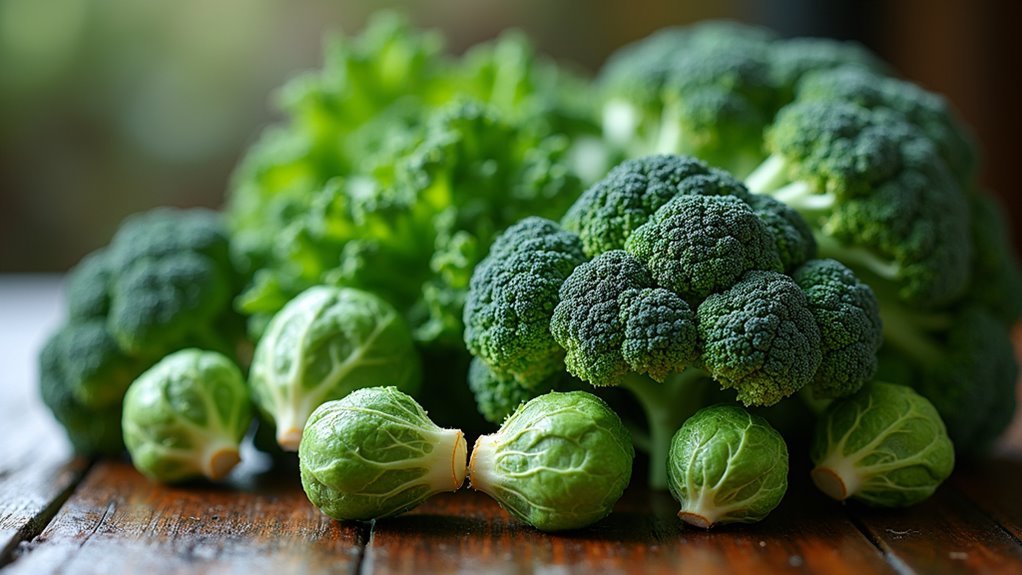
When you bite into broccoli or chew raw kale, you’re activating a sophisticated biochemical process that transforms sulfur-containing compounds called glucosinolates into powerful liver-supporting metabolites.
Every bite of cruciferous vegetables triggers a complex chemical cascade that converts glucosinolates into potent liver-detoxifying compounds through enzymatic activation.
This conversion happens when myrosinase enzymes react to damaged plant cells, creating isothiocyanates and indole derivatives that directly support your liver’s detoxification capabilities.
These metabolites follow a specific metabolic pathway in your human body, acting as bifunctional modulators that enhance liver detoxification by activating phase II enzymes while simultaneously inhibiting harmful phase I enzymes.
However, genetic variations affect how efficiently you process these compounds from cruciferous vegetables. If you’re a rapid metabolizer, you’ll need higher intake levels to achieve ideal detoxification benefits, potentially requiring 5-10 daily servings.
How Isothiocyanates Activate Liver Detoxification Enzymes
Once isothiocyanates reach your liver, they trigger a sophisticated enzymatic response that transforms your body’s detoxification capacity.
These powerful compounds from glucosinolates in cruciferous vegetables work as bifunctional modulators, inhibiting phase I cytochrome P450 enzymes while activating phase II detoxification systems. This dual action creates ideal balance for eliminating harmful substances.
When you consume 5-10 servings of cruciferous vegetables daily, you’ll greatly increase glucuronidation enzyme activity within your detoxification pathways.
Isothiocyanates enhance liver enzymes that boost antioxidant levels and glutathione production, your body’s master antioxidant.
This enzymatic activation doesn’t just support liver health—it fundamentally improves how efficiently your system processes and eliminates toxins, creating a more robust detoxification framework throughout your body.
The Role of Myrosinase in Maximizing Glutathione Benefits
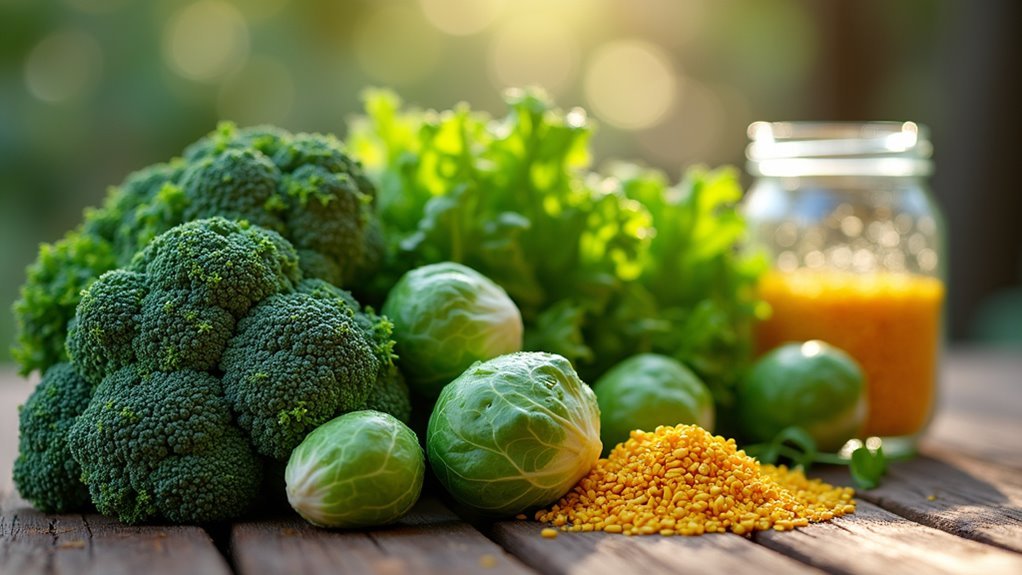
Behind this remarkable enzymatic activation lies myrosinase, the catalyst that reveals cruciferous vegetables’ full therapeutic potential. When you chew or chop these vegetables, you’re damaging plant cells and triggering myrosinase to convert glucosinolates into powerful isothiocyanates. This conversion directly impacts your liver’s glutathione production and detoxification capacity.
Your cooking methods matter greatly. Steaming preserves myrosinase activity, while boiling destroys it, reducing health benefits. Even when cooking inactivates plant myrosinase, your gut bacteria contain this enzyme, continuing glucosinolate breakdown post-digestion.
Regular consumption of myrosinase-rich cruciferous vegetables enhances your liver’s phase II enzyme activity, boosting detoxification processes. This enzymatic cascade ultimately elevates glutathione levels, maximizing the protective benefits these nutritional powerhouses offer your body’s natural defense systems.
Genetic Factors That Influence Cruciferous Vegetable Effectiveness
Although everyone benefits from cruciferous vegetables, your genetic makeup determines just how effectively these foods boost your liver’s glutathione production.
Your GST genes control how quickly you metabolize isothiocyanates, the powerful compounds that enhance detoxification. If you carry certain genetic variations, particularly null variants of GSTM1 and GSTT1, you’ll have reduced enzyme activity and slower isothiocyanate excretion.
This actually works in your favor – you’ll experience greater health benefits from moderate cruciferous vegetable intake compared to rapid metabolizers who need higher consumption levels.
These genetic differences also affect your cancer risk and detoxification capacity. Understanding your genetic profile enables personalized dietary recommendations, ensuring you optimize glutathione production based on your unique biochemical needs.
Optimal Preparation Methods for Enhanced Liver Support
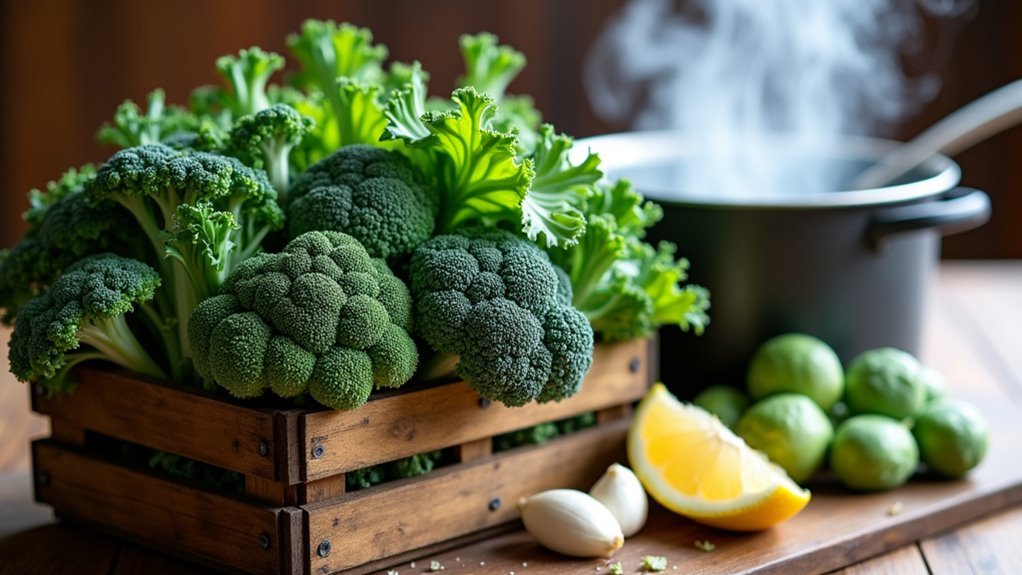
While your genetic profile determines how efficiently you process cruciferous compounds, the way you prepare these vegetables dramatically impacts their liver-supporting potential.
Ideal preparation methods focus on preserving the myrosinase enzyme, which converts glucosinolates into liver-boosting isothiocyanates.
Raw consumption maximizes glucosinolate content and supports your body’s detoxification processes most effectively. If you prefer cooked vegetables, steam them for less than five minutes to maintain myrosinase activity and enhance liver glutathione production.
Light sautéing and quick blanching also promote nutrient retention while activating beneficial compounds.
Avoid prolonged boiling, as these cooking methods inactivate myrosinase and reduce isothiocyanate bioavailability.
Incorporate a diverse range of cruciferous vegetables like broccoli and kale to provide varied glucosinolates that collectively boost your liver’s antioxidant capacity.
Synergistic Nutrients That Amplify Glutathione Production
Beyond the inherent compounds in cruciferous vegetables, certain nutrients work synergistically to maximize your liver’s glutathione production capacity. When you combine cruciferous vegetables with vitamin C, you’ll enhance the conversion of glucosinolates into powerful isothiocyanates while protecting existing glutathione from oxidative stress.
Selenium acts as a cofactor for glutathione peroxidase, amplifying antioxidant activity throughout your system. Adding sulfur-rich compounds like N-acetylcysteine alongside your broccoli and kale provides additional building blocks for glutathione synthesis.
Vitamin E works in tandem to regenerate glutathione after it neutralizes free radicals. This nutrient synergy activates phase II detoxification enzymes more effectively than cruciferous vegetables alone, creating an ideal environment for sustained glutathione production and enhanced liver detoxification capacity.
Dosage and Timing Strategies for Maximum Liver Protection
To maximize your liver’s glutathione production, you’ll need to consume 5-10 servings of cruciferous vegetables daily, strategically timing their intake with meals to enhance nutrient absorption and compound activation.
| Preparation Method | Impact on Liver Health |
|---|---|
| Steaming < 5 minutes | Preserves glucosinolates conversion to isothiocyanates |
| Raw consumption | Maximizes myrosinase enzyme activity |
| Overcooking > 10 minutes | Destroys beneficial compounds completely |
| Meal-timed intake | Enhances detoxification enzyme activation |
Your sulfur-rich foods work best when you’re eating them alongside meals rather than isolation. This timing strategy guarantees ideal glucosinolates availability while supporting phase II detoxification processes. The consistent daily servings create cumulative effects on antioxidant defenses, dramatically improving glutathione levels and overall liver health through sustained compound exposure.
Frequently Asked Questions
How Do Cruciferous Vegetables Help the Liver?
You’ll boost your liver’s detoxification when you eat cruciferous vegetables because they contain glucosinolates that convert to isothiocyanates, enhancing phase II enzymes, increasing glutathione levels, and reducing inflammation.
How Do You Increase Glutathione in Your Liver?
You’ll increase liver glutathione by eating cruciferous vegetables daily, consuming sulfur-rich foods, lightly steaming vegetables to preserve enzymes, supporting phase II detoxification pathways, and reducing oxidative stress through consistent nutrient intake.
What Vegetables Are High in Glutathione?
You’ll find high glutathione levels in spinach, avocados, and asparagus. Mushrooms like shiitake and maitake are excellent sources too. Cruciferous vegetables including broccoli, kale, and Brussels sprouts also contain significant amounts.
What Enzymes Are in Cruciferous Vegetables?
You’ll find myrosinase as the key enzyme in cruciferous vegetables. It breaks down glucosinolates into powerful isothiocyanates like sulforaphane, which then activate your liver’s phase II detoxification enzymes for enhanced glutathione production.


