
You’ll boost your liver’s detoxification power with these top cruciferous vegetables: broccoli, Brussels sprouts, cauliflower, kale, and cabbage lead the pack with their glucosinolate compounds that activate liver enzymes. Arugula, watercress, mustard greens, and turnip greens also provide sulfur-rich nutrients that enhance toxin elimination. These vegetables contain antioxidants, fiber, and vitamins A, C, and K that protect liver cells from oxidative stress while supporting fat metabolism. Discover how proper preparation methods can maximize their liver-cleansing benefits.
Broccoli: The Liver Detox Powerhouse

When it comes to supporting your liver’s natural detoxification processes, broccoli stands out as one of the most powerful vegetables you can add to your plate. This cruciferous powerhouse contains glucosinolates, sulfur compounds that activate your liver’s detoxifying enzymes and enhance its cleansing abilities.
You’ll also benefit from broccoli’s impressive antioxidant profile, especially sulforaphane, which protects your liver cells from oxidative stress and inflammation. The high fiber content aids digestion while helping eliminate toxins from your body.
Regular broccoli consumption may reduce your risk of fatty liver disease and improve overall liver function. Just one cup of cooked broccoli delivers over 100% of your daily vitamin C needs, further boosting immune function and supporting peak liver health through enhanced detoxification pathways.
Brussels Sprouts: Sulfur-Rich Liver Cleanser
You’ll find that Brussels sprouts pack a powerful punch for liver detoxification thanks to their high concentration of sulfur-containing glucosinolates.
These compounds work directly with your liver enzymes, boosting their activity and helping your body process toxins more efficiently.
When you regularly include Brussels sprouts in your diet, you’re giving your liver the sulfur support it needs to maintain ideal detoxification pathways.
Sulfur Compounds Detox Benefits
Among the most powerful cruciferous vegetables for liver support, Brussels sprouts pack an impressive concentration of sulfur-containing glucosinolates that transform into potent detoxification enhancers once you consume them.
These sulfur-containing compounds become active isothiocyanates during digestion, directly supporting your body’s ability to detoxify the liver through enhanced enzymatic processes.
Brussels sprouts effectively balance liver enzyme activities, helping your system eliminate harmful toxins more efficiently. Their exceptional antioxidant content works to reduce liver inflammation while protecting cells from oxidative damage.
The vitamins C and K in these vegetables further strengthen liver health by supporting cellular repair mechanisms.
Research confirms that regular Brussels sprouts consumption improves liver enzyme levels and reduces liver fat accumulation, making them essential for thorough liver detoxification protocols.
Liver Enzyme Support
Brussels sprouts activate your liver’s detoxification enzymes through their concentrated sulfur compounds, creating a powerful cleansing effect that transforms how your body processes toxins.
These cruciferous vegetables contain glucosinolates that convert into isothiocyanates during digestion, directly enhancing liver enzymes responsible for eliminating harmful substances from your system.
The high fiber content in Brussels sprouts supports your liver health by helping maintain ideal weight, preventing non-alcoholic fatty liver disease development.
Regular consumption greatly reduces liver inflammation levels, improving overall liver function and disease resistance.
When you incorporate Brussels sprouts into your balanced diet, you’re providing your liver with essential nutrients that boost detoxification pathways, making these vegetables an invaluable addition to any liver-supporting nutrition plan.
Cauliflower: White Vegetable With Green Benefits
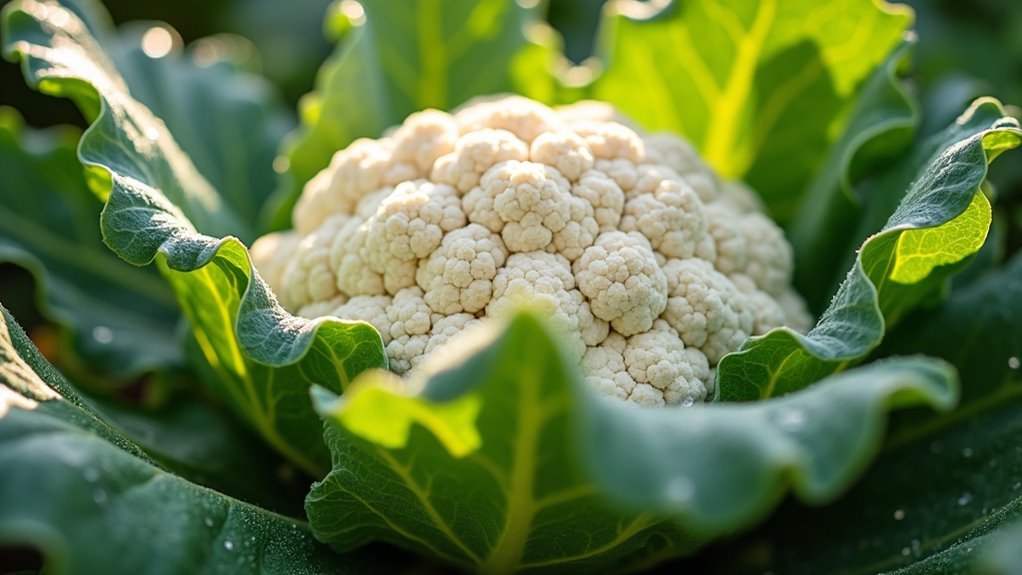
While cauliflower’s pale appearance might suggest it’s nutritionally bland, this versatile cruciferous vegetable packs a powerful punch for liver health. You’ll benefit from its high fiber content, vitamins C and K, and potent antioxidants that support detoxification processes.
| Nutrient Component | Liver Health Benefit |
|---|---|
| Glucosinolates | Activate detoxifying enzymes |
| Antioxidants | Reduce oxidative stress |
| Fiber | Support metabolism |
Cauliflower’s glucosinolates enhance your liver’s natural detoxification abilities by activating essential enzymes. Regular consumption helps reduce inflammation and oxidative stress, promoting ideal liver function. Since it’s low in calories and carbohydrates, you’ll support weight management while reducing fatty liver disease risk. This cruciferous vegetable easily adapts to various dishes, making it simple to maintain a balanced diet that prioritizes liver health.
Kale: Dark Leafy Green for Enhanced Detoxification
You’ll find kale packed with glucosinolates and essential vitamins that directly support your liver’s detoxification processes.
This nutrient-dense green contains specific compounds that activate your body’s natural detoxifying enzymes while providing powerful antioxidants to protect liver cells.
How you prepare kale greatly impacts its nutritional benefits, so understanding the best cooking methods guarantees you’re maximizing its liver-supporting potential.
Kale’s Liver-Supporting Nutrients
Kale stands out as a nutritional powerhouse among cruciferous vegetables, delivering an impressive array of liver-supporting compounds that work synergistically to enhance your body’s natural detoxification processes.
You’ll benefit from kale’s rich glucosinolates, which boost your liver’s ability to eliminate toxins and neutralize harmful substances. The antioxidants—vitamins A, C, and K—shield your liver cells from oxidative stress while promoting ideal liver health.
Kale’s high fiber content regulates fat levels, helping prevent fatty liver disease. Additionally, chlorophyll binds to heavy metals and environmental toxins, facilitating their removal from your system.
Regular kale consumption supports balanced liver enzymes and maintains essential metabolic processes for enhanced detoxification.
Optimal Kale Preparation Methods
Understanding kale’s powerful liver-supporting properties leads naturally to maximizing these benefits through proper preparation techniques.
You’ll get the most antioxidants and vitamin C by eating kale raw in salads or smoothies, preserving its natural detoxification power. However, light steaming enhances certain nutrients’ bioavailability while maintaining fiber content essential for liver health.
To optimize absorption, pair kale with healthy fats like olive oil or avocado. These combinations help your body absorb fat-soluble vitamins and phytochemicals that support detoxification processes.
Whether you choose raw or lightly cooked kale, regular consumption can improve liver enzyme levels and reduce fatty liver disease risk. The key is consistency—incorporating kale into your daily routine maximizes its liver-protective benefits.
Cabbage: Traditional Liver Support Vegetable
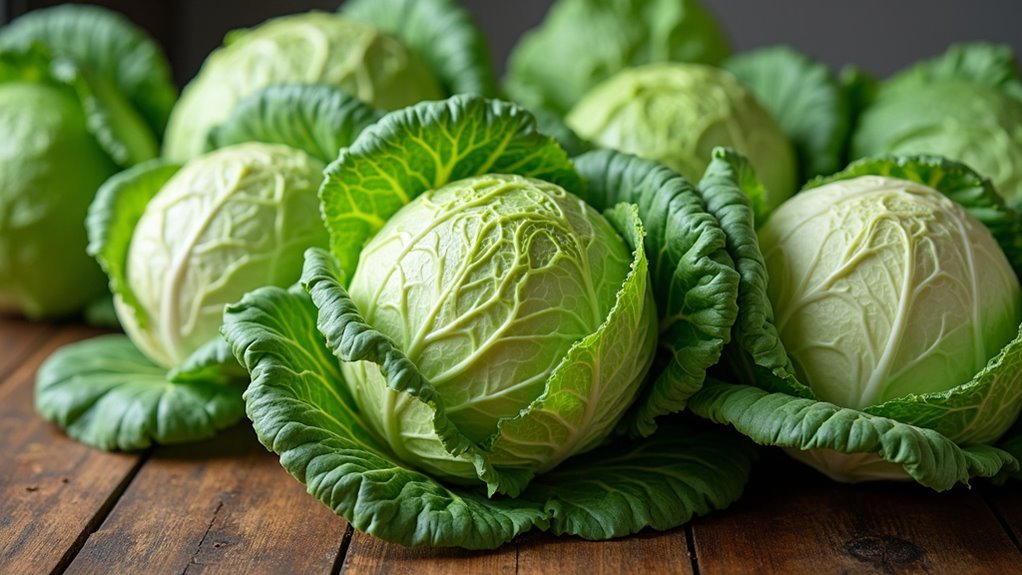
Among the most accessible cruciferous vegetables, cabbage stands out as a powerhouse for liver detoxification that’s been supporting human health for centuries. This affordable vegetable delivers impressive benefits through its rich glucosinolates, which convert to liver-supporting isothiocyanates during digestion.
Your liver benefits from cabbage’s exceptional fiber content and antioxidants, which actively combat inflammation while promoting fat metabolism. Studies consistently link regular cabbage consumption to reduced non-alcoholic fatty liver disease risk.
| Cabbage Benefits | Liver Impact |
|---|---|
| Glucosinolates | Activates detox enzymes |
| High fiber content | Reduces fat accumulation |
| Low calorie density | Supports weight management |
You’ll find cabbage incredibly versatile—raw in slaws, fermented as sauerkraut, or cooked in soups. These cruciferous vegetables excel at enhancing your liver’s natural detoxification processes.
Bok Choy: Asian Green for Liver Health
You’ll find bok choy stands out among cruciferous vegetables as a powerhouse for liver detoxification, packed with glucosinolates that activate your body’s natural cleansing enzymes.
This Asian green delivers impressive nutritional value with high levels of vitamins C and K, plus sulfur compounds that directly support your liver’s ability to process and eliminate toxins.
Whether you stir-fry it lightly or add it raw to salads, bok choy’s versatile preparation methods make it easy to incorporate into your daily routine for peak liver health benefits.
Bok Choy Liver Benefits
Five powerful compounds make bok choy a standout choice for liver health among cruciferous vegetables.
You’ll benefit from glucosinolates that enhance your liver’s enzyme activity, helping eliminate toxins through improved detoxification processes. The antioxidants in bok choy protect your liver cells from oxidative stress while reducing inflammation that can damage liver tissue.
You’re getting essential nutrients including vitamins A, C, and K, plus fiber that supports overall liver function and helps prevent fatty liver disease.
The sulfur compounds work specifically to boost your liver’s natural detoxification pathways by promoting enzyme activity that flushes harmful substances from your system.
Since bok choy’s low in calories and high in water content, you’ll maintain healthy weight levels, which is vital for preventing non-alcoholic fatty liver disease.
Nutritional Profile Overview
Nutritional powerhouse bok choy delivers an impressive array of liver-supporting compounds in every crisp bite. You’ll get essential vitamins A, C, and K that directly support detoxification processes and liver health.
This member of cruciferous vegetables packs fiber while staying low in calories, helping prevent fatty liver disease and promoting digestive wellness.
You’ll benefit from glucosinolates, sulfur compounds that activate liver enzymes and enhance your body’s natural detoxification abilities. The abundant antioxidants combat oxidative stress, shielding your liver cells from inflammation and damage.
Additionally, you’re getting calcium and magnesium that support metabolic health and optimize liver function. This nutrient-dense green maximizes liver protection while delivering exceptional nutritional value per serving.
Preparation and Consumption
Getting the maximum liver-supporting benefits from bok choy depends on how you prepare and consume this versatile Asian green. You’ll reveal powerful glucosinolates through proper preparation and consumption methods that enhance liver detox capabilities.
| Preparation Method | Health Benefits | Best For |
|---|---|---|
| Raw in salads | Maximum glucosinolates retention | Liver detox support |
| Light stir-frying | Preserves vitamin K content | Blood clotting function |
| Steaming | Retains most nutrients | Weight management |
| Soup addition | Easy digestion | Non-alcoholic fatty liver disease prevention |
| Blanching | Reduces bitterness | Introducing to diet |
Whether you choose raw or cooked preparations, these cruciferous vegetables deliver consistent health benefits. You’ll support your liver’s natural detoxification processes while managing weight effectively through regular consumption.
Arugula: Peppery Leaves With Detox Properties
This distinctive peppery green packs a powerful punch when it comes to supporting your liver’s natural detoxification processes. Arugula’s rich glucosinolates content actively promotes liver health by enhancing your body’s ability to eliminate harmful toxins.
You’ll benefit from its impressive antioxidants profile, which reduces oxidative stress and helps prevent liver damage.
Despite being low in calories, arugula delivers essential vitamins A, C, and K that support ideal liver function. The high fiber content aids your digestion while regulating blood sugar levels, contributing to better metabolic health.
Arugula’s low-calorie profile doesn’t compromise its nutritional power, delivering liver-supporting vitamins and metabolism-boosting fiber in every bite.
When you incorporate this cruciferous vegetable into your meals, you’re increasing your intake of protective phytochemicals that may shield against liver disease, making arugula an excellent addition to any liver-friendly diet.
Watercress: Nutrient-Dense Liver Protector
While arugula offers impressive detox benefits, watercress stands out as one of the most nutrient-dense leafy greens you can add to your liver-supporting arsenal.
This cruciferous powerhouse delivers vitamins A, C, and K alongside essential minerals like calcium and iron, creating an ideal foundation for liver health.
Watercress contains glucosinolates, sulfur compounds that enhance your liver’s detoxification processes while protecting against cellular damage.
You’ll benefit from its rich antioxidants, which combat oxidative stress and inflammation that threaten liver function.
Being low in calories yet high in fiber, watercress supports digestive wellness and weight management—crucial factors for preventing fatty liver disease.
Regular consumption promotes healthy liver enzyme activity, potentially reducing your risk of liver complications.
Mustard Greens: Spicy Cruciferous for Cleansing
Adding a spicy kick to your liver detox routine, mustard greens pack powerful cleansing compounds that’ll supercharge your body’s natural detoxification pathways.
These cruciferous vegetables deliver vitamins A, C, and K directly to support your liver health while their glucosinolates activate detoxifying enzymes throughout your system.
You’ll benefit from their high fiber content, which regulates fat accumulation in your liver and improves digestion.
The anti-inflammatory and antioxidant properties work together to protect your liver cells from damage while promoting efficient detoxification processes.
Since they’re low in calories, you can easily add mustard greens to salads, stir-fries, or smoothies.
Regular consumption helps you achieve lower risks of liver-related diseases while maintaining peak liver function.
Turnip Greens: Root Vegetable Tops for Liver Function
Don’t overlook the leafy tops of turnips when you’re building your liver detox arsenal. Turnip greens pack powerful nutrients that directly support liver health through multiple pathways.
Turnip greens deliver targeted liver support with nutrients that enhance detoxification pathways and protect against cellular damage.
You’ll get vitamins A, C, and K plus calcium and magnesium that optimize liver function. These cruciferous tops contain glucosinolates, sulfur compounds that boost your liver’s detoxification enzymes and enhance toxin elimination.
The high fiber content aids digestion while regulating cholesterol, promoting overall metabolic health. Rich in antioxidants yet low in calories, turnip greens combat oxidative stress and inflammation that damage liver cells.
Regular consumption may reduce your risk of non-alcoholic fatty liver disease thanks to their nutrient-dense profile and natural detoxification properties.
Frequently Asked Questions
What Cruciferous Vegetables Are Good for the Liver?
You’ll benefit from eating broccoli, Brussels sprouts, cabbage, and kale. They’re packed with glucosinolates that boost your liver’s detox enzymes, reduce inflammation, and protect against oxidative stress that damages liver cells.
What Is the Best Vegetable to Cleanse Your Liver?
You’ll find broccoli’s your best choice for liver cleansing. It’s packed with sulforaphane and glucosinolates that activate detoxification enzymes, reduce inflammation, and protect liver cells from oxidative damage while eliminating toxins.
Do Cruciferous Vegetables Detox the Liver?
Yes, cruciferous vegetables do detox your liver. You’ll boost phase II detoxification enzymes when you eat broccoli, cauliflower, and Brussels sprouts. Their glucosinolates enhance your liver’s ability to process and eliminate harmful toxins effectively.
What Flushes Toxins Out of the Liver?
Your liver naturally flushes toxins through bile production and enzyme activity. You can support this process by staying hydrated, eating antioxidant-rich foods, exercising regularly, and avoiding alcohol and processed foods.


