

You’ll need 150-250 grams of mixed berries daily to deliver the 100-400 mg of anthocyanins your cells require for ideal antioxidant protection and reduced inflammation. Focus on darker varieties like blueberries, blackberries, and chokeberries since they contain higher phenolic concentrations. A standard serving is half a cup, consumed 3-4 times weekly, though daily intake provides maximum cellular benefits. Fresh berries offer superior bioavailability compared to processed forms, and combining different types creates synergistic effects that enhance your body’s natural defense systems.
Understanding Berry Antioxidants and Cellular Protection
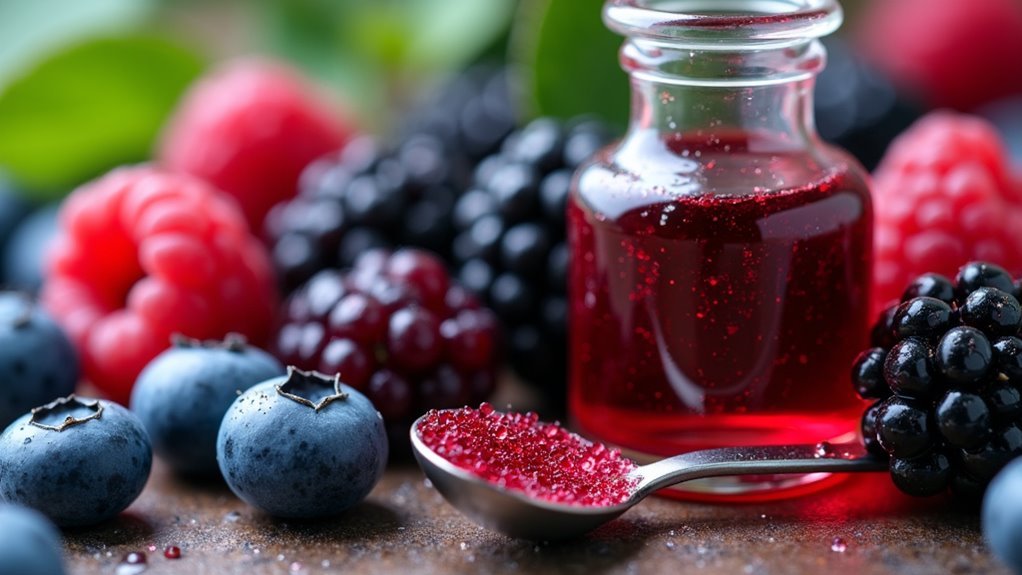
When you consume berries, you’re delivering powerful phenolic compounds and antioxidants directly to your cells, where they act as protective shields against oxidative stress and free radical damage linked to chronic diseases.
Your body’s cellular protection depends heavily on antioxidant capacity, which varies greatly among berry types. Chokeberries lead the pack with the highest antioxidant activity, considerably outperforming other varieties.
The phenolic content in berries like maqui, blueberries, and blackberries determines their protective strength. These compounds work by neutralizing harmful free radicals that can damage your cellular structures.
When you regularly include antioxidant-rich berries in your diet, you’re actively supporting your body’s defense systems. The key lies in understanding that higher phenolic content translates to better cellular protection and enhanced overall health outcomes.
Daily Serving Recommendations for Optimal Antioxidant Intake
Understanding the protective power of berry antioxidant naturally leads to the question of how much you should consume daily for peak benefit.
Research shows that consuming 150-250 grams of mixed berries daily provides ideal antioxidant intake for cardiovascular health and reduced oxidative stress.
For practical application, consider these daily serving recommendations:
- Standard serving: Aim for 1/2 cup of berries to maximize phenolic compound absorption.
- Frequency: Consume berries at least 3-4 times weekly to reduce chronic disease risk.
- Variety: Choose darker berries like blackberries and blueberries for higher antioxidant concentrations.
You’ll enhance insulin sensitivity and metabolic health by focusing on anthocyanin-rich varieties.
Incorporating diverse berries ensures you’re getting a broad spectrum of protective compounds for ideal cellular health.
Blueberry Dosage for Maximum Anthocyanin Benefits
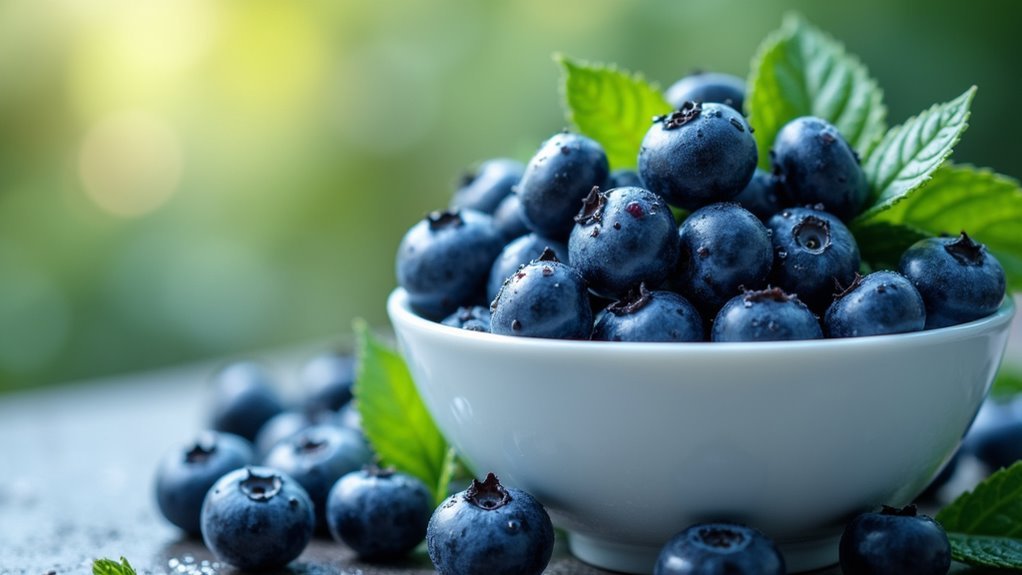
You’ll get the most anthocyanin benefits by consuming 150-250 grams of fresh blueberries daily, which equals about one to two cups.
Fresh blueberries deliver higher bioavailability than processed forms or supplements since cooking reduces their antioxidant capacity.
Even smaller amounts of 50 grams can boost cognitive function and heart health, but consistency matters more than occasional large doses.
Optimal Daily Anthocyanin Amounts
Since your body absorbs anthocyanins most effectively within specific dosage ranges, you’ll want to aim for 100 to 400 mg of anthocyanins daily from blueberries to maximize their health benefits.
This translates to consuming 1-2 cups of fresh blueberries, providing substantial antioxidant activity for cellular protection.
Research shows that 200 mg of daily anthocyanin intake delivers measurable cognitive improvements, particularly enhanced memory performance.
To optimize your anthocyanin consumption:
- Choose wild blueberries when possible, as they contain higher anthocyanin concentrations than cultivated varieties
- Combine blueberries with other antioxidant-rich fruits to create synergistic effects that amplify overall health benefits
- Consume blueberries consistently as part of your daily routine rather than sporadically for sustained cellular support
Regular intake within these ranges supports cardiovascular health and cognitive function effectively.
Fresh Vs Supplement Forms
Fresh blueberries and concentrated supplements each offer distinct advantages for maximizing your anthocyanin intake. Fresh berries provide 100-200 mg anthocyanins per 100 grams, plus essential fiber and vitamins that supplements can’t match. You’ll need 150-250 grams daily for ideal cardiovascular benefits. Supplements deliver concentrated doses of 100-500 mg anthocyanin equivalents per serving, making them convenient when fresh options aren’t available.
| Form | Anthocyanin Content | Additional Benefits | Recommended Intake |
|---|---|---|---|
| Fresh Blueberries | 100-200 mg/100g | Fiber, vitamins | 150-250g daily |
| Supplements | 100-500 mg/serving | Concentrated dose | 300mg extract |
| Berry Juice | Variable | Quick absorption | Follow label |
| Combined Approach | Enhanced | Maximum antioxidant capacities | Both forms |
Consider incorporating both forms to maximize phenolic content and overall health benefits.
Strawberry and Raspberry Consumption Guidelines
You’ll want to consume ½ cup of strawberries and ½ cup of raspberries daily to maximize your antioxidant intake while staying within recommended serving sizes.
This combination provides approximately 25 calories from strawberries plus significant fiber and vitamin C, while raspberries contribute 4g of dietary fiber and high levels of anthocyanins.
These serving sizes guarantee you’re getting ideal antioxidant concentration levels without exceeding caloric needs, supporting your cellular health and reducing oxidative stress.
Daily Serving Recommendations
When establishing your daily berry intake, aim for approximately one cup of strawberries (150 grams) and one cup of raspberries (123 grams) to enhance antioxidant benefits.
These serving sizes provide ideal cellular health support while delivering essential nutrients your body needs.
Here’s what these daily portions offer:
- Strawberries: 49 calories with 3 grams of fiber, plus vitamin C and ellagic acid for enhanced antioxidant protection
- Raspberries: Over 8 grams of dietary fiber with phenolic compounds that reduce inflammation and oxidative stress
- Combined intake: Maximum antioxidant content from unique berry profiles that work synergistically to combat free radical damage
You’ll maximize cellular health benefits by incorporating both varieties daily, leveraging their distinct nutritional profiles to support your body’s natural defense systems against oxidative damage.
Antioxidant Concentration Levels
Because antioxidant levels vary greatly between strawberry and raspberry varieties, understanding their concentration differences helps you optimize your daily intake for maximum cellular protection.
Raspberries deliver higher antioxidant concentration levels than strawberries, containing double the vitamin C content at 32 milligrams per half-cup serving compared to strawberries’ 15 milligrams. This difference notably impacts your body’s ability to combat oxidative stress at the cellular level.
Both berries contain substantial total phenolic content, but raspberries provide more concentrated antioxidant compounds per serving.
You’ll maximize cellular protection by consuming the recommended half-cup portions of either berry. When you’re targeting specific antioxidant goals, raspberries offer more potent protection against cellular damage, while strawberries provide consistent antioxidant support with slightly higher carbohydrate content.
Maqui Berry Extract Dosing for Enhanced Cellular Health
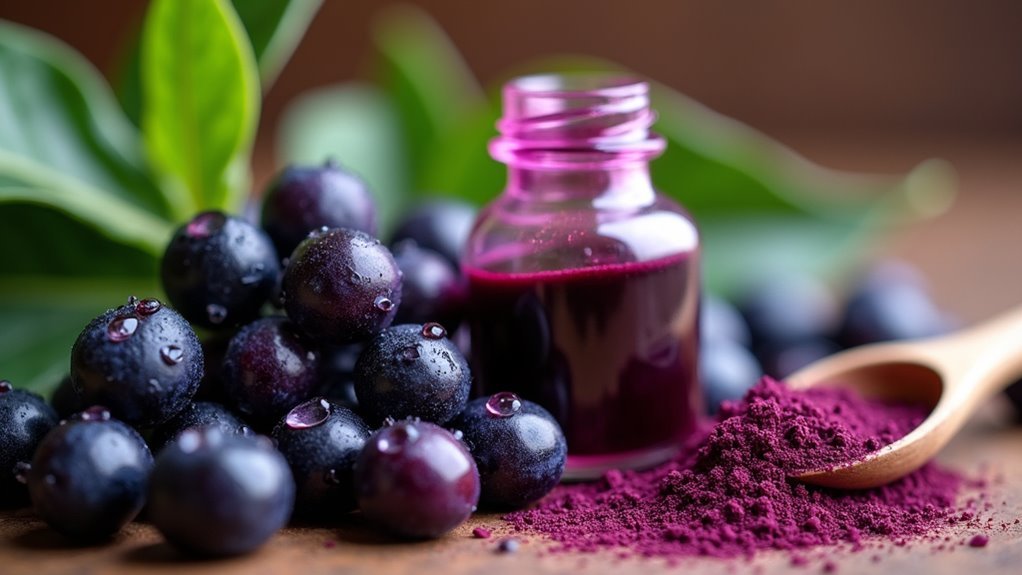
While maqui berry extract offers impressive antioxidant potential, finding the right dosage depends on the specific extract form you’re using and your cellular health goals.
For ideal antioxidant activity and cellular health benefits, you’ll want to take into account these evidence-based dosing guidelines:
- Standardized Delphinol extract: 450 mg daily has shown significant antioxidant activity in clinical trials.
- Fruit pulp extract: Effective dosages range from 0.1 to 10 ppm for antioxidant benefits.
- Juice concentrate: 4 mL diluted to 160-200 mg/mL gallic acid equivalents provides measurable cellular protection.
The acetone extracts demonstrate radical scavenging activity at just 6.1 ppm, while animal studies suggest cardioprotective effects occur at 10 mg/kg body weight.
You’ll achieve the best results by matching your dosage to the extract type you’re using.
Elderberry and Blackberry Therapeutic Amounts
You’ll need to understand ideal extraction dosages to maximize elderberry’s superior antioxidant capacity of 12.09 mmol/g TEAC compared to blackberry’s lower phenolic content.
Freeze-dried concentrations offer the most potent therapeutic benefits, with elderberry extracts maintaining better stability for immune support.
Your anti-inflammatory dosing should prioritize elderberry’s proven ability to reduce IL-6 markers while incorporating blackberry’s complementary radical scavenging properties.
Optimal Extraction Dosages
When extracting elderberry for maximum therapeutic benefit, you’ll want to use 400 watts for exactly 5 minutes to achieve the highest phenolic and antioxidant content possible. This ideal extraction method delivers superior results compared to blackberry processing requirements.
For blackberry extracts, you’ll need different parameters to maximize their antioxidant properties. Use 325 watts for 7.5 minutes to access their full therapeutic potential.
Here’s what makes elderberry extraction superior for cellular health:
- Higher total phenolic content – Elderberry consistently outperforms blackberry in beneficial compound concentration.
- Enhanced inflammation control – Freeze-dried elderberry extracts more effectively inhibit IL-6 markers.
- Superior stability – Elderberry’s antioxidant capacity remains more reliable over time than blackberry extracts.
These extraction dosages guarantee you’re getting maximum therapeutic value from each berry type.
Freeze-Dried Concentrations
Freeze-dried elderberry concentrations deliver therapeutic compounds at remarkably higher levels than their blackberry counterparts, with total phenolic content reaching approximately 194.61 µg/mL in refined preparations.
You’ll find that freeze-dried elderberry maintains superior antioxidant capacity compared to blackberry extracts, making it your preferred choice for therapeutic applications.
The freeze-drying process preserves elderberry’s potent anti-inflammatory properties, particularly its ability to inhibit IL-6 cytokine production.
When selecting dosages, you should prioritize freeze-dried elderberry due to its notably higher anthocyanin content.
This processing method guarantees you’re getting maximum therapeutic benefits while maintaining the integrity of elderberry’s bioactive compounds.
Your ideal dosing strategy should account for these enhanced concentrations when calculating daily antioxidant intake requirements.
Anti-Inflammatory Therapeutic Levels
Understanding these enhanced freeze-dried concentrations becomes particularly important when determining therapeutic dosages for anti-inflammatory effects. Your body requires specific amounts of elderberry and blackberry compounds to achieve meaningful health benefits.
For ideal therapeutic impact, consider these research-backed dosage guidelines:
- Elderberry extract: 300-600 mg daily, with 400 mg specifically targeting inflammatory cytokines like IL-6
- Blackberry phenolic compounds: 280-400 mg of total phenolics daily for notable anti-inflammatory benefits
- Fresh blackberry equivalent: 100-150 g daily has shown measurable reduction in inflammatory markers
These dosages guarantee you’re getting sufficient anthocyanins and other phenolic compounds to modulate inflammation effectively.
The antioxidant properties of both berries work synergistically when consumed consistently, making daily intake essential for ideal cellular protection and inflammatory response management.
Wild Berry Safety and Dosage Considerations
While wild berries offer exceptional antioxidant benefits, you’ll need to exercise extreme caution during foraging to avoid potentially dangerous mistakes. Misidentifying wild berries can lead to serious health issues, as some toxic varieties closely resemble edible ones.
For safety, always forage with an experienced guide or use reliable field guides to guarantee accurate identification.
Avoid collecting berries near roadways where pollutants and pesticides contaminate the environment. You should thoroughly wash all wild berries before eating to remove potential pathogens and chemical residues that could cause illness.
Stick to the recommended half-cup serving size for wild varieties. This portion provides concentrated antioxidants without overconsumption risks. When you’re uncertain about identification, don’t take chances with your health.
Fresh vs. Frozen Berry Potency and Serving Sizes
Once you’ve mastered safe wild berry collection, you’ll face another important decision: choosing between fresh and frozen berries for ideal antioxidant benefits.
Fresh berries deliver higher vitamin and enzyme levels, but they’re time-sensitive. You’ll need to consume them within days for maximum potency. Frozen berries retain impressive nutritional value, maintaining up to 80% of their antioxidant capacity compared to fresh varieties.
Fresh berries offer peak nutrition but spoil quickly, while frozen varieties preserve 80% of their antioxidant power long-term.
Here’s your best serving strategy:
- Portion size: Stick to half a cup (75-100 grams) regardless of type
- Fresh berries: Consume within 2-3 days of purchase
- Frozen berries: Store for months without significant nutrient loss
Quality matters most. Select high-grade berries based on variety, harvest ripeness, and proper storage conditions to maximize antioxidant benefits.
Timing and Frequency of Berry Consumption
Beyond choosing the right berry type, when and how often you consume them greatly impacts their antioxidant effectiveness.
You’ll maximize health benefits by eating berries daily, with half a cup providing essential vitamins and phenolic compounds. The timing of your consumption matters greatly – eating berries around meals helps control postprandial blood glucose and improves insulin sensitivity, especially if you have metabolic syndrome.
The antioxidants in berries mitigate oxidative stress from high-energy foods when consumed strategically with meals. You can also incorporate berry-rich snacks between meals to maintain steady antioxidant levels throughout the day, supporting cellular health and reducing inflammation.
For targeted benefits, consider standardized extracts like Delphinol at 450 mg daily for clinical-strength antioxidant effects.
Combining Different Berries for Synergistic Effects
Although individual berries pack impressive antioxidant power, you’ll access even greater health benefits by combining different varieties in your daily routine.
When you mix berries like blueberries, blackberries, and raspberries, their diverse phenolic compounds create synergistic effects that boost your cellular defense against reactive oxygen species (ROS). Research shows that total phenolic contents increase markedly when consuming mixed berry blends versus single types.
Here’s how different berries work together:
- Dark berries (blackcurrants, chokeberries) provide anthocyanins for oxidative stress management.
- Vitamin C-rich berries (strawberries) enhance antioxidant absorption and effectiveness.
- Mixed flavonoids create cumulative effects supporting cardiovascular health and insulin sensitivity.
You’ll maximize cellular protection by incorporating this variety-based approach into your daily antioxidant strategy.
Monitoring Cellular Health Response to Berry Supplementation
When you start incorporating berry supplements into your routine, you’ll need to track specific biomarkers that reveal how effectively these antioxidants are protecting your cells at the molecular level.
Monitor oxidative stress markers like malondialdehyde (MDA) and superoxide dismutase (SOD) levels to assess how well the total anthocyanin and phenolic contents are neutralizing reactive oxygen species (ROS).
Track MDA and SOD biomarkers to measure how effectively berry anthocyanins and phenolic compounds are neutralizing cellular oxidative damage.
Track inflammation indicators such as C-reactive protein (CRP), which should decrease with consistent berry intake.
You’ll also want to measure postprandial blood glucose and insulin concentrations, as these metabolic markers reflect cellular function improvements.
At therapeutic doses like 450 mg/day of maqui berry extract, you should see measurable changes in these biomarkers within several weeks of supplementation.
Frequently Asked Questions
Can Children and Elderly People Follow the Same Berry Dosage Recommendations?
You shouldn’t give children and elderly people identical dosages. Children need smaller amounts due to their size and developing systems, while elderly individuals may require adjusted portions based on medications and health conditions.
Do Berry Supplements Provide the Same Cellular Benefits as Whole Berries?
You’ll get some cellular benefits from berry supplements, but they’re typically less effective than whole berries. Whole berries contain fiber, water, and synergistic compounds that enhance antioxidant absorption and cellular protection.
How Do Medications or Medical Conditions Affect Recommended Berry Dosages?
You’ll need to consult your doctor before taking berry supplements if you’re on blood thinners, diabetes medications, or have kidney conditions, as berries can interact with these drugs and affect dosing requirements.
What’s the Minimum Effective Dose of Berries for Measurable Cellular Health Benefits?
You’ll see measurable cellular benefits with just half a cup of mixed berries daily. That’s roughly 75-100 grams, providing enough anthocyanins and antioxidants to reduce oxidative stress and improve cellular function within weeks.
Can You Consume Too Many Berries and Experience Negative Side Effects?
You can consume too many berries and experience digestive issues like diarrhea, bloating, or stomach cramps. High fiber content causes problems when you exceed several cups daily. You’ll also get excess natural sugars.


