

You can notably reduce tension headaches by eating magnesium-rich foods like spinach (157mg per serving), pumpkin seeds (168mg per ounce), and quinoa (118mg per cup). These foods help relax tense muscles in your scalp and neck while supporting proper nerve function. Add almonds, black beans, and avocados to your daily meals since adults need 310-420mg of magnesium daily. Strategic meal planning with these nutrient-dense options will reveal even more effective headache prevention strategies.
Understanding the Magnesium-Tension Headache Connection
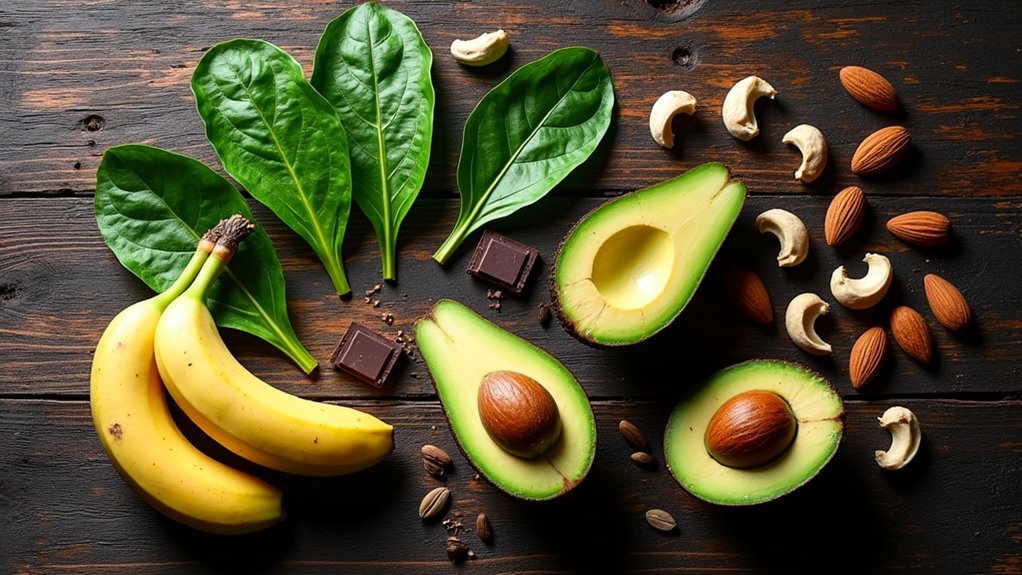
When tension grips your head and neck muscles, magnesium deficiency might be the hidden culprit behind your discomfort. This essential mineral directly supports muscle relaxation and nerve function, making it vital for preventing the muscle contractions that trigger tension headaches.
Research reveals that people suffering from chronic tension headaches often have markedly lower magnesium levels than those without headaches.
Your body’s magnesium stores influence how effectively your muscles can relax after contracting. When you’re deficient, your scalp and neck muscles stay tense longer, increasing both the frequency of headaches and their intensity.
Studies show that boosting your dietary magnesium intake through magnesium-rich foods like leafy greens can considerably reduce headache episodes. This connection between magnesium and headache prevention makes nutritional intervention a powerful tool for managing tension-type headaches naturally.
Dark Leafy Greens: Spinach and Swiss Chard for Natural Relief
Nature’s pharmacy offers some of its most potent headache-fighting weapons in the form of dark leafy greens like spinach and Swiss chard.
These nutritional powerhouses deliver impressive amounts of magnesium that can relieve headaches naturally. You’ll get approximately 157 mg of magnesium from one serving of cooked spinach, while Swiss chard provides about 150 mg per cup. This substantial magnesium content helps reduce both frequency and severity of tension headaches.
These magnesium-rich greens deliver 150-157 mg per serving, naturally reducing both frequency and severity of tension headaches.
When you regularly consume these dark leafy greens, you’ll maintain magnesium levels that prevent headaches linked to deficiency.
Beyond their headache-fighting abilities, spinach and Swiss chard supply essential nutrients that support your overall health. You can easily incorporate them into salads, smoothies, or cooked dishes to naturally combat headache symptoms while nourishing your body.
Nuts and Seeds: Almonds, Cashews, and Pumpkin Seeds

When you’re choosing nuts and seeds for headache relief, you’ll find significant differences in their magnesium content that can impact your daily intake strategy.
Pumpkin seeds pack the most powerful punch with 168 mg of magnesium per ounce, while almonds and cashews contain roughly 74-76 mg each.
Understanding these variations helps you determine the right serving sizes to meet your daily magnesium needs for tension headache prevention.
Magnesium Content Comparison
Among nature’s most concentrated sources of magnesium, nuts and seeds stand out as powerful allies in your fight against tension headaches.
When comparing magnesium content, pumpkin seeds lead with an impressive 550 mg per 100 grams, making them exceptionally effective for headache management. Almonds follow with 270 mg, while cashews provide 260 mg per 100 grams.
You’ll find that pumpkin seeds contain more than double the magnesium of other nuts and seeds, potentially offering enhanced results for reducing headache frequency. Including this variety in your diet helps prevent tension headaches by maintaining ideal magnesium levels.
Just one handful daily can greatly contribute to the 400-600 mg recommended intake for migraine sufferers.
Daily Serving Recommendations
To maximize magnesium’s headache-fighting benefits, you’ll want to aim for specific daily portions of these powerful nuts and seeds. A one-ounce handful represents the ideal daily serving recommendation for headache relief. This portion delivers substantial magnesium: almonds provide 76 mg, cashews offer 74 mg, and pumpkin seeds contain an impressive 150 mg per ounce.
You can easily incorporate these healthy foods into your routine by adding them to breakfast cereals, yogurt, or enjoying them as afternoon snacks.
Rotating between different nuts and seeds throughout the week guarantees varied magnesium intake while preventing monotony. Consistent daily consumption of these magnesium-rich options helps maintain steady blood levels, supporting your body’s natural ability to prevent tension headaches before they start.
Whole Grains That Pack a Magnesium Punch
You’ll find that whole grains offer an excellent way to boost your magnesium intake while potentially reducing tension headaches.
Quinoa stands out as a magnesium powerhouse, delivering 118 mg per cooked cup to support your neurological health.
Brown rice and oats also provide substantial magnesium content, making them smart choices when you’re looking to manage headache frequency through dietary changes.
Quinoa’s Magnesium Benefits
When you’re searching for tension headache relief through dietary choices, quinoa stands out as a powerhouse whole grain that delivers an impressive 118 mg of magnesium per 100 grams. This magnesium content helps relax blood vessels, preventing the constriction that triggers tension headaches.
As a complete protein, quinoa provides all nine essential amino acids your body needs.
You’ll also benefit from quinoa’s high fiber content, which stabilizes blood sugar levels and prevents glucose-related headaches. This combination of magnesium, fiber, and essential nutrients enhances your overall nutritional intake while supporting head health.
Brown Rice Relief
Brown rice delivers a steady 84 mg of magnesium per cooked cup, making it a reliable whole grain ally in your fight against tension headaches. This essential nutrient helps relax muscles and reduces the tension that triggers painful episodes.
| Benefit | How Brown Rice Helps |
|---|---|
| Blood Sugar Stability | Prevents headache-triggering fluctuations |
| Muscle Relaxation | Magnesium content eases tension |
| Nutrient Intake | Provides B vitamins and fiber |
| Headache Prevention | Stabilizes energy levels |
| Overall Health | Supports better hydration |
You’ll find that incorporating brown rice into your meals provides essential nutrients beyond magnesium. The whole grains help stabilize your blood sugar levels, preventing the spikes and crashes that often lead to tension headaches. Regular consumption supports thorough headache management through improved nutrient intake and sustained energy release.
Oats for Headaches
Although oats contain slightly less magnesium than brown rice at 61 mg per 100 grams, they’re still powerful allies against tension headaches. This whole grain’s magnesium content helps relax tense muscles that contribute to headache pain.
What sets oats apart is their low glycemic index, which stabilizes your blood sugar levels and prevents the spikes and crashes that trigger headaches.
You’ll also benefit from their impressive fiber content, which supports proper digestion and prevents constipation—a common headache trigger.
Regular oat consumption may reduce both headache frequency and severity by maintaining steady magnesium levels in your body.
You can easily incorporate oats into your diet through morning oatmeal, smoothies, or baked goods, making headache prevention both delicious and convenient.
Legumes and Beans for Sustained Magnesium Release
Because legumes and beans offer a steady supply of magnesium throughout the day, they’re particularly effective for managing tension headaches. Black beans and lentils provide 60-70 mg of magnesium per cup, while chickpeas deliver around 80 mg. This sustained release helps maintain magnesium levels consistently, promoting muscle relaxation that can alleviate headaches.
Regular consumption of these legumes supports your body’s magnesium needs, preventing deficiency-related tension headaches. You’ll get the most benefit by incorporating various beans into your daily meals, allowing for continuous magnesium absorption rather than single-dose spikes.
Beyond headache relief, legumes contribute essential nutrients like fiber and protein to your diet. This combination supports overall health while specifically targeting magnesium deficiency, making beans an ideal food choice for long-term headache management.
Hydrating Magnesium Sources: Avocados and Bananas

When tension headaches strike, avocados and bananas offer a dual benefit of magnesium replenishment and natural hydration. You’ll get about 58 mg of magnesium from one avocado and 32 mg from a medium banana, both supporting muscle relaxation and improved blood flow.
These fruits contain approximately 73-74% water, making them excellent for hydration while delivering essential nutrients. Regular consumption can reduce both frequency and severity of tension headaches.
With their high water content and essential nutrients, these fruits naturally combat tension headaches through consistent dietary inclusion.
Avocados provide healthy fats that enhance nutrient absorption, while bananas offer potassium for electrolyte balance. You can easily incorporate them into your diet through smoothies, salads, or eat them alone.
This simple dietary addition supports effective headache prevention by addressing both dehydration and magnesium deficiency simultaneously.
Daily Magnesium Requirements and Meal Planning Tips
Understanding your daily magnesium requirements helps you create targeted meal plans that effectively prevent tension headaches. Adult men need 400-420 mg daily, while women require 310-320 mg, with increased needs during pregnancy.
Here’s how to optimize your magnesium intake:
- Diversify your sources – Include leafy greens, nuts, seeds, legumes, and whole grains in each meal.
- Plan strategic combinations – Add spinach to breakfast smoothies or top salads with pumpkin seeds.
- Steam vegetables – This cooking method preserves more magnesium than boiling.
- Track your intake – Keep a food diary to monitor which magnesium-rich foods consistently meet your daily allowance.
Effective meal planning guarantees you’re incorporating enough magnesium-rich foods to support headache prevention while maintaining nutritional variety.
Frequently Asked Questions
What Should I Eat if I Have a Tension Headache?
You should eat magnesium-rich foods like spinach, almonds, and black beans to relax muscles. Include fatty fish for omega-3s, stay hydrated with water-rich foods, and consume folate-packed leafy greens for relief.
Can Tension Headache Be Caused by Magnesium Deficiency?
Yes, you can develop tension headaches from magnesium deficiency. When you’re low in magnesium, your muscles can’t relax properly, creating tension that triggers headaches and increases their frequency and intensity.
What Helps Tension Headaches Asap?
You’ll get fastest relief by drinking water immediately, applying cold or heat to your head, taking deep breaths, gently massaging your temples, and consuming ginger tea for its anti-inflammatory properties.
Does Magnesium Make a Headache Go Away?
Magnesium can help reduce your headache pain by blocking brain signals that trigger discomfort and decreasing pain-causing chemicals. You’ll likely see better results using it preventively rather than waiting until you’re suffering.


