

You’ll sleep better when you consume quinoa-based dinners 2-3 hours before bedtime, allowing its 249.6mg of magnesium per 100g to calm your nervous system and boost melatonin production. Pair quinoa with tryptophan-rich foods like turkey or almonds for enhanced relaxation effects. Try quinoa salads with tart cherries and spinach, or create light fruit bowls as pre-bedtime snacks. Always rinse quinoa thoroughly and cook with a 2:1 water ratio for ideal digestibility and maximum sleep-promoting benefits ahead.
Why Quinoa’s Magnesium Content Makes It a Sleep Superfood

While you might think of quinoa as just another trendy grain, its impressive magnesium content actually makes it a powerful ally for better sleep. With 249.6mg of magnesium per 100g, quinoa delivers essential nutrients that support your nervous system and reduce stress levels vital for quality rest.
When you’re magnesium deficient, you’ll likely experience sleep disturbances and restless leg syndrome. However, adequate magnesium intake from this superfood helps regulate neurotransmitters that promote better sleep. The mineral creates a calming effect on your body, easing the shift to sleep.
Most importantly, magnesium converts tryptophan into serotonin, which becomes melatonin – your body’s natural sleep hormone. By incorporating quinoa into your meals, you’re actively supporting improved sleep quality.
How to Time Your Quinoa Meals for Maximum Sleep Benefits
Since timing plays a crucial role in maximizing quinoa’s sleep benefits, you’ll want to consume your quinoa-rich meals strategically throughout the day.
Eat quinoa-based dinners 2-3 hours before bedtime to allow proper digestion while absorbing sleep-enhancing magnesium and tryptophan. These complex carbs stabilize blood sugar, preventing nighttime awakenings that disrupt your rest.
Pair quinoa with tryptophan-rich foods like turkey or chicken during dinner to boost serotonin production, which helps regulate your sleep cycles.
For better health outcomes, consider a light quinoa fruit bowl as a pre-bedtime snack to curb late-night hunger without causing sleep disruption.
Remember to hydrate adequately throughout the day, but limit fluids one hour before sleep to avoid bathroom interruptions.
Best Quinoa Recipes That Combine Sleep-Promoting Nutrients

Although quinoa’s complete protein profile makes it naturally sleep-supportive, you’ll maximize its benefits by combining it with other nutrients that work synergistically to promote restful sleep.
Quinoa’s complete amino acid profile naturally supports better sleep when paired with complementary nutrients for maximum effectiveness.
Try a quinoa salad with tart cherries, spinach, and almonds. The cherries boost serotonin and melatonin production, while spinach and almonds provide magnesium-rich foods that reduce stress. Quinoa’s high fiber content helps with regulating sleep by stabilizing blood sugar.
Create a breakfast bowl combining quinoa with bananas and walnuts for sleep-promoting nutrients that support overnight recovery.
For dinner, pair quinoa with baked salmon and sweet potatoes. This combination delivers omega-3 fatty acids and complex carbohydrates that work together for restorative sleep.
These recipes harness quinoa’s versatility while targeting multiple sleep pathways.
Pairing Quinoa With Other Magnesium-Rich Foods for Better Rest
Maximizing quinoa’s magnesium content becomes even more powerful when you strategically combine it with other magnesium-rich foods.
You’ll create a nutrient-dense meal that’ll greatly boost your sleep quality when you pair quinoa’s 249.6 mg of magnesium per 100g with almonds (268 mg), pumpkin seeds (262 mg), or spinach (79 mg).
These combinations work together to promote relaxation and support your nervous system’s ability to wind down.
For an evening treat, you can incorporate dark chocolate into quinoa desserts, adding an impressive 327 mg of magnesium per 100g.
Even avocado, though containing less magnesium at 29 mg per 100g, creates delicious quinoa salads that contribute to restful sleep.
These strategic pairings maximize magnesium intake, helping regulate your sleep cycles naturally.
Simple Ways to Prepare Quinoa for Evening Meals
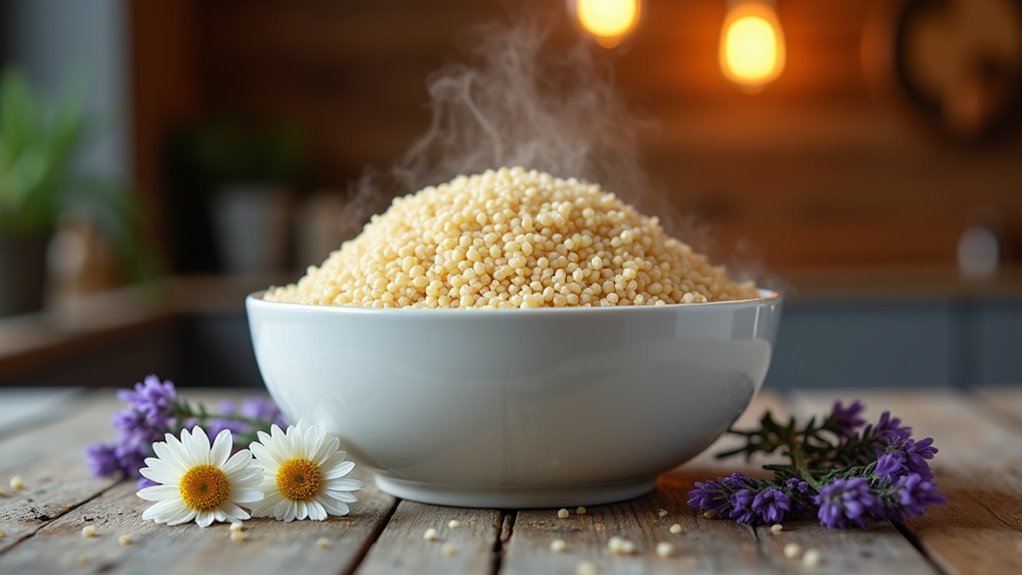
When you’re preparing quinoa for dinner, proper preparation determines whether you’ll enjoy a delicious, sleep-promoting meal or struggle with bitter, poorly textured grains.
Start by rinsing quinoa thoroughly under running water to remove saponins that create bitterness. Cook using a 2:1 water-to-quinoa ratio, bringing to a boil then simmering 15-20 minutes until fluffy.
Boost nutrients by substituting vegetable or chicken broth for water, adding depth to your evening meals. Incorporate magnesium-rich spinach or tryptophan-rich turkey directly into your quinoa dishes for enhanced relaxation benefits.
Experiment with sleep-enhancing spices like turmeric or cinnamon while cooking to maximize both flavor and health benefits. These simple techniques transform ordinary quinoa into powerful, sleep-supporting dinners.
Frequently Asked Questions
Is It Good to Eat Quinoa Before Bed?
Yes, you should eat quinoa before bed. It’s rich in magnesium and tryptophan, which promote relaxation and melatonin production. The complex carbohydrates help stabilize blood sugar, preventing sleep disruptions throughout the night.
How Can I Improve My Sleep Quality Fast?
You’ll improve sleep quality fast by establishing a consistent bedtime routine, avoiding screens before bed, keeping your room cool and dark, exercising regularly, and limiting caffeine intake after 2 PM.
Which Food Is Good for Deep Sleep?
You’ll find quinoa excellent for deep sleep since it’s packed with magnesium that reduces stress, contains tryptophan for melatonin production, and provides B vitamins that balance mood while stabilizing blood sugar.
Which Seed Is Best for Sleep?
You’ll find pumpkin seeds are excellent for sleep since they’re packed with magnesium and zinc. They’ll help your body produce melatonin naturally while calming your nervous system for deeper rest.


Leave a Reply