

You’ll find halibut and mackerel top the list for sleep-supporting fish, delivering 90-97mg of magnesium per 3.5 oz serving. These varieties help your body deactivate adrenaline and produce sleep hormones naturally. Salmon, sardines, and tuna also contribute meaningful magnesium levels while providing omega-3 fatty acids that regulate serotonin for better rest. Consuming these fish 2-3 hours before bedtime optimizes digestion and nutrient absorption. The complete nutritional profiles reveal even more sleep-enhancing benefits.
Understanding Magnesium’s Role in Sleep Quality

When you’re tossing and turning at night, your body might be signaling a magnesium deficiency that’s sabotaging your sleep quality. This essential mineral acts as your body’s natural relaxation agent by deactivating adrenaline and calming your nervous system.
Higher magnesium levels directly correlate with better sleep quality, longer sleep durations, and fewer insomnia symptoms.
Increased magnesium intake leads to deeper, more restful sleep with reduced nighttime disruptions and enhanced overall sleep duration.
You’ll find that adequate dietary intake of magnesium supports the production of sleep-related hormones your body needs for restorative rest. Research shows magnesium supplementation helps you fall asleep faster and reduces nighttime awakenings.
Fatty fish like salmon and mackerel provide excellent sources of this sleep-promoting mineral. With adults needing 310-420 milligrams daily, incorporating magnesium-rich foods becomes vital for achieving ideal sleep.
How Fatty Fish Support Natural Sleep Cycles
As your body prepares for sleep each night, fatty fish work behind the scenes to support your natural circadian rhythms through multiple biological pathways. The magnesium in salmon and mackerel helps deactivate adrenaline, calming your mind and reducing anxiety that interferes with sleep onset.
Meanwhile, omega-3 fatty acids enhance serotonin production, an essential neurotransmitter that regulates your sleep cycles and promotes consistent sleep patterns. This dual-action approach makes fatty fish particularly effective for sleep quality improvement.
The 30 mg of magnesium per 3.5 oz serving of cooked salmon contributes to better sleep hormone regulation. Additionally, consuming fatty fish regularly supports your overall health by reducing chronic disease risks, which indirectly benefits your sleep through improved cardiovascular function and reduced inflammation.
Salmon: The Sleep-Promoting Powerhouse

Among all sleep-promoting fish, salmon stands out as the ultimate nutritional powerhouse for better rest. You’ll get approximately 30 mg of magnesium per 3.5 oz serving, covering 7% of your daily needs. This mineral works alongside salmon’s impressive omega-3 fatty acids to reduce inflammation and enhance sleep quality naturally.
What makes salmon exceptional is its extensive nutrient profile supporting sleep. You’re getting 22 grams of high-quality protein for muscle recovery, plus vitamin B6 and vitamin D that regulate melatonin production. These sleep hormones are essential for maintaining healthy sleep cycles.
When you include salmon in your regular diet, you’re addressing multiple factors that influence rest quality. The combination of magnesium, omega-3s, and sleep-supporting vitamins creates a synergistic effect that promotes deeper, more restorative sleep patterns.
Mackerel’s Magnesium and Omega-3 Benefits
When you’re looking for another sleep-enhancing fish, mackerel delivers an impressive magnesium punch with 97 mg per 3.5 oz serving—that’s nearly a quarter of your daily needs.
You’ll also get a substantial dose of omega-3 fatty acids that work alongside magnesium to regulate serotonin levels and improve sleep quality.
This nutrient combination doesn’t just help you fall asleep faster; it can also reduce inflammation that might otherwise disrupt your rest.
Mackerel’s Magnesium Content
Though mackerel mightn’t be the first fish that comes to mind for sleep support, this nutrient-dense option delivers a compelling combination of magnesium and omega-3 fatty acids that can enhance your nightly rest.
A 3.5-ounce serving provides approximately 33 mg of magnesium, contributing about 8% of your daily recommended intake. This essential mineral works to deactivate adrenaline and calm your mind for better sleep quality.
You’ll benefit from mackerel’s dual-action approach to relaxation. The magnesium content helps regulate your nervous system, while the abundant omega-3 fatty acids reduce inflammation throughout your body.
This powerful combination promotes deeper, more restorative sleep patterns. By incorporating mackerel into your regular diet, you’re supporting your body’s natural sleep mechanisms through targeted nutrition.
Omega-3 Sleep Benefits
Beyond magnesium’s relaxation properties, mackerel’s omega-3 fatty acids create a powerful sleep-promoting partnership that works at the neurochemical level. When you consume mackerel, these essential fats help regulate your serotonin production, directly enhancing sleep quality.
Your brain uses these omega-3s to optimize neurotransmitter function, making it easier to fall asleep and stay asleep throughout the night.
The combination of magnesium and omega-3 fatty acids in mackerel creates a dual-action approach to better rest. While magnesium deactivates adrenaline and promotes relaxation, omega-3s fine-tune your brain’s sleep-wake cycle.
This nutritional synergy means you’re getting extensive sleep support from a single food source. Regular mackerel consumption provides both nutrients consistently, helping establish healthier sleep patterns while supporting your heart health simultaneously.
Halibut’s Nutrient Profile for Better Rest
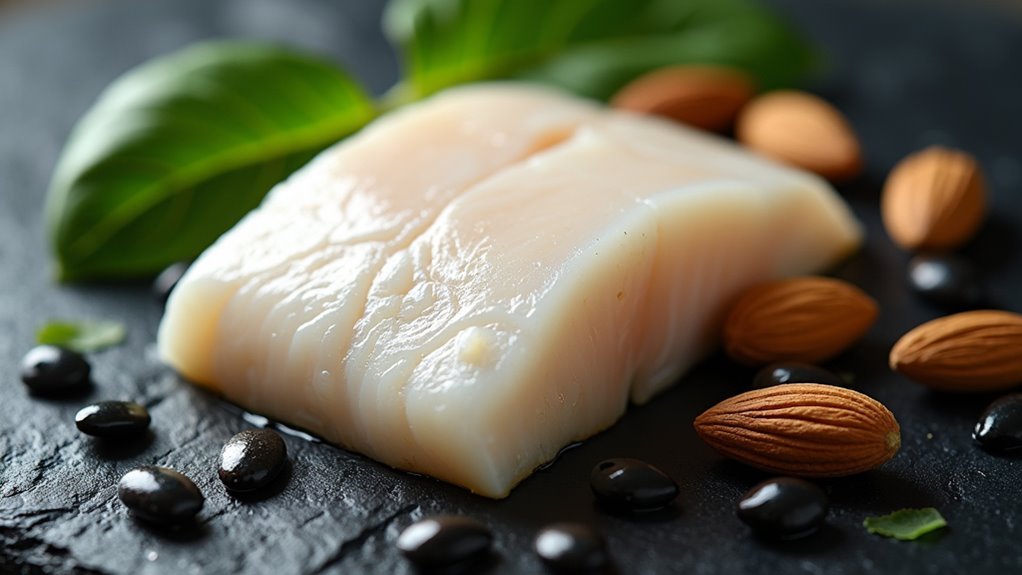
You’ll find halibut’s magnesium content provides about 7% of your daily needs, supporting muscle relaxation and sleep preparation.
This white fish doesn’t stop at magnesium—it’s packed with vitamin B6, vitamin D, and omega-3 fatty acids that work together to regulate your sleep cycles.
Whether you’re grilling, baking, or pan-searing halibut, you’re getting a nutrient-dense meal that can naturally improve your rest quality.
Halibut’s Magnesium Content
When you’re searching for a fish that delivers both exceptional taste and sleep-promoting nutrients, halibut stands out as a remarkable choice. This white fish provides approximately 30 mg of magnesium per 3.5 oz serving, contributing 7% of your daily value. While this magnesium content supports sleep quality, halibut offers additional benefits that enhance its value.
| Nutrient | Amount per 3.5 oz |
|---|---|
| Magnesium | 30 mg (7% DV) |
| Protein | 22 g |
| Vitamin D | Good source |
| Calories | Low |
| Sleep Benefits | Enhanced quality |
The combination of magnesium and vitamin D in halibut works synergistically to regulate your sleep patterns. You’ll also get high-quality protein that supports muscle repair while maintaining a low-calorie intake, making halibut an excellent choice for improving your overall rest.
Additional Sleep Nutrients
The sleep-supporting benefits of halibut extend far beyond magnesium alone. This fatty fish delivers vitamin D, which enhances calcium absorption and directly supports better rest patterns.
You’ll also get significant amounts of tryptophan, an amino acid that your body converts into serotonin and melatonin—two essential compounds for regulating sleep cycles.
Halibut’s high-quality protein content, around 22 grams per serving, helps stabilize your blood sugar levels throughout the night. This prevents the blood sugar spikes and crashes that can disrupt your sleep.
When you combine magnesium with vitamin D and tryptophan, you’re getting a powerful trio of nutrients that work synergistically to improve sleep quality. These compounds address different aspects of sleep regulation, making halibut an excellent choice for your evening meal.
Preparation and Consumption
Grilling, baking, or steaming halibut preserves its sleep-enhancing nutrients while creating a delicious meal that won’t weigh you down before bedtime.
These gentle cooking methods maintain the fish’s 30 mg of magnesium per serving, ensuring you’re getting maximum sleep benefits from your preparation. You’ll want to consume halibut 2-3 hours before sleep to allow proper digestion while still benefiting from its tryptophan and magnesium content.
Season your halibut simply with herbs like dill or thyme to avoid overstimulating flavors. Pair it with sleep-promoting sides like steamed vegetables or quinoa.
The fish’s 22 grams of protein will help stabilize blood sugar overnight, while its vitamin D works alongside magnesium to regulate your sleep-wake cycle naturally.
Sardines: Small Fish With Big Sleep Benefits
Although sardines might seem like an unlikely sleep aid, these tiny fish pack a remarkable nutritional punch that can greatly improve your nighttime rest. You’ll get approximately 37 mg of magnesium per 3.5-ounce serving, which directly supports better sleep quality by regulating your nervous system.
Sardines deliver multiple sleep-enhancing compounds beyond magnesium. Their high omega-3 fatty acids content improves sleep duration and overall rest quality.
Omega-3 fatty acids in sardines naturally extend sleep duration while enhancing overall rest quality through powerful sleep-promoting compounds.
You’ll also benefit from substantial vitamin D levels, which aid calcium absorption and support sleep regulation mechanisms.
The tryptophan in sardines converts into serotonin and melatonin in your body, promoting natural relaxation and healthy sleep patterns.
Their convenience and nutritional density make sardines an excellent choice for enhancing your diet specifically for improved sleep health without complicated meal preparation.
Tuna’s Magnesium Content and Sleep Connection
When considering fish options for better sleep, tuna stands out as an accessible source of magnesium that can greatly impact your rest quality. A 3.5-ounce serving delivers approximately 30 mg of magnesium, covering 7% of your daily recommended intake. This essential mineral regulates neurotransmitters that control sleep patterns, helping your body naturally prepare for rest.
Magnesium’s relaxation properties can combat insomnia symptoms while improving sleep duration.
You’ll benefit from tuna’s dual sleep-promoting compounds since it’s also rich in tryptophan, an amino acid that boosts serotonin and melatonin production. These hormones work together with magnesium to enhance overall sleep quality.
Adding tuna to your regular diet alongside other magnesium-rich foods creates a thorough approach to better sleep health through natural nutrition.
Rainbow Trout for Relaxation and Recovery
Rainbow trout emerges as another excellent fish choice for enhancing sleep quality, offering a powerful combination of nutrients that support both relaxation and recovery.
This fatty fish provides 30 mg of magnesium per 3.5 oz serving, contributing 8% of your daily recommended intake. You’ll benefit from its rich omega-3 fatty acids that reduce inflammation and promote better sleep by supporting heart health.
The 22 grams of protein in rainbow trout enhances satiety, preventing late-night snacking that disrupts your sleep patterns.
Additionally, you’re getting essential B vitamins, including vitamin B6, which aids serotonin and melatonin production—hormones vital for sleep regulation.
Including rainbow trout in your evening meal supports relaxation and helps your body recover during restful sleep.
Comparing Magnesium Levels Across Fish Species
Since magnesium plays an essential role in sleep regulation by calming your nervous system and relaxing muscles, understanding which fish provide the highest levels helps you make informed dietary choices.
Halibut stands out as the clear winner, delivering 90 mg of magnesium per 3.5 oz serving—three times more than other options. This makes halibut exceptionally valuable for sleep support.
Sardines follow with 39 mg per serving, while cooked salmon and tuna each provide 30 mg. Mackerel also contributes meaningful magnesium levels, though specific amounts vary by preparation method.
When you’re prioritizing fish for sleep benefits, halibut offers the most substantial magnesium content. However, all these fish contribute to your daily magnesium intake, supporting better sleep quality through their combined nutrient profiles.
Optimal Serving Sizes for Sleep Enhancement
Although knowing which fish contain the most magnesium matters, understanding proper serving sizes guarantees you maximize their sleep-enhancing benefits.
The ideal serving sizes for sleep enhancement consistently measure 3.5 oz (100 g) across all magnesium-rich fish varieties. This standardized portion delivers approximately 30 mg of magnesium from salmon and halibut, while providing similar benefits from mackerel, tuna, and sardines.
You’ll find this serving size practical and manageable for regular consumption without overwhelming your digestive system before bedtime.
When you consistently consume these ideal serving sizes, you’re supporting your body’s natural sleep processes through adequate magnesium intake. The 3.5 oz portion strikes the perfect balance between obtaining sufficient nutrients for quality sleep and maintaining reasonable meal portions that won’t interfere with your rest.
Best Preparation Methods to Preserve Nutrients
You’ll maximize the sleep-promoting nutrients in your fish by choosing gentle cooking methods that preserve magnesium and omega-3 fatty acids.
Steaming, baking at lower temperatures, grilling without charring, and poaching are your best options for maintaining these essential compounds.
Additionally, proper storage and using the freshest fish possible guarantees you’re getting the highest nutrient content before you even start cooking.
Gentle Cooking Techniques
When you’re preparing magnesium-rich fish for better sleep, the cooking method you choose directly impacts how many nutrients survive the process.
Gentle cooking techniques like steaming, poaching, and baking preserve magnesium content far better than high-heat methods such as frying.
Steaming allows your fish to cook evenly while maintaining moisture and essential nutrients without added fats.
You’ll retain more minerals when you poach fish in flavorful broth or water, since the cooking temperature stays below boiling.
Baking at moderate temperatures around 350°F helps preserve both moisture and nutrients in magnesium-rich varieties like salmon and halibut.
You can further protect nutrients by avoiding prolonged cooking times and using lids during preparation, ensuring you get maximum sleep-promoting benefits from your meal.
Storage and Freshness
Since proper storage begins the moment you bring fish home, placing it in the coldest part of your refrigerator immediately helps preserve its magnesium content and overall nutritional value.
You’ll want to use fresh fish within two days to maintain ideal freshness and nutrient content. For longer storage, wrap fish tightly in plastic wrap or aluminum foil, then place it in an airtight container before freezing to prevent nutrient loss.
When you’re ready to cook, choose gentle cooking methods like steaming, poaching, or baking at lower temperatures. These techniques retain magnesium better than high-heat methods.
Don’t overcook your fish—aim for an internal temperature of 145°F to preserve nutrients while ensuring safety.
Timing Your Fish Intake for Maximum Sleep Benefits
Although many people focus on which fish to eat for better sleep, the timing of your fish consumption plays an equally significant role in maximizing its sleep-promoting benefits.
You’ll want to incorporate magnesium-rich fish like salmon, mackerel, tuna, and sardines into your evening meal 2-3 hours before bedtime. This timing allows proper digestion while ensuring the magnesium and omega-3 fatty acids can effectively regulate your serotonin levels for improved sleep onset.
For consistent results, you should eat fish several times weekly to maintain steady magnesium intake and support better sleep patterns.
Consider pairing your fish with magnesium-rich sides like leafy greens or whole grains to enhance the overall magnesium content of your meal and optimize sleep benefits.
Frequently Asked Questions
What Fish Is Highest in Magnesium?
Mackerel’s your best choice for magnesium among fish, providing 97 mg per 3.5 oz serving. That’s about 23% of your daily value, making it considerably higher than salmon, halibut, or sardines.
What Is the Best Source of Magnesium for Sleep?
You’ll find leafy greens like spinach and pumpkin seeds offer the highest magnesium content for sleep. However, if you’re choosing fish, salmon and mackerel provide solid magnesium while delivering sleep-supporting omega-3s.
What Fish Helps With Sleep?
You’ll find salmon, mackerel, halibut, and tuna are excellent fish choices for better sleep. They’re packed with magnesium, tryptophan, and omega-3s that help regulate sleep hormones and improve your overall sleep quality naturally.
What One Food Is the Highest in Magnesium?
You’ll find pumpkin seeds contain the highest magnesium levels at 168 mg per ounce, providing 40% of your daily value. They’re considerably richer than other foods like black beans or spinach.


Leave a Reply