

You’ll boost your vitamin D levels by incorporating cheese and butter into your diet, as these dairy products naturally contain this essential nutrient. Butter provides approximately 60 IU per 100 grams, while cheese varieties like mozzarella and cheddar offer around 4 IU per serving. The fat content in these dairy products enhances vitamin D absorption since it’s fat-soluble. Fortified versions can greatly increase these levels, supporting bone health and helping you meet daily vitamin D requirements more effectively.
Understanding Vitamin D Content in Dairy Products
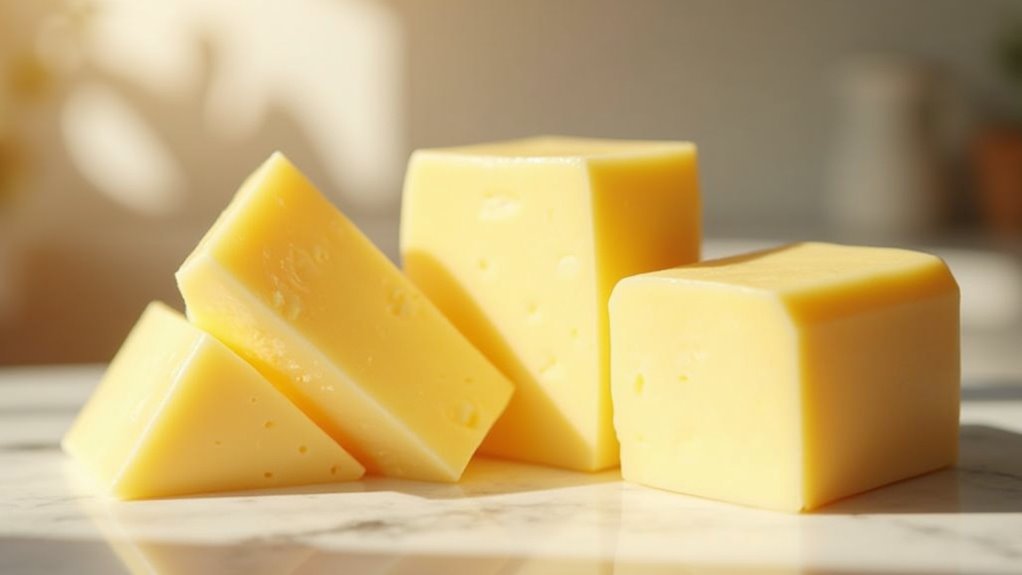
While many people turn to supplements for their vitamin D needs, dairy products like cheese and butter naturally contain this essential nutrient in varying amounts.
Dairy products like cheese and butter offer a natural alternative to vitamin D supplements for essential nutrient intake.
You’ll find that butter provides approximately 60 IU of vitamin D per 100 grams, while cheese offers about 4.08 IU per cubic inch, depending on the type.
However, fortified dairy products greatly boost your vitamin D content options. Many manufacturers enhance milk and yogurt with additional vitamin D, and some cheese varieties are also fortified to increase their nutritional value.
This vitamin D content in dairy products plays a vital role in calcium absorption, directly supporting your bone health.
Cheese Types and Their Vitamin D Concentrations
Different cheese varieties offer varying concentrations of vitamin D, though most provide relatively modest amounts of this essential nutrient.
When you’re exploring cheese types for vitamin D concentrations, you’ll find that most serve as a minor source compared to other foods. However, they can still contribute meaningfully to your dietary intake.
Here’s what you should know about popular cheese varieties:
- Mozzarella cheese delivers approximately 0.1 mcg (4.54 IU) per ounce, making it useful for boosting vitamin D levels in pizza and pasta dishes.
- Cheddar cheese provides around 0.1 mcg (4.08 IU) per cubic inch, adding versatility to your daily vitamin D intake through sandwiches and snacks.
- Fortified cheese options can greatly increase vitamin D content, offering enhanced nutritional benefits alongside butter and other dairy products.
Butter’s Role in Daily Vitamin D Intake

Beyond cheese varieties, butter serves as another valuable dairy source for increasing your vitamin D intake throughout the day.
With approximately 60 IU per 100 grams, butter provides a modest amount of daily vitamin D that can help boost vitamin D levels, especially in areas with limited sunlight.
The fat content in butter enhances absorption of fat-soluble vitamins, making vitamin D more effective for your health. You can incorporate butter into meals alongside other vitamin D-rich foods as part of a balanced diet.
While butter offers nutritional benefits, you’ll want to use it moderately due to its saturated fat content.
When used appropriately, butter serves as a flavorful way to support your vitamin D requirements.
Absorption Benefits of Fat-Soluble Vitamin D From Dairy
Since vitamin D is a fat-soluble vitamin, the natural fats found in cheese and butter actually enhance your body’s ability to absorb this essential nutrient.
These dietary fats create the perfect environment for vitamin D absorption in your digestive system, maximizing the benefits from your daily intake.
When you consume cheese and butter, you’re not just getting vitamin D – you’re optimizing how your body processes it.
Here’s how these dairy products boost absorption:
- Enhanced bioavailability – The lipid content helps transport vitamin D through your intestinal walls more efficiently.
- Improved calcium absorption – Fat-soluble vitamin D works synergistically with calcium in dairy products.
- Sustained nutrient delivery – Combining fortified dairy products with natural fats provides steady vitamin D intake throughout digestion.
Maximizing Bone Health Through Fortified Cheese and Butter
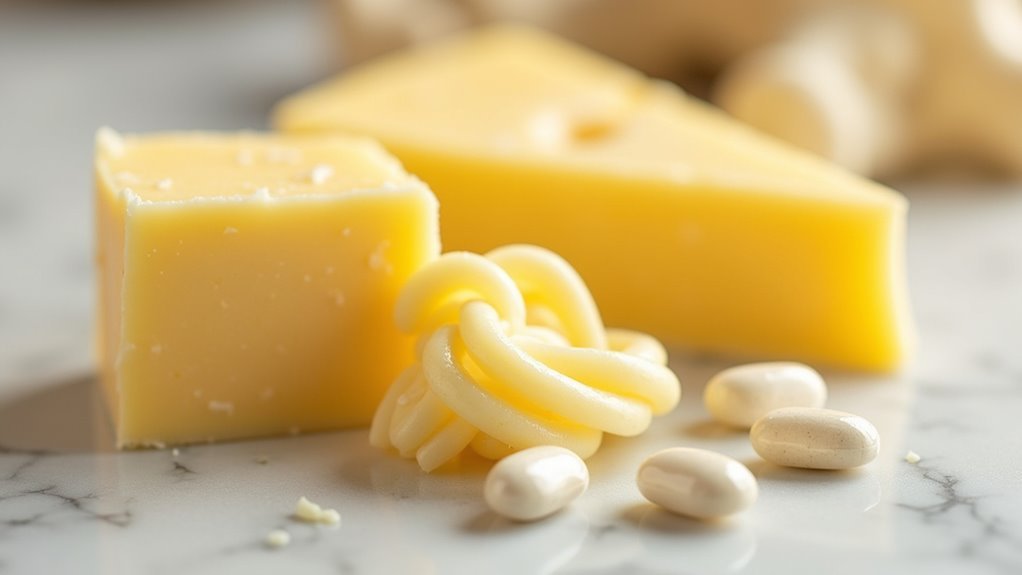
The combination of vitamin D and calcium in fortified cheese creates a powerful foundation for bone strength that goes beyond simple nutrient absorption. When you consume fortified cheese regularly, you’re supporting calcium absorption while boosting vitamin D levels simultaneously. Each slice can provide up to 6 IU, contributing meaningfully to your daily intake and osteoporosis prevention strategy.
Fortified butter enhances this approach by delivering approximately 60 IU per 100 grams while preserving fat-soluble vitamins often lost during processing.
These dairy products offer practical accessibility for meeting your recommended daily intake of 600-800 IU. By incorporating both fortified cheese and butter into your diet, you’re creating multiple opportunities throughout the day to strengthen bone health while enjoying familiar, flavorful foods.
Frequently Asked Questions
Does Cheese Increase Vitamin D?
Yes, you’ll get small amounts of vitamin D from cheese. Most varieties like cheddar and mozzarella provide about 4 IU per ounce, though it’s not a major source compared to other foods.
Is Butter High in Vitamin D?
Butter isn’t high in vitamin D, containing only about 60 IU per 100 grams. You’ll find it’s a moderate source that can contribute to your daily intake, but it’s not among the richest vitamin D foods available.
Does Dairy Increase Vitamin D?
You’ll definitely increase your vitamin D intake through dairy products. Fortified milk provides up to 120 IU per cup, while yogurt offers 80-100 IU per serving, making dairy an excellent choice.
What Food Is Highest in Vitamin D?
You’ll find fatty fish like wild-caught salmon contains the highest vitamin D levels, delivering up to 600 IU per serving. That’s considerably more than fortified milk, cheese, or butter can provide.


