
You can maintain strong muscles on a plant-based diet by prioritizing lichen-derived vitamin D3 supplements, which are more effective than D2 at raising your serum levels. Get 10-15 minutes of daily sunlight when possible, and include fortified plant milks, cereals, and nutritional yeast in your meals. Aim for 10mcg (400 IU) daily, especially during fall and winter months. Regular blood testing guarantees you’re maintaining ideal levels between 20-50 ng/mL for maximum muscle strength and performance benefits ahead.
Understanding Vitamin D’s Role in Muscle Function
Your muscles depend on vitamin D to function at their finest, as this essential nutrient enhances calcium absorption—the foundation of every muscle contraction and movement you make.
Vitamin D fuels optimal muscle function by enhancing calcium absorption, which powers every contraction and movement your body makes.
When you’re deficient in vitamin D, you’ll likely experience muscle weakness, fatigue, and increased injury risk—particularly problematic if you’re following a plant-based diet where vitamin D sources are limited.
Vitamin D receptors in your muscle tissue directly influence muscle health and performance. Research consistently shows that adequate levels improve muscle strength and reduce fall risk in older adults.
If you have low vitamin D levels, supplementation can lead to significant improvements in muscle function and performance. Understanding this connection is vital for anyone seeking the best muscle health, especially those committed to plant-based nutrition who must be strategic about their vitamin D intake.
Why Plant-Based Vitamin D3 Outperforms D2
When choosing vitamin D supplements for muscle health, plant-based vitamin D3 from lichen delivers superior results compared to vitamin D2.
While vitamin D2 is plant-derived, your body must convert it through a complex process, making it less efficient for maintaining adequate levels.
Plant-based vitamin D3 demonstrates superior absorption and effectiveness in raising serum 25(OH)D levels, which are essential for muscle function and strength.
Studies consistently show vitamin D3’s advantage in maintaining ideal vitamin levels compared to D2’s limited conversion efficiency.
Lichen-sourced supplements provide a vegan-friendly option that supports muscle strength without contaminants typically found in animal-derived sources.
Since plant-based diets often lack sufficient vitamin D3, choosing quality lichen-based supplements guarantees you’re getting the most effective form for ideal muscle health.
Harnessing Sunlight for Natural Vitamin D Production

Twenty percent of your daily vitamin D needs can come from just 10-15 minutes of strategic sunlight exposure. UVB rays convert cholesterol in your skin into Vitamin D3, making this natural process incredibly effective.
However, your geographical location greatly impacts production—those farther from the equator need longer exposure, especially during winter months.
If you have darker skin tones, you’ll require extended sunlight exposure due to higher melanin levels blocking UVB rays. Age also affects effectiveness; older adults produce less Vitamin D naturally.
Expose about 20% of your skin during peak hours while avoiding sunburn.
When sunlight isn’t sufficient, plant-based Vitamin D3 supplements become essential. This approach minimizes health risks while ensuring adequate levels for ideal muscle function and overall wellness.
Lichen-Derived Supplements as the Ultimate Vegan Source
While traditional Vitamin D3 supplements rely on animal-derived sources like lanolin from sheep’s wool, lichen-derived supplements offer you a completely vegan alternative that’s just as effective.
This lichen-derived Vitamin D3 supplement provides a pure vegan source of Vitamin D that’s perfect for plant-based diets. Unlike fortified foods that often contain synthetic D2, lichen-based supplements deliver the same D3 form your body naturally produces.
You’ll experience superior health benefits compared to plant-based alternatives, helping maintain strong bones and supporting peak health. The sustainable production process doesn’t harm ecosystems, making it environmentally responsible.
These supplements are registered with the Vegan and Vegetarian Society, available as convenient chewable tablets or sprays.
Fortified Plant Foods That Boost Vitamin D Intake
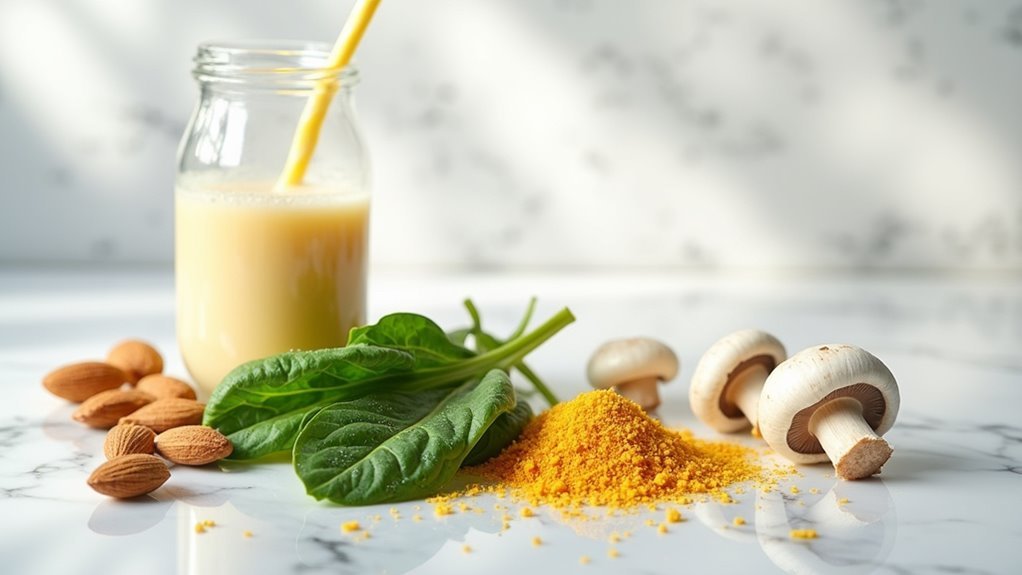
Five essential categories of fortified plant foods can greatly boost your vitamin D intake without compromising your vegan lifestyle.
These vitamin D sources provide convenient alternatives to traditional vegan supplements while delivering essential nutrition.
Fortified plant milks lead the pack, with almond, soy, and oat varieties containing up to 120 IU per serving.
You’ll find these consistently reliable for daily vitamin D intake.
- Fortified breakfast cereals offer up to 100 IU per serving for morning nutrition.
- Nutritional yeast provides around 100 IU per tablespoon with savory flavor.
- Orange juice delivers 100 IU while adding vitamin C benefits.
- Tofu supplies up to 80 IU when choosing fortified brands.
These fortified plant foods make reaching your daily vitamin D goals achievable through regular meals.
UV-Treated Mushrooms for Vegetarian Vitamin D
UV-treated mushrooms represent a breakthrough discovery for plant-based eaters seeking natural vitamin D sources. When exposed to UV light, varieties like maitake and shiitake naturally produce higher levels of this essential nutrient.
UV-exposed mushrooms like maitake and shiitake offer plant-based eaters a natural breakthrough for boosting vitamin D levels effectively.
You’ll find that a single serving of UV-treated button mushrooms can deliver up to 1,000 IU of Vitamin D, helping you meet daily requirements effectively.
If you’re following a plant-based diet, these mushrooms offer excellent vegetarian sources of this nutrient. You can maintain adequate Vitamin D levels by incorporating four servings weekly, particularly beneficial if you live in regions with limited sunlight.
When shopping, look for labels indicating mushrooms have been fortified with vitamin D through UV treatment to guarantee you’re getting maximum nutritional benefits.
Daily Dosage Requirements for Optimal Muscle Support
Understanding your ideal vitamin D dosage becomes essential when you’re prioritizing muscle health and strength. Adults need 10mcg (400 IU) daily for maximum muscle support, particularly from plant-based sources like lichen-derived Vitamin D3 supplements.
Key dosage considerations for muscle support:
- Seasonal timing: Increase your daily dosage during fall and winter when sunlight exposure decreases.
- Training enhancement: Combine adequate Vitamin D levels with resistance training for maximum muscle strength benefits.
- Source quality: Choose lichen-based Vitamin D3 supplements over D2 for superior absorption and muscle function.
- Consistency matters: Maintain regular supplementation to prevent muscle weakness and reduce fall risks.
Your ideal intake depends on current Vitamin D levels, so consider testing before starting supplementation.
Plant-based sources guarantee you’re supporting muscle health while maintaining dietary preferences.
Testing Your Vitamin D Levels for Better Health
You’ll need regular blood testing to monitor your vitamin D status and guarantee your plant-based sources are meeting your body’s needs.
The 25-hydroxy vitamin D test provides the most accurate measurement of your levels, and understanding how to interpret these results helps you make informed decisions about supplementation.
Knowing when to retest guarantees you’re maintaining ideal levels for muscle support and overall health.
Understanding 25-Hydroxy Testing
Blood tests serve as your most reliable tool for determining vitamin D status, specifically through the 25-hydroxy vitamin D test that measures calcidiol levels in your bloodstream.
This test provides the most accurate assessment of your body’s vitamin D stores, making it vital for anyone following a plant-based diet.
Understanding your results helps guide supplementation decisions:
- Adequate levels: 20 ng/mL or above supports bone health and muscle function
- Deficiency indicators: Below 20 ng/mL suggests inadequate vitamin D status
- Risk factors: Plant-based diets and limited sun exposure increase deficiency likelihood
- Monitoring frequency: Regular blood tests prevent both deficiency and toxicity
Since dietary sources of vitamin D are limited in plant-based foods, monitoring vitamin D levels becomes essential for maintaining ideal health and making informed decisions about fortified foods or supplements.
Interpreting Your Results
What do those numbers on your test results actually mean for your health? If your vitamin D levels fall below 20 ng/mL, you’re dealing with low vitamin D levels that require immediate attention. This deficiency prevents your body from properly absorbing calcium, weakening your muscles and bones.
Health professionals recommend achieving levels between 20-50 ng/mL for ideal function.
When your results show deficiency, you’ll need to increase your recommended daily intake through vegan vitamin D supplements and foods rich in vitamin D like fortified plant milks and mushrooms. Your vitamin D daily requirements might be higher initially to correct deficiency.
Since calcium and vitamin D work together to help your body absorb calcium effectively, maintaining adequate levels becomes vital for muscle strength and overall wellness.
When to Retest
How often should you retest your vitamin D levels to guarantee you’re maintaining optimal health? Generally, you should retest at least annually, but certain circumstances require more frequent monitoring to prevent deficiency and enhance your serum 25(OH)D levels.
Consider retesting every 3-6 months if you’re:
- Taking vitamin D supplements and need dosage adjustments
- Part of at-risk groups like vegans or older adults with limited sun exposure
- Experiencing deficiency symptoms despite consuming foods fortified with vitamin D
- Making significant dietary or lifestyle changes affecting your vitamin D intake
Regular monitoring becomes especially important when you’re relying on plant-based sources and fortified foods.
Your healthcare provider can help determine the best retesting schedule based on your individual health needs and risk factors for maintaining optimal vitamin D levels.
Risk Factors That Increase Vitamin D Deficiency
Several factors can greatly increase your risk of vitamin D deficiency, making it essential to identify whether you’re part of a vulnerable group.
Limited sun exposure during fall and winter months puts most UK residents at risk, especially if you work indoors year-round.
Older adults face higher deficiency rates because their skin produces vitamin D less efficiently.
If you have darker skin, you’ll need considerably more sun exposure to generate adequate levels.
Regular sunscreen use, while protecting against skin damage, blocks the UVB rays necessary for vitamin D production.
People who cover their skin for religious or cultural reasons also face increased risk.
These factors make plant-based fortified foods and supplements vital alternatives for maintaining ideal vitamin D levels.
Combining Vitamin D With Calcium for Maximum Benefits
Beyond securing adequate vitamin D through fortified foods and supplements, you’ll want to pair this nutrient with calcium to release its full potential for bone and muscle health.
Vitamin D enhances calcium absorption in your intestines, making this combination essential for muscle strength and strong bones.
To maximize muscle performance, aim for these daily targets:
- 1,000 mg calcium from foods rich in calcium like leafy greens and tofu
- 10+ mcg vitamin D through plant-based Vitamin D3 supplements or UV-treated mushrooms
- Fortified plant milks that contain both nutrients in one convenient source
- Strategic pairing of calcium-rich meals with vitamin D sources throughout your day
Without adequate Vitamin D levels, your body can’t effectively utilize calcium, potentially leading to muscle weakness and compromised bone health.
Sustainable Plant-Based Supplementation Strategies
When you’re committed to maintaining consistent vitamin D levels year-round, developing a sustainable supplementation routine becomes essential for long-term muscle health and overall wellness. Plant-based Vitamin D3 offers a vegan-friendly alternative that supports regular supplementation without compromising your values.
| Supplement Form | Daily Intake Method | Best For |
|---|---|---|
| Chewable Tablets | 10mcg with breakfast | Families with children |
| Liquid Spray | 2-3 sprays under tongue | Quick absorption needs |
| Capsules | One capsule daily | Traditional preference |
| Gummy Form | 1-2 gummies morning | Palatability concerns |
Sustainable strategies include choosing high-quality supplements with proven bioavailability to prevent deficiencies that cause muscle fatigue. Consistency trumps perfection—establish routines that fit your lifestyle for lasting results.
Frequently Asked Questions
How to Get Vitamin D on a Plant-Based Diet?
You can get vitamin D by taking vegan D3 supplements from lichen, eating UV-treated mushrooms, choosing fortified plant milks and cereals, and exposing your skin to sunlight regularly.
Does Vitamin D Make Your Muscles Stronger?
Yes, vitamin D strengthens your muscles by enhancing protein synthesis and improving muscle function. If you’re deficient, supplementing with vitamin D can boost your strength and performance, especially when you’re doing resistance training regularly.
What Is the Best Plant Source of Vitamin D?
You’ll find UV-exposed mushrooms are the best plant source of vitamin D, providing significant D2 levels. However, lichens offer superior vitamin D3, which your body absorbs and utilizes more effectively than D2.
Does Plant Based Vitamin D Work?
Yes, plant-based vitamin D3 from lichens works effectively. You’ll absorb it just like animal sources, and it’ll raise your vitamin D levels better than D2, supporting muscle strength and function reliably.


