

You can boost your vitamin D levels during winter months by choosing wild-caught salmon with 556-924 IU per serving, UV-exposed cremini mushrooms providing 1,100 IU per cup, and fortified soy milk delivering 185 IU per cup. Cod liver oil offers 450 IU per teaspoon, while canned sardines provide 193 IU and mackerel contains 643 IU per serving. Fortified cereals and vitamin D-enhanced egg yolks round out your options for maintaining adequate levels when sunlight’s scarce.
Wild-Caught Salmon and Fatty Fish
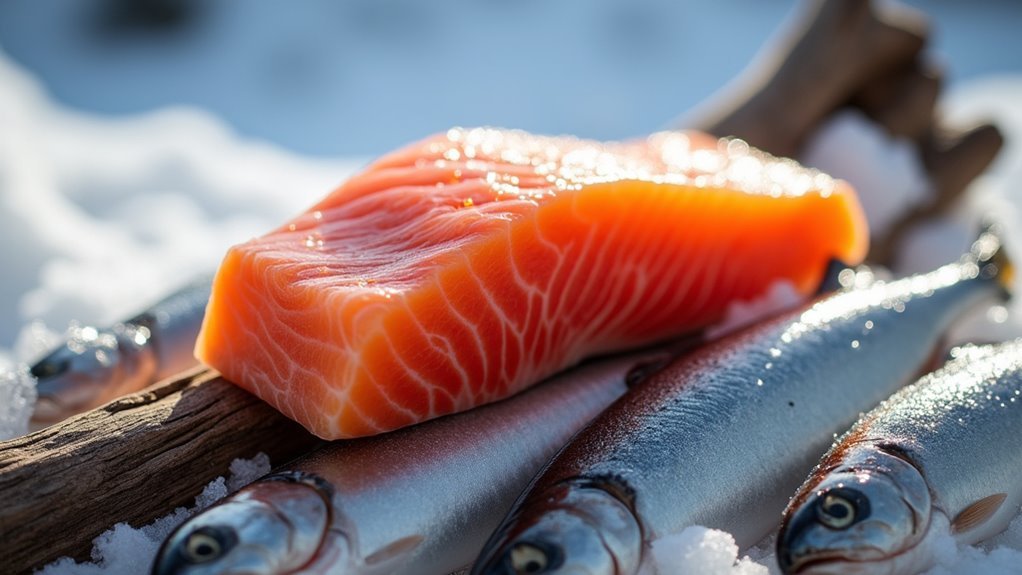
When winter’s shorter days limit your sun exposure, wild-caught salmon emerges as one of nature’s most potent vitamin D sources. A single 3.5-ounce serving delivers 556 to 924 IU per serving, meeting most adults’ daily requirements.
You’ll maximize your vitamin D intake by rotating different fatty fish throughout winter months. Mackerel packs 643 IU per serving, while fresh Atlantic herring provides 167 IU.
These fish don’t just boost your vitamin D levels—they’re loaded with omega-3 fatty acids that support heart and skin health.
If you don’t eat fish, cod liver oil offers a concentrated alternative at 450 IU per teaspoon. During winter months when sunlight exposure drops markedly, these fatty fish become essential for maintaining adequate vitamin D status.
Fortified Dairy and Plant-Based Milks
You’ll find fortified dairy products like cow’s milk offer an accessible way to boost your vitamin D intake during winter months, with most brands providing around 111 IU per cup along with bone-supporting calcium.
If you’re avoiding dairy, fortified plant-based milks such as soy milk can actually deliver even more vitamin D at approximately 185 IU per cup.
Always check nutrition labels since fortification levels vary between brands, ensuring you’re getting the vitamin D boost you need.
Cow’s Milk Benefits
Although sunlight exposure decreases greatly during winter months, fortified cow’s milk offers a reliable and accessible way to maintain your vitamin D levels. You’ll get approximately 111 IU per cup, which represents 14% of your daily value. This fortified food helps prevent vitamin D deficiency while supporting calcium absorption for ideal bone health.
| Benefit | Amount per Cup | Daily Value % |
|---|---|---|
| Vitamin D | 111 IU | 14% |
| Calcium | 276-352 mg | 28-35% |
| Protein | 8g | 16% |
Unlike plant-based milks that vary markedly in vitamin D content, cow’s milk provides consistent fortification levels. You’re also strengthening your immune system and supporting adequate levels of this essential nutrient when natural sunlight isn’t available during winter.
Plant-Based Alternatives
Several plant-based alternatives provide excellent vitamin D sources for those avoiding dairy or following vegan diets.
You’ll find that fortified plant-based milks offer impressive vitamin D levels, with soy milk delivering approximately 185 IU of vitamin D per cup—even more than cow’s milk. These vegan alternatives effectively boost vitamin D levels during winter months when sunlight exposure is limited.
- Fortified orange juice provides around 100 IU per cup, making it an excellent non-dairy option for breakfast.
- Fortified breakfast cereals typically contain about 100 IU per serving, easily fitting into morning routines.
- Plant-based milks like soy, almond, and oat varieties offer convenient vitamin D fortification.
Always check nutrition labels when shopping to verify you’re selecting products with adequate vitamin D content for your dietary needs.
UV-Exposed Mushrooms

Nature’s vitamin D powerhouse comes in an unexpected form: UV-exposed mushrooms. When exposed to UV light, these fungi produce vitamin D2, making them an exceptional source of vitamin D for your winter diet.
One cup of UV-exposed cremini mushrooms delivers an impressive 1,100 IU, providing 139% of your daily vitamin D needs. This plant-based option offers significant health benefits, especially during winter months when sunlight exposure decreases.
One cup of UV-exposed cremini mushrooms provides 139% of your daily vitamin D requirements, making them a winter nutrition powerhouse.
Unlike regular commercially grown varieties, UV-exposed mushrooms dramatically enhance your vitamin D intake. Morels also contribute meaningfully, providing 136 IU per cup.
You’ll find these mushrooms particularly valuable if you’re following a plant-based diet or simply want to boost vitamin D levels naturally through food rather than supplements.
Cod Liver Oil and Fish Oil Supplements
When traditional food sources aren’t enough to meet your vitamin D needs, cod liver oil delivers a potent solution with approximately 450 IU per teaspoon—covering 56% of your daily requirements.
This concentrated source becomes particularly valuable during winter months when limited sunlight exposure makes it challenging to maintain adequate vitamin levels naturally.
Fish oil supplements offer another viable option, though vitamin D content varies by product.
Both supplements provide significant health benefits beyond just meeting vitamin D requirements, including essential omega-3 fatty acids.
- Choose high-quality supplements tested for purity and potency to guarantee maximum effectiveness
- Regular consumption helps maintain ideal vitamin D levels throughout darker winter periods
- Both options are generally safe since your body naturally excretes excess vitamin D
Vitamin D-Enhanced Egg Yolks

Vitamin D-enhanced egg yolks offer a practical breakfast solution that delivers 41 IU of vitamin D per large egg—roughly 5% of your daily needs. These vitamin D-enhanced eggs get their boosted vitamin D content through special hen feeds or UV light exposure during production.
| Serving Size | Vitamin D Amount |
|---|---|
| 1 large egg | 41 IU |
| 2 large eggs | 82 IU |
| 4 large eggs | 164 IU |
| Daily recommended intake | 800 IU |
You’ll find these eggs particularly valuable during winter’s seasonal decrease in sunlight, when natural vitamin D synthesis drops considerably. Beyond vitamin D, they’re a nutritious addition providing high-quality protein and essential nutrients. Two enhanced egg yolks contribute over 10% of your daily recommended intake of 800 IU.
Fortified Cereals and Breakfast Foods
Fortified cereals transform your morning routine into a vitamin D powerhouse, delivering up to 100 IU per serving—that’s about 12% of your daily needs in a single bowl.
You’ll find breakfast cereals offer convenient nutrition, especially during winter months when sunlight’s limited.
Smart cereal selection maximizes health benefits:
- Choose whole grain options over sugary varieties—they’re typically better fortified with vitamin D
- Check nutrition labels carefully to compare vitamin D content between brands
- Pair fortified cereals with vitamin D-enhanced milk to double your daily intake
Oatmeal and granola varieties often include vitamin D fortification alongside fiber and essential nutrients.
You can boost absorption by combining these fortified cereals with dairy or plant-based milk, creating a breakfast that supports bone health and immune function throughout cold winter months.
Canned Sardines and Mackerel
Beyond breakfast options, canned sardines pack an impressive 193 IU of vitamin D per 3.5-ounce serving, making them one of winter’s most convenient nutritional powerhouses.
Canned sardines deliver 193 IU of vitamin D per serving, making them a winter nutritional powerhouse.
You’ll get even more bang for your buck with mackerel, which delivers a whopping 643 IU per serving—easily exceeding your daily recommended intake. Both fish are nutrient-rich sources that provide omega-3 fatty acids alongside vitamin D, supporting heart health during winter months when you need extra nutritional support.
You can easily incorporate these shelf-stable options into salads, pasta dishes, or simply enjoy them on toast.
Their versatile options make maintaining adequate vitamin D levels achievable without extensive meal preparation, giving you practical solutions for winter wellness.
Frequently Asked Questions
How to Raise Vitamin D Levels in Winter?
You’ll need to eat fatty fish like salmon, drink fortified milk, include UV-exposed mushrooms, and take 5000 IU supplements daily. Don’t forget to check your levels regularly.
What Foods Have Vitamin D in Winter?
You’ll find vitamin D in fatty fish like salmon and sardines, fortified milk, egg yolks, canned tuna, and UV-exposed mushrooms. These foods become especially important when you can’t get enough sunlight.
What Food Is Highest in Vitamin D?
You’ll find wild-caught salmon contains the highest vitamin D levels, providing up to 924 IU per 3.5-ounce serving. That’s more than any other food source, delivering over 100% of your daily requirements.
What Type of Vitamin D Should I Take in the Winter?
You should take Vitamin D3 (cholecalciferol) during winter since it’s more effective than D2. Consider 5000 IU daily if you’re getting limited sunlight, and choose oil-based supplements for better absorption.


