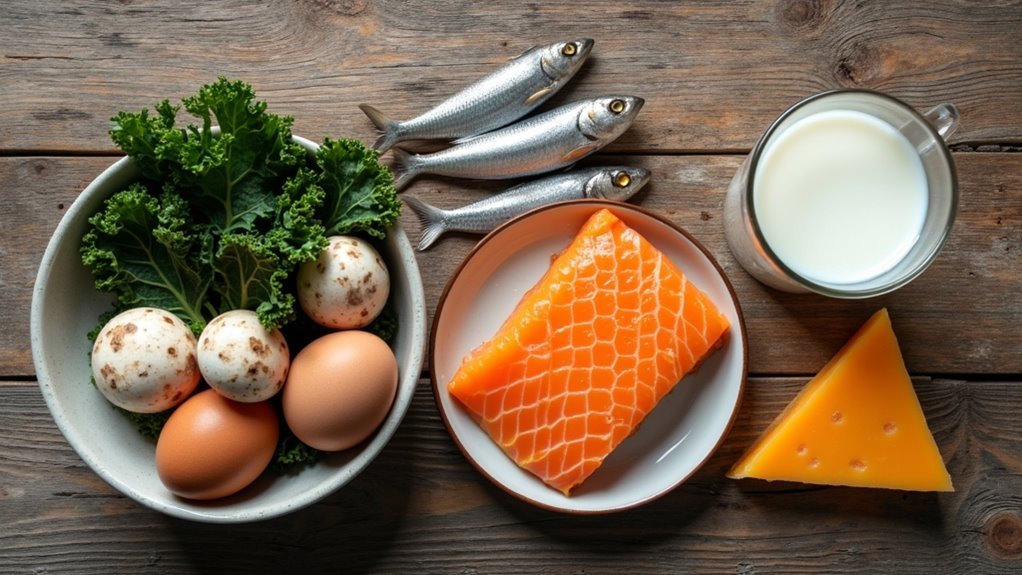
You can greatly boost your vitamin D intake and prevent osteoporosis by incorporating seven key foods into your diet. Wild-caught salmon provides 600-1,000 IU per serving, while canned sardines with bones offer 300 IU plus calcium. Fortified dairy products and plant-based milks deliver 100-150 IU per cup, and fortified cereals can provide up to 100% of your daily needs. Pasture-raised egg yolks and UV-treated mushrooms complete this bone-protecting arsenal, helping you maintain ideal bone density through strategic nutrition choices.
Wild-Caught Salmon: The Ultimate Bone-Building Fish
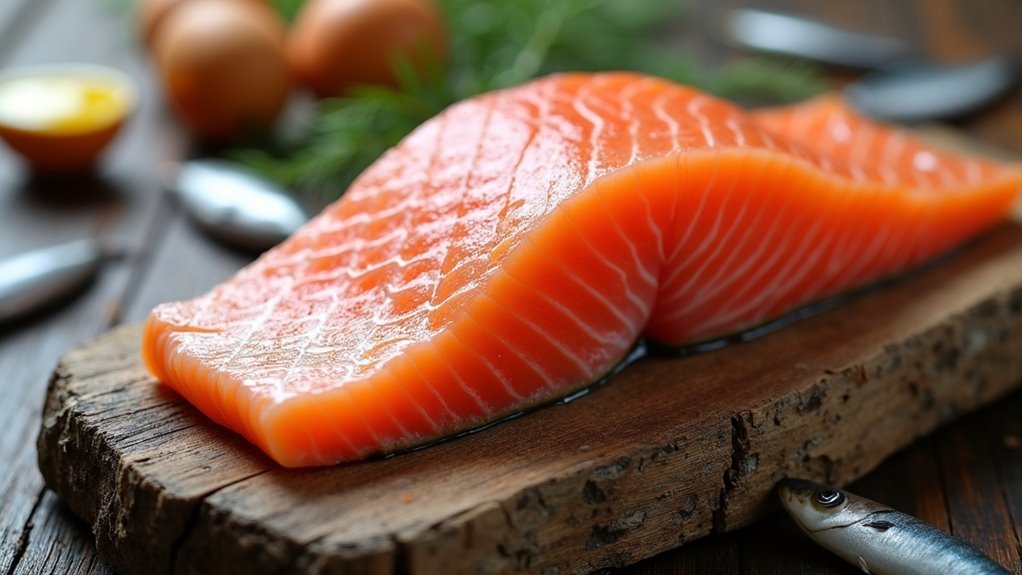
When you’re looking to fortify your bones against osteoporosis, wild-caught salmon stands out as nature’s powerhouse for bone health.
A 3.5-ounce serving delivers 600 to 1,000 IU of vitamin D, essential for calcium absorption and maintaining bone density. You’ll also benefit from omega-3 fatty acids that reduce inflammation and support overall bone health.
A single serving of wild-caught salmon provides up to 1,000 IU of bone-strengthening vitamin D plus anti-inflammatory omega-3s.
Wild-caught varieties surpass farm-raised salmon in vitamin D content due to their natural diet and environment. This makes them your superior choice for osteoporosis prevention.
Including wild-caught salmon in your meals twice weekly helps you meet recommended dietary intake levels of vitamin D. This consistent consumption contributes to a balanced diet that supports strong bones, particularly if you’re at risk for osteoporosis.
Fortified Dairy Products: Calcium and Vitamin D Powerhouses
Beyond fish options, fortified dairy products offer you a dual nutritional advantage in your fight against osteoporosis. These calcium-rich foods deliver both calcium and vitamin D in one convenient package, making them powerhouse choices for maintaining strong bones.
Most fortified milk and yogurt brands provide 100-150 IU of vitamin D per cup, helping you reach your daily recommended intake of 400 IU. You’ll also get substantial calcium – essential since adults need 1,000 mg daily (1,200 mg if you’re over 50).
Plant-based alternatives like fortified almond or soy milk contain comparable calcium levels plus added vitamin D.
Regular consumption of these fortified dairy products greatly supports bone density, with research showing reduced osteoporosis risk, especially for older adults.
Canned Sardines With Bones: Small Fish, Big Benefits
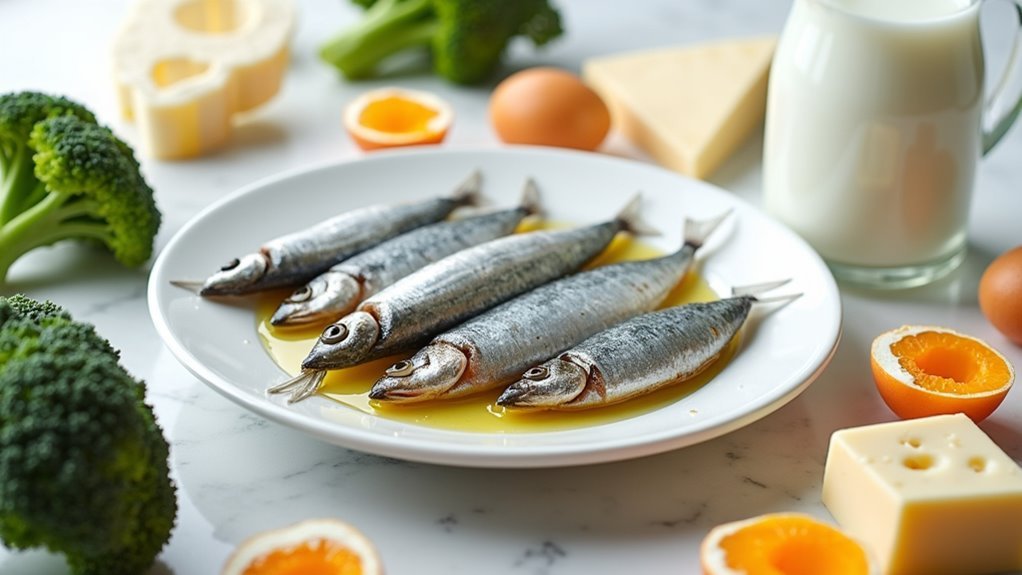
You’ll find that canned sardines with bones pack an impressive nutritional punch for osteoporosis prevention, delivering around 300 IU of vitamin D per 3.5-ounce serving.
The edible bones provide approximately 180 mg of calcium per 3-ounce portion, giving you two essential bone-building nutrients in one convenient package.
Unlike larger fish, sardines contain minimal mercury levels, making them a safe choice you can enjoy regularly to strengthen your bones and support long-term skeletal health.
Vitamin D Content
Canned sardines with bones pack an impressive nutritional punch, delivering approximately 300 IU of vitamin D per 3.5-ounce serving alongside substantial calcium content. This vitamin D content makes them an excellent choice for supporting bone health and preventing osteoporosis.
You’re getting dual benefits since the soft, edible bones contribute about 180 mg of calcium in a 3-ounce serving, perfectly complementing the vitamin D for ideal absorption.
Regular consumption helps you meet daily vitamin D and calcium intake requirements effectively. The combination works synergistically—vitamin D enhances calcium absorption, while adequate calcium provides the building blocks for healthy bones.
Including canned sardines in your dietary intake offers a convenient, nutrient-dense solution for maintaining bone strength and reducing osteoporosis risk.
Calcium From Bones
The soft, edible bones in canned sardines deliver approximately 300 mg of calcium per 3.5-ounce serving, making these small fish one of the most calcium-rich foods available.
You’ll find that sardines don’t just provide calcium—they’re also packed with vitamin D, offering 600-1,000 IU per serving to help you absorb calcium more effectively. This powerful combination supports bone density and reduces osteoporosis risk.
If you have dietary restrictions that limit dairy intake, sardines become an excellent alternative to meet your daily calcium requirements. The omega-3 fatty acids in these fish further enhance bone health benefits.
Regular sardine consumption creates a thorough strategy for maintaining strong bones throughout your lifetime.
Osteoporosis Prevention Power
When you’re looking for maximum osteoporosis prevention benefits in a single food, sardines with bones deliver an unmatched nutritional punch that targets bone health from multiple angles.
You’ll get 300 IU of daily vitamin D and 180 mg of calcium per 3-ounce serving, making significant progress toward your recommended intake goals. The omega-3 fatty acids in canned sardines reduce inflammation while promoting bone density, effectively lowering your risk of fractures.
Those soft, edible bones boost your calcium intake substantially, supporting strong bone structure. Regular consumption helps you meet daily requirements of 1,000-1,200 mg calcium and 800 IU vitamin D.
Including sardines in your healthy diet provides thorough osteoporosis prevention through this nutrient-dense powerhouse.
UV-Treated Mushrooms: Plant-Based Vitamin D Sources

While most vitamin D sources come from animal products, UV-treated mushrooms offer a powerful plant-based alternative that can greatly boost your vitamin D intake. Maitake and shiitake varieties contain up to 1,000 IU of vitamin D per 100 grams when exposed to ultraviolet light, making them excellent for vegans and vegetarians.
| Mushroom Type | Vitamin D Content | Best Uses |
|---|---|---|
| UV-Treated Maitake | Up to 1,000 IU/100g | Stir-fries, soups |
| UV-Treated Shiitake | Up to 1,000 IU/100g | Pasta, risotto |
| UV-Treated Portobello | 375-400 IU/100g | Grilling, stuffing |
These mushrooms enhance calcium absorption and improve bone density, reducing osteoporosis risk. Cooking doesn’t diminish their vitamin D content, so you can incorporate them into any healthy diet. They’re particularly valuable during winter months when sunlight exposure is limited for maintaining adequate vitamin D levels.
Egg Yolks From Pasture-Raised Chickens
You’ll find that pasture-raised chicken egg yolks contain considerably more vitamin D than conventional eggs, with each yolk providing about 40 IU of this bone-supporting nutrient.
The key advantage lies in the chickens’ access to natural sunlight, which allows them to synthesize higher levels of vitamin D that transfers directly into their eggs.
To maximize your osteoporosis prevention efforts, you can safely consume 1-2 pasture-raised egg yolks daily as part of your vitamin D strategy.
Vitamin D Content Levels
Although most people don’t realize it, egg yolks from pasture-raised chickens pack an impressive 600 to 800 IU of vitamin D per yolk—significantly more than their conventionally raised counterparts. This dramatic difference stems from the chickens’ sunlight exposure and natural diet.
When you choose pasture-raised options, you’re getting a powerhouse of dietary vitamin D that directly supports calcium absorption and bone health.
These vitamin D-rich egg yolks become especially valuable for osteoporosis prevention. You’ll find that incorporating them into your daily meals provides a convenient, natural way to meet your vitamin D requirements.
This is particularly important if you live in regions with limited sunlight. The combination of vitamin D and other nutrients in these egg yolks from pasture-raised chickens creates an effective defense against bone density loss.
Pasture-Raised Nutritional Advantages
When pasture-raised chickens roam freely under natural sunlight and forage on diverse diets, their egg yolks develop exceptional nutritional profiles that can’t be matched by conventional alternatives.
You’ll get considerably more vitamin D from these golden yolks – up to six times higher than conventional eggs, delivering 100-200 IU per yolk to support calcium absorption and bone health.
This natural advantage stems from the chickens’ sun exposure and varied diet, which also boosts omega-3 fatty acid content.
By incorporating pasture-raised egg yolks into your balanced diet alongside fatty fish and fortified foods, you’re creating a powerful nutritional strategy against osteoporosis.
These nutrient-dense yolks help you meet daily vitamin D requirements while providing superior quality compared to factory-farmed alternatives.
Optimal Daily Consumption
Balance becomes essential when determining how many pasture-raised egg yolks to include in your daily routine for ideal vitamin D absorption and bone protection. Each yolk provides approximately 37 IU of vitamin D, contributing meaningfully to your daily recommended intake.
For individuals at osteoporosis risk, consuming 1-2 egg yolks daily offers an effective natural approach to boost vitamin D levels. This intake supports calcium absorption, which directly impacts bone density maintenance and osteoporosis prevention.
You’ll maximize bone health benefits by incorporating whole eggs rather than avoiding the yolks. The enhanced vitamin D content in pasture-raised egg yolks, combined with essential fatty acids, creates a powerful nutritional foundation for calcium utilization and long-term skeletal strength.
Fortified Cereals and Plant-Based Milks
Since natural vitamin D sources can be limited in many diets, fortified cereals and plant-based milks offer you a practical solution for meeting your daily nutrient needs.
Many fortified cereals provide up to 100% of your recommended vitamin D intake per serving, making them an excellent breakfast choice for bone health. Plant-based milks like almond, soy, and oat varieties typically contain 100-150 IU of vitamin D per cup, supporting your healthy diet goals.
These fortified products often include calcium alongside vitamin D, helping boost your calcium levels and potentially preventing osteoporosis.
You’ll want to read labels carefully since vitamin D and calcium content varies between brands. Regular consumption of these fortified foods helps you meet daily requirements, especially if you have limited sun exposure.
Canned Tuna: Convenient Vitamin D for Daily Meals
Beyond fortified options, canned tuna offers a natural and accessible way to boost your vitamin D intake while adding protein to your meals. With 236 IU per 3.5-ounce serving, it’s an excellent choice for supporting bone health and preventing osteoporosis.
Canned tuna provides multiple benefits for bone density:
Beyond vitamin D, canned tuna delivers protein and omega-3s that work together to strengthen and maintain healthy bone density.
- Vitamin D content helps your body absorb calcium more effectively
- High-quality protein supports bone structure and maintenance
- Omega-3 fatty acids reduce inflammation that can weaken bones
- Versatile preparation allows easy incorporation into daily meals
Choose water-packed varieties for fewer calories while maintaining nutritional value. You can add canned tuna to salads, sandwiches, or casseroles, making it simple to reach your recommended daily intake of 400 IU vitamin D for ideal bone health.
Frequently Asked Questions
What Foods Increase Bone Density?
You’ll increase bone density by eating fatty fish like salmon, leafy greens such as kale, fortified plant-based milks, canned sardines with bones, and calcium-enriched tofu for ideal nutrition.
What Food Is Highest in Vitamin D?
Wild-caught salmon’s your best bet for vitamin D, delivering 600-1,000 IU per 3.5 ounces. You’ll also find high amounts in UV-treated mushrooms like maitake, which can provide up to 1,000 IU per 100 grams.
What Vitamin D Is Best for Osteoporosis?
You’ll want vitamin D3 (cholecalciferol) for osteoporosis prevention since it’s more effective than D2 at raising blood levels. You should aim for 800 IU daily and monitor your levels regularly.
Is 2 Eggs a Day Enough Vitamin D?
No, you won’t get enough vitamin D from just two eggs daily. They’ll only provide about 41 IU, while you need 600-800 IU. You’ll need additional sources like fatty fish or fortified foods.


