
Pumpkin seeds are zinc powerhouses because they deliver 2.17 mg of zinc per ounce, meeting 19-26% of your daily requirements in just a handful. You’ll benefit from their natural chelation processes that enhance absorption, while healthy fats and antioxidants create an ideal environment for your body to utilize the zinc effectively. Their rich nutrient profile supports immune function, activates T-lymphocytes for infection resistance, and promotes skin health and healing. Discover how proper preparation methods can maximize these incredible benefits.
The Science Behind Pumpkin Seeds’ Exceptional Zinc Content
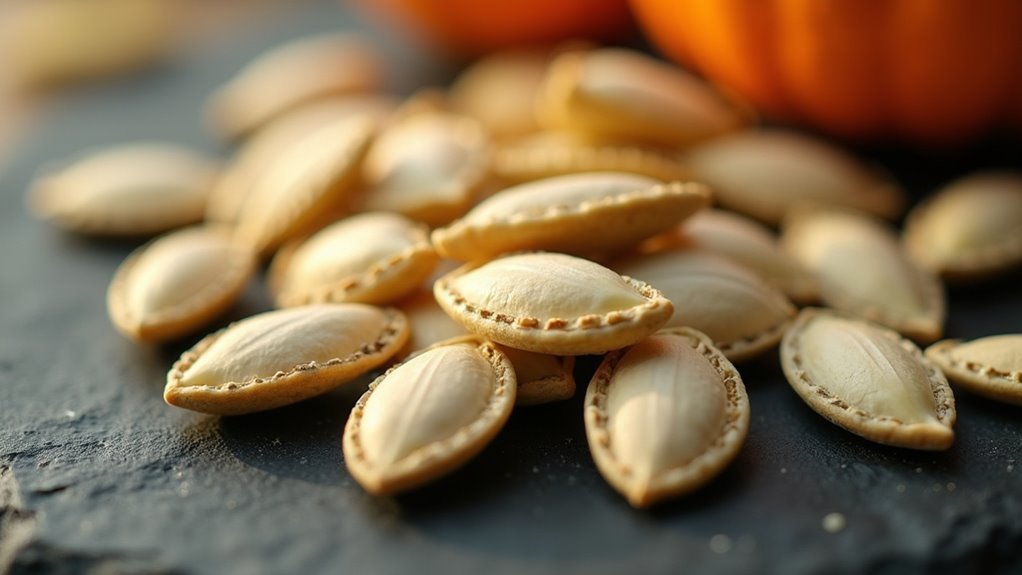
When you’re searching for a powerful plant-based source of zinc, pumpkin seeds stand out as nutritional powerhouses that deliver approximately 2.17 mg of this essential mineral per ounce.
This impressive concentration provides 19% of your daily value if you’re male and 26% if you’re female, making these seeds among the richest dietary sources available.
The science reveals that zinc’s health benefits extend throughout your body, supporting your immune system and promoting heart health through reduced oxidative stress.
What’s particularly fascinating is the nutrient synergy within pumpkin seeds – their natural antioxidants and healthy fats enhance zinc absorption and bioavailability.
This combination helps prevent zinc deficiency while maximizing the mineral’s protective effects against cellular damage and compromised immunity.
How Zinc From Pumpkin Seeds Strengthens Your Immune System
Since zinc serves as a cornerstone of immune function, consuming pumpkin seeds regularly can significantly bolster your body’s defense mechanisms. The zinc in pumpkin seeds activates T-lymphocytes, your body’s specialized immune cells that fight infections. This mineral also protects against deficiency-related immune weakness.
| Immune Component | Zinc’s Role | Health Benefits |
|---|---|---|
| T-lymphocytes | Activates adaptive immunity | Enhanced infection resistance |
| Antioxidants | Combats oxidative stress | Protects immune cells |
| Free radicals | Neutralizes cellular damage | Reduces inflammation |
| Immune response | Maintains adequate zinc levels | Faster recovery times |
| Disease resistance | Strengthens overall immune health | Fewer illnesses |
When you maintain adequate zinc levels through pumpkin seeds, you’re supporting your immune system’s ability to ward off pathogens while reducing oxidative stress that weakens immunity.
Bioavailability: Why Your Body Absorbs Zinc Better From Pumpkin Seeds
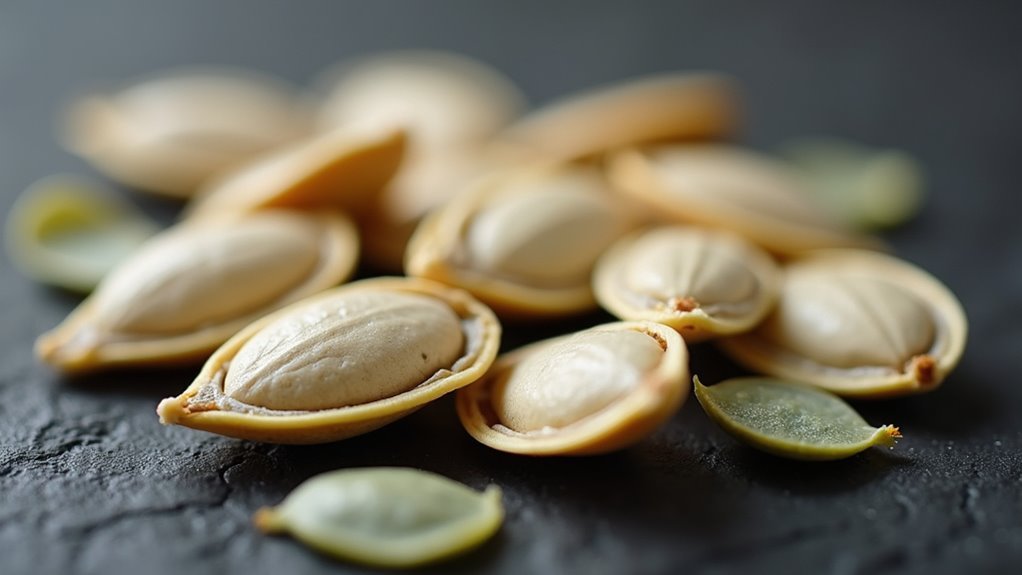
Your body doesn’t absorb all zinc equally, and pumpkin seeds offer distinct advantages through their natural chelation process that binds zinc with amino acids and organic compounds.
While these seeds contain phytic acid that can block zinc absorption, you can dramatically improve bioavailability by soaking or sprouting them before consumption.
The unique combination of healthy fats, proteins, and antioxidants in pumpkin seeds creates an ideal environment that enhances your body’s ability to absorb and utilize this essential mineral.
Natural Chelation Process
The zinc in pumpkin seeds undergoes a natural chelation process that considerably boosts your body’s ability to absorb this essential mineral.
When you consume pumpkin seeds as part of a balanced diet, the phytates naturally facilitate chelation, enhancing zinc bioavailability rather than hindering it.
The zinc binds to amino acids, creating a powerful absorption advantage:
- You’ll absorb zinc more efficiently than from synthetic supplements
- Your digestive tract welcomes the amino acid-bound zinc readily
- Healthy fats in the seeds amplify nutrient absorption dramatically
- One ounce delivers 19-26% of your daily intake requirements
- Roasted pumpkin seeds maximize bioavailability for peak benefits
This natural process guarantees your body receives maximum zinc benefits, making these nutrient-dense seeds an exceptional choice for meeting your mineral needs.
Phytic Acid Considerations
Although pumpkin seeds contain phytic acid—a compound that typically reduces mineral absorption—you’ll find that proper preparation methods dramatically transform these potential nutrient blockers into absorption enhancers.
When you soak or sprout pumpkin seeds, you’ll greatly lower phytic acid levels, making zinc more bioavailable to your body. Roasting also reduces this compound while improving zinc absorption during digestion.
What makes pumpkin seeds an exceptional dietary source is their natural magnesium content, which works synergistically to enhance zinc absorption.
You’ll maximize nutrient absorption by consuming these mineral-rich seeds as part of balanced meals, where fats and proteins facilitate zinc uptake.
Through simple preparation techniques like soaking or roasting, you’re fundamentally optimizing these seeds’ bioavailability for superior mineral absorption.
Enhanced Absorption Factors
When you consume pumpkin seeds regularly, your body benefits from a unique combination of absorption-enhancing factors that make their zinc more bioavailability than many other plant sources.
Your body’s enhanced absorption comes from these powerful synergistic elements:
- Protein content works alongside zinc to optimize uptake in your digestive system.
- Healthy fats create an ideal environment for mineral absorption in your intestines.
- Magnesium content partners with zinc, helping both minerals function more effectively.
- Complete nutrient profile supports overall absorption mechanisms your body needs.
- Reduced phytates through proper preparation methods release zinc’s full potential.
You’ll meet your daily zinc requirement more efficiently because pumpkin seeds deliver 19-26% of your needs per ounce.
This impressive zinc absorption rate makes them superior to most plant-based sources, giving you confidence in your nutritional choices.
Comparing Pumpkin Seeds to Other Zinc-Rich Food Sources
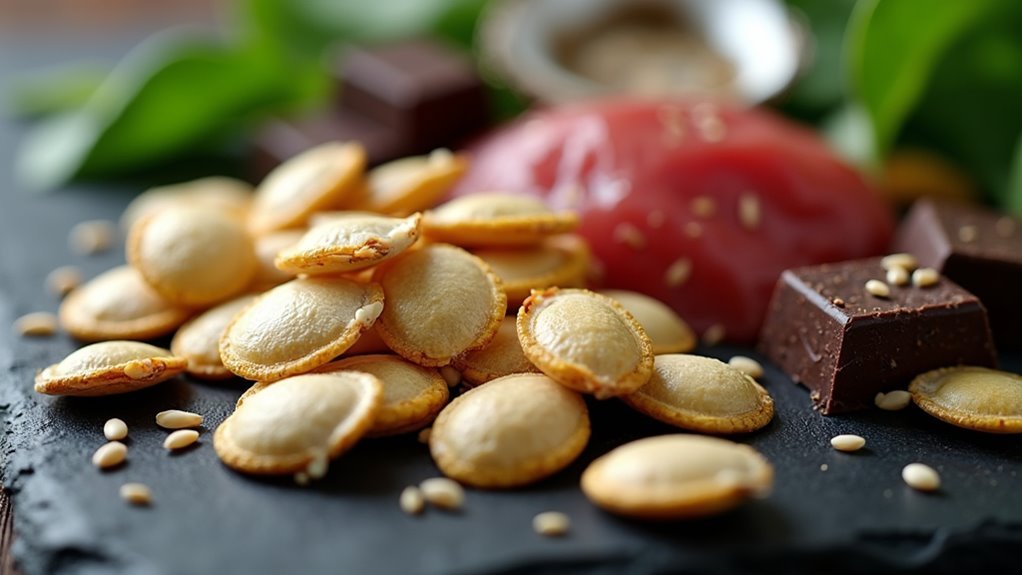
While pumpkin seeds rank among the top plant-based zinc sources with 2.17 mg per ounce serving, they’re not necessarily the heavyweight champion of zinc-rich foods.
Your comparison reveals that legumes often outperform these nutrient-dense seeds considerably. Baked beans deliver 5.79 mg per cup, covering 53% of men’s Daily Value and 72% for women. Lentils and white beans also surpass pumpkin seeds with 2.51 mg and 2.47 mg per cup respectively.
Though pumpkin seeds offer additional health benefits like healthy fats and magnesium, animal sources dominate zinc levels entirely. Oysters contain a staggering 74 mg per serving—over 600% of your daily needs.
When choosing plant-based sources, consider legumes for higher zinc content plus dietary fiber. This essential mineral comparison helps optimize your nutrition strategy.
Roasted Vs Raw: Which Preparation Method Maximizes Zinc Benefits
How you prepare your pumpkin seeds directly impacts the zinc your body can actually use. While raw pumpkin seeds offer health benefits, roasting is the superior preparation method for maximizing zinc absorption. The roasting process reduces moisture content, concentrating nutrients and enhancing bioavailability.
Here’s why roasted pumpkin seeds deliver superior zinc benefits:
- Enhanced absorption – Your body absorbs zinc more efficiently from roasted seeds
- Concentrated nutrition – Reduced moisture content means more zinc per bite
- Better digestibility – Roasting breaks down compounds that inhibit mineral absorption
- Improved flavor – You’ll actually enjoy eating these nutritional powerhouses
- Preserved nutritional profile – Moderate roasting temperatures maintain zinc content
Roast your seeds at 300°F for 15 minutes with minimal salt to optimize their zinc-boosting potential.
Daily Zinc Requirements and How Pumpkin Seeds Help You Meet Them
Now that you know the best preparation method for pumpkin seeds, understanding your daily zinc needs becomes the next step in optimizing your nutrition strategy.
Men require 11 mg of zinc daily, while women need 8 mg. Just one ounce of pumpkin seeds delivers 2.17 mg of zinc, meeting 19% of men’s daily zinc requirements and 26% for women.
These seeds offer exceptional value for prostate health and immune function support.
You’ll also benefit from essential nutrients like magnesium and healthy fats that complement zinc absorption. The antioxidants in pumpkin seeds enhance zinc’s effectiveness in your body, making them an ideal daily addition.
Including a handful regularly helps you meet significant zinc requirements while supporting overall wellness.
Frequently Asked Questions
How Is Zinc in Pumpkin Seeds?
You’ll find pumpkin seeds contain 2.17 mg of zinc per ounce, delivering 19-26% of your daily needs. This zinc supports your immune system, skin health, and reproductive function while reducing oxidative stress.
What Makes Pumpkin Seeds Anti-Parasite?
You’ll find pumpkin seeds contain cucurbitacin, a compound that directly fights intestinal parasites. They’re also packed with zinc and antioxidants that boost your immune system, helping your body naturally defend against parasitic infections.
What Happens if We Eat Pumpkin Seeds Daily?
You’ll boost your zinc intake considerably, improve blood sugar control after meals, sleep better due to tryptophan, support heart health with antioxidants, and strengthen bones through magnesium and phosphorus.
How Much Pumpkin Seeds to Eat Daily for Prostate?
You should eat about 1 ounce or 28 grams of pumpkin seeds daily for prostate health. This amount provides approximately 2.17 mg of zinc, meeting 19-26% of your daily zinc requirements.


