
You’ll boost your digestive healing supplements’ effectiveness by incorporating fermented vegetables like sauerkraut, kimchi, and cultured carrots into your routine. These probiotic-rich foods deliver billions of beneficial bacteria that enhance nutrient absorption and create ideal gut conditions for supplements to work. Fermented beets, radishes, and cauliflower increase microbiome diversity while supporting intestinal lining repair. The timing matters—consume these cultured vegetables with meals to maximize supplement absorption and accelerate your digestive recovery process.
How Fermented Vegetables Support Digestive System Recovery
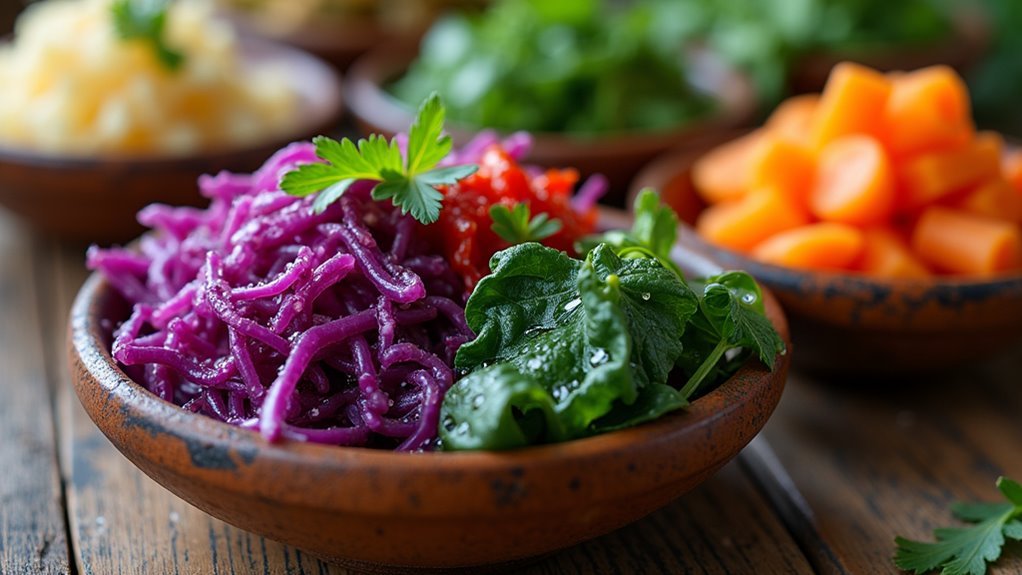
Fermentation transforms ordinary vegetables into powerful allies for your digestive system’s recovery. When you consume fermented vegetables like kimchi and sauerkraut, you’re delivering beneficial probiotics directly to your gut microbiome. These living cultures help restore balance after digestive distress, illness, or antibiotic treatment.
The fermentation process doesn’t just add probiotics—it enhances nutrient absorption by breaking down complex compounds into easily digestible forms. Your body can better utilize vitamins and minerals from these cultured foods, supporting faster healing.
Fermented vegetables also promote gut motility, helping you achieve regular bowel movements and reducing IBS symptoms. They stimulate production of short-chain fatty acids that strengthen your intestinal lining and combat inflammation.
Regular consumption of these probiotic-rich foods accelerates digestive health recovery while protecting against future gastrointestinal issues.
The Science Behind Probiotic-Rich Cultured Vegetables
When you consume fermented vegetables like kimchi or sauerkraut, you’re introducing billions of live beneficial bacteria into your digestive system through a natural process that transforms ordinary vegetables into powerful probiotic foods.
This fermentation process doesn’t just preserve the vegetables—it actually multiplies the beneficial microorganisms that can colonize your gut and crowd out harmful bacteria.
The specific strains of lactobacilli and other probiotics created during fermentation directly impact your gut microbiome’s diversity, which research shows is essential for ideal digestive function and overall health.
Fermentation Creates Beneficial Bacteria
Although many people view bacteria with suspicion, the microscopic organisms thriving in cultured vegetables are actually your digestive system’s best allies. When you consume fermented foods like kimchi and sauerkraut, you’re introducing beneficial bacteria that transform your gut microbiome into a thriving ecosystem.
The fermentation process breaks down sugars through lactic acid bacteria, creating an environment where probiotics flourish. These microorganisms don’t just survive—they multiply and strengthen your digestive defenses.
| Fermentation Stage | Bacterial Activity | Digestive Benefits |
|---|---|---|
| Initial (0-3 days) | Sugar breakdown begins | Acid production starts |
| Active (4-7 days) | Lactic acid bacteria dominate | Probiotic population peaks |
| Mature (8+ days) | Stable bacterial community | Maximum nutrient bioavailability |
| Consumption | Live bacteria colonize gut | Enhanced digestive function |
Gut Microbiome Health Impact
Your gut houses trillions of microorganisms that directly influence your overall health, and cultured vegetables serve as powerful allies in optimizing this complex ecosystem.
When you consume fermented vegetables like kimchi and sauerkraut, you’re introducing beneficial probiotics that actively restore balance to your gut microbiota. These live cultures enhance microbiome diversity, which research directly links to improved digestive function and reduced inflammation.
The fiber in cultured vegetables acts as prebiotic fuel, feeding your existing gut bacteria and promoting their growth. This creates a thriving environment where beneficial microorganisms flourish.
Additionally, the probiotics in fermented vegetables produce short-chain fatty acids during digestion, strengthening your intestinal barrier and supporting metabolic health. Regular consumption can even alleviate IBS symptoms while improving cholesterol levels and insulin sensitivity.
Sauerkraut: Traditional Fermented Cabbage for Gut Restoration
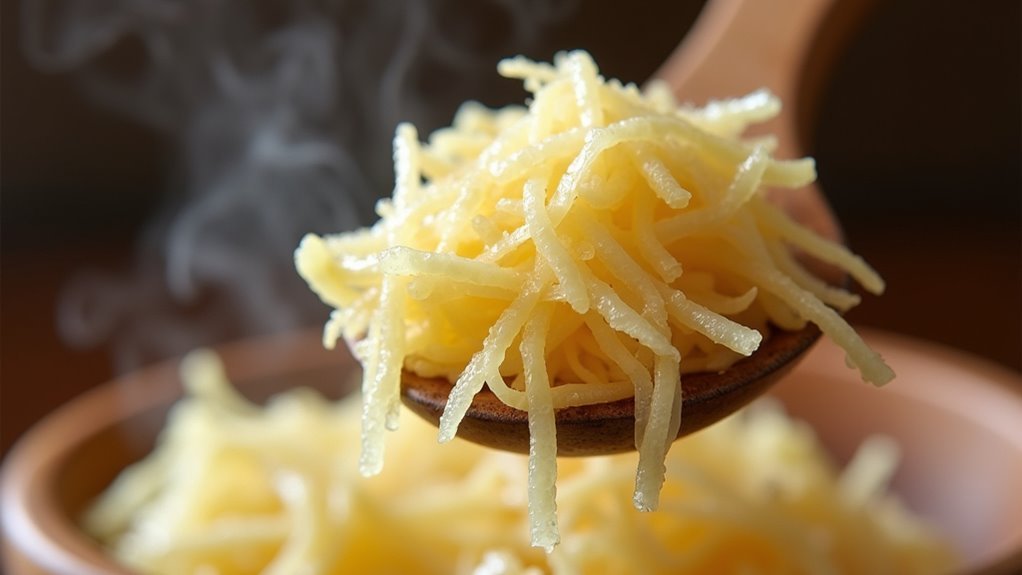
For thousands of years, sauerkraut has served as one of humanity’s most effective digestive remedies, transforming simple cabbage into a powerhouse of gut-healing probiotics through natural fermentation.
This traditional cultured vegetable delivers beneficial probiotics that directly support your gut health while providing essential nutrients for peak digestion.
You’ll maximize sauerkraut’s healing potential by following these key principles:
- Choose unpasteurized varieties – Heat treatment destroys the live cultures your digestive system needs.
- Consume regularly – Consistent intake helps restore and maintain healthy gut microbiota balance.
- Start gradually – Begin with small portions to allow your system to adjust to increased microbial diversity.
Rich in fiber, vitamins C and K, and antioxidants, sauerkraut enhances nutrient absorption while alleviating IBS symptoms through improved digestive function.
Kimchi’s Role in Enhancing Digestive Supplement Effectiveness
When you combine kimchi with your digestive supplements, you’re creating a powerful probiotic synergy that amplifies the healing potential of both.
The beneficial bacteria in kimchi work alongside supplement ingredients to establish a more robust gut microbiome than either could achieve alone.
This fermented powerhouse also enhances your body’s ability to absorb nutrients from supplements by improving intestinal permeability and digestive enzyme activity.
Probiotic Synergy Effects
While digestive supplements work to restore gut balance, kimchi amplifies their effectiveness through powerful probiotic synergy.
The fermented vegetable’s Lactobacillus kimchii strain creates a dynamic partnership with supplement probiotics, establishing a more robust gut microbiome than either could achieve alone.
This synergistic relationship delivers three key benefits:
- Enhanced bioavailability – Kimchi’s fermentation process increases nutrient absorption, making your digestive supplements more effective.
- Increased short-chain fatty acid production – The combination boosts beneficial compounds that heal your intestinal lining.
- Reduced inflammation – Garlic and ginger in kimchi provide anti-inflammatory support that complements probiotic action.
You’ll experience improved gut health markers and potentially reduced IBS symptoms when combining kimchi with your regular digestive supplement routine.
Enhanced Nutrient Absorption
Beyond synergistic effects, kimchi transforms your digestive system into a nutrient-absorbing powerhouse that enhances supplement effectiveness. The fermentation process increases vitamin and mineral bioavailability, making nutrients more accessible to your body. Kimchi’s probiotics create ideal gut health conditions that enhance nutrient absorption from your digestive supplements.
| Kimchi Component | Absorption Benefit | Supplement Impact |
|---|---|---|
| Probiotics | Improves microbiome balance | Enhances supplement uptake |
| Fermented nutrients | Increases bioavailability | Maximizes nutrient utilization |
| Anti-inflammatory compounds | Reduces gut inflammation | Promotes digestive healing |
| High fiber content | Supports digestive function | Enhances supplement efficacy |
The high fiber content supports healthy digestion while reducing inflammation creates an environment where your supplements work more effectively. You’ll experience improved overall digestive health as kimchi maintains the gut conditions necessary for optimal supplement benefits.
Fermented Beets and Their Impact on Intestinal Health
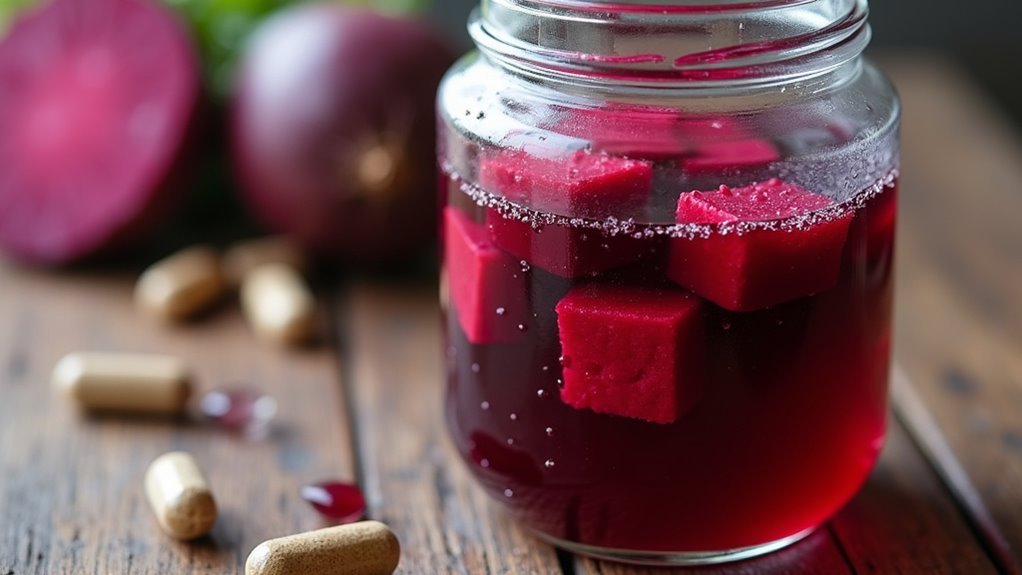
Although beets have long been valued for their nutritional benefits, their fermented beets offer exceptional advantages for your intestinal health. When you consume fermented beets, you’re introducing beneficial probiotics that enhance your gut health by diversifying the bacterial communities in your digestive tract.
These cultured vegetables deliver three key intestinal benefits:
- Improved blood flow – Dietary nitrates enhance oxygen delivery to your gut, reducing inflammation and promoting healing.
- Enhanced digestion – High fiber content supports regular bowel movements and feeds your healthy gut microbiome.
- Reduced oxidative stress – Natural betalains act as antioxidants, protecting your intestinal lining from damage.
Additionally, fermented beets boost your digestive enzyme activity, leading to superior nutrient absorption and overall digestive function improvement.
Cultured Carrots as Natural Digestive System Boosters
When you incorporate cultured carrots into your daily routine, you’re harnessing one of nature’s most effective digestive system boosters.
These fermented vegetables deliver powerful probiotics that strengthen your gut health by promoting beneficial bacteria growth in your digestive tract. The fermentation process greatly increases vitamin C content and enhances antioxidant bioavailability, making these nutrients more accessible to your body.
You’ll benefit from their high dietary fiber content, which regulates bowel movements and prevents constipation while keeping calories low.
Regular consumption can reduce gut inflammation, potentially easing irritable bowel syndrome (IBS) symptoms. Their naturally tangy flavor makes them versatile additions to salads, sandwiches, or standalone snacks, delivering both taste and digestive benefits.
How Fermented Radishes Accelerate Healing Processes
You’ll find fermented radishes pack a powerful punch for digestive healing, delivering probiotics that flood your gut with beneficial bacteria while their natural enzymes boost nutrient absorption.
The fermentation process transforms these peppery vegetables into easily digestible healing agents that reduce inflammation and strengthen your gut lining.
When you incorporate fermented radishes into your diet, you’re accelerating your body’s natural recovery processes through improved digestion and enhanced bacterial balance.
Fermented Radish Benefits
Fermented radishes pack a powerful punch for digestive healing through their concentrated probiotic content and enhanced nutritional profile. When you consume these cultured vegetables, you’ll experience significant health benefits that support your digestive system’s recovery and maintenance.
The fermented process transforms ordinary radishes into healing powerhouses by:
- Boosting nutrient absorption – Fermentation increases bioavailability of vitamin C and antioxidants, making these essential nutrients more accessible to your body.
- Providing digestive enzymes – These natural enzymes help break down food more efficiently, reducing uncomfortable bloating and gas.
- Reducing inflammation – Anti-inflammatory compounds actively combat gut inflammation, accelerating healing of digestive disorders.
You’ll also strengthen your immune function since probiotics in fermented radishes promote beneficial bacteria growth, creating a healthier gut microbiome that enhances your overall immune response.
Healing Process Enhancement
Since your digestive system requires specific nutrients and beneficial bacteria to repair damaged tissue, fermented radishes deliver these healing components in their most bioavailable form. The probiotics in these cultured vegetables actively reduce gut inflammation while promoting faster tissue recovery.
| Healing Component | Action | Result |
|---|---|---|
| Probiotics | Restore microbiome balance | Accelerated tissue repair |
| Enhanced nutrients | Improve cellular function | Faster healing processes |
| Antioxidants | Combat oxidative stress | Reduced inflammation |
When you consume fermented radishes regularly, you’re providing your digestive tract with targeted healing support. The fermentation process transforms ordinary radishes into powerful therapeutic foods that work synergistically with your body’s natural healing mechanisms. This enhanced bioavailability guarantees peak absorption of nutrients essential for digestive recovery and ideal gut health maintenance.
The Benefits of Cultured Cauliflower for Gut Microbiome Balance
Inflammation wreaks havoc on your digestive system, but cultured cauliflower offers a powerful solution through its rich concentration of lactic acid bacteria.
This fermented powerhouse transforms your gut health by introducing beneficial probiotics that restore balance to your microbiome.
When you consume cultured cauliflower regularly, you’re providing your digestive system with three key advantages:
- Enhanced nutrient absorption – Fermentation breaks down compounds, making vitamins and minerals more bioavailable.
- Improved bowel regularity – High fiber content promotes healthy digestion and may reduce IBS symptoms.
- Increased microbiome diversity – Beneficial gut bacteria flourish, crowding out harmful pathogens.
The fermentation process doesn’t just preserve cauliflower; it creates a therapeutic food that actively heals your digestive tract while preventing gastrointestinal disorders.
Fermented Cucumber’s Contribution to Digestive Wellness
You’ll discover that fermented cucumbers pack powerful probiotic bacterial strains like Lactobacillus that directly enhance your digestive enzyme production.
These beneficial bacteria don’t just survive in your gut—they actively multiply and strengthen your microbiome balance while breaking down food more efficiently.
When you regularly consume these cultured vegetables, you’re fundamentally training your digestive system to function at peak performance through improved bacterial diversity and enhanced enzymatic activity.
Probiotic Bacterial Strains
The transformation of fresh cucumbers into tangy, probiotic-rich pickles creates a powerhouse of beneficial bacteria that can revolutionize your digestive health.
When you consume fermented cucumbers, you’re introducing essential probiotic bacterial strains that work tirelessly to restore balance in your gut microbiome.
These cultured vegetables deliver specific lactic acid bacteria that enhance your gut health through:
- Breaking down complex foods for improved nutrient absorption
- Increasing beneficial flora diversity to combat digestive disorders
- Balancing gut acidity levels for ideal digestive function
The probiotic bacterial strains in fermented cucumbers don’t just improve digestion—they strengthen your immune response and alleviate IBS symptoms.
You’ll experience more regular bowel movements as these beneficial bacteria establish themselves in your digestive tract, creating an environment where harmful pathogens can’t thrive.
Digestive Enzyme Enhancement
While your body produces its own digestive enzymes, fermented cucumbers naturally boost this process by delivering additional enzymatic support that breaks down food more efficiently.
The fermentation process creates live cultures that produce enzymes specifically designed to digest sugars and fibers, making nutrients more bioavailable. These probiotics work alongside your natural digestive system, reducing bloating and discomfort after meals.
When you consume fermented cucumbers, you’re introducing beneficial bacteria that continue producing digestive enzymes in your gut.
The lactic acid generated during fermentation helps balance stomach acidity, creating an ideal environment for enzyme activity. This enhanced enzymatic action improves overall gut function and promotes better nutrient absorption, supporting your digestive wellness through natural biological processes.
Gut Microbiome Balance
Building on enhanced enzymatic activity, fermented cucumbers deliver powerful probiotic strains that fundamentally reshape your gut microbiome composition.
These cultured vegetables introduce beneficial bacteria that actively compete with harmful microorganisms, creating an ideal digestive environment.
The fermentation process produces three key benefits for your gut bacteria ecosystem:
- Lactic acid production – Creates an acidic environment that inhibits pathogenic bacteria while promoting beneficial microorganism growth
- Probiotic diversity – Introduces multiple strains of beneficial bacteria that enhance overall microbiome balance
- Fiber content – Provides prebiotic fuel that nourishes existing gut bacteria and supports their proliferation
You’ll experience reduced bloating, improved bowel regularity, and enhanced digestive comfort as fermented cucumbers restore your intestinal harmony.
This balanced microbiome directly strengthens immune function and supports long-term digestive wellness.
Why Cultured Turnips Enhance Nutrient Absorption
When you consume cultured turnips, you’re introducing powerful probiotic bacteria into your digestive system that dramatically improve how your body processes and absorbs nutrients.
Cultured turnips deliver probiotic bacteria that transform your digestive system, dramatically boosting nutrient processing and absorption capabilities.
The fermentation process transforms these vegetables into nutrient powerhouses, increasing bioavailability of essential vitamins like vitamin C and minerals such as potassium. Your gut bacteria thrive on the prebiotics found in cultured turnips, creating an ideal environment for nutrient absorption.
The lactic acid bacteria present break down complex carbohydrates more efficiently, making digestion smoother. This enhanced digestive process reduces inflammation throughout your system while promoting better overall nutrient uptake.
You’ll experience improved gut health as beneficial bacteria flourish, creating a positive cycle where better digestion leads to enhanced nutrient absorption and stronger immune function.
Maximizing Supplement Benefits Through Fermented Vegetable Timing
Beyond improving your body’s natural nutrient absorption, you can strategically time your fermented vegetables consumption with supplements to create powerful synergistic effects.
The timing of when you eat kimchi, sauerkraut, and other cultured foods directly impacts how well your digestive health supplements work.
Here’s how to maximize these benefits:
- Eat fermented vegetables during meals – This creates ideal conditions for probiotics to work alongside your supplements.
- Consume cultured foods before supplements – Stimulates gastric juices that improve nutrient breakdown and absorption.
- Maintain regular intake – Consistent consumption supports your gut microbiome and enhances supplement efficacy over time.
Research shows that probiotics in fermented vegetables complement supplement strains, leading to enhanced gut healing and improved digestive function when timed correctly.
Combining Cultured Vegetables With Specific Digestive Supplements
While strategic timing enhances supplement absorption, pairing specific cultured vegetables with targeted digestive supplements creates even more powerful therapeutic combinations. You’ll maximize benefits when you match the right fermented foods with complementary supplements.
| Cultured Vegetables | Recommended Digestive Supplements |
|---|---|
| Kimchi & Sauerkraut | Probiotics capsules |
| Miso & Tempeh | Digestive enzyme supplements |
| Kefir | Fiber supplements |
| Fermented vegetables | L-glutamine supplements |
| Sauerkraut | Prebiotic fiber supplements |
When you combine kimchi with probiotics, you’re enhancing gut microbiome diversity considerably. Miso’s natural enzymes work synergistically with digestive enzyme supplements to improve nutrient breakdown. Kefir’s probiotics help break down fiber supplements for better absorption and regularity. Adding fermented vegetables to L-glutamine supports intestinal lining repair while reducing inflammation effectively.
Creating Your Own Fermented Vegetable Blends for Healing
Taking supplement combinations further, you can craft personalized fermented vegetable blends that target your specific digestive concerns.
These homemade creations enhance gut health by diversifying probiotics, as different vegetables and fermentation processes yield unique beneficial strains for your gut microbiome.
Here’s how to create healing fermented vegetable blends:
- Choose your base vegetables – Combine cabbage, carrots, beets, and radishes for diverse flavors and nutrients.
- Add therapeutic spices – Include garlic, ginger, or chili peppers for anti-inflammatory properties and enhanced digestion.
- Use simple brine method – Mix water and sea salt, then ferment at room temperature for several days.
Regular consumption of your custom fermented vegetable blends promotes balanced gut microbiome, reduces bloating, and boosts nutrient absorption for ideal digestive healing.
Signs Your Digestive System Is Responding to Cultured Vegetables
Enhanced immune function becomes evident as your body better fights off gastrointestinal infections.
If you suffer from irritable bowel syndrome (IBS), you’ll see a noticeable decrease in cramping and discomfort as gut microbiota diversity improves.
These signs indicate your digestive health is responding positively to the beneficial bacteria and nutrients cultured vegetables provide.
Frequently Asked Questions
What Is the Best Fermented Food for Gut Health?
You’ll find kefir’s the best fermented food for gut health since it contains up to 61 strains of beneficial yeast and bacteria, making it more potent than other options for promoting digestive wellness.
What Is the Most Gut Healing Food?
You’ll find kimchi’s the most gut-healing food because it’s packed with probiotics, antioxidants, and anti-inflammatory compounds. It’ll enhance your microbiome diversity while providing essential vitamins that support digestive healing better than other fermented foods.
What Is the Best Vegetable for Your Gut?
You’ll find kimchi’s the best vegetable for your gut. It’s packed with probiotics that boost beneficial bacteria, improve digestion, and enhance nutrient absorption while providing essential vitamins and fiber for ideal digestive health.
Can Fermented Foods Heal the Gut?
You can heal your gut with fermented foods like kimchi and sauerkraut. They’ll restore beneficial bacteria, reduce inflammation, improve nutrient absorption, and strengthen your gut barrier while alleviating digestive symptoms.


