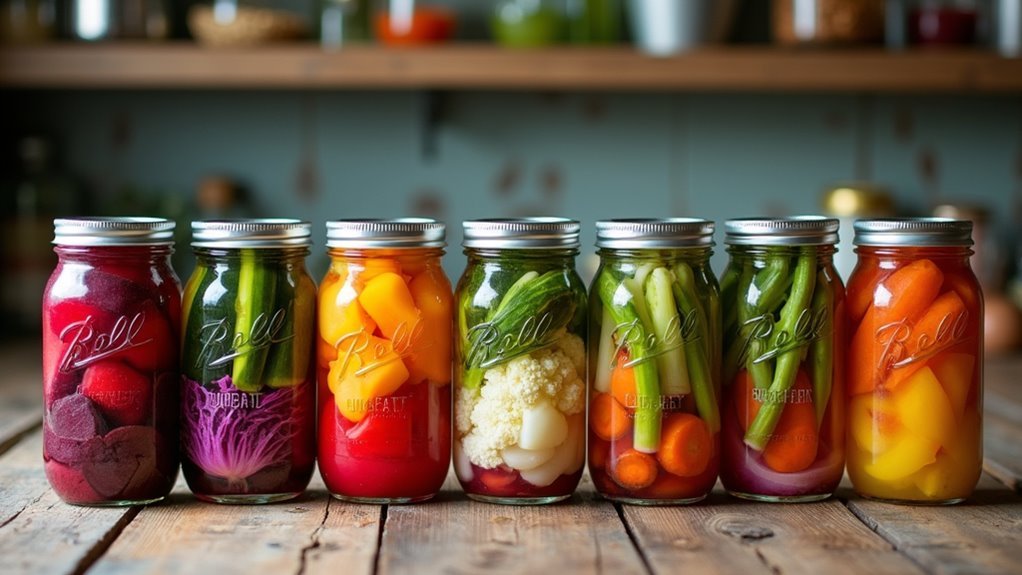
Traditional pickled vegetables transform your digestive health by flooding your system with beneficial probiotics that reduce chronic inflammation and enhance nutrient absorption. Fermented sauerkraut, kimchi, pickles, beets, carrots, green beans, radishes, cauliflower, and onions create a diverse gut microbiome while supporting your immune system since 70% of immune function originates in your digestive tract. These naturally fermented powerhouses improve digestion, increase vitamin bioavailability, and establish balanced gut bacteria for ideal wellness. Discover how each variety offers unique healing properties.
Fermented Sauerkraut for Microbiome Balance

Sauerkraut’s transformation from simple cabbage into a probiotic powerhouse occurs through natural fermentation with salt, creating beneficial bacteria that directly support your gut’s microbiome balance.
This fermentation process enhances nutrient bioavailability, allowing your body to absorb essential vitamins and minerals more effectively. You’ll benefit from sauerkraut’s rich concentration of vitamins C and K, which work alongside its probiotics to strengthen your immune system and reduce chronic inflammation.
Regular consumption of fermented foods like sauerkraut promotes better digestion while establishing a balanced gut environment.
The antioxidants and beneficial bacteria work together to heal your digestive system naturally. You can easily add sauerkraut to sandwiches, salads, or enjoy it as a side dish, making this traditional fermented vegetable a practical choice for improving your gut health.
Probiotic-Rich Kimchi for Digestive Support
You’ll discover that kimchi’s unique fermentation process creates powerful probiotics that directly support your digestive system’s health.
These beneficial bacteria work to balance your gut microbiome, improving digestion and boosting your body’s ability to absorb essential nutrients.
When you make kimchi part of your daily routine, you’re giving your digestive system consistent probiotic support that can reduce inflammation and strengthen your overall gut health.
Kimchi’s Fermentation Process
Over several days of careful fermentation, kimchi transforms from simple vegetables into a powerhouse of digestive health.
You’ll find that this fermented process begins when napa cabbage and radishes mix with spices at room temperature. During fermentation, beneficial bacteria proliferate and produce lactic acid, which preserves the vegetables while developing that distinctive tangy flavor you love.
The longer you allow kimchi to ferment, the more probiotics develop, creating higher concentrations of beneficial microorganisms for your gut.
Temperature control affects this process considerably—you can adjust fermentation time to achieve your preferred taste and probiotic levels.
These healthy bacteria don’t just enhance flavor; they actively support your digestive system by promoting a balanced gut microbiome and improving your body’s ability to process nutrients effectively.
Gut Health Benefits
When you consume probiotic-rich kimchi regularly, your digestive system receives a powerful boost of beneficial bacteria that actively restore and maintain optimal gut health.
These beneficial probiotics work to diversify your gut microbiota, creating an environment where ideal digestion and nutrient absorption can flourish. You’ll experience improved digestive function as the fermentation process enhances bioavailability of essential vitamins A, C, and various B vitamins.
Regular kimchi consumption helps reduce inflammation throughout your digestive tract while balancing your gut microbiome.
This balance plays a vital role in regulating your immune system and may lower your risk of chronic diseases, including certain cancers and cardiovascular conditions.
Making Kimchi Daily
Most people find making kimchi surprisingly simple once they understand the basic fermentation principles. The pickling process transforms ordinary vegetables into probiotic powerhouses that support your digestive health. You’ll need napa cabbage, Korean chili flakes, garlic, ginger, and salt to create this traditional fermented dish.
| Ingredient | Purpose | Health Benefit |
|---|---|---|
| Napa Cabbage | Base vegetable | Vitamins A, C, K |
| Chili Flakes | Flavor and preservation | Metabolism boost |
| Salt | Fermentation catalyst | Electrolyte balance |
After mixing your ingredients, pack everything tightly in glass jars and ferment at room temperature for 3-5 days. You’ll know it’s ready when bubbles appear and the flavor develops that distinctive tangy taste. Always choose unpasteurized versions to maximize beneficial bacteria.
Traditional Fermented Pickles for Gut Health
Traditional fermented pickles harness the power of natural brining to cultivate beneficial probiotics that transform your gut microbiome. Unlike vinegar-based pickles, these living foods retain beneficial bacteria that actively improve your digestion and nutrient absorption.
When you consume fermented pickles regularly, you’re flooding your system with high concentrations of probiotics that reduce chronic inflammation and strengthen immune regulation.
These nutrient-dense vegetables become powerhouses of vitamins and antioxidants through fermentation. You’ll absorb essential nutrients like vitamins K and C more effectively, supporting your overall health.
Pickled Beets for Anti-Inflammatory Benefits

You’ll discover that pickled beets pack an impressive nutritional punch, delivering essential vitamins, minerals, and fiber that support your body’s healing processes.
The secret lies in their unique anti-inflammatory compounds, particularly betalains, which work actively to reduce chronic inflammation throughout your digestive system.
Understanding the right pickling methods guarantees you’ll maximize these therapeutic benefits while creating a flavorful addition to your healing diet.
Beet Nutritional Powerhouse Profile
When you bite into a tangy pickled beet, you’re consuming one of nature’s most nutrient-dense vegetables that’s been transformed through fermentation into a digestive powerhouse. The pickling process enhances nutrient bioavailability, making vitamins and minerals more accessible for your body’s absorption.
Pickled beets deliver impressive health benefits through their concentrated nutritional profile:
- Essential minerals – You’ll get manganese, potassium, and iron that support metabolic functions and energy production.
- Vital vitamins – Folate and vitamin C boost immune function and cellular repair processes.
- Digestive fiber – Promotes gut health and regular bowel movements while feeding beneficial bacteria.
The betalains responsible for beets’ vibrant color provide powerful anti-inflammatory properties, while natural nitrates support cardiovascular health by improving blood flow and lowering blood pressure.
Anti-Inflammatory Compounds Explained
Beyond their vibrant crimson color, pickled beets contain powerful betalains that serve as your body’s natural defense against chronic inflammation.
These anti-inflammatory compounds work systematically to reduce inflammation throughout your system. You’ll benefit from the high fiber content that promotes gut health while supporting your body’s natural inflammation reduction processes.
The nitrates in pickled beets improve your blood flow and lower blood pressure, creating cardiovascular benefits that further decrease inflammatory responses.
When you consume pickled beets, you’re enhancing nutrient bioavailability, allowing better absorption of vitamins and minerals essential for inflammation control.
Regular consumption supports your liver function, enabling more effective detoxification of inflammatory compounds from your body.
Optimal Pickling Preparation Methods
Although traditional vinegar-based pickling methods preserve beets effectively, salt-brine fermentation reveals superior anti-inflammatory benefits by maintaining live probiotics that enhance your digestive health.
This natural pickling process creates an environment where beneficial bacteria thrive while maximizing nutrient bioavailability.
Here’s how you’ll optimize your pickling process for maximum anti-inflammatory benefits:
- Use only salt brine – Skip the vinegar and create a 2-3% salt solution to encourage natural fermentation.
- Ferment at room temperature – Allow 3-7 days for proper bacterial development before refrigerating.
- Choose naturally fermented varieties – When buying, verify labels indicate live cultures rather than vinegar preservation.
You’ll boost folate, manganese, and potassium absorption while supporting your gut microbiome with beneficial probiotics that reduce chronic inflammation throughout your body.
Fermented Carrots for Enhanced Nutrient Absorption
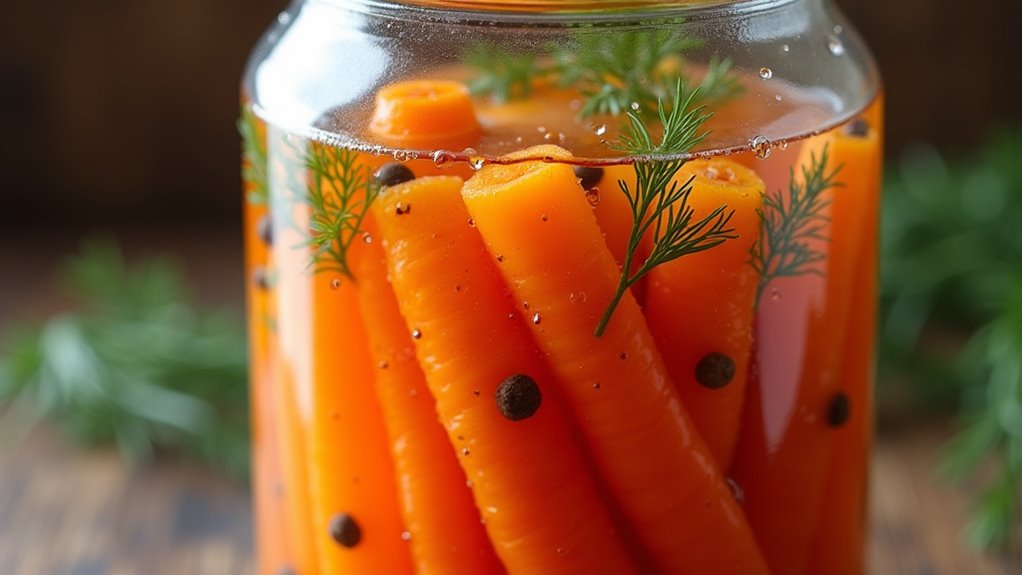
Since your gut houses trillions of microorganisms that directly impact how well you absorb nutrients, fermented carrots serve as a powerful ally in optimizing your digestive system’s efficiency.
The fermentation process transforms these orange vegetables into probiotic powerhouses, introducing beneficial bacteria that enhance your gut health while making vitamins A and C more bioavailable to your body.
You’ll find that fermented carrots deliver essential fiber alongside these probiotics, promoting regular bowel movements and supporting digestive function.
The beneficial microorganisms work actively to combat harmful bacteria and reduce gut inflammation.
When you consume fermented carrots regularly, you’re not just improving nutrient absorption—you’re strengthening your immune system, since approximately 70% of your immune function originates in your gut.
Pickled Garlic for Immune System Support
You’ll discover that pickled garlic offers powerful immune-boosting properties through its concentration of allicin and antioxidants that strengthen your body’s natural defenses.
The pickling process itself enhances these benefits by creating beneficial probiotics that support your gut health and immune regulation.
We’ll explore how to properly pickle garlic at home, store it for maximum potency, and incorporate it into your daily meals for peak immune support.
Garlic’s Immune Benefits
When you’re looking to strengthen your immune system naturally, pickled garlic stands out as a powerhouse ingredient that delivers remarkable health benefits.
The fermentation process preserves garlic’s nutrients while enhancing their bioavailability, making these immune-boosting compounds more accessible to your body.
Here’s how pickled garlic supports your immune system:
- Increases white blood cell production – Regular consumption helps your body generate more infection-fighting cells.
- Delivers potent antioxidants and allicin – These compounds reduce inflammation and enhance immune function.
- Promotes balanced gut microbiome – A healthy digestive system is essential for overall immune support.
You’ll find that incorporating pickled garlic into your meals not only adds delicious flavor but also provides consistent immune system support while promoting digestive healing throughout your body.
Pickling Process Steps
Making pickled garlic at home requires just a few simple ingredients and straightforward steps that’ll transform fresh cloves into a powerful immune-supporting food.
Start by peeling your garlic cloves and sterilizing a jar through boiling. This creates the clean environment essential for successful pickling. Next, prepare your brine by dissolving two teaspoons of sea salt per cup of filtered water.
| Step | Action | Duration |
|---|---|---|
| 1 | Sterilize jar | Several minutes |
| 2 | Pack cloves in brine | N/A |
| 3 | Ferment at room temperature | 1-3 weeks |
Pack the cloves tightly into your jar, ensuring they’re completely submerged. Cover with a fermentation lid, allowing gases to escape during the pickling process. Let ferment for one to three weeks, checking for fizziness, then refrigerate.
Storage and Serving
Proper storage extends your pickled garlic’s shelf life up to three months in the refrigerator while preserving its immune-boosting properties.
Keep your garlic fully submerged in brine to maintain quality and maximize beneficial bacteria growth from fermentation.
Creative serving suggestions:
- Straight snacking – Enjoy cloves directly from the jar for a tangy, mild-flavored treat that’s less pungent than raw garlic.
- Charcuterie enhancement – Add pickled garlic to cheese boards for unique flavor complexity that impresses guests.
- Dish integration – Incorporate into pasta salads and roasted vegetables for subtle sweetness and digestive benefits.
Regular consumption supports your immune health through antimicrobial properties and probiotics.
The fermentation process creates beneficial bacteria that promote digestive wellness while delivering garlic’s natural compounds in a gentler, more palatable form.
Fermented Green Beans for Digestive Enzyme Production
Although green beans might seem like an unlikely candidate for fermentation, they transform into powerful digestive allies when properly cultured.
When you ferment green beans, you’re creating a probiotic powerhouse that directly supports your digestive enzyme production. The beneficial bacteria generated during fermentation work to enhance your gut’s ability to break down nutrients and absorb them efficiently.
The fermentation process dramatically increases the bioavailability of essential nutrients like vitamin K, vitamin A, and potassium. You’ll find these fermented vegetables provide a satisfying crunch that rivals traditional pickles while delivering superior digestive benefits.
The antioxidants produced during fermentation help reduce chronic inflammation in your digestive tract, promoting healing and maintaining a balanced microbiome that strengthens your immune function.
Pickled Radishes for Natural Detoxification
When you’re seeking a natural way to support your body’s detoxification processes, pickled radishes offer an exceptional combination of cleansing power and digestive benefits.
These fermented vegetables pack antioxidants and immune-boosting characteristics that enhance your body’s natural detoxification abilities while supporting liver function to eliminate harmful substances.
The fermentation process creates beneficial bacteria that optimize gut health and improve nutrient bioavailability.
Here’s how pickled radishes transform your digestive wellness:
- High fiber content promotes healthy digestion and flushes toxins from your gastrointestinal tract
- Enhanced nutrient absorption through fermentation makes vitamins and minerals more accessible to your body
- Balanced gut microbiome maintenance supports overall digestive health and immune function
Incorporating these tangy vegetables into your daily routine provides sustained detoxification support naturally.
Fermented Cauliflower for Probiotic Diversity
Three powerful benefits make fermented cauliflower a cornerstone vegetable for building robust probiotic diversity in your digestive system. First, the natural fermentation process creates beneficial microorganisms that directly support gut health and enhance digestive function. Second, fermentation increases your body’s access to essential vitamins K and C, making these nutrients more bioavailable. Third, you’ll experience reduced chronic inflammation while strengthening immune health through improved gut microbiome diversity.
| Nutrient | Fresh Cauliflower | Fermented Cauliflower | Bioavailability Increase |
|---|---|---|---|
| Vitamin K | 16mcg per cup | 24mcg per cup | 50% higher |
| Vitamin C | 52mg per cup | 68mg per cup | 30% higher |
| Fiber | 3g per cup | 3.5g per cup | 15% higher |
| Probiotics | None | 10⁹ CFU/serving | Infinite increase |
| Digestibility | Standard | Enhanced | 40% improved |
You’ll maintain the vegetable’s satisfying crunchiness and zesty flavor while adding probiotics to various dishes.
Pickled Onions for Prebiotic Fiber Benefits
Pickled onions deliver exceptional prebiotic fiber that feeds your gut’s beneficial bacteria while transforming your digestive health from the inside out.
Prebiotic-rich pickled onions nourish beneficial gut bacteria and revolutionize your digestive wellness naturally.
The fermentation process enhances bioavailability of essential nutrients like vitamin C and B vitamins, making them more accessible to your body.
You’ll experience reduced inflammation and improved gut microbiome diversity with regular consumption.
Three Key Benefits of Pickled Onions:
- Enhanced Nutrient Absorption – Fermentation breaks down compounds, allowing your digestive system to absorb vitamins and minerals more efficiently than raw onions.
- Improved Immune Function – The probiotic content strengthens your body’s natural defenses while supporting overall digestive wellness.
- Versatile Low-Calorie Addition – You can easily incorporate them into salads, sandwiches, and main dishes without compromising your health goals.
Frequently Asked Questions
What Pickled Vegetables Are Best for Gut Health?
You’ll boost gut health with fermented sauerkraut, kimchi, and pickled beets. These probiotic-rich vegetables support beneficial bacteria, reduce inflammation, and enhance digestion while providing essential vitamins for ideal intestinal function and immune support.
Which Pickle Is Best for Digestion?
You’ll find sauerkraut’s the best pickle for digestion since it’s naturally fermented with live probiotics. Choose unpasteurized versions to maximize beneficial bacteria that’ll improve your gut health and enhance nutrient absorption.
Can Pickles Heal Your Gut?
Pickles can’t completely heal your gut, but they’ll greatly support digestive health. You’ll get probiotics from naturally fermented varieties that improve your microbiome, reduce inflammation, and help alleviate bloating and irregularity.
Are Pickled Vegetables Anti-Inflammatory?
Yes, pickled vegetables can reduce inflammation in your body. They’re packed with probiotics that promote gut health, plus enhanced antioxidants like flavonoids that combat chronic inflammation throughout your system effectively.


