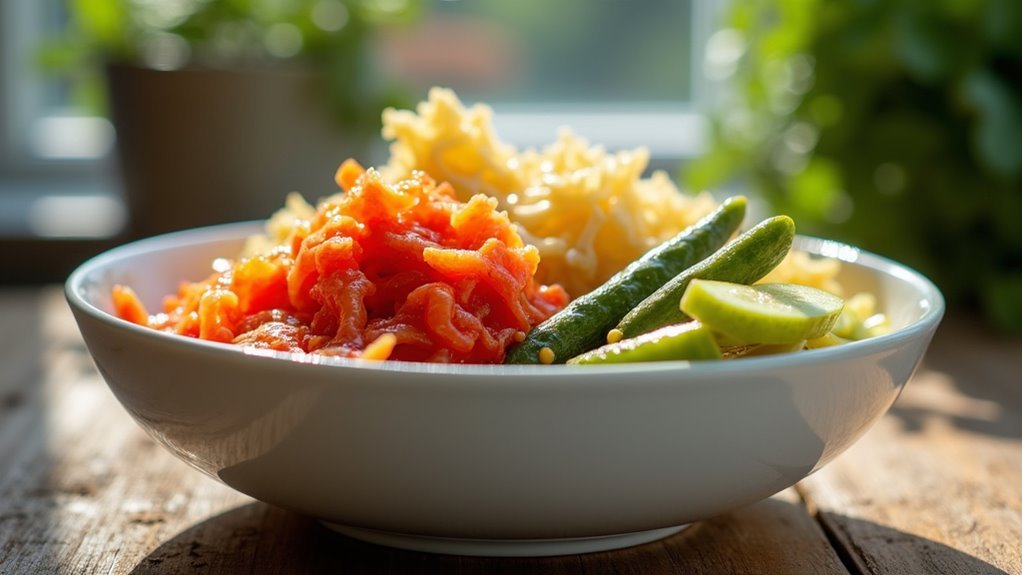
Cultured vegetables heal your digestive disorders by flooding your gut with beneficial probiotics like Lactobacillus and Bifidobacterium, which balance your intestinal microbiome and reduce inflammation. These fermented foods produce short-chain fatty acids that lower your gut’s pH, creating an acidic environment that inhibits harmful bacteria while promoting healthy digestion. Regular consumption of sauerkraut, kimchi, and fermented pickles enhances nutrient absorption, alleviates IBS and IBD symptoms, and restores your digestive wellness naturally through increased microbial diversity and improved gut flora balance.
The Science Behind Cultured Vegetables and Gut Healing
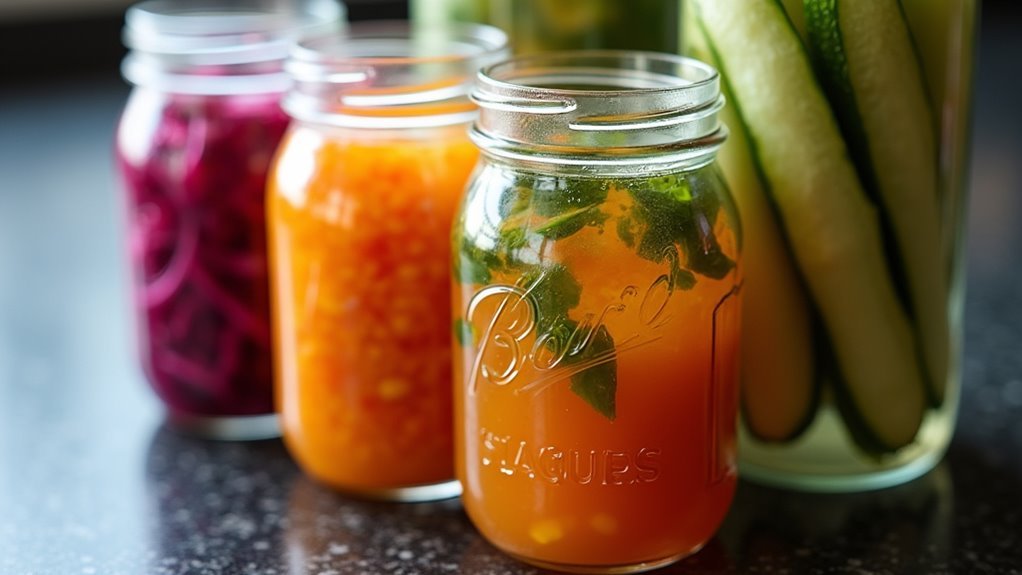
Fermentation transforms ordinary vegetables into powerful allies for your digestive system. During the fermentation process, beneficial bacteria convert sugars into probiotics—live microorganisms that enhance your gut health by diversifying your microbiome.
These cultured vegetables become nutrient powerhouses as fermentation increases bioavailability, making essential vitamins and minerals easier for your body to absorb.
The probiotics in fermented foods produce short-chain fatty acids that lower your gut’s pH level, creating an environment where harmful bacteria can’t thrive. This process provides energy directly to your colon cells while supporting overall digestive function.
Short-chain fatty acids from probiotics create an acidic gut environment that starves harmful bacteria while energizing your colon cells.
Research shows that regular consumption of cultured vegetables can effectively alleviate symptoms of digestive disorders like IBS and IBD, promoting a balanced gut environment that naturally heals your digestive system.
Essential Probiotic Strains in Fermented Vegetables
While understanding the fermentation process sets the foundation, knowing which specific probiotic strains you’re consuming helps you maximize the digestive benefits of cultured vegetables.
The essential probiotic strains in fermented vegetables include Lactobacillus and Bifidobacterium, both critical for ideal gut health. These beneficial bacteria work to improve digestion by balancing your intestinal microbiome and reducing symptoms of IBS and constipation.
When you consume cultured vegetables regularly, you’re enhancing your gut’s microbial diversity, which directly correlates with better digestive function.
These probiotic strains produce short-chain fatty acids that lower your gut pH, creating an environment where beneficial bacteria thrive. Additionally, they decrease inflammatory protein activation, reducing gastrointestinal inflammation and promoting overall digestive wellness through natural healing mechanisms.
How Fermentation Transforms Vegetables Into Medicine

Beyond simply preserving vegetables, the fermentation process fundamentally alters their nutritional profile and transforms them into powerful digestive medicine. When you consume fermented foods, you’re getting concentrated doses of beneficial probiotics that directly support gut health.
The fermentation process breaks down complex nutrients, making vitamins and minerals more bioavailable for your body to absorb. During fermentation, beneficial bacteria produce short-chain fatty acids that create an ideal environment for healthy digestion.
These compounds lower your gut’s pH, favoring good bacteria while suppressing harmful strains. You’ll also experience increased microbial diversity, which reduces inflammation and strengthens your intestinal barrier.
This transformation process basically pre-digests nutrients, making fermented vegetables far more therapeutic than their raw counterparts for digestive wellness.
Specific Digestive Disorders That Respond to Cultured Vegetables
Research consistently demonstrates that cultured vegetables provide targeted relief for several common digestive disorders, offering you a natural therapeutic approach when conventional treatments fall short.
If you suffer from irritable bowel syndrome, the probiotics in sauerkraut and kimchi can balance your gut microbiome while reducing inflammation. These fermented vegetables also increase stool frequency and decrease discomfort for those with functional constipation.
You’ll find particular benefit if you have lactose intolerance, as beneficial bacteria help break down lactose effectively.
For inflammatory bowel diseases like Crohn’s and ulcerative colitis, cultured vegetables enhance short-chain fatty acid production, strengthening your gut barrier.
Regular consumption increases microbial diversity, fundamentally improving your digestive health and immune function.
Short-Chain Fatty Acids: The Key to Digestive Recovery

When cultured vegetables undergo fermentation in your gut, they produce powerful compounds called short-chain fatty acids (SCFAs) that serve as the primary fuel source for your colon cells. These SCFAs—acetate, propionate, and butyrate—transform your gut health by reducing inflammation and strengthening your intestinal barrier.
| SCFA Type | Primary Benefits |
|---|---|
| Acetate | Reduces gut inflammation, supports immune function |
| Propionate | Enhances gut barrier integrity, metabolic health |
| Butyrate | Promotes gut healing, anti-inflammatory properties |
| Combined SCFAs | Increases microbial diversity, balances microbiome |
| Fermented foods | Delivers healthy probiotics, sustained SCFA production |
Butyrate particularly excels at healing digestive disorders by promoting beneficial bacteria growth and modulating immune responses. Regular consumption of fermented foods increases your gut’s microbial diversity, creating an environment where SCFAs can effectively combat digestive disorders naturally.
Choosing the Right Cultured Vegetables for Your Condition
How do you determine which fermented vegetables will best address your specific digestive concerns? Your symptoms guide the selection process for ideal therapeutic benefits.
Target these fermented foods for specific conditions:
- Kimchi for IBS relief – The spicy, probiotic-rich vegetables reduce irritable bowel symptoms while boosting beneficial gut bacteria populations.
- Sauerkraut for constipation – Lactobacillus bacteria improve digestive function and promote regular bowel movements naturally.
- Fermented pickles for gut diversity – Naturally cultured varieties enhance flora balance without vinegar’s harsh effects.
- Carrot and cauliflower ferments for stability – These prebiotic-rich vegetables nourish existing beneficial bacteria while providing digestive support.
You’ll maximize health benefits by matching specific fermented foods to your digestive needs. Start with small portions and gradually increase intake as your system adapts to these powerful probiotics.
Creating Your Own Therapeutic Fermented Vegetables at Home
You’ll need specific equipment and ingredients to guarantee your homemade fermented vegetables develop the right probiotics for therapeutic benefits.
The process starts with gathering sterilized jars, sea salt, filtered water, and fresh vegetables like cabbage, carrots, and cauliflower.
Following proper fermentation steps will help you create potent cultured vegetables that can greatly improve your digestive health.
Essential Equipment and Ingredients
Three essential pieces of equipment will transform your kitchen into a fermentation station for creating therapeutic cultured vegetables.
You’ll need minimal investment to start producing beneficial probiotics at home.
Essential Equipment and Ingredients:
- Quart-size canning jar with fermentation lid – Creates the perfect anaerobic environment for developing beneficial bacteria while allowing gas to escape safely.
- Non-iodized sea salt – Forms the vital fermentation brine that preserves vegetables and encourages healthy bacterial growth without harmful additives.
- Filtered water – Dissolves salt effectively while eliminating chlorine that could interfere with the fermentation process.
- Fresh seasonal vegetables – Provides natural sugars and nutrients that feed beneficial microorganisms during transformation.
Food safety begins with sterilizing equipment in boiling water before use.
Step-by-Step Fermentation Process
Five simple steps will guide you through creating your first batch of therapeutic fermented vegetables that’ll transform ordinary produce into probiotic powerhouses.
First, dissolve one tablespoon of sea salt in two cups of filtered water to create your fermentation brine. This salt solution initiates the process while protecting your vegetables from harmful bacteria.
Next, tightly pack your chopped vegetables—cauliflower, carrots, and onions work perfectly—into a sterilized quart jar, leaving expansion room at the top.
Pour the brine over your vegetables, ensuring complete submersion to prevent mold growth. Cover with a fermentation lid or loosely fitted standard lid to allow gas escape.
Store in a cool, dark location and check for bubbling after three days. Continue fermenting until you achieve desired sourness, then refrigerate to preserve those healthy live bacteria and probiotics.
Integrating Cultured Vegetables Into Your Daily Healing Protocol
While many people view cultured vegetables as occasional side dishes, transforming them into daily healing allies requires strategic integration into your existing meal patterns.
Strategic daily integration of cultured vegetables transforms these probiotic powerhouses from mere side dishes into essential healing allies for optimal gut health.
You’ll maximize your digestive health benefits by consuming one to two servings of naturally fermented cultured vegetables daily, ensuring a steady supply of probiotics to support beneficial gut bacteria.
- Morning kickstart: Add a forkful of sauerkraut to your scrambled eggs, creating a colorful, probiotic-rich breakfast that awakens your digestive system.
- Lunch enhancement: Layer fermented kimchi onto sandwiches or salads, introducing tangy flavors while delivering live cultures.
- Dinner accompaniment: Serve cultured vegetables alongside grilled proteins, pairing traditional comfort foods with gut-healing properties.
- Raw consumption priority: Keep fermented vegetables unheated when possible, preserving essential probiotics for peak therapeutic impact.
Frequently Asked Questions
How Long Does It Take for Fermented Foods to Heal the Gut?
You’ll start noticing fermented foods’ gut healing effects within days as probiotics populate your microbiome. Significant digestive improvements typically occur within two to four weeks, while lasting gut health changes develop over several months of consistent consumption.
Can Fermented Foods Heal the Gut?
Yes, you can heal your gut with fermented foods. They’ll introduce beneficial probiotics that balance your microbiome, reduce inflammation, improve digestion, and alleviate symptoms like bloating and constipation naturally.
Is It Okay to Eat Fermented Vegetables Every Day?
You can eat fermented vegetables daily for better gut health and digestion. They’ll boost beneficial bacteria and improve nutrient absorption. However, start slowly and monitor your tolerance to avoid gas or bloating.
Are Pickled Vegetables Good for Your Gut?
Yes, pickled vegetables are excellent for your gut when they’re naturally fermented. They’ll boost your beneficial bacteria, improve digestion, reduce inflammation, and enhance nutrient absorption, supporting overall digestive health effectively.


