
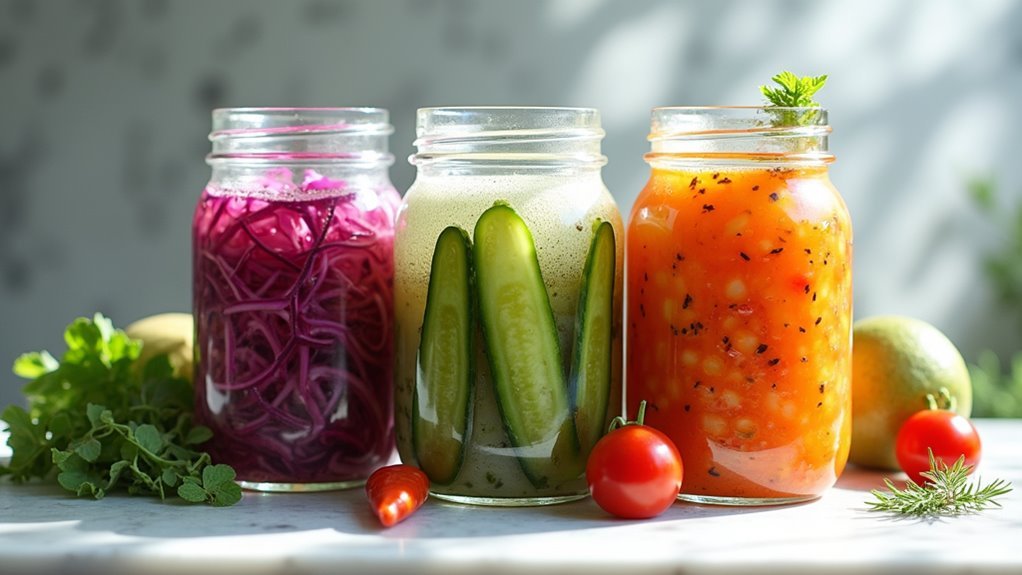
You’ll boost gut health by choosing fresh, seasonal vegetables like carrots and cauliflower with non-iodized sea salt for ideal fermentation. Master the 1-3 day timeline by checking daily for fizziness while maintaining 60°F-75°F temperatures and keeping vegetables submerged in brine. Store your fermented creations in the refrigerator immediately after fermentation, where they’ll develop enhanced probiotic potency over one to two weeks. These foundational techniques reveal the full spectrum of digestive healing benefits awaiting your discovery.
Choose the Right Vegetables and Salt for Optimal Fermentation

When you’re ready to begin fermenting vegetables at home, selecting fresh vegetables like carrots, cucumbers, and cauliflower sets the foundation for successful probiotic development.
Fresh vegetables like carrots, cucumbers, and cauliflower provide the essential foundation for developing healthy probiotics through home fermentation.
These seasonal picks contain higher nutrient levels and natural sugars that feed beneficial bacteria during the fermentation process.
You’ll need non-iodized sea salt instead of regular table salt, which can inhibit fermentation and harm probiotic benefits.
Always use filtered water rather than chlorinated tap water, as chlorine kills the beneficial bacteria essential for gut health.
Don’t forget to add flavor enhancers like garlic, mustard seeds, or bay leaves.
These ingredients complement your vegetables’ natural flavors while boosting the fermentation process and creating delicious, gut-healing probiotics for your daily routine.
Master the Fermentation Timeline for Maximum Probiotic Benefits
Once you’ve prepared your vegetables and brine, timing becomes essential for developing maximum probiotic benefits. Your fermentation process typically takes 1-3 days at room temperature, allowing beneficial probiotic bacteria to multiply and enhance your gut microbiome.
Check daily for fizziness, which indicates active fermentation and growing health benefits.
Maintain fermentation temperature between 60°F-75°F for ideal flavor development. Higher temperatures accelerate the process but may compromise probiotic quality.
Keep vegetables fully submerged in brine to prevent spoilage and maintain effectiveness. Use fermentation lids or loosely fitted standard lids to allow gas escape while protecting your fermented foods.
After achieving desired fermentation, transfer jars to your refrigerator. This enhances taste and preserves probiotics for several months, maximizing the nutritional value of your homemade creation.
Store and Consume Your Fermented Vegetables for Best Gut Healing Results
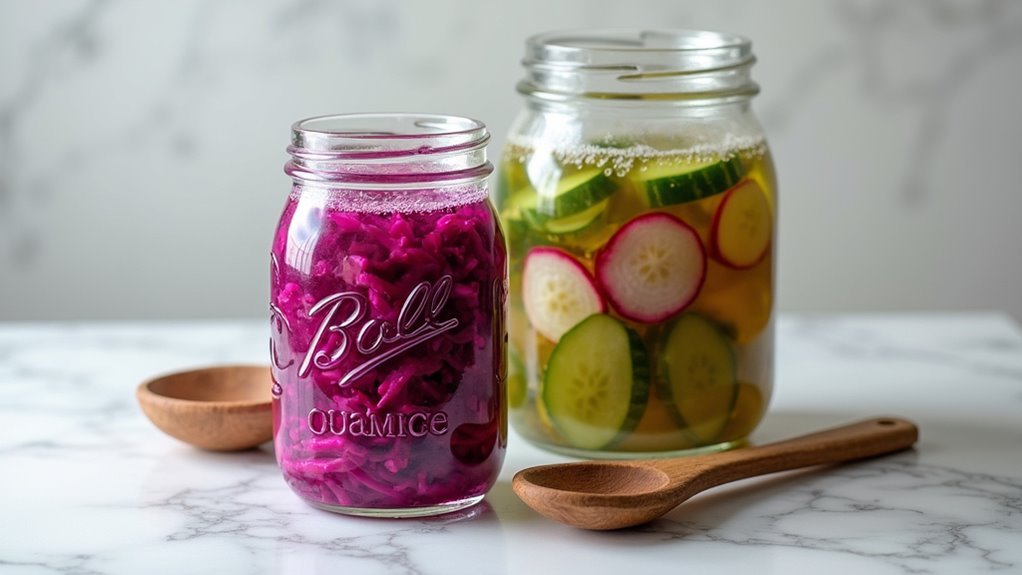
How should you handle your freshly fermented vegetables to maximize their gut-healing potential?
Transfer your jars to the refrigerator immediately after fermentation to slow the process and enhance flavor development. Your probiotic vegetables will improve in both taste and probiotic potency after one to two weeks of storage, though you can consume them right away for initial gut health benefits.
Refrigerate fermented vegetables immediately to slow fermentation and enhance flavor – probiotic potency peaks after one to two weeks of cold storage.
Keep vegetables submerged in brine during storage by adding salted water if they float – this prevents spoilage and maintains healthy probiotics.
Properly stored fermented vegetables last several months in the refrigerator, giving you long-term access to gut-healing benefits.
Before serving, taste your vegetables and rinse if too salty to guarantee pleasant flavor while preserving their probiotic content.
Frequently Asked Questions
What Vegetable Has the Most Probiotics?
You’ll find kimchi contains the most probiotics among vegetables. This fermented cabbage dish packs diverse beneficial bacteria that boost your gut health more effectively than other probiotic vegetables like sauerkraut or fermented pickles.
What Vegetables Are Best for Gut Bacteria?
You’ll benefit most from garlic, onions, artichokes, and cruciferous vegetables like broccoli for prebiotics. Include fermented options like kimchi and sauerkraut for direct probiotics, plus colorful varieties for ideal gut bacteria diversity.
How to Ferment Vegetables for Gut Health?
You’ll pack cut vegetables tightly in sterilized jars, cover with salt brine, and ferment at room temperature for 1-3 days until fizzy, then refrigerate to slow fermentation.
What Naturally Kills Bad Bacteria in the Gut?
You’ll kill bad gut bacteria naturally by eating garlic, ginger, and turmeric for their antimicrobial effects. Add probiotic foods, polyphenol-rich berries, fiber-packed prebiotic vegetables, and drink plenty of water daily.


