

You’ll reveal powerful cartilage healing by consuming traditional bone broth rich in glycine and natural collagen. Take 10-30 grams of hydrolyzed collagen with vitamin C before workouts to maximize synthesis. Choose animal sources like chicken cartilage for type II collagen and fish for superior bioavailability. Time your intake strategically – evening consumption aligns with natural repair cycles during sleep. Maintain consistent dosing, prioritize quality sleep, and use slow-simmering cooking methods. These ancient secrets combined with modern timing strategies reveal nature’s most effective joint restoration methods.
Traditional Bone Broth: The Foundation of Cartilage Restoration

When you’re looking to restore cartilage naturally, traditional bone broth stands as your most powerful dietary foundation. This nutrient-dense liquid delivers concentrated collagen, glycine, and essential amino acids directly extracted from bones and connective tissues through slow simmering.
You’ll receive natural glucosamine and chondroitin—the same compounds found in expensive joint supplements—while supporting your body’s collagen production naturally.
Regular bone broth consumption addresses glycine deficiency, which contributes to sleep disturbances and joint pain. The high collagen content promotes better hydration and enhances overall joint function.
Unlike synthetic supplements, bone broth provides these healing compounds in their most bioavailable form. By making bone broth a dietary staple, you’re giving your joints the raw materials they need for ongoing repair and maintenance.
Glycine-Rich Foods for Natural Collagen Production
You’ll find glycine in abundance when you consume traditional bone broth, which extracts this essential amino acid from cartilage and connective tissues during the slow cooking process.
Organ meats like liver and kidney pack concentrated doses of glycine that directly fuel your body’s collagen production machinery.
You can choose between gelatin powder and hydrolyzed collagen supplements, though gelatin requires dissolving in hot liquids while collagen peptides mix easily into any beverage.
Traditional Bone Broth Benefits
For centuries, traditional bone broth has served as nature’s powerhouse for collagen support, delivering a concentrated dose of glycine that your body craves for ideal healing.
When you simmer animal bones, you’re releasing collagen, gelatin, and essential nutrients that make this ancient remedy superior to many modern collagen supplements.
The amino acid glycine in bone broth doesn’t just support joint and skin health—it reduces inflammation, promotes better sleep quality, and enhances cellular health through glutathione production.
If you’re experiencing joint pain or sleep disturbances, you might’ve glycine deficiencies that regular bone broth consumption can address.
Organ Meat Glycine Sources
Beyond the liquid gold of bone broth, organ meats stand as some of nature’s most concentrated glycine sources, delivering the building blocks your body needs for robust collagen production.
Liver, heart, and kidney pack exceptional glycine content, with collagen comprising roughly one-third glycine by composition. You’ll maximize benefits by incorporating these nutrient-dense foods regularly into your meals.
Don’t overlook bone marrow from larger animals—it’s another glycine powerhouse that provides both collagen and essential nutrients.
You can easily boost your intake through hearty stews featuring organ meats or by adding marrow bones to your cooking routine. Regular consumption helps address glycine deficiency symptoms like sleep disturbances and joint pain while supporting cellular health and natural collagen synthesis throughout your body.
Gelatin Versus Collagen Supplements
When choosing between gelatin and collagen supplements, understanding their distinct forms and absorption rates can dramatically impact your glycine intake and collagen-building results.
Gelatin requires dissolving in hot water and forms a gel when cooled, making it perfect for soups and desserts. You’ll get natural glycine while enjoying versatile culinary applications that support gut health alongside collagen production.
Collagen supplements, particularly hydrolyzed versions, dissolve easily in both hot and cold liquids without gelling. They’re formulated for concentrated amino acid delivery, including glycine, and offer convenient daily supplementation. You can mix them into smoothies, coffee, or water effortlessly.
Both provide essential glycine for collagen synthesis, but your lifestyle and preferences determine which works better.
Consider gelatin for cooking enthusiasts and collagen supplements for convenience-focused individuals seeking consistent daily intake.
Ancient Gelatin Preparations and Modern Applications
While modern supplement shelves overflow with collagen powders and pills, ancient cultures had already mastered the art of extracting healing nutrients from animal bones and connective tissues.
You’ll find that traditional bone broth and aspic contained the same collagen peptides that today’s supplements promise. These gelatin-rich preparations delivered bioavailable glycine and collagen directly to your joints, supporting cartilage integrity just as modern research confirms.
You can harness these ancient techniques by slow-cooking bones for 12-24 hours, creating nutrient-dense broths that rival expensive supplements.
The health benefits you’ll experience mirror what our ancestors knew intuitively – that gelatin supports joint function and reduces inflammation.
Today’s hydrolyzed collagen supplements simply offer convenience, but the healing wisdom remains unchanged.
Hydrolyzed Collagen: Breaking Down the Science
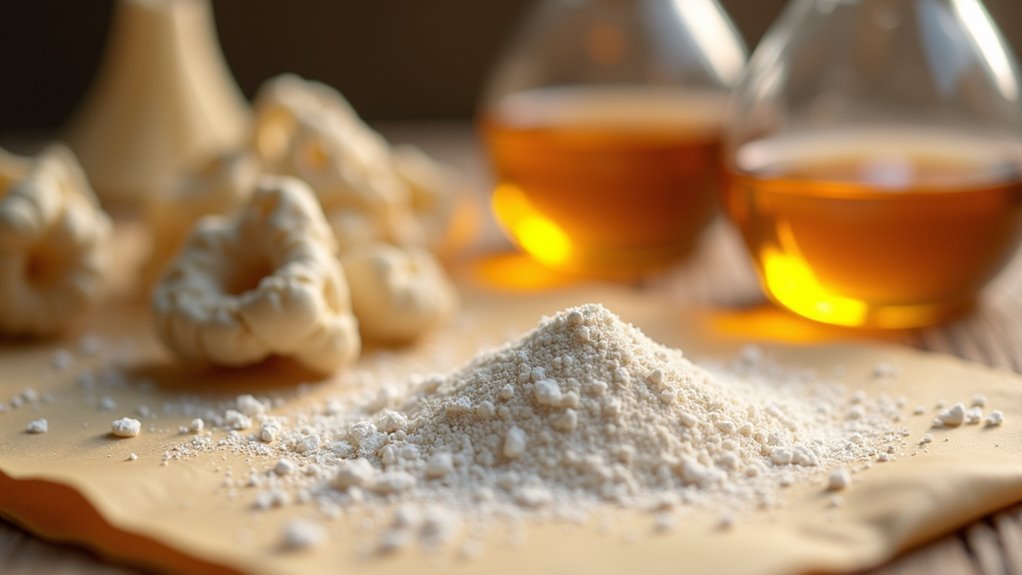
Since hydrolyzed collagen undergoes enzymatic breakdown into smaller peptides, your body can absorb and utilize it more efficiently than whole collagen proteins. This enhanced bioavailability makes hydrolyzed collagen particularly appealing for those seeking skin health improvements.
Research suggests hydrolyzed collagen may boost skin hydration and elasticity, though results aren’t universally accepted by regulatory authorities.
Studies indicate hydrolyzed collagen supplements may enhance skin moisture and firmness, but regulatory agencies question the evidence quality.
One notable clinical trial showed young men increased collagen production after consuming 30 grams of hydrolyzed collagen with vitamin C before exercise, highlighting potential synergy between these nutrients.
However, the European Food Safety Authority hasn’t approved health claims due to insufficient high-quality evidence.
You’ll need consistency if you’re considering supplementation, as individual responses vary considerably. Remember that while promising research exists, regulatory bodies remain cautious about definitive health claims.
Exercise-Enhanced Collagen Synthesis for Joint Repair
You can maximize your collagen synthesis by timing your exercise strategically with supplement intake.
Research shows that consuming hydrolyzed collagen with vitamin C before your workout enhances collagen production in tendons and joints.
However, your age considerably impacts this response, with younger adults experiencing greater benefits than middle-aged individuals.
Exercise Timing Matters
When you consume hydrolyzed collagen with vitamin C before exercising, you’re setting up your body for enhanced collagen synthesis that can greatly boost joint repair.
The timing of your supplementation matters considerably—research shows young men produced more collagen when they supplemented before physical activity compared to those who didn’t.
Your age and sex influence how effectively you’ll respond to this strategy, with younger individuals typically experiencing greater increases in collagen synthesis post-exercise.
Since exercise naturally stimulates collagen regeneration in tendons, combining it with pre-workout supplementation amplifies the healing process for your joints and connective tissues.
For ideal results, time your collagen intake to coincide with exercise sessions, especially if you’re recovering from joint injuries or engaging in intense physical activity.
Age-Related Collagen Response
As you age, your body’s ability to synthesize collagen in response to exercise and supplementation gradually diminishes, making strategic timing even more critical for joint repair. Middle-aged individuals show reduced collagen production compared to younger participants, highlighting how aging affects connective tissue regeneration efficiency.
| Age Group | Collagen Response | Hormonal Factor | Strategy |
|---|---|---|---|
| Young Adults | High synthesis rates | Ideal hormone levels | Standard supplementation |
| Middle-aged Men | Moderate response | Declining testosterone | Increased dosage timing |
| Pre-menopausal Women | Enhanced production | Estrogen support | Maintain regular exercise |
| Post-menopausal Women | Notably reduced | Estrogen decline | Combined hormone consideration |
Regular physical activity remains essential for combating age-related degeneration, though you’ll need to adjust your approach and expectations as collagen synthesis naturally decreases with time.
Vitamin C and Collagen: Essential Partnership for Healing

While collagen supplements have gained popularity for their healing benefits, they can’t reach their full potential without their essential partner: vitamin C. This crucial nutrient acts as a cofactor for enzymes that stabilize and cross-link collagen molecules, creating stronger structural integrity.
Without adequate vitamin C, your body can’t form collagen properly, leading to weakened connective tissues and impaired healing.
The beneficial effects become evident when you combine both nutrients strategically. Research shows that taking hydrolyzed collagen with vitamin C before exercise notably increases collagen production.
You’ll maximize these effects by including vitamin C-rich foods like citrus fruits, strawberries, and bell peppers in your diet. This partnership optimizes skin hydration, elasticity, and overall healing capacity, making your collagen supplementation far more effective.
Animal Source Selection for Optimal Cartilage Benefits
Although all collagen supplements can support healing, the animal source you choose greatly impacts your cartilage health outcomes.
Chicken cartilage provides concentrated type II collagen made specifically for cartilage repair, making it your best choice for joint restoration.
Fish collagen offers superior bioavailability and anti-inflammatory peptides that actively support the main component of cartilage structure.
Bovine sources deliver versatile type I and III collagen, strengthening both cartilage and surrounding tissues effectively.
Pork-derived collagen supplies unique amino acids that boost your body’s natural collagen synthesis.
Don’t overlook bone broth as a food rich in gelatin and essential nutrients.
This traditional remedy extracted from animal bones provides thorough joint support while delivering the building blocks your cartilage needs for ideal healing and regeneration.
Dosage and Timing Strategies for Maximum Absorption
You’ll need to nail down the right dosage and timing to get the most from your collagen supplements.
Taking 4-10 grams daily with food boosts absorption, while consuming hydrolyzed collagen 30 minutes before workouts can enhance synthesis when paired with vitamin C.
Your timing strategy should focus on consistency and aligning intake with physical activity periods for maximum healing benefits.
Optimal Daily Dosage Ranges
Three key factors determine how effectively your body uses collagen supplements: dosage amount, timing, and consistency. Your ideal daily dosage depends on your specific health goals and age. For general wellness, you’ll want 4-10 grams of glycine daily, while targeting skin and joint health requires 10-30 grams of collagen hydrolysate.
| Purpose | Daily Dosage |
|---|---|
| General wellness | 4-10 grams glycine |
| Skin/joint health | 10-30 grams collagen |
| Aging support | Higher end ranges |
Taking your supplement with food enhances absorption since it improves how your body processes this protein in the body. You’ll see better results with consistent daily intake rather than sporadic use. Consider timing your dose before exercise to maximize collagen synthesis in tendons and connective tissues.
Best Timing Methods
Beyond determining your proper dosage amount, the timing of your collagen intake can greatly impact how well your body absorbs and utilizes these supplements.
The best timing methods involve taking collagen on an empty stomach to prevent competition with other proteins during absorption. You’ll maximize benefits by consuming your supplements with vitamin C, particularly before exercise sessions to enhance synthesis.
Evening intake aligns perfectly with your body’s natural repair processes during sleep, when collagen production naturally peaks.
For sustained results, maintain consistent daily consumption over extended periods rather than expecting immediate effects.
Combining collagen supplements with foods rich in glycine and other amino acids throughout your day further supports ideal absorption and cartilage healing potential.
Enhanced Absorption Techniques
While proper dosage forms the foundation of effective supplementation, optimizing absorption techniques can dramatically amplify your collagen’s healing potential.
You’ll want to focus on strategic methods that enhance your body’s ability to utilize these essential amino acids effectively.
Enhanced absorption techniques center on timing and combination strategies:
- Pair with vitamin C-rich foods – Citrus fruits, berries, or bell peppers boost collagen synthesis and stability
- Take with meals – Food presence supports digestive processes and improves amino acid utilization
- Time around workouts – Post-exercise consumption stimulates collagen regeneration in tendons and connective tissues
Choose hydrolyzed collagen supplements whenever possible, as they’re broken down into smaller peptides for superior absorption.
This preparation method guarantees your body can efficiently process and distribute the amino acids where healing’s needed most.
Traditional Cooking Methods That Preserve Healing Properties
When you turn to time-honored cooking techniques, you’ll release collagen’s full healing potential through methods that have nourished communities for generations. Traditional cooking methods like slow simmering transform bones and cartilage into nutrient-dense broths rich in collagen and glycine.
| Method | Time Required | Key Benefits |
|---|---|---|
| Slow Simmering | 12-24 hours | Maximum collagen extraction |
| Pressure Cooking | 2-4 hours | Preserved nutrients, reduced time |
| Acid Addition | Throughout cooking | Enhanced tissue breakdown |
| Whole Animal Use | Varies | Balanced glycine intake |
You’ll maximize extraction by adding vinegar or lemon juice, which breaks down connective tissues more effectively. Pressure cooking offers a modern alternative while preserving essential amino acids. Using whole animals—including skin, organs, and bones—ensures you’re getting the complete nutritional profile that modern diets often miss.
Lifestyle Factors That Support Natural Cartilage Regeneration
Since your body’s cartilage regeneration depends heavily on consistent daily habits, you’ll need to focus on specific lifestyle factors that actively support this natural healing process.
Regular exercise stimulates collagen regeneration in your tendons while enhancing overall joint health. You’ll want to maintain proper form during physical activities to protect your cartilage from excessive wear. Weight loss can greatly reduce stress on your joints, promoting natural healing.
Key lifestyle factors include:
- Balanced nutrition – Consume glycine-rich foods like bone broth and organ meats to support collagen synthesis
- Adequate hydration – Maintain cartilage elasticity and facilitate nutrient transport to cartilage cells
- Consistent sleep patterns – Enable recovery processes essential for collagen and cartilage repair
Maintaining healthy weight reduces cartilage damage risk while supporting your body’s natural regeneration capabilities.
Frequently Asked Questions
Does Collagen Really Repair Cartilage?
You’ll find mixed evidence on collagen’s cartilage repair abilities. While some studies show promising results for joint health and pain reduction, there isn’t enough high-quality research to definitively prove cartilage regeneration occurs.
What Does the Mayo Clinic Say About Collagen?
You’ll find the Mayo Clinic recognizes collagen’s importance for skin and joints but emphasizes limited clinical evidence supporting supplements. They recommend consulting healthcare professionals and maintaining protein-rich diets instead.
Is There a Downside to Taking Collagen?
You’ll face potential risks including kidney strain from excess protein, environmental concerns from animal sourcing, uncertain effectiveness due to digestive breakdown, and possible contamination issues, especially if you’ve got existing health conditions.
What Are the First Signs That Collagen Is Working?
You’ll notice improved skin hydration and elasticity within four to eight weeks. Your nails become stronger with less breakage, while joint comfort increases and exercise recovery improves, signaling collagen’s effectiveness.


