

You’ll heal joint cartilage most effectively by pressure cooking collagen-rich bones like chicken feet, knuckle bones, and beef joints at 10-12 psi for 90 minutes to 3 hours. This high-pressure environment breaks down connective tissue into bioavailable gelatin containing glycine and proline—essential amino acids that stimulate cartilage regeneration and reduce inflammation. Your broth should gel when cooled, indicating therapeutic collagen levels that support proteoglycan synthesis and joint function. Understanding ideal techniques and nutrient combinations maximizes your cartilage repair potential.
How Pressure Cooking Extracts Maximum Collagen From Bones
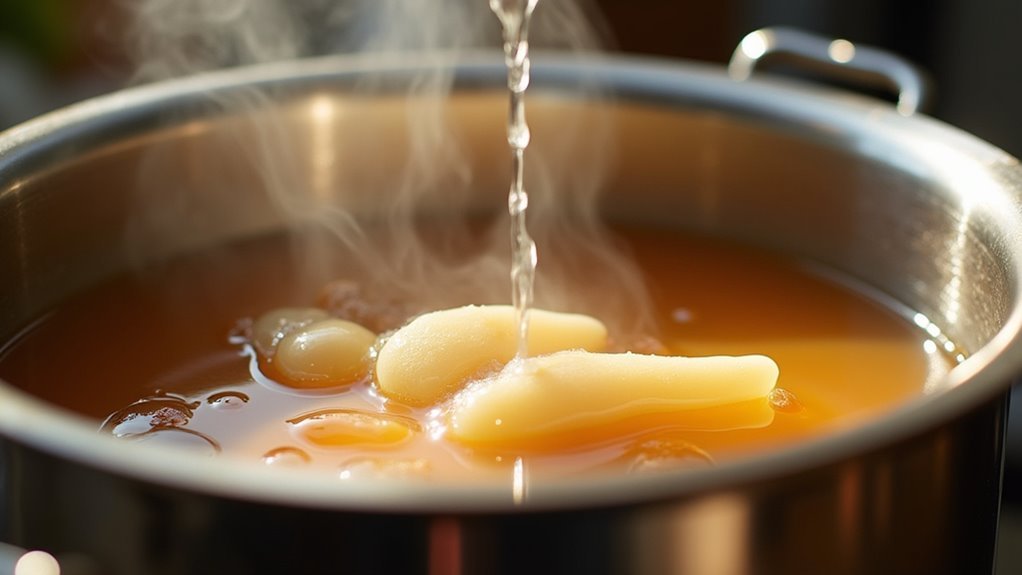
When you’re seeking maximum collagen extraction from bones, pressure cooking delivers unmatched results through its combination of high heat and intense pressure.
This powerful method breaks down collagen and gelatin from joints and cartilage more effectively than traditional cooking methods. You’ll enhance your nutrient profile by adding vinegar during the process, which extracts essential minerals alongside the collagen.
The sealed environment preserves volatile compounds while preventing nutrient loss, creating a richer, more potent broth.
You should cook for 90 minutes to 3 hours to guarantee complete collagen release from bones. When your finished broth gels upon cooling, you’ll know you’ve successfully extracted the maximum healing benefits for your joint health.
The Science Behind Collagen and Joint Cartilage Regeneration
Your pressure-cooked bone broth doesn’t just taste good—it delivers powerful compounds that actively rebuild your joint cartilage at the cellular level.
Beyond flavor, pressure-cooked bone broth provides therapeutic compounds that actively regenerate joint cartilage through targeted cellular repair mechanisms.
When you consume collagen-rich bone broth, you’re providing your body with essential amino acids like glycine and proline that directly support cartilage regeneration.
Here’s how collagen works to restore your joints:
- Stimulates proteoglycan synthesis – These molecules maintain cartilage structure and cushioning
- Reduces inflammation – Decreases joint pain while promoting healing
- Enhances mobility – Regular consumption improves overall joint function
Studies show that dietary collagen supplementation notably reduces osteoarthritis symptoms.
The amino acids from pressure-cooked bones become building blocks for new cartilage formation, accelerating repair processes and strengthening joint integrity for long-term health benefits.
Best Bone Types for Cartilage-Healing Collagen Content
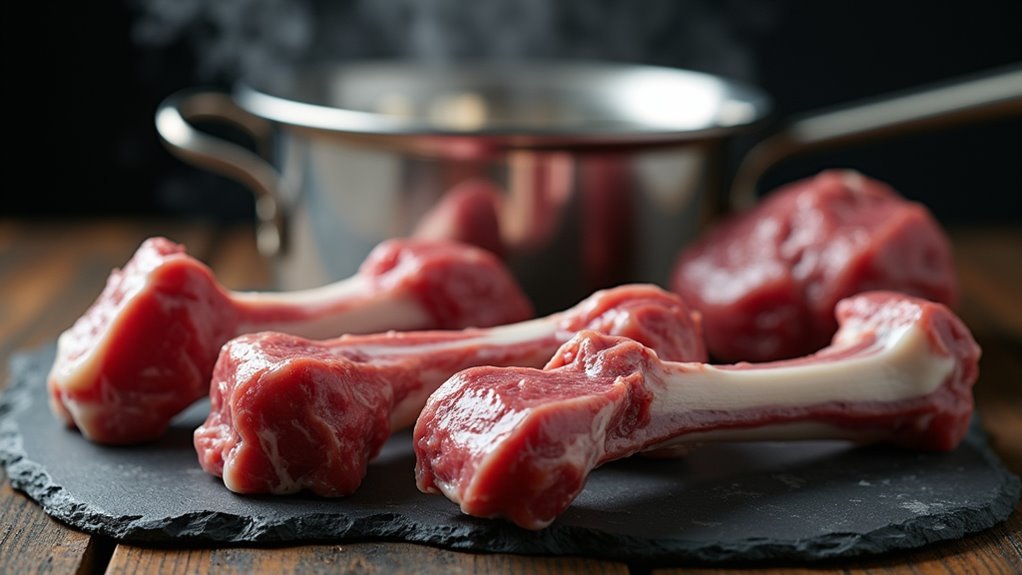
You’ll find that chicken feet and knuckle bones deliver the highest concentrations of cartilage-healing collagen for your pressure cooker broth.
While marrow bones add rich flavor and complementary nutrients, joint-specific bones like chicken necks and backs contain the most connective tissue your cartilage needs.
Combining different bone types from both beef and chicken maximizes the variety of collagen and joint-supporting compounds you’ll extract during cooking.
Joint Bones Versus Marrow
While both joint bones and marrow bones offer nutritional benefits, they serve distinctly different purposes when you’re making collagen-rich broth for cartilage health.
Joint bones contain the highest concentration of collagen and gelatin essential for rebuilding damaged cartilage tissue. In contrast, marrow bones primarily provide rich fat and flavor without delivering the therapeutic collagen your joints need.
When you’re targeting cartilage repair, prioritize joint bones from knuckles and feet over marrow bones. Adding chicken feet to your broth further amplifies collagen content, creating a gel-like consistency when cooled.
Key differences for ideal healing:
- Joint bones deliver therapeutic collagen that directly supports cartilage regeneration
- Marrow bones provide taste enhancement but limited cartilage-healing compounds
- Combination approach maximizes both flavor and joint-healing potential
Cartilage-Rich Chicken Parts
Chicken feet stand as the ultimate powerhouse for cartilage-healing collagen, containing more joint-supporting compounds per ounce than any other poultry part.
You’ll extract maximum gelatin from these cartilage-rich joints when pressure cooking your bone broth. Wings and necks deliver essential nutrients while creating that signature gelatinous texture that signals quality collagen content.
Don’t overlook chicken backs and carcasses—they’ll boost your broth’s flavor while adding valuable collagen that maintains joint integrity. The extracted collagen keeps your joints hydrated and elastic, potentially reducing pain and improving mobility.
You’ll maximize your broth’s nutrient profile by combining various chicken bones like drumsticks and wing tips. This strategic combination guarantees superior joint health benefits from every batch.
Optimal Pressure Cooking Times for Collagen Extraction
When extracting collagen from bones in a pressure cooker, timing becomes the essential factor that determines your broth’s nutritional potency and gelatin content.
You’ll need at least 90 minutes under high pressure to break down cartilage effectively, but 2-3 hours delivers peak results for maximum collagen extraction.
Your cooking time depends on your equipment and bone size:
- Instant Pot Users: Select the Soup/Broth setting and cook for 2-3 hours to extract maximum nutrients from connective tissues.
- Stovetop Pressure Cookers: Monitor carefully and adjust between 45 minutes to 2 hours based on desired broth intensity and bone density.
- Natural Release Method: Allow 20-30 minutes of natural release post-cooking to enhance flavor while continuing residual collagen extraction for richer, more gelatinous broth.
Key Nutrients Beyond Collagen That Support Joint Health

Although collagen forms the foundation of joint health, your body requires a symphony of additional nutrients to maintain ideal cartilage function and reduce inflammation.
Manganese supports connective tissue formation and you’ll find it in nuts, seeds, and whole grains. Omega-3 fatty acids from salmon and mackerel deliver powerful anti-inflammatory benefits that reduce joint stiffness.
Vitamin C fuels collagen synthesis, making guava, strawberries, and kiwi excellent choices for joint support. Sulfur from cruciferous vegetables, garlic, and eggs helps build cartilage structure.
Magnesium strengthens bone health while reducing muscle tension around joints – get yours from spinach, pumpkin seeds, and almonds.
These nutrients work synergistically with collagen to optimize your joint function.
Pressure Cooker Vs Traditional Methods for Nutrient Retention
Understanding these joint-supporting nutrients sets the stage for choosing the best cooking method to extract them from your ingredients.
When you’re making bone broth for collagen, your pressure cooker greatly outperforms traditional methods for nutrient retention.
Your pressure cooker’s sealed environment preserves volatile compounds that would normally escape during long stovetop simmering. You’ll extract more collagen from bones in just 1-3 hours compared to traditional methods requiring up to 24 hours.
The higher temperatures and pressures pull nutrients from cartilage more effectively while retaining vitamins and minerals.
Key advantages of pressure cooking for nutrient extraction:
- Faster collagen extraction – Higher pressure breaks down bone matrix more efficiently
- Better vitamin preservation – Reduced cooking time minimizes nutrient loss
- Enhanced flavor concentration – Sealed cooking prevents dilution and compound evaporation
Essential Ingredients to Maximize Collagen Potency
Since you’ve optimized your pressure cooking method, selecting the right ingredients becomes essential for maximizing your broth’s collagen content.
You’ll want to include chicken feet as your primary collagen-rich component, as they’re packed with gelatin and collagen compounds that dissolve under high pressure cooking.
Choose joints and bones from pastured or grass-fed animals to boost omega-3 fatty acids and overall nutritional value.
Pastured and grass-fed animal bones provide superior omega-3 fatty acids and enhanced nutritional density for therapeutic bone broth preparation.
Add two tablespoons of apple cider vinegar to help extract collagen and minerals from bones through its natural acidity.
Don’t forget aromatic vegetables like onions and garlic—they enhance flavor while contributing antioxidants that support joint health.
Cook everything under high pressure for at least two hours, allowing sufficient time for collagen-rich connective tissues to completely break down and infuse your healing broth.
Temperature and Pressure Requirements for Effective Collagen Release
You’ll need to set your pressure cooker to 15 psi to reach the critical 250°F temperature that effectively breaks down collagen into gelatin.
This ideal pressure setting guarantees you’re extracting maximum nutrients from bones while making them highly bioavailable for your joints.
The duration you maintain this heat directly impacts your broth’s final collagen concentration, with longer cooking times producing increasingly gelatinous results.
Optimal Pressure Settings
When extracting collagen for joint health benefits, your pressure cooker’s settings directly determine the quality and quantity of nutrients released from bones and connective tissues.
The ideal pressure settings for cooking bone broth require 10-12 psi, creating temperatures around 240°F (116°C). This precise range guarantees maximum collagen breakdown while preserving nutrient quality.
You’ll want to maintain these settings for 90 minutes to 3 hours, depending on bone density.
After cooking, use natural pressure release to maintain collagen integrity and achieve clearer broth.
Key pressure cooker guidelines:
- Set pressure to 10-12 psi for ideal collagen extraction without overcooking
- Cook for 90 minutes to 3 hours based on bone type and desired concentration
- Use natural release method to preserve nutrient structure and minimize particle dispersion
Heat Duration Impact
Although traditional simmering methods require 12-24 hours to extract meaningful collagen, pressure cooking dramatically accelerates this process through precise heat duration control.
You’ll achieve the best collagen extraction by cooking bone-rich ingredients for 90 minutes to 3 hours under pressure. This targeted heat duration effectively breaks down collagen into bioavailable gelatin that supports joint cartilage repair.
Your pressure cooker maintains temperatures between 240°F to 250°F, creating perfect conditions for collagen release without overcooking.
You’ll notice that collagen-rich bones like joints and feet release their beneficial compounds much faster than conventional methods. The controlled heat duration guarantees you’re getting quality bone broth packed with nutrients essential for joint health, while preventing the degradation that occurs with excessive cooking times.
Signs Your Bone Broth Contains Therapeutic Levels of Collagen
How can you tell if your pressure cooker bone broth contains the therapeutic collagen levels needed for joint health? Your broth should exhibit specific visual and textural characteristics that indicate successful collagen extraction from bones and cartilage.
When properly prepared, therapeutic bone broth will demonstrate these key indicators:
- Gel Formation – Your cooled broth should set into a firm, jiggly gel consistency, proving collagen has been extracted from joints and connective tissues.
- Thick, Glossy Texture – The liquid should appear rich and lustrous when heated, showcasing high collagen concentration for ideal health benefits.
- Melting Properties – Your gelled broth should completely liquefy when reheated, confirming the presence of therapeutic gelatin levels.
Regular consumption of this collagen-rich pressure cooker bone broth supports cartilage repair and joint function.
Daily Dosage Recommendations for Joint Cartilage Repair
Determining the right amount of collagen-rich bone broth for joint cartilage repair depends on achieving therapeutic dosage levels that research has validated. You’ll need 10-20 grams of collagen daily for ideal joint health benefits. Since one cup of quality bone broth provides approximately 10 grams of collagen, consuming 1-2 cups daily meets research-backed requirements for cartilage repair.
| Daily Dosage | Bone Broth Amount | Joint Health Benefit |
|---|---|---|
| 10-15 grams | 1-1.5 cups | Basic cartilage support |
| 15-20 grams | 1.5-2 cups | Enhanced repair function |
| 20+ grams | 2+ cups | Maximum therapeutic effect |
Consistency matters more than large amounts. You’ll see better cartilage repair results with regular daily dosage over several months rather than sporadic high intake.
Combining Bone Broth Collagen With Other Joint-Healing Nutrients
While bone broth collagen provides excellent joint support on its own, you’ll accelerate cartilage repair by strategically pairing it with complementary nutrients that enhance collagen synthesis and reduce inflammation.
Essential Nutrient Combinations for Maximum Joint Health:
- Vitamin C Partnership – Consume citrus fruits or bell peppers with your bone broth collagen to boost collagen synthesis and accelerate cartilage healing processes.
- Omega-3 Integration – Add fatty fish like salmon to reduce inflammation and improve cartilage lubrication when combined with collagen supplementation.
- Mineral Support System – Include magnesium-rich foods like spinach alongside sulfur-containing foods such as garlic to enhance calcium absorption and support collagen production for stronger joint structures.
These combinations create synergistic effects that maximize your body’s ability to repair and maintain healthy cartilage.
Frequently Asked Questions
Does Collagen Break Down in a Pressure Cooker?
You don’t need to worry about collagen breaking down in your pressure cooker. The high temperature and pressure actually transform collagen into gelatin without degrading its nutritional value or beneficial properties.
Is Bone Broth Good for Cartilage Repair?
You’ll benefit from bone broth’s collagen and amino acids like glycine for cartilage repair. It’s nutrient-dense with minerals that support joint health and may reduce inflammation associated with osteoarthritis.
Is Pressure Cooker Bone Broth as Healthy?
You’ll find pressure cooker bone broth equally healthy as traditional methods. It’s actually more nutrient-dense since high pressure efficiently extracts collagen, minerals, and amino acids while retaining maximum nutritional benefits.
What Should You Not Put in a Pressure Cooker?
You shouldn’t put dairy products, foaming foods like split peas, high-sugar items, or delicate vegetables in your pressure cooker. Don’t overfill it beyond the maximum line either.


