

Collagen broth repairs your shoulder cartilage by providing hydrolyzed type II collagen that breaks down into essential amino acids like glycine and proline, which your body uses to rebuild damaged cartilage tissue. The broth’s glucosamine and chondroitin enhance synovial fluid production while reducing joint friction and inflammation. You’ll need 2.5-15 grams daily of hydrolyzed collagen, with initial mobility improvements appearing within 2-4 weeks and significant pain reduction typically occurring around three months of consistent supplementation.
Understanding Shoulder Cartilage Structure and Function

Your shoulder’s articular cartilage acts as nature’s shock absorber, covering bone endpoints within the joint to create an incredibly smooth surface that allows your arm to move freely without friction.
This remarkable tissue consists primarily of water, collagen fibers, and proteoglycans working together to maintain joint stability during physical activities.
Type II collagen provides the structural backbone of your shoulder cartilage, delivering essential resilience and support that keeps your joint functioning properly.
The surrounding synovial membrane secretes lubricating fluid that nourishes your cartilage and enhances its longevity.
When your shoulder cartilage becomes damaged, you’ll experience conditions like osteoarthritis, resulting in pain, inflammation, and restricted mobility.
Understanding this complex structure helps you appreciate why maintaining healthy cartilage is vital for peak shoulder function.
The Science Behind Collagen Broth’s Healing Properties
When scientists examine collagen broth at the molecular level, they’ve discovered it’s packed with hydrolyzed collagen that breaks down into amino acids your body can readily absorb and utilize for cartilage repair.
Specifically, glycine and proline serve as building blocks for collagen synthesis in your connective tissues.
The broth’s glucosamine and chondroitin enhance synovial fluid production, lubricating your joints and reducing friction.
The broth’s glucosamine and chondroitin work together to boost synovial fluid production, naturally lubricating joints and minimizing painful friction during movement.
Anti-inflammatory compounds within the broth create an ideal healing environment by reducing swelling and pain in your shoulder joints.
Research shows these amino acids stimulate chondrocyte activity—the cells responsible for maintaining cartilage health.
Regular consumption improves joint function and reduces osteoarthritis pain, potentially decreasing your need for surgical intervention while promoting natural regeneration.
Key Nutrients in Collagen Broth That Support Cartilage Repair
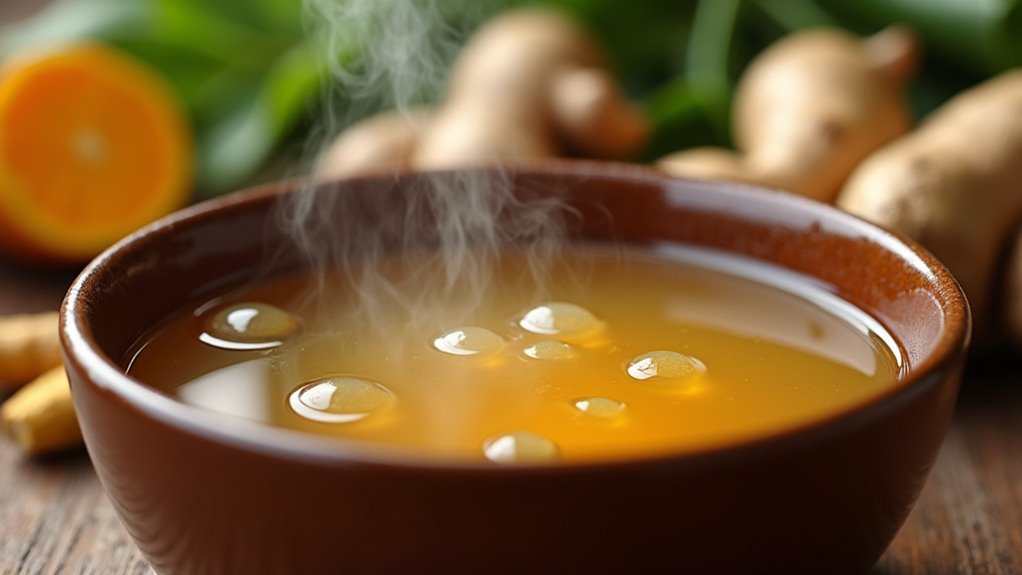
Understanding how collagen broth works at the cellular level reveals why specific nutrients make it so effective for shoulder cartilage repair.
You’re getting hydrolyzed collagen that delivers essential amino acids directly to cartilage cells, fueling their regeneration process. The glycine and proline in collagen broth create the building blocks your body needs to form new collagen fibers, maintaining cartilage structure.
You’ll also receive glucosamine and chondroitin sulfate, which reduce joint pain while supporting overall cartilage health.
The calcium and magnesium boost bone density around your shoulder joint, creating a stronger foundation for healing. Additionally, hyaluronic acid helps your cartilage retain moisture, improving its flexibility and ability to withstand daily stress and movement.
How Type II Collagen Specifically Targets Joint Cartilage
Ninety percent of your shoulder cartilage consists of type II collagen, making it the most essential structural protein for maintaining joint integrity and function. When you consume collagen broth containing hydrolyzed type II collagen (UC-II), you’re specifically targeting your cartilage tissue’s repair mechanisms.
Unlike other collagen types, type II collagen directly supports your hyaline cartilage’s extracellular matrix. This targeted approach stimulates your immune response and promotes cartilage regeneration in your shoulder joints.
| Benefit | Mechanism | Result |
|---|---|---|
| Pain Reduction | Immune modulation | Decreased inflammation |
| Cartilage Repair | Matrix regeneration | Improved tissue integrity |
| Joint Mobility | Hyaline restoration | Enhanced function |
Research shows you’ll need approximately 40mg daily of UC-II for ideal results, making it more effective than traditional supplements for cartilage tissue repair.
The Role of Amino Acids in Shoulder Cartilage Regeneration

While type II collagen provides the structural framework for cartilage repair, the individual amino acids within collagen broth serve as the fundamental building blocks that drive your shoulder’s regenerative processes.
Glycine and proline are particularly important, as they’re essential components of collagen synthesis in shoulder cartilage. When you consume collagen broth, these amino acids directly support new cartilage tissue formation in your joint.
Glycine and proline from collagen broth directly fuel your shoulder’s cartilage repair by providing essential amino acid building blocks.
Research shows that collagen peptides stimulate production of cartilage-specific proteins, accelerating your shoulder’s repair mechanisms.
These amino acids also promote anti-inflammatory responses in joint tissues, which is essential for effective healing.
Regular collagen broth consumption can improve your shoulder’s functionality while reducing pain from cartilage injuries.
Glucosamine and Chondroitin Content in Homemade Bone Broth
When you simmer bones for 20-24 hours, you’re extracting valuable glucosamine from cartilage and connective tissues while pulling chondroitin from the bone matrix itself.
Your homemade broth concentrates these compounds far beyond what you’ll find in most commercial supplements, creating a potent source of joint-supporting nutrients.
You can maximize these levels by using a variety of joint-rich bones like knuckle bones, marrow bones, and chicken feet in your brewing process.
Natural Glucosamine Sources
Since homemade bone broth extracts glucosamine directly from the cartilage and connective tissues of bones during cooking, you’re getting this essential compound in its most natural form.
Unlike synthetic supplements, this natural glucosamine comes with a complete matrix of supporting nutrients that work synergistically for cartilage repair.
When you use chicken or beef bones with high cartilage content, you’re maximizing your glucosamine intake.
The slow cooking process breaks down these tissues, releasing bioavailable compounds your body can readily absorb.
By cooking your broth for 20-24 hours, you’ll extract ideal levels of glucosamine along with chondroitin sulfate.
This natural approach provides your shoulder joints with the building blocks needed for cartilage maintenance and regeneration without artificial additives.
Chondroitin Extraction Process
Beyond glucosamine extraction, your homemade bone broth simultaneously pulls chondroitin sulfate from cartilage and connective tissues through the same slow-cooking process.
This 20-24 hour simmering period breaks down cartilaginous structures, releasing valuable compounds that support cartilage health directly into your broth.
To optimize chondroitin sulfate extraction, you’ll want to:
- Select cartilage-rich bones like chicken backs, beef knuckle bones, or fish heads
- Add apple cider vinegar during cooking to break down collagen matrices more effectively
- Maintain consistent low heat throughout the extended cooking period
- Include joint-heavy cuts such as chicken feet or oxtail for maximum yield
The resulting broth contains varying concentrations of chondroitin depending on your bone selection and preparation method, creating a natural supplement for shoulder joint repair.
Concentration Levels Comparison
Three key factors determine the glucosamine and chondroitin concentrations you’ll extract from your homemade bone broth: bone selection, cooking duration, and preparation technique.
You’ll typically achieve 4-10 grams of glucosamine per liter when using chicken or beef bones, while chondroitin sulfate levels range from 0.5 to 1.5 grams per liter.
The bone-to-water ratio notably impacts these concentrations—you’ll extract more nutrients with higher bone density.
Longer simmering times increase nutrient extraction, maximizing the compounds essential for joint cartilage repair.
Adding vinegar during cooking enhances extraction efficiency, pulling more glucosamine and chondroitin from the bone matrix.
These varying concentrations mean you can optimize your bone broth recipe to support shoulder cartilage healing through strategic ingredient choices and cooking methods.
Anti-Inflammatory Compounds That Reduce Shoulder Joint Pain
When you consume collagen broth regularly, you’re introducing powerful anti-inflammatory compounds directly into your system that can greatly reduce shoulder joint pain.
These compounds work synergistically to combat inflammation and promote healing in your shoulder joints.
The key anti-inflammatory elements in collagen broth include:
- Glycine and proline – amino acids that actively reduce inflammatory markers throughout your body
- Gelatin compounds – support cartilage regeneration while decreasing joint stiffness and discomfort
- Omega-3 fatty acids – provide additional anti-inflammatory benefits that target shoulder joint inflammation
- Antioxidants – neutralize free radicals that contribute to joint pain and tissue damage
Studies show that these compounds can markedly decrease inflammation levels, improving your joint mobility and reducing the chronic pain associated with osteoarthritis and other inflammatory conditions affecting your shoulders.
Optimal Preparation Methods for Maximum Nutrient Extraction
Although collagen broth’s anti-inflammatory benefits are impressive, you’ll only receive maximum therapeutic value if you prepare it correctly to extract the highest concentration of nutrients from the bones.
You’ll need to simmer your broth for 20-24 hours, allowing collagen and amino acids to properly leach into the liquid. Add apple cider vinegar or another acid during cooking to draw minerals and collagen from the bone structure into your broth.
Choose high-quality, grass-fed bones to guarantee you’re getting beneficial nutrients without harmful additives.
After cooking, strain the broth to remove impurities and create a clear liquid. Cool it completely, then remove the fat layer that forms on top to reduce saturated fat while preserving the nutrient-rich gelatin beneath.
Daily Dosage Recommendations for Cartilage Repair Benefits
You’ll need to determine the right amount of collagen broth to consume daily for substantial cartilage repair benefits.
The timing of your intake and how frequently you consume it throughout the day can greatly impact absorption and effectiveness.
Getting these dosage factors right guarantees you’re maximizing the therapeutic potential for your shoulder cartilage health.
Optimal Collagen Amounts
The most effective collagen dosage for shoulder cartilage repair depends on the specific type of collagen you’re taking. Understanding ideal amounts guarantees you’re maximizing your investment in cartilage repair.
Here’s your dosage guide for different collagen supplements:
- Hydrolyzed collagen: Take 2.5-15 grams daily to support thorough cartilage repair and joint health.
- Undenatured type II collagen (UC-II): Use approximately 40 mg daily for reduced pain and improved joint function.
- Quality sourcing: Choose grass-fed animal-derived products for maximum absorption and effectiveness.
- Timeline commitment: Maintain consistent supplementation for at least three months to see noticeable improvements in cartilage density.
Since your body’s natural collagen production declines with age, long-term supplementation becomes increasingly important for maintaining shoulder cartilage integrity and preventing further deterioration.
Timing and Frequency
When timing your collagen broth consumption for shoulder cartilage repair, you’ll want to divide your daily intake into 2-4 cups spread throughout the day rather than consuming it all at once. This approach allows your body to continuously absorb the amino acids needed for cartilage regeneration.
You’ll see better results by maintaining consistent daily consumption over several months rather than sporadic intake. Consider drinking one cup with breakfast, another mid-afternoon, and a third with dinner to optimize absorption patterns.
Since collagen production naturally declines with age, establishing a regular routine becomes essential for joint health maintenance.
Whether you’re targeting specific shoulder issues or supporting overall cartilage repair, consistency matters more than perfect timing. Your body’s healing processes work best with steady, sustained collagen broth intake.
Timeline for Visible Improvements in Shoulder Mobility
Although individual results vary, you’ll typically begin noticing subtle improvements in shoulder mobility within 2 to 4 weeks of consistent collagen broth consumption.
As collagen integrates into your joint structure, cartilage begins its regeneration process.
Here’s what you can expect during your collagen supplementation journey:
- 2-4 weeks: Initial mobility improvements as collagen starts integrating into joint structure
- 6-12 weeks: Increased flexibility and decreased stiffness as cartilage regeneration accelerates
- 3 months: Significant enhancements in joint function and pain reduction become apparent
- 6 months: Ideal results in mobility and function with cumulative benefits most pronounced
For best outcomes, commit to at least six months of regular collagen broth intake.
Research shows osteoarthritis patients experience the most significant improvements around the three-month mark, with continued benefits developing through consistent long-term use.
Combining Collagen Broth With Other Cartilage-Supporting Foods
You’ll maximize collagen broth’s cartilage-repairing benefits by strategically combining it with specific nutrient-dense foods that work together to enhance absorption and effectiveness.
Certain food pairings create synergistic effects where the combined nutrients provide greater cartilage support than each food would deliver individually.
Smart combinations also target inflammation reduction while simultaneously providing the building blocks your shoulder cartilage needs for ideal repair and maintenance.
Synergistic Nutrient Combinations
While collagen broth provides essential building blocks for cartilage repair, combining it with specific nutrients creates powerful synergistic effects that amplify its healing potential for shoulder joints.
Strategic nutrient pairing maximizes your body’s ability to synthesize and utilize collagen effectively:
- Vitamin C Partnership – Add oranges or blueberries to enhance collagen synthesis and stabilize cartilage structure.
- Magnesium Activation – Include spinach and pumpkin seeds to support enzymatic functions that activate vitamin D for improved collagen utilization.
- Anti-inflammatory Boost – Pair with omega-3 rich fatty fish or walnuts to reduce joint inflammation while supporting cartilage repair.
- Herbal Enhancement – Combine with turmeric or ginger for anti-inflammatory properties that create synergistic healing effects.
Incorporating dark leafy green vegetables provides vitamin K, supporting calcium regulation and maintaining cartilage integrity alongside your collagen broth consumption.
Anti-Inflammatory Food Pairings
How can you amplify collagen broth’s cartilage-healing power beyond its natural benefits? You’ll maximize results by pairing it with anti-inflammatory foods that target shoulder joint health specifically.
Add turmeric or ginger to your collagen broth for enhanced anti-inflammatory properties. These spices contain natural compounds that reduce joint pain and swelling while supporting cartilage repair.
You can also incorporate dark leafy greens rich in Vitamin K, which promotes calcium retention and reduces joint inflammation.
Serve your collagen broth alongside fatty fish like salmon to gain omega-3 fatty acids that combat joint pain.
Include antioxidant-rich blueberries and oranges to stabilize cartilage through essential vitamins that fight inflammation.
Finally, pair with amino acid-rich legumes to support cartilage rebuilding while maintaining healthy weight, reducing pressure on your shoulder joints.
Clinical Evidence Supporting Collagen’s Effectiveness for Joint Health
Because joint health directly impacts your daily mobility and quality of life, researchers have conducted extensive clinical trials to evaluate collagen’s therapeutic potential. The evidence consistently demonstrates that collagen supplementation delivers measurable benefits for joint function and pain reduction.
Clinical research reveals four key findings supporting collagen’s effectiveness:
- Hydrolyzed collagen considerably reduces osteoarthritis pain while improving joint function in affected individuals.
- Undenatured type II collagen (UC-II) provides superior pain relief compared to glucosamine and placebo treatments.
- Analysis of 41 studies confirms that collagen supplementation enhances cartilage repair and alleviates joint degeneration symptoms.
- Collagen intake increases bone mineral density, particularly benefiting postmenopausal women’s joint stability.
These findings establish collagen as a scientifically-backed intervention for maintaining healthy joints and supporting cartilage repair.
Frequently Asked Questions
Can You Rebuild Cartilage With Collagen?
You can’t completely rebuild cartilage with collagen, but you’ll support cartilage repair and regeneration. Collagen supplements provide essential amino acids that stimulate cartilage matrix production and reduce joint inflammation effectively.
How Do You Regenerate Shoulder Cartilage?
You’ll regenerate shoulder cartilage through physical therapy, anti-inflammatory foods, adequate sleep, and avoiding repetitive stress. Regular exercise strengthens surrounding muscles while proper nutrition supports tissue repair and reduces cartilage breakdown.
Can Bone Broth Rebuild Cartilage?
You can’t fully rebuild cartilage with bone broth alone, but you’ll support cartilage repair through its collagen, amino acids, and nutrients that enhance your body’s natural healing processes and reduce joint inflammation.
Is Collagen Good for Shoulder Injury?
Yes, collagen’s excellent for your shoulder injury. It’ll help rebuild damaged cartilage, reduce pain and stiffness, and improve joint function. You’ll benefit from type II collagen specifically since it supports cartilage health and recovery.


