
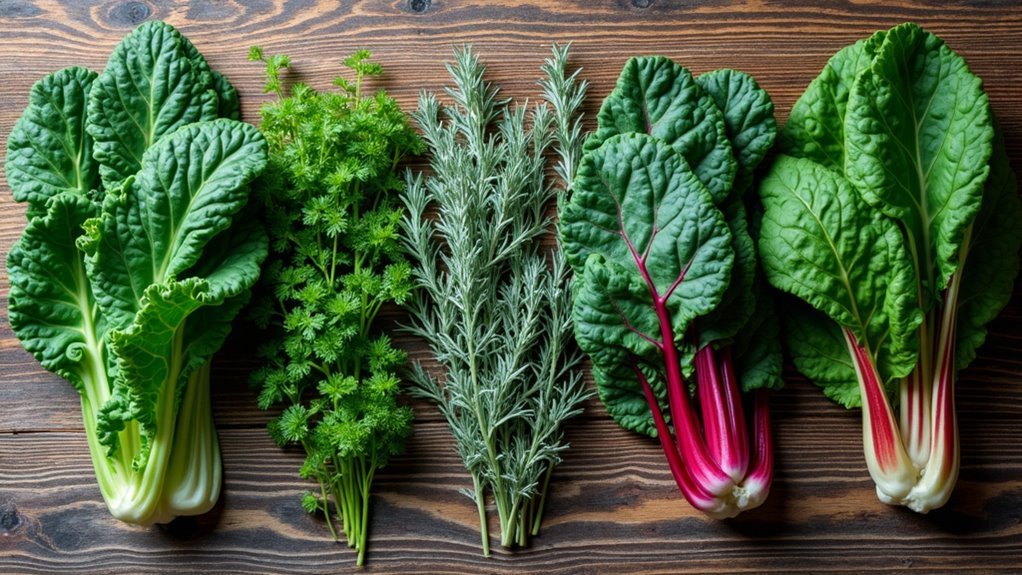
You can harness nature’s pharmacy through five powerful leafy greens that offer remarkable healing properties. Kale delivers potent antioxidants like lutein and beta-carotene to combat disease and inflammation. Spinach provides essential iron for blood health while supporting cellular function with folate. Swiss chard strengthens bones with magnesium and vitamin K. Watercress contains cancer-fighting glucosinolates that protect DNA. Collard greens supply calcium and folate for heart and brain health. These therapeutic vegetables reveal extensive wellness benefits.
Kale: The Antioxidant Powerhouse for Disease Prevention

Kale stands out as one of nature’s most nutrient-dense leafy greens, packed with powerful antioxidants that can help shield your body from disease.
This powerhouse leafy green delivers exceptional antioxidant protection, making it one of nature’s most effective disease-fighting vegetables.
You’ll get exceptional levels of lutein and beta-carotene, which combat oxidative stress and support disease prevention. Just one cup provides 68% of your daily vitamin K needs, essential for blood clotting and bone health.
The anti-inflammatory properties in kale actively reduce your risk of chronic diseases like heart disease and cancer.
You’ll also benefit from improved digestive health thanks to its high fiber content, which promotes regularity and ideal gut function.
When preparing kale, steaming guarantees nutrient preservation while maintaining its therapeutic benefits. This versatile green makes a healthy addition to countless dishes.
Spinach: Iron-Rich Green for Blood Health and Cellular Function
Spinach delivers exceptional iron content that’s essential for maintaining healthy blood and ideal cellular function throughout your body. This iron-rich green provides approximately 15% of your daily iron needs per cooked cup, directly supporting red blood cell production and oxygen transport.
You’ll also benefit from spinach’s impressive array of vitamins A, C, and K, which strengthen your immune function, skin health, and bones.
The folate in spinach enhances cellular function and DNA synthesis, making it particularly valuable during pregnancy. Antioxidants like lutein and zeaxanthin protect your cells from oxidative stress while supporting eye health.
Spinach’s exceptional nutrient density helps combat fatigue and boost energy levels, making this therapeutic green a powerful addition to your daily diet.
Swiss Chard: Magnesium and Vitamin K for Bone Strength
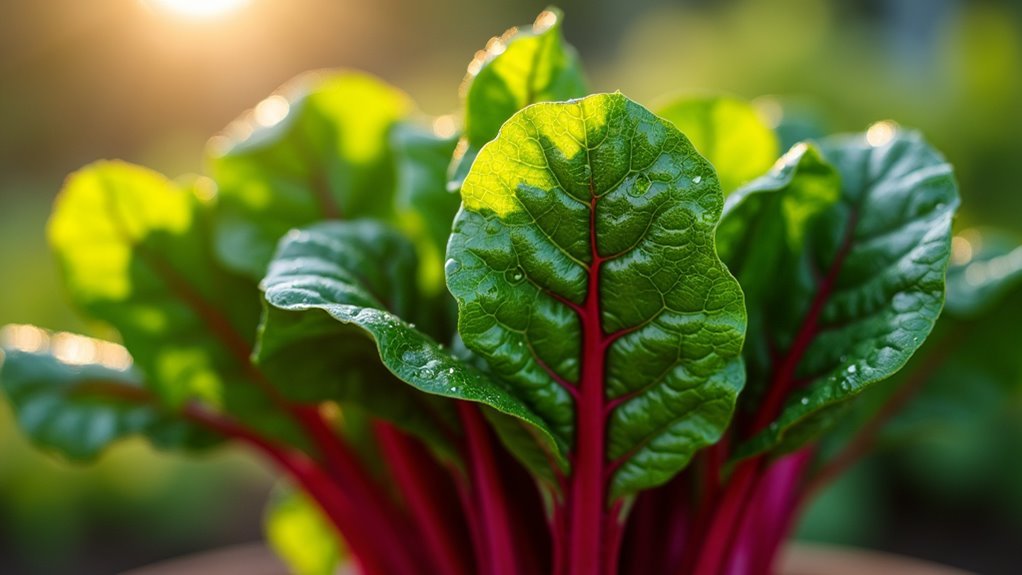
Swiss chard stands out as a powerhouse for bone health, delivering impressive amounts of magnesium and vitamin K that work together to strengthen your skeletal system. You’ll get 36% of your daily vitamin K needs from just one cup of cooked Swiss chard, making it vital for bone metabolism and osteoporosis prevention.
| Nutrient | Amount per Cup | Bone Health Benefit |
|---|---|---|
| Magnesium | High content | Bone formation support |
| Vitamin K | 36% DV | Calcium regulation |
| Combined minerals | ideal levels | Fracture prevention |
| Antioxidants | Rich source | Inflammation reduction |
| Fiber | Significant amount | Nutrient absorption enhancement |
The magnesium content supports muscle function while improving bone density. For postmenopausal women facing increased bone density loss risks, incorporating this therapeutic leafy vegetable into your diet provides essential protection against osteoporosis-related complications.
Watercress: Cancer-Fighting Compounds and Immune Support
While most leafy greens offer impressive nutritional benefits, watercress delivers one of nature’s most potent combinations of cancer-fighting compounds and immune-boosting nutrients.
You’ll find watercress packed with glucosinolates, powerful compounds that inhibit tumor growth and help eliminate carcinogens from your body, making it exceptional for cancer prevention. The high levels of vitamins A and C provide robust antioxidant properties that strengthen your immune function while combating oxidative stress.
Research shows you’ll experience significant DNA damage reduction when consuming watercress regularly. Additionally, its abundant vitamin K supports bone health and reduces fracture risk.
Regular watercress consumption provides measurable DNA protection while delivering bone-strengthening vitamin K to reduce fracture risk.
With impressive nutrient density and unique peppery flavor, you can easily incorporate watercress into salads for enhanced immunity and overall wellness.
Collard Greens: Calcium and Folate for Heart and Brain Health

Beyond their reputation as a Southern comfort food staple, collard greens pack an extraordinary nutritional punch that directly benefits your heart and brain health. Each cooked cup delivers 27% of your daily calcium needs, strengthening bones while supporting cardiovascular function.
You’ll also get 35% of your folate requirements, which enhances brain function and may protect against cognitive decline. The vitamin K content is impressive too—131% daily value per raw cup promotes proper blood clotting and heart health.
Their high fiber helps maintain healthy cholesterol levels, while abundant antioxidants provide anti-inflammatory benefits throughout your body. By incorporating collard greens into your meals, you’re investing in your overall wellness through nature’s powerful therapeutic compounds.
Frequently Asked Questions
What Leafy Green Has the Most Health Benefits?
You’ll find kale offers the most extensive health benefits among leafy greens. It’s packed with vitamins A, C, and K, plus powerful antioxidants like lutein and beta-carotene that help reduce disease risk.
Which Vegetable Has Medicinal Properties?
You’ll find watercress has notable medicinal properties, as it contains compounds that may inhibit cancer cell growth. Kale’s also therapeutic with antioxidants that reduce chronic disease risks and improve your overall health considerably.
What Is the King of Green Leafy Vegetables?
You’ll find that kale’s considered the king of green leafy vegetables because it’s incredibly nutrient-dense, providing over 100% daily value for vitamins A and K in just one cup.
Which Leafy Vegetable Is Best for Health?
You can’t go wrong with kale since it’s packed with vitamins A, C, and K plus powerful antioxidants. However, you’ll benefit from rotating different greens like spinach and collard greens for varied nutrients.


