

You’ll find the highest concentrations of B vitamins in dark leafy greens like spinach, which delivers 39% of your daily folate needs in just half a cup. Kale provides 19% of daily folate plus riboflavin and B6, while Swiss chard offers 36% of folate requirements. Collard greens, bok choy, and watercress also pack significant B vitamin content. These greens support energy metabolism, nervous system function, and prevent deficiency-related fatigue. Discover the best cooking methods to maximize these nutritional benefits.
What Are B Vitamins and Why Do You Need Them
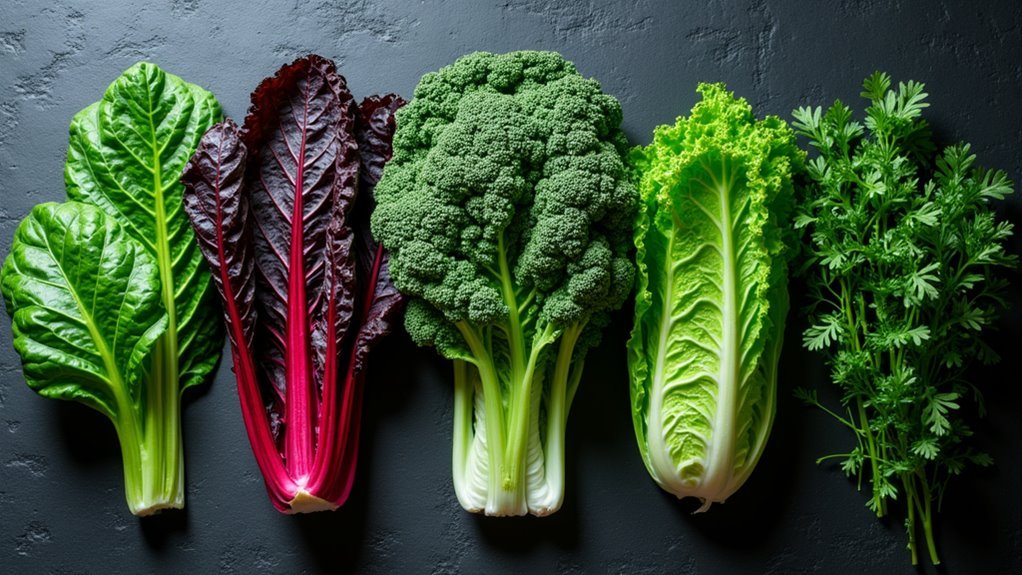
B vitamins act as your body’s cellular powerhouse, converting the food you eat into usable energy while keeping your nervous system running smoothly. This group of eight water-soluble vitamins each serves specific functions that you can’t live without.
Vitamin B1 transforms carbohydrates into fuel, while B12 creates red blood cells and synthesizes DNA. You’ll need varying amounts daily—men require 1.4 mg of B6 versus women’s 1.2 mg, and adults need approximately 1.5 micrograms of B12.
Your body requires specific B vitamin amounts daily—B1 fuels carbohydrate metabolism while B12 builds red blood cells and DNA synthesis.
When you don’t get enough B vitamins, you’ll experience fatigue, anemia, and cognitive problems. That’s where leafy greens become vital.
They’re particularly rich in folate (B9), which supports cell division and prevents neural tube defects during pregnancy, making them essential dietary staples.
Spinach: The Folate Powerhouse
When you’re looking for a B vitamin boost, spinach delivers impressive folate levels with 39% of your daily value in just half a cup of cooked leaves.
You’ll also get a solid dose of other B vitamins, including 12% of your riboflavin needs and 56% of your vitamin B6 requirements per serving.
However, how you prepare your spinach makes all the difference in preserving these valuable nutrients.
Nutritional Content Breakdown
Among leafy greens, spinach stands out as a folate powerhouse, delivering an impressive 39% of your daily value in just half a cup when cooked. This makes spinach one of the most valuable healthy foods high in vitamin B complex nutrients.
Beyond folate, you’ll get 12% of your daily riboflavin (B2) needs from just one cup of raw spinach. The green also provides smaller amounts of pyridoxine (B6) and pantothenic acid (B5), creating a thorough B vitamin profile.
To maximize folate retention, you should steam your spinach rather than boiling it. This cooking method preserves more nutrients while making them more bioavailable.
At minimal calories, spinach delivers exceptional nutritional density, making it an efficient way to boost your B vitamin intake.
Cooking Methods Matter
Since cooking methods directly impact folate retention, you’ll want to choose steaming over boiling to preserve spinach’s impressive B vitamin content.
When you steam spinach, you’ll retain maximum folic acid levels while making nutrients more bioavailable. Cooked spinach delivers 39% of your daily folate needs in just half a cup, compared to only 12% from raw spinach.
Different cooking methods affect nutrient preservation differently. Steaming stands out as the superior technique because it doesn’t leach water-soluble vitamins like folic acid into cooking water.
You’ll also reduce oxalates through cooking, which enhances iron and calcium absorption. This makes steamed spinach particularly valuable for DNA synthesis and repair.
Kale: Multiple B Vitamins in One Green
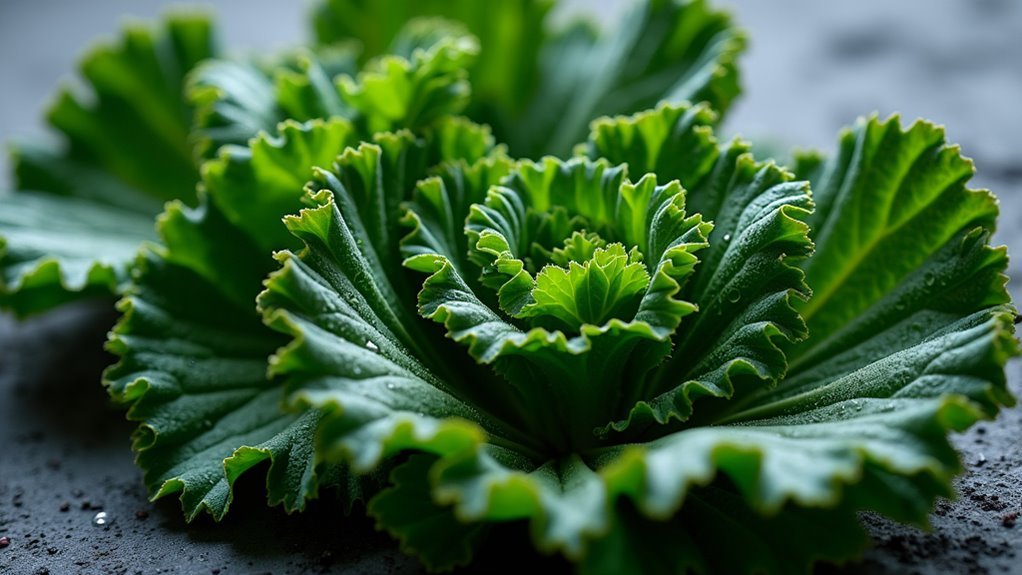
While many vegetables offer single nutritional benefits, kale delivers multiple B vitamins in one powerhouse green that’ll boost your energy and support your nervous system. You’re getting an excellent good source of folate (B9), providing 19% of your daily value in just one cooked cup. This nutrient-dense leafy green also contains riboflavin (B2) and vitamin B6, supporting your energy metabolism.
| Nutrient | Amount per Cup | Daily Value |
|---|---|---|
| Folate (B9) | 19% DV | High |
| Riboflavin (B2) | Small amount | Low |
| Vitamin B6 | Small amount | Low |
| Calories | Very low | Minimal |
| Antioxidants | High | Excellent |
Kale’s antioxidants enhance B vitamins absorption, while its low-calorie profile makes it perfect for increasing your intake without excess calories. Adding kale supports heart health and balanced nutrition.
Swiss Chard: Colorful Nutrition for Energy Metabolism
You’ll find Swiss chard stands out among leafy greens with its impressive B-vitamin profile, particularly as an exceptional source of folate that supports your body’s energy metabolism.
This colorful vegetable delivers about 36% of your daily folate needs in just a half-cup serving, along with smaller amounts of riboflavin and pantothenic acid that help convert food into usable energy.
The vibrant red and yellow stems aren’t just visually striking—they signal the presence of diverse nutrients that work together to fuel your body’s metabolic processes.
Swiss Chard B-Vitamin Profile
Rainbow-colored stems and dark green leaves make Swiss chard one of nature’s most visually striking sources of B vitamins. You’ll get approximately 14% of your Daily Value for folate (B9) in just one cup of cooked Swiss chard.
This powerhouse green also delivers riboflavin (B2) and vitamin B6, supporting your energy metabolism and overall health.
The high folate content you’ll find in Swiss chard helps support heart health by reducing homocysteine levels in your blood. You can easily incorporate this versatile leafy green into salads, sautés, and soups to boost your B vitamin intake.
When you steam Swiss chard, you’ll preserve its B vitamin content, ensuring you retain maximum nutrients for ideal health benefits.
Energy Metabolism Benefits
Beyond its visual appeal, Swiss chard delivers powerful energy metabolism benefits that can transform how your body converts food into usable fuel. Each cooked cup provides 36% of your daily vitamin K needs plus significant riboflavin, both essential for energy production.
The 28 micrograms of folate supports cellular function and energy metabolism, helping maintain your liveliness throughout the day.
Swiss chard’s vitamin B6 content plays a significant role in protein metabolism while converting carbohydrates into accessible energy. This vitamin B powerhouse enhances your metabolic efficiency, ensuring your body maximizes nutritional value from every meal.
Collard Greens: Traditional Southern Superfood
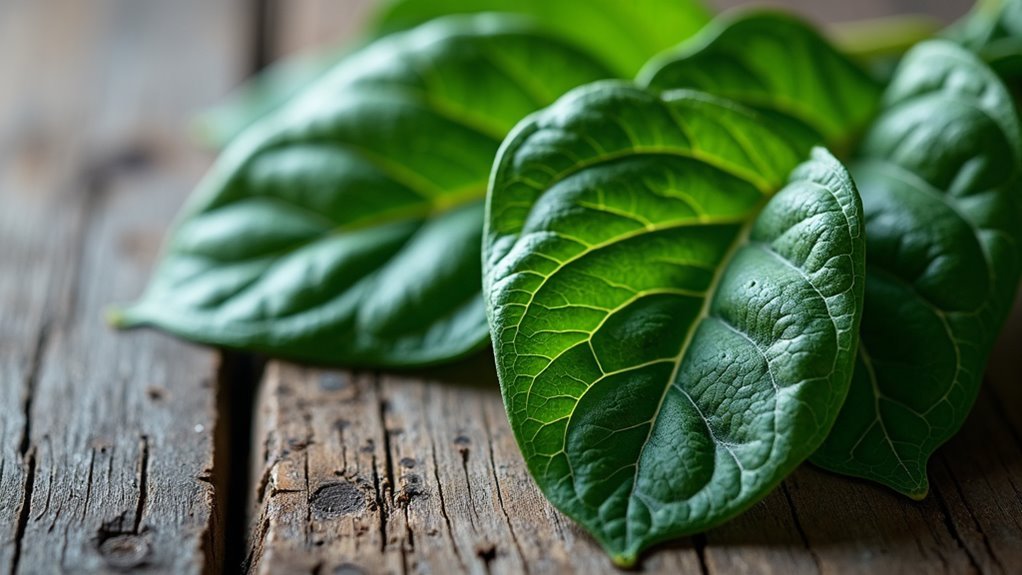
Collard greens pack an impressive nutritional punch that’s earned them superfood status in traditional Southern cuisine.
You’ll get 17% of your daily folate needs from just a half-cup cooked serving, making these leafy greens one of the good sources of vitamin B your body craves. Beyond folate, you’re also getting substantial amounts of vitamin K for bone protection and heart health, plus vitamins A and C to boost your immune system and skin health.
You can easily incorporate collard greens into your meals by steaming, sautéing, or adding them to soups and stews.
Regular consumption may help reduce your risk of inflammatory diseases and certain cancers while supporting your energy metabolism.
Turnip Greens: Underrated B Vitamin Source
While collard greens dominate Southern tables, turnip greens deserve equal recognition as a powerhouse B vitamin source. You’ll get approximately 21% of your daily folate (vitamin B9) needs from just half a cup of cooked turnip greens. These nutrient-dense leaves pack serious nutritional value while keeping calories low.
| Nutrient | Amount per 1/2 cup |
|---|---|
| Folate (B9) | 21% DV |
| Vitamin K | High content |
| Calories | Very low |
| Antioxidants | Significant |
You can retain maximum vitamin B content by sautéing or steaming these versatile greens. Beyond folate, turnip greens support bone health through vitamin K and provide antioxidant protection. They’re an underrated addition to any B vitamin-focused diet plan.
Mustard Greens: Spicy Leaves With Nutritional Punch
When you’re looking for leafy greens that pack both flavor and nutrition, mustard greens deliver an impressive combination of spicy taste and essential B vitamins.
These cruciferous greens provide approximately 18% of your daily folate needs per cooked cup, supporting DNA synthesis and potentially reducing birth defect risks. You’ll also benefit from their vitamin B6 and riboflavin content, which boost energy metabolism and maintain healthy skin and eyes.
You can easily add mustard greens to salads, stir-fries, and soups for versatile meal options.
To maximize their nutritional benefits, steam or lightly cook these greens rather than boiling them. This gentle cooking method preserves their vitamin B content while enhancing digestibility, ensuring you get the most nutritional value from these spicy, nutrient-dense greens.
Arugula: Peppery Greens Rich in Essential Nutrients
You’ll find arugula’s distinctive peppery flavor makes it a standout choice among leafy greens, while its impressive B vitamin content, especially folate, supports your heart health and cellular function.
This versatile green transforms ordinary salads, sandwiches, and pasta dishes with its bold taste while delivering 15% of your daily folate needs in just one cup.
You can easily incorporate arugula into your meals as a nutrient-dense, low-calorie addition that enhances both flavor and your overall vitamin intake.
Arugula’s B Vitamin Profile
Although arugula’s peppery bite might steal the spotlight, this nutrient-dense green delivers an impressive B vitamin punch that’ll support your body’s essential functions. With just 5 calories per cup, arugula provides substantial nutritional value without weight concerns.
| B Vitamin | Amount per Cup | Daily Value % | Primary Function |
|---|---|---|---|
| Folate (B9) | High | 25% | DNA synthesis/repair |
| Riboflavin (B2) | Moderate | Variable | Energy metabolism |
| Vitamin B6 | Small | Variable | Neurological function |
| Overall Profile | Excellent | Notable | Multiple benefits |
You’ll find that incorporating arugula into salads, smoothies, or as garnish enhances dish flavors while greatly boosting B vitamins intake. This leafy green’s folate content particularly supports cellular health, making arugula an excellent choice for maintaining ideal wellness through natural nutrition.
Culinary Uses and Benefits
Five simple ways transform arugula from a basic salad green into a culinary powerhouse that elevates your dishes while delivering essential nutrients.
You can blend it into smoothies for a vitamin B boost without overwhelming the taste.
Create vibrant pestos by substituting arugula for traditional basil, adding its signature peppery kick while maintaining the health benefits.
Use it as a flavorful garnish on pizzas, soups, or grain bowls to enhance both visual appeal and nutritional value.
Incorporate arugula into sandwiches and wraps for extra crunch and folate content.
You can also sauté it briefly with garlic as a nutritious side dish that retains its distinct flavor while providing essential vitamins.
Romaine Lettuce: More Than Just Salad Base
When you think of romaine lettuce, you’re likely picturing crisp salad leaves, but this nutritious green offers far more than meets the eye. Among vegetable sources rich in vitamin B, romaine lettuce stands out by providing 19% of your daily folate needs per 100 grams.
You’ll also benefit from its impressive vitamin A and K content, supporting your eye and bone health respectively.
At just 17 calories per 100 grams, you can enjoy romaine lettuce guilt-free while managing your weight. Its dietary fiber content promotes healthy digestion and gut function.
Don’t limit yourself to traditional salads – you can incorporate romaine into sandwiches and wraps, adding nutritional value and satisfying crunch to various meals throughout your week.
Bok Choy: Asian Greens for B Vitamin Boost
Moving beyond Western leafy greens, bok choy brings impressive B vitamin content from Asian cuisine straight to your table. This cruciferous powerhouse delivers 37 micrograms of folate per 100 grams, supporting essential cell division processes.
You’ll also get 0.1 mg of riboflavin (vitamin B2), which fuels energy production and maintains healthy skin for good health.
At just 13 calories per 100 grams, bok choy won’t derail your diet goals. Beyond vitamin B nutrients, you’re getting bone-strengthening vitamin K for blood clotting support.
Bok choy’s versatility makes incorporating these nutrients effortless:
- Add raw leaves to salads for maximum vitamin B retention
- Stir-fry quickly to preserve nutritional content
- Steam gently for tender, nutrient-rich results
This Asian green seamlessly enhances any meal while boosting your vitamin B intake considerably.
Watercress: Aquatic Superfood With High Nutrient Density
Watercress delivers an exceptional nutrient punch that’ll transform your B vitamin intake while adding barely any calories to your diet. This aquatic superfood provides 16% of your daily folate (B9) needs per 100 grams, making it one of the most efficient vitamin B foods available. You’ll also benefit from its impressive antioxidant profile and bone-supporting vitamin K content.
| Nutrient | Benefit |
|---|---|
| Folate (B9) | 16% daily value per 100g |
| Vitamin K | Supports bone health, reduces inflammation |
| Vitamin C | Boosts immune function |
| Calcium | Enhances bone strength |
Its distinctive peppery flavor adds excitement to salads, sandwiches, and soups, encouraging you to consume more B vitamin-rich foods regularly while supporting your weight management goals.
Best Cooking Methods to Preserve B Vitamins
While leafy greens pack impressive B vitamin content, you’ll maximize their nutritional value by choosing cooking methods that preserve these delicate, water-soluble nutrients.
Steaming stands out as your best option, retaining up to 39% of folate compared to boiling’s significant nutrient loss. Quick cooking methods like sautéing or microwaving also preserve B vitamins better than prolonged water exposure.
For ideal B vitamin preservation in leafy greens, follow these techniques:
- Steam or lightly sauté with minimal water and shorter cooking times
- Blanch before freezing to stop enzymatic breakdown
- Cook until vibrant colored and tender, avoiding overcooking
Light cooking actually enhances bioavailability, making B vitamins easier for your body to absorb.
Daily Serving Recommendations for Optimal B Vitamin Intake
Now that you know how to cook leafy greens properly, let’s determine how much you should eat to meet your B vitamin needs. You should aim for at least 2-3 servings of leafy greens weekly to support adequate folate intake, since they’re a top source of this essential B vitamin.
A half-cup of cooked spinach delivers 39% of your daily folate value, making it an excellent choice for maintaining B vitamin levels. You can diversify your intake by incorporating collard greens and turnip greens, which provide a broader spectrum of B vitamins.
Cooked collard greens offer 17% daily value of folate per half-cup serving. Regular consumption guarantees you’ll receive not only folate but also other B vitamins like riboflavin and pantothenic acid from these nutrient-dense vegetables.
Frequently Asked Questions
Which Leafy Greens Are High in Vitamin B?
You’ll find spinach offers the highest folate content at 39% DV per half cup. Turnip greens provide 21% DV, while collard greens contain 17% DV. Kale and mustard greens are also excellent sources.
What Plants Are High in B Vitamins?
You’ll find B vitamins in legumes like lentils and chickpeas, whole grains such as quinoa and brown rice, nuts, seeds, nutritional yeast, and fortified cereals beyond leafy greens.
What Vegetable Has the Most B12?
You won’t find B12 in any vegetable since it’s only naturally present in animal products. You’ll need fortified foods or supplements to meet your B12 requirements on a plant-based diet.
Which Food Has the Most B Vitamins?
You’ll find the most B vitamins in nutritional yeast, which contains all eight B vitamins including B12. Liver’s also exceptionally rich, followed by fortified cereals, eggs, and leafy greens like spinach.


