
You can combat iron deficiency anemia by incorporating five powerful leafy greens into your diet. Spinach leads with 6mg of iron per cooked cup, while Swiss chard provides 3mg per serving. Kale offers 1.1mg with vitamin C that enhances absorption, and collard greens deliver 2.2mg of bioavailable iron. Arugula rounds out the list with 2.5mg per 100 grams. Pair these non-heme iron sources with vitamin C-rich foods to maximize absorption and discover ideal preparation methods below.
Spinach: The Iron Powerhouse for Blood Health
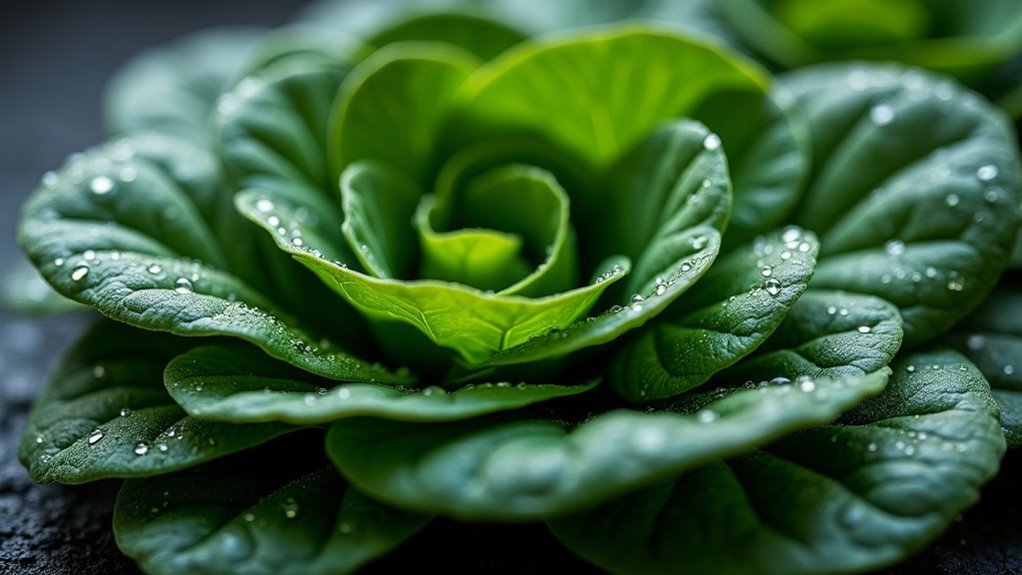
Spinach stands out as nature’s iron champion, delivering approximately 6 mg of iron per cooked cup—nearly one-third of your daily iron requirements. This powerhouse among leafy greens offers exceptional health benefits for combating iron deficiency and supporting blood health.
While spinach contains non-heme iron, which isn’t absorbed as easily as iron from meat sources, you can maximize absorption by pairing it with vitamin C-rich foods like citrus fruits or bell peppers. Cooking spinach reduces oxalates that typically inhibit iron uptake, making the mineral more bioavailable.
Regular spinach consumption can effectively prevent anemia, especially if you’re following a plant-based diet, while providing essential vitamins like K, A, and folate for peak wellness.
Swiss Chard: Colorful Nutrition for Iron Deficiency
The rainbow-colored stems of Swiss chard signal its impressive nutritional density, delivering approximately 3 mg of iron per 150-gram serving alongside a powerhouse blend of vitamins A, C, and K.
Swiss chard’s vibrant rainbow stems pack an impressive 3 mg of iron per serving plus essential vitamins A, C, and K.
This vibrant leafy green combats iron deficiency anemia while supporting your overall nutritional health through its rich antioxidant profile.
You’ll maximize iron absorption by pairing Swiss chard with vitamin C-rich foods like citrus fruits or bell peppers.
The cooking process actually enhances bioavailability, making cooked Swiss chard more effective than raw varieties.
Its versatility shines in salads, soups, and stir-fries, letting you easily incorporate these iron-rich foods into daily meals.
Among healthy foods for anemia relief, Swiss chard’s exceptional iron content and colorful appeal make it an outstanding addition to your leafy greens rotation.
Kale: Nutrient-Dense Leaves for Enhanced Iron Absorption
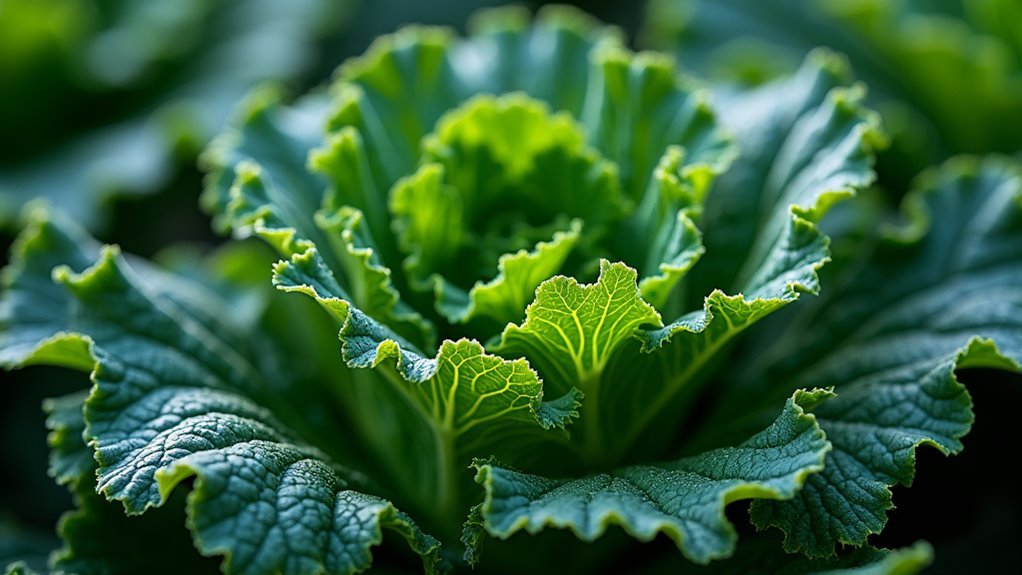
While Swiss chard delivers impressive iron content through its colorful stems, kale offers a different yet equally valuable approach to combating iron deficiency through its remarkable nutrient synergy.
You’ll get 1.1 mg of iron per 100 grams from this nutrient-dense powerhouse, but kale’s real strength lies in its vitamin C content, which greatly boosts iron absorption from non-heme iron sources.
When you consume kale, you’re not just increasing your iron levels – you’re optimizing how your body processes this essential nutrient.
This versatile member of leafy greens provides additional essential nutrients like vitamin K, fiber, and antioxidants that support overall health.
Whether you blend it into smoothies or add it to salads, kale effectively combats anemia.
Collard Greens: Traditional Iron-Rich Vegetable Medicine
Boasting an impressive 2.2 mg of iron per 100 grams, collard greens stand out as one of the most potent leafy vegetables for addressing iron deficiency anemia.
These nutrient-dense greens have served as traditional medicinal food for centuries, particularly valued for their exceptional iron content and anemia relief properties.
You’ll maximize iron absorption by pairing collard greens with vitamin C-rich foods, as their natural vitamin C content enhances iron uptake.
Consider these preparation methods:
- Steam lightly to preserve iron content while maintaining digestibility
- Sauté with citrus juice to boost vitamin C levels
- Combine raw leaves in salads with tomatoes or bell peppers
- Add to soups alongside other iron-rich leafy greens
Their medicinal properties extend beyond iron intake, supporting overall blood health while delivering essential nutrients your body needs for ideal iron absorption.
Arugula: Peppery Greens Packed With Bioavailable Iron
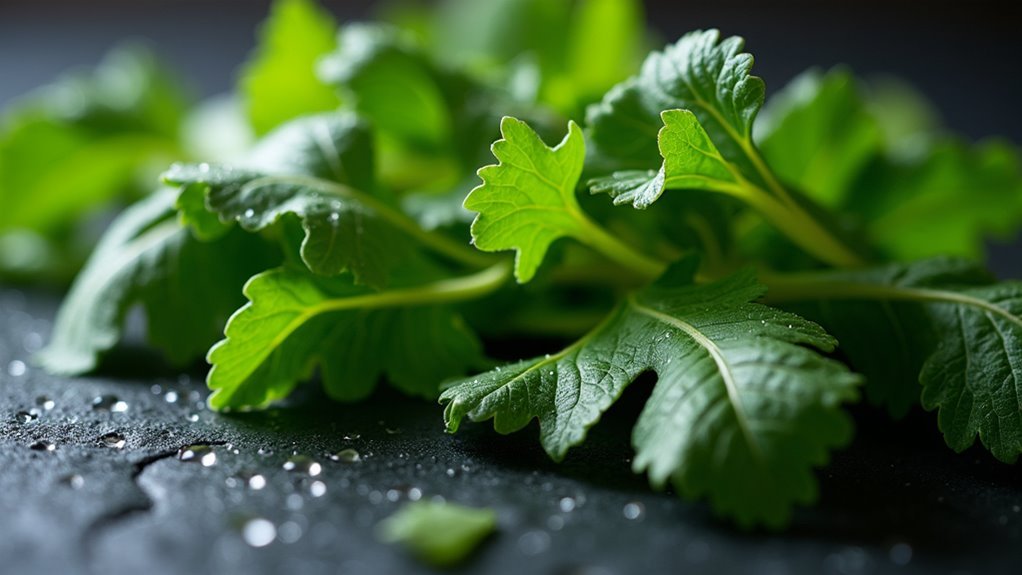
Delivering an impressive 2.5 mg of iron per 100 grams, arugula surpasses many leafy greens in iron content while offering exceptional bioavailability.
This peppery green’s nutritional profile extends beyond iron, providing essential vitamins A, C, and K that support your overall health and anemia recovery.
You’ll maximize iron absorption by pairing arugula with vitamin C-rich foods like citrus fruits or bell peppers.
At just 25 calories per 100 grams, arugula delivers nutrient density without caloric excess, making it ideal for weight-conscious individuals managing anemia.
You can easily incorporate arugula into salads, sandwiches, and smoothies.
Its distinctive peppery flavor enhances meals while boosting your iron intake.
This versatile green transforms ordinary dishes into iron-rich powerhouses that support your body’s fight against anemia.
Frequently Asked Questions
What Leafy Greens Are Good for Anemia?
You’ll find spinach offers the highest iron content at 6mg per cup, while Swiss chard, kale, mustard greens, and collard greens also provide valuable iron to help combat anemia effectively.
What Should I Eat to Cure Anemia?
You’ll need to eat iron-rich foods like lean meats, fish, beans, and fortified cereals. Pair them with vitamin C sources like oranges or tomatoes to boost absorption and consult your doctor.
What Is the Fastest Way to Cure Iron-Deficiency Anemia?
You’ll cure iron-deficiency anemia fastest by eating heme iron from red meat, which absorbs at 30%. Pair non-heme sources like spinach with vitamin C to triple absorption rates.
Which Leaves Are Used to Cure Anemia?
You’ll find spinach most effective with 6mg iron per cup, followed by Swiss chard at 3mg. Beet greens, kale, and collard greens also help boost iron levels when you’re fighting anemia.


