

You’ll boost your mineral intake considerably by incorporating these five nutrient-dense leafy greens into your diet. Spinach delivers 15% of daily iron and 24% of calcium needs, while kale provides essential magnesium and potassium for over 300 enzymatic reactions. Swiss chard offers over 300% of vitamin K requirements plus copper for enhanced iron absorption. Collard greens supply immune-supporting selenium and zinc, and arugula contains cardiovascular-protective nitrates. Discover how each green transforms your health outcomes.
Spinach: Iron and Calcium Powerhouse for Energy and Bone Health

Powerhouse might be an understatement when describing spinach’s nutritional profile. This remarkable leafy green delivers approximately 15% of your daily iron needs per cooked cup, fueling energy production and oxygen transport throughout your bloodstream.
You’ll also get about 24% of your daily calcium requirements, making spinach essential for bone health and osteoporosis prevention.
The vitamin K content exceeds 100% of daily values, supporting bone metabolism and blood coagulation. Meanwhile, magnesium contributes 19% of your daily needs, maintaining proper muscle and nerve function while boosting energy production.
Beyond these minerals, spinach contains powerful antioxidants like flavonoids and carotenoids that combat oxidative stress, promoting your overall health through this nutritionally dense addition to any diet.
Kale: Mineral-Dense Superfood With Magnesium and Potassium
While spinach commands attention for iron and calcium, kale stands out as another mineral-rich champion that’ll boost your magnesium and potassium intake considerably. This nutrient-dense superfood delivers impressive mineral content that directly supports heart health and reduces chronic diseases risk.
| Mineral | Amount per Cup (21g) |
|---|---|
| Potassium | 150 mg |
| Magnesium | 24 mg |
| Daily Value | 6% potassium, 6% magnesium |
You’ll find kale’s magnesium supports over 300 enzymatic reactions, including energy production and protein synthesis. Its potassium helps maintain healthy blood pressure and fluid balance. While one cup won’t meet your complete daily recommended intakes, incorporating this leafy green consistently helps you reach magnesium targets of 310-420 mg and potassium goals of 2,500-3,000 mg, promoting peak health.
Swiss Chard: Vitamin K and Copper Rich Green for Blood and Bone Support
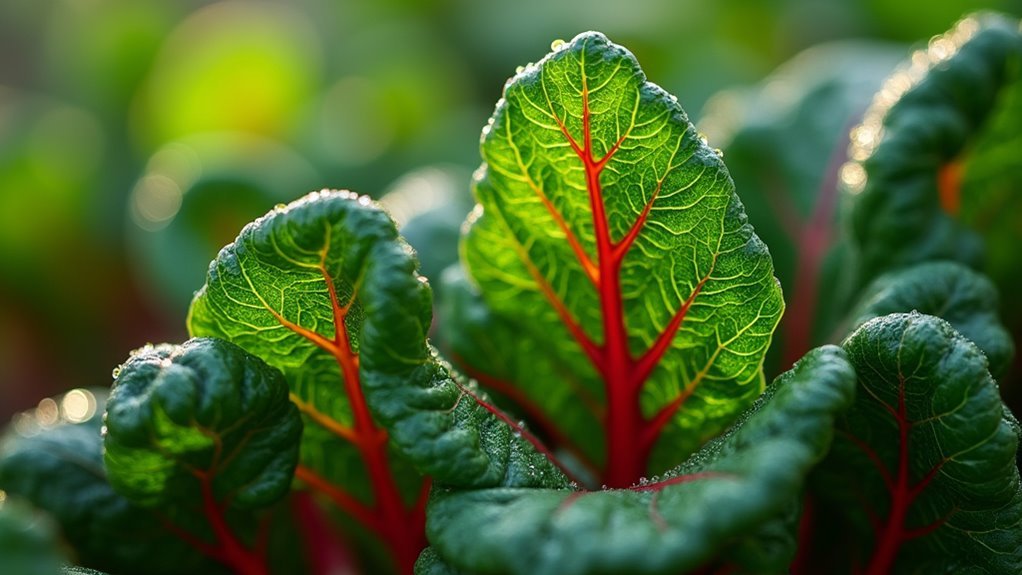
Swiss chard delivers an exceptional vitamin K punch that’ll transform your approach to bone and blood health. One cup of cooked Swiss chard provides over 300% of your daily vitamin K needs, essential for proper blood clotting and maintaining strong bones.
Swiss chard’s vitamin K content delivers over 300% of daily needs, revolutionizing your bone and blood health approach.
This powerhouse green doesn’t stop there—its copper content enhances iron absorption and supports red blood cell formation.
You’ll also benefit from Swiss chard’s magnesium, which keeps your muscles, nerves, and heartbeat functioning efficiently.
The antioxidants like beta-carotene and lutein protect your eye health while potentially reducing chronic diseases risk.
Adding Swiss chard to your balanced diet regularly supports both bone strength and healthy blood circulation through its remarkable nutrient density.
Collard Greens: Selenium and Zinc Source for Immune Function
When your immune system needs essential mineral support, collard greens deliver exceptional selenium and zinc content that’ll strengthen your body’s natural defenses. Each cup provides 12% of selenium’s daily value and 6% of zinc’s requirements, creating powerful antioxidant protection while supporting cellular metabolism.
You’ll maximize your immune response by regularly consuming these nutrient-dense leaves, which combine selenium and zinc with vitamins A and C. This mineral-rich combination enhances immune cell function and reduces inflammation throughout your body.
Arugula: Nitrate-Rich Leafy Green for Cardiovascular Health

Your cardiovascular system thrives when you regularly consume arugula, a powerhouse leafy green that delivers concentrated dietary nitrates to enhance blood flow and reduce blood pressure naturally.
This nitrate-rich vegetable stands out among leafy greens for its exceptional heart health benefits.
One cup of arugula provides 18% of your daily vitamin K needs, supporting healthy blood clotting and arterial function.
The peppery flavor indicates high antioxidants that combat oxidative stress while improving endothelial function.
You can easily incorporate arugula into your cardiovascular health routine through:
- Fresh salads with mixed greens
- Sandwich toppings for added nutrition
- Pizza garnishes after cooking
- Smoothie additions for nitrate boosts
- Pasta dishes as finishing touches
Regular arugula consumption greatly reduces heart disease risk through improved blood circulation.
Frequently Asked Questions
What Is the Healthiest Leafy Green to Eat?
You can’t go wrong with kale since it’s considered the healthiest leafy green overall. However, you’ll also get exceptional nutrition from collard greens, which provide even more vitamin K than kale does.
What Is the King of Green Leafy Vegetables?
Kale’s often called the “king of green leafy vegetables” because you’ll get incredible nutrient density from it. You’re consuming high levels of vitamins A, C, and K plus essential minerals when you eat kale.
What Is the Number One Healthiest Green?
You’ll find kale consistently ranks as the number one healthiest green. It’s packed with vitamins K, A, and C, plus calcium and powerful antioxidants that support your immune system and bone health.
What Are the Best Leaves for Health Benefits?
You’ll get the most health benefits from kale, spinach, collard greens, Swiss chard, and watercress. They’re packed with calcium, iron, magnesium, and vitamin K for strong bones and proper metabolism.


